For my church friends…

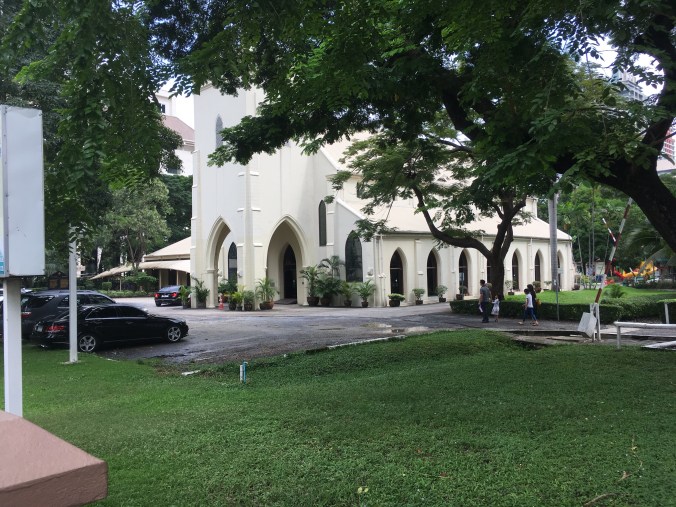
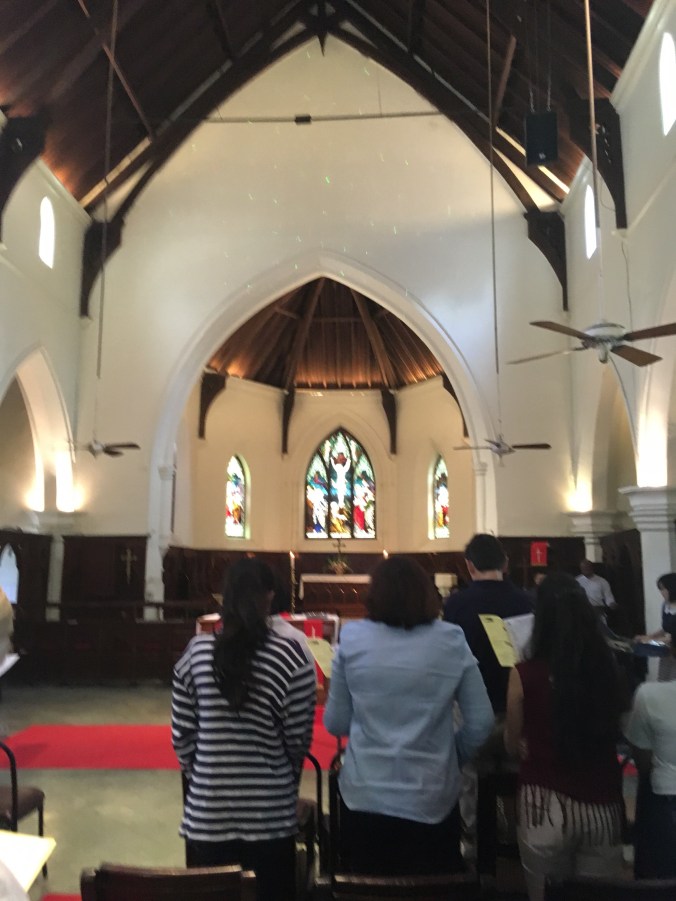
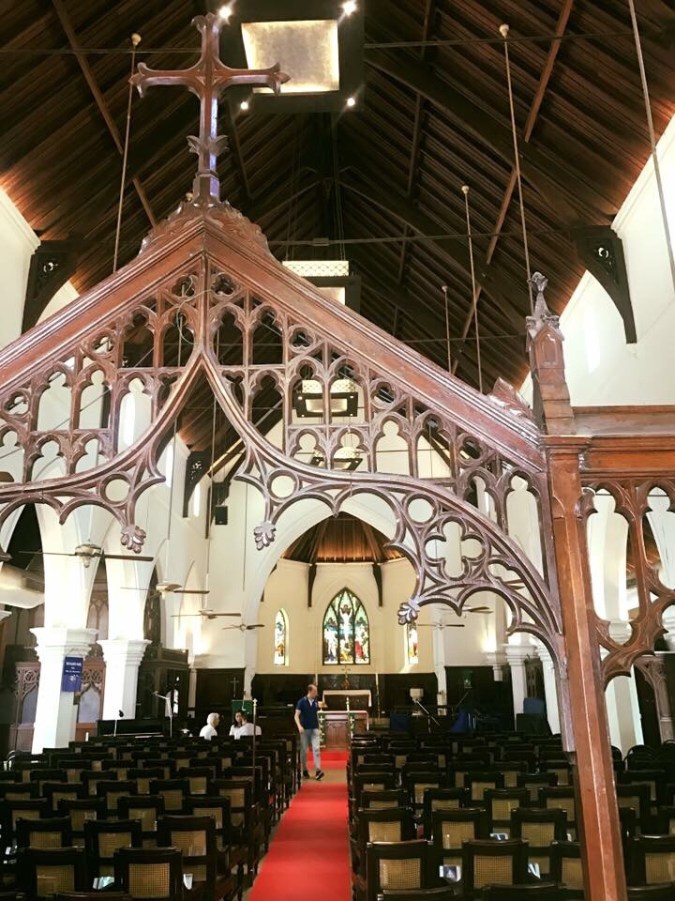
We found an Anglican Church here, not too far away, about 1/2 hour by boat then Sky Train. It is an English- speaking congregation (fortunately) with a very pleasant English vicar. The congregation, on the other hand is very international. It’s a big congregation of anywhere between 200-300 people so it’s very vibrant and lively.

Being abroad and having to serve such a rich complexity of people means that the approach is probably more evangelical than I am used to back in Blighty. We have lots of ‘worship songs’ for instance many of which are unfamiliar but which are quickly learned and after the service little groups huddle together with their hands on each other’s heads for Prayer Ministry.

Given that there are so many people processing communion can take a while and services often last 1.5 hours. One even stretched to 1.45hrs, which in my opinion was TOO long for the hordes of children seated around us. It felt more like sitting in a noisy playgroup by the end!!!

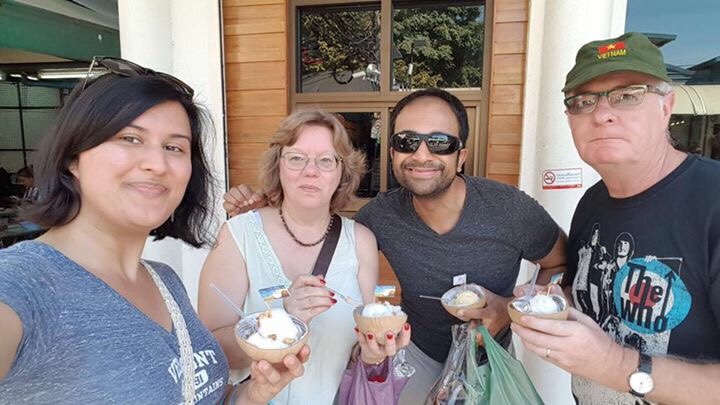
What is nice though is that they serve lunch in the Hall after the service for a donation. It’s usually packed!!! So lots of opportunities to for fellowship and to chat to people who are not part of the ‘school’ crowd. Many are tourists and just passing through but we are starting to recognise some familiar friendly faces.

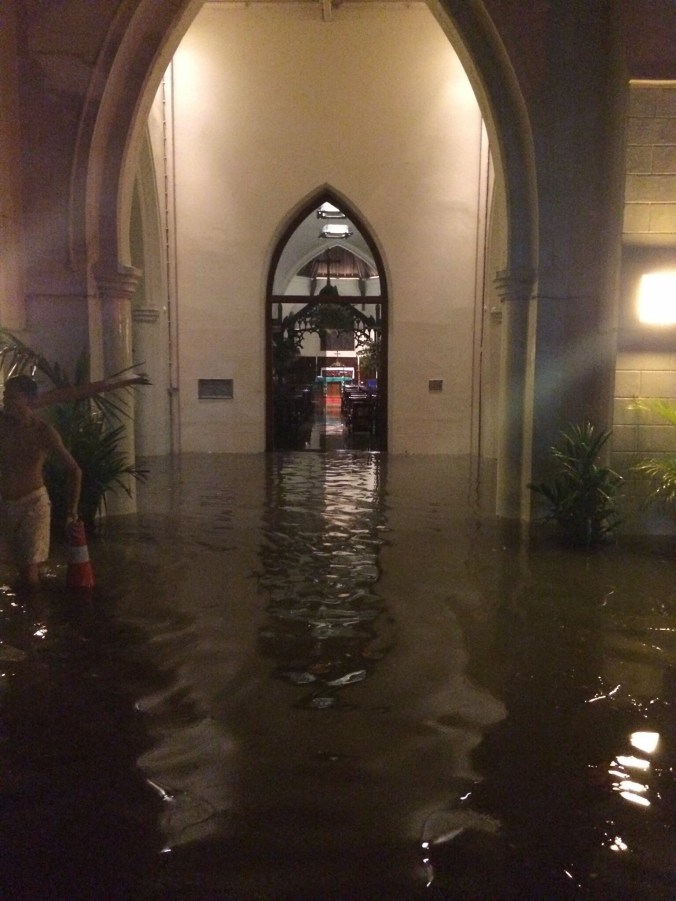
In the autumn when we were in the rainy season the church was badly flooded and we had to use the hall.

We are not going to be here for Christmas but it does seem strange seeing a nativity outside in the church grounds but in the shade of the tree!

On another religious matter we often go past the Erawan Shrine, a very busy Hindu shrine in the City Centre which was the site of a bomb in 2015 where 12 lost their lives and 120 were injured

It seems appropriate to see a sign in the entrance to a mall…

Winter Stories

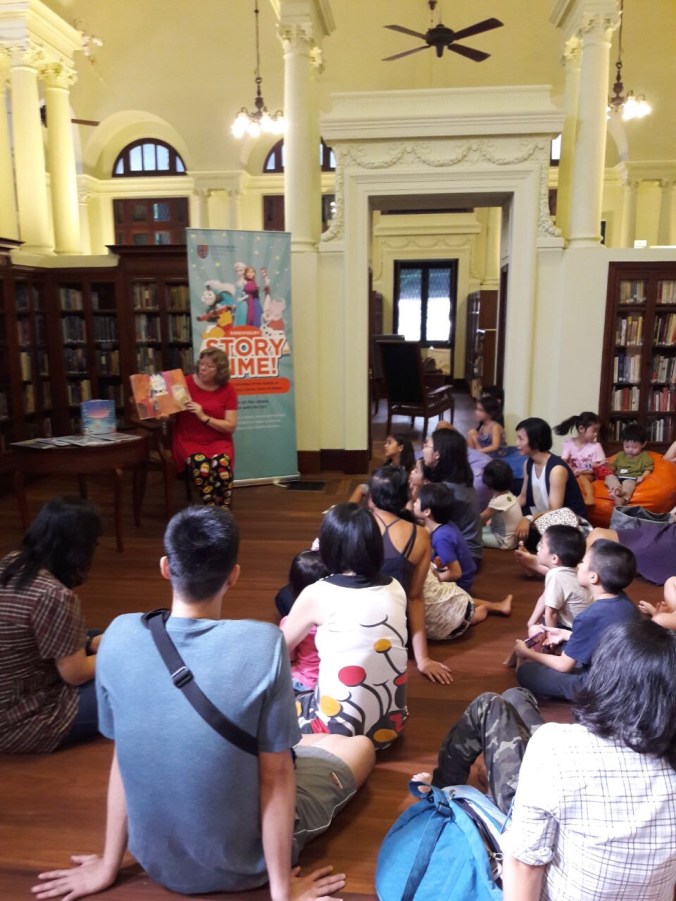
Off to the Neilson Hayes library again this weekend. The interior refurbishment of the building is complete and you can see what a beautiful neo-colonial setting it is.

The library was founded in the 1920s by the wife of one of the Doctors at the Naval Hospital. It was and remains a women-run organisation providing a wide range of English language materials to its members who come from a wide variety of backgrounds.

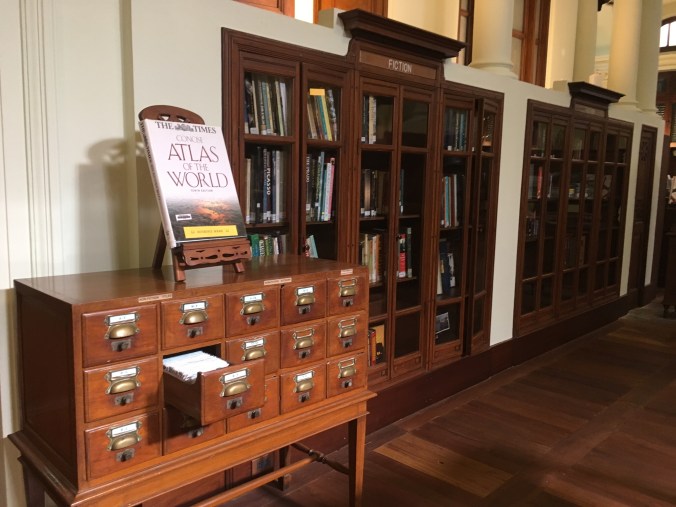
For my library friends, you may be interested in the glass fronted book cases and also the card catalogue which to my amazement is fully functional! It is the first time I have seen a card catalogue in use for 30 years. The last time I saw a set of catalogue drawers it was in an antique shop and being used as a quirky bottle holder (each drawer is just the right size for a bottle of wine! A good use for ex-library furniture I thought.

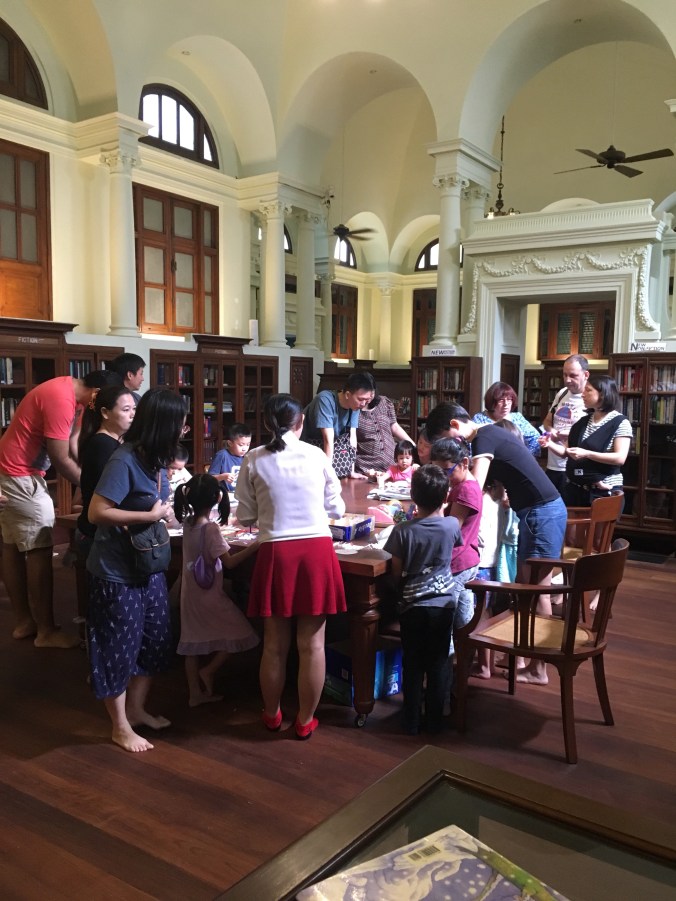
Anyway, my session was well attended and I told winter/snow themed stories. The children loved the tactile snow bear story and we all had lots of ‘strokes’ of the fur.

It was slightly incongruous though trying to explain cold and ice and snow to little children who have no frame of reference other than relentless heat! ‘Frog is fffffreezing’ meant little to them…

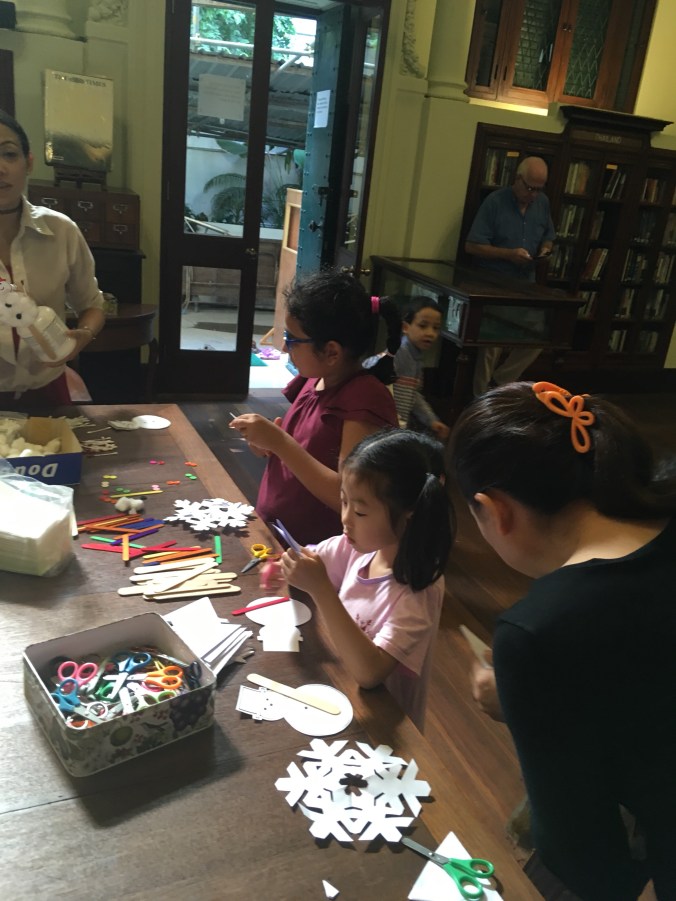
We cut out paper snowflakes and stuck cotton wool onto snowmen thanks to Meaw the talented assistant there. Only a very few had any concept of what snow was.

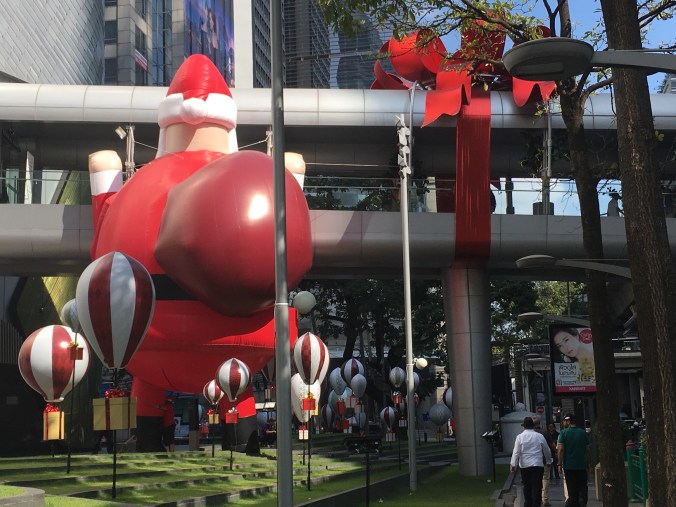
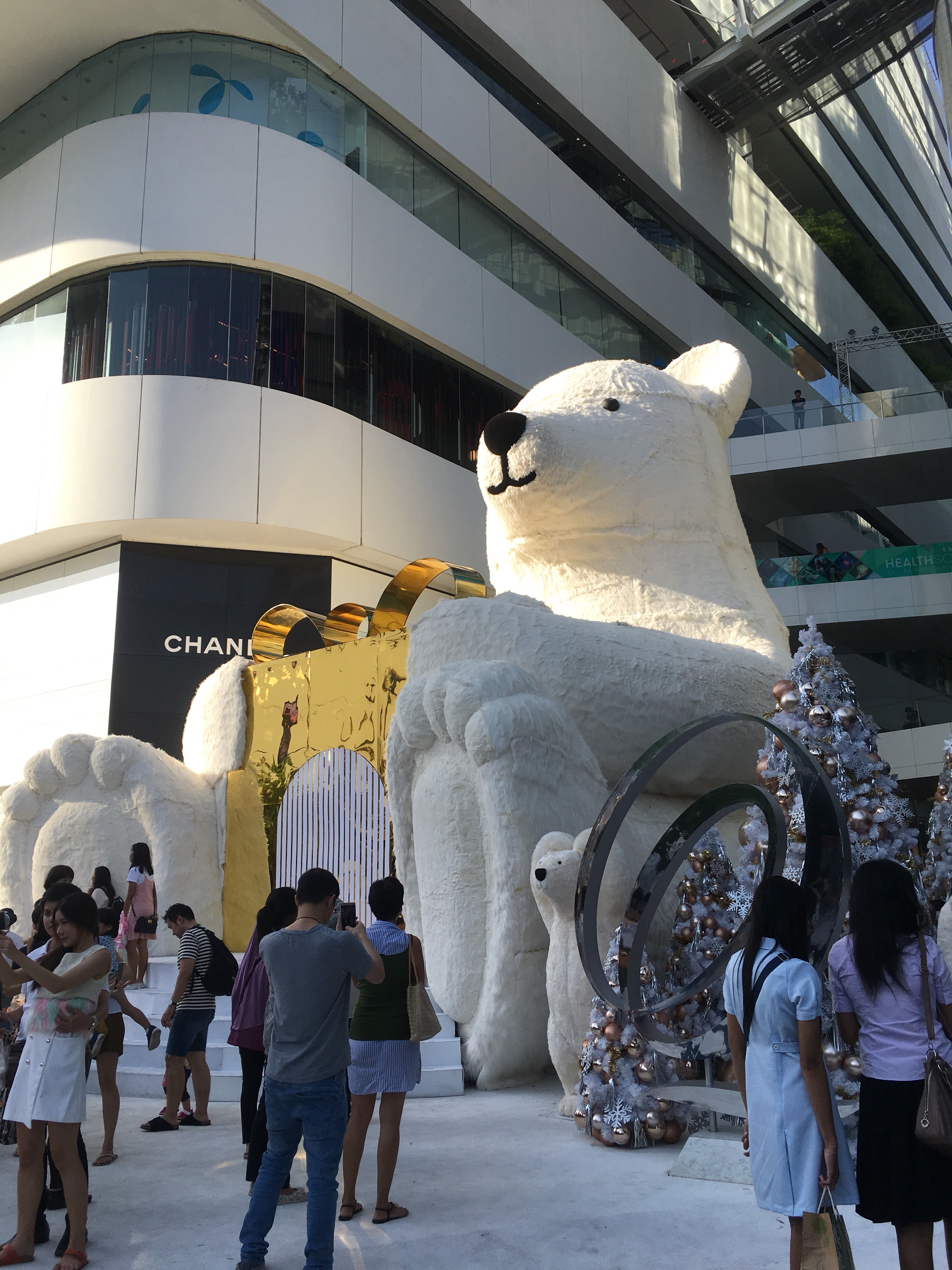
It was about 33 degrees outside so I put on my sun shades to leave. This is my strangest Christmas season to date. It is so hot that it doesn’t feel ‘Christmassy’. There are decorations in the malls but they all seem to be stylised trees or bears in Santa outfits. Not an angel, shepherd or nativity in sight.

One blessing though, we are not assaulted by tacky Christmas music wherever we go.

Window clings and other things

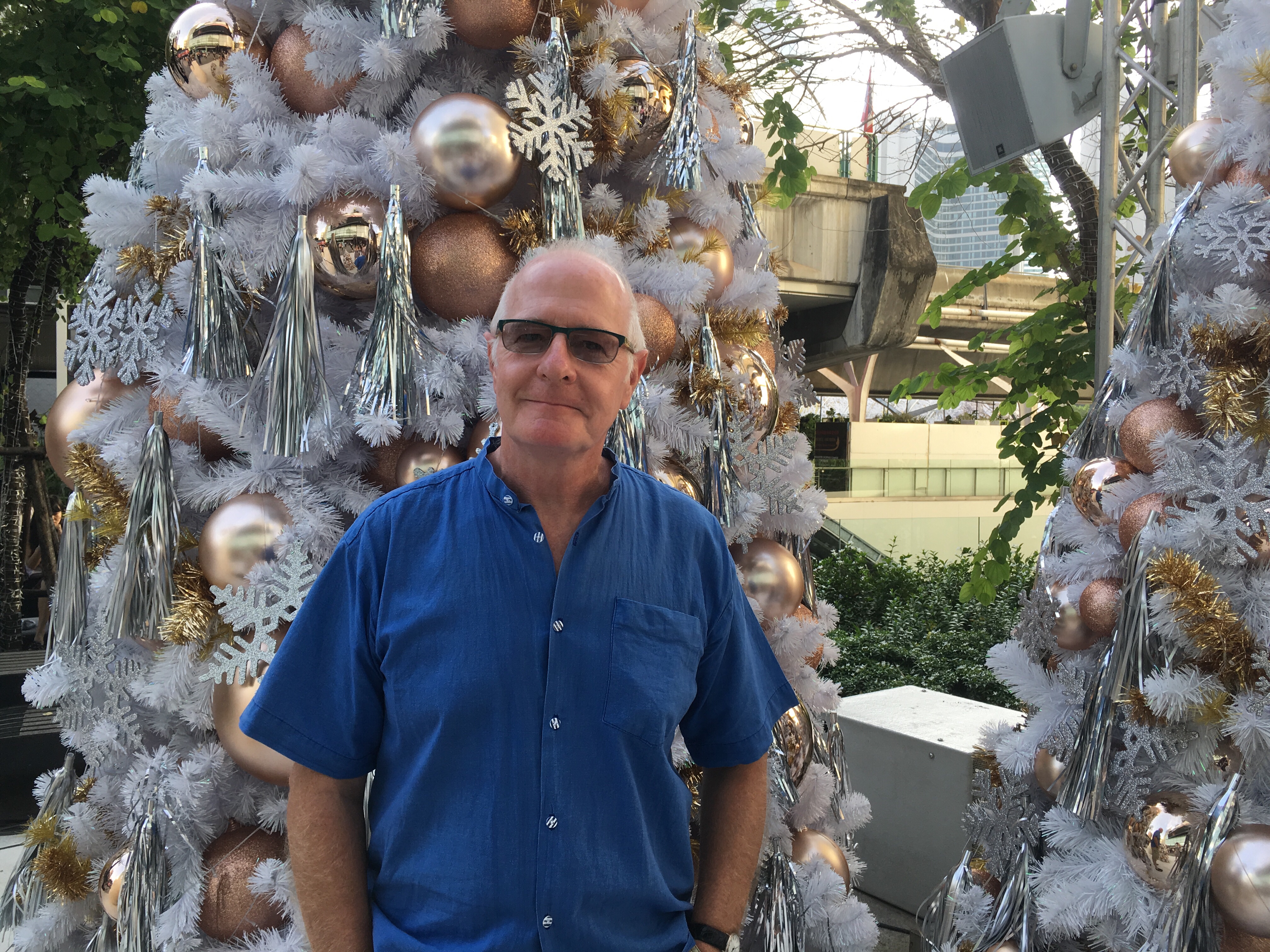
It is very weird to be preparing for Christmas in a hot country. It doesn’t feel Christmassy at all. Technically it is winter here and when I asked a member of my team what the weather forecast was for last weekend she said not raining just cold. Cold!!!’ It was about 32 degrees so not what I would call cold. In fact on occasion we can experience a wave of heat in the evenings. Last night around 8pm even though we had the fan on we came over all hot and sweaty. It’s so unusual for us as we mentally expect the temperature to drop once the sun goes down but it doesn’t here. That sort of thing takes us by surprise. So we do our Christmas shopping in short sleeves. The malls are decorated as you can see but finding actual Christmas stuff is hard. I wanted to make a decoration using holly but couldn’t find any anywhere. In the end I managed to get one scraggly little bit of artificial holly and constructed the wreath below.

So our decs are up – minimal as we won’t be here for actual Christmas and we didn’t bring much. The silicone star window clings are the most effective and small to bring! No tree for us this year.

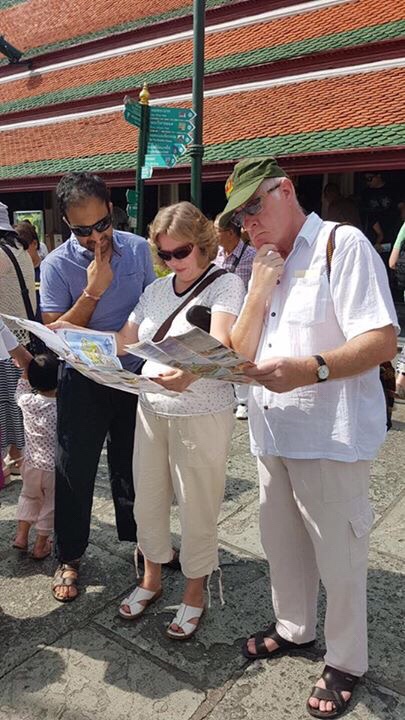
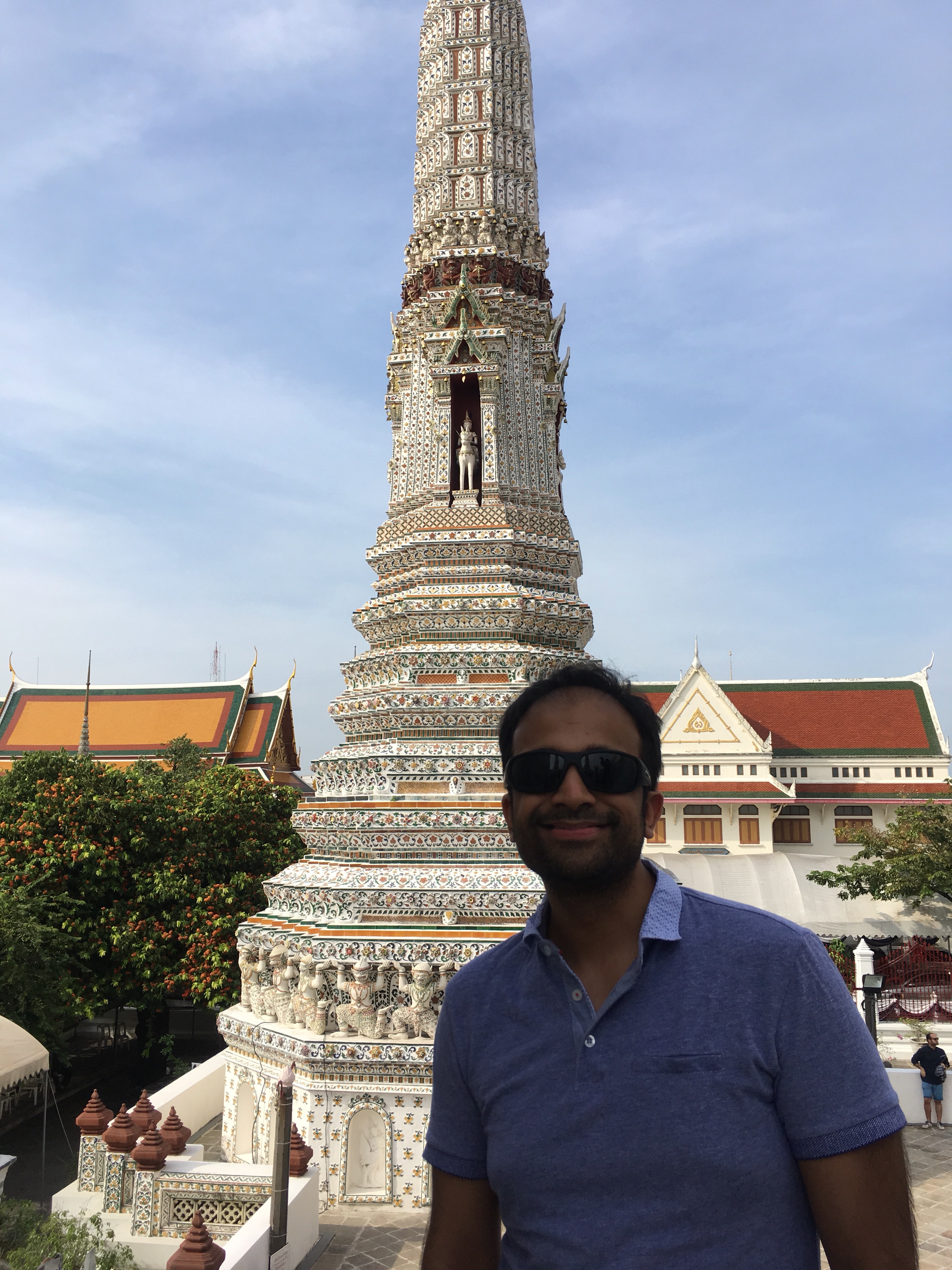
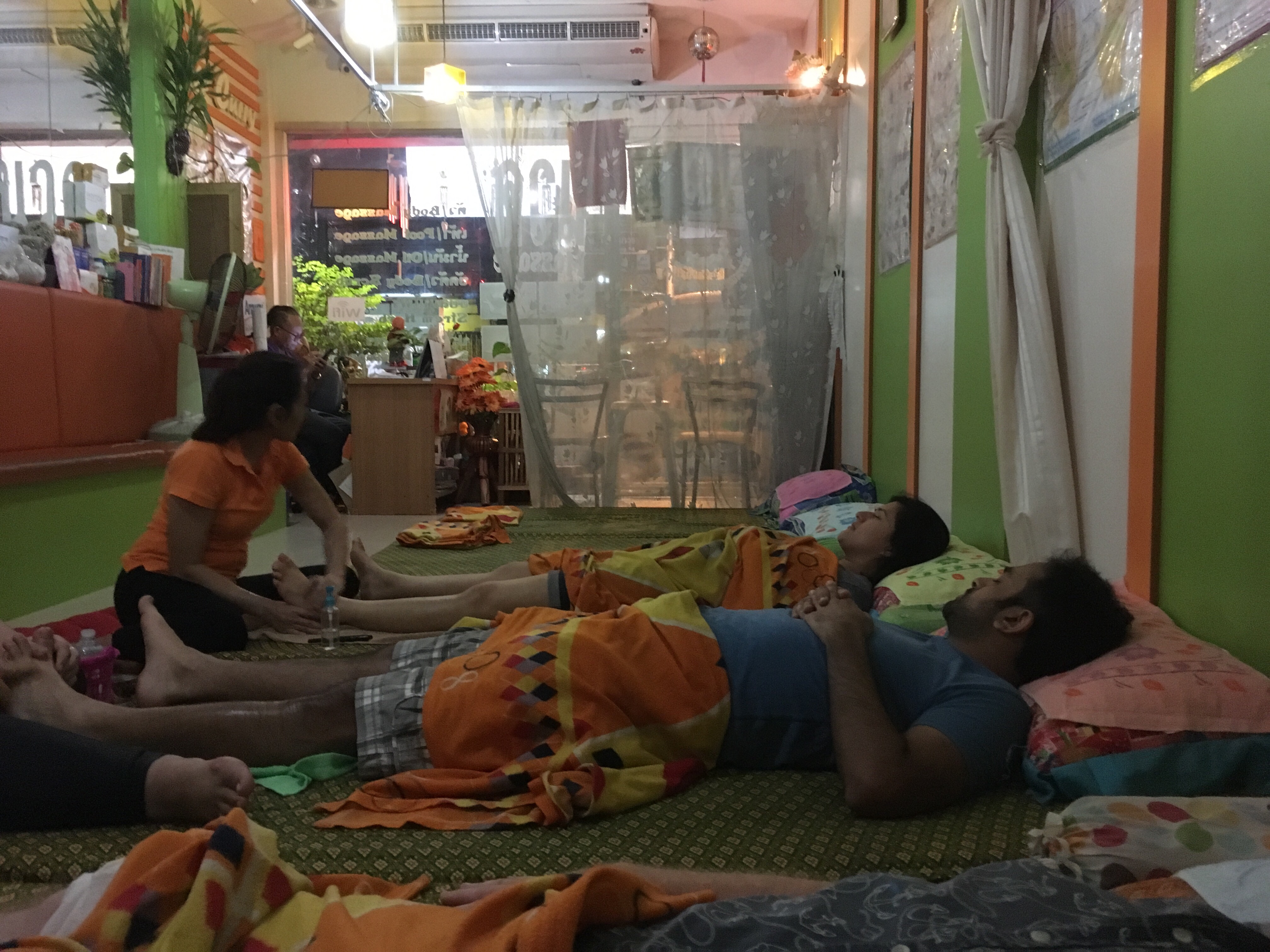
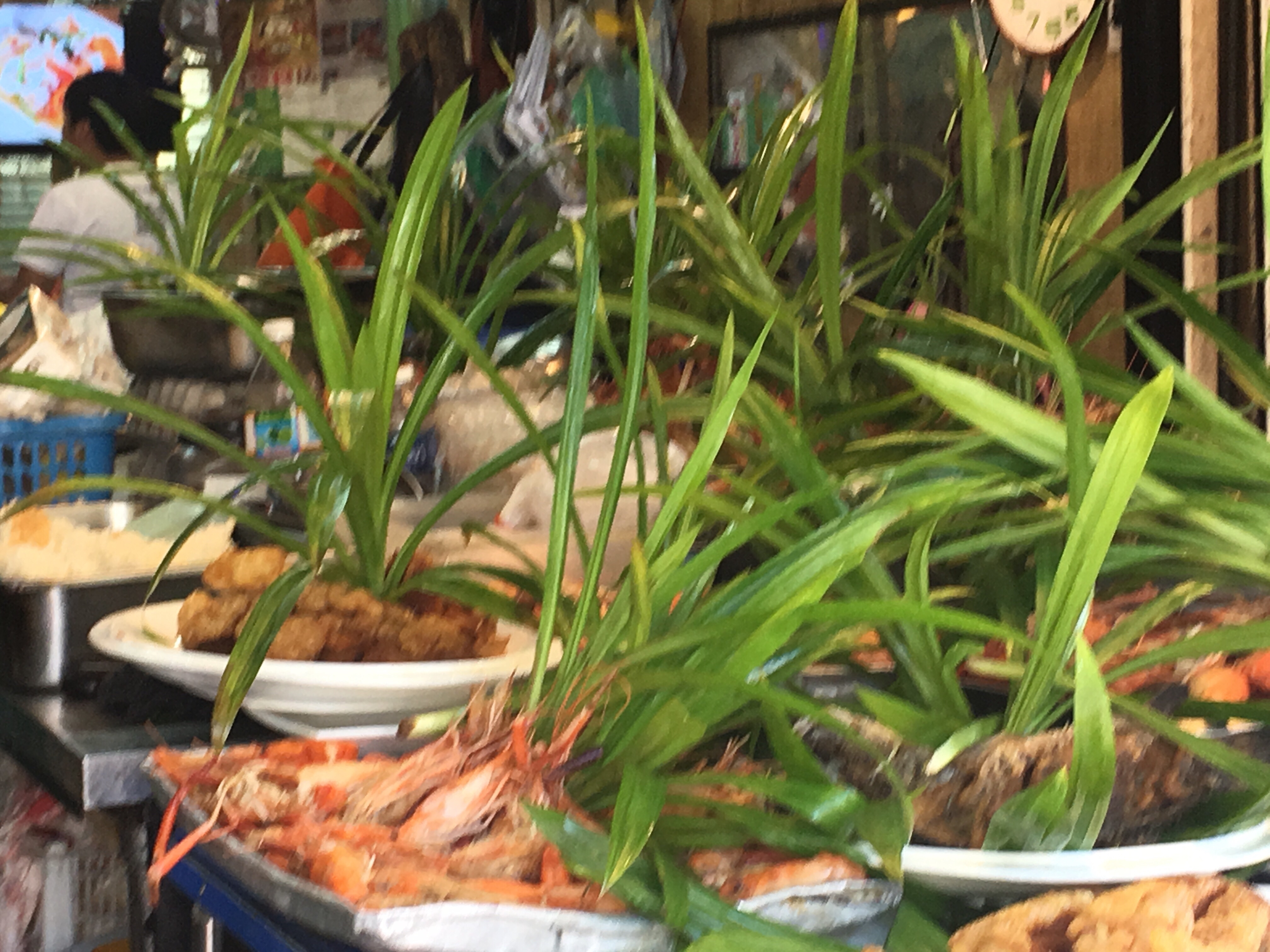
As yet I haven’t heard a single bit of Christmas music or had sight (never mind taste) of a mince pie! In someways the lack of blatant commercialism is quite refreshing. Today we have a day off work which is brilliant- some public holiday but I can’t remember what for. We had guests for the weekend, Omar is the boys’ half uncle (its complicated & I can explain if you have the time) and his girlfriend Halima who are having a December break in Thailand. It was absolutely wonderful to see folks from home & to show someone around our new life. We took them on the tourist trail and packed loads into two days. We did temples and palaces and markets. We even fitted in a Thai foot massage (which we needed after pounding the streets in the heat all day)We ate sumptuously and I thought you all might like to see this fish stall we found in the market. And treated ourselves to delicious coconut ice cream which they served with interesting toppings such as red beans, pumpkin or sweet corn! We had peanuts on ours. All served in a coconut shell so no waste!We break up for our three week Christmas break on Friday 15th so not long now. It’s been a long and very busy term. I have had so much to absorb and learn, so many different cultural mores to negotiate and so many different approaches to get used to. I am ready for a rest. Might nip down to the pool now…

Beautiful or unlucky?

img_1761

One of the ways that we are trying to adapt to our new surroundings is by learning a little of the language. THIS IS NOT EASY. The script isn’t the same and none of the words have any common roots from Latin so unlike other European languages nothing sounds like any words that we are in any way familiar with!!!

Courtesy of the school we had 5 free Thai lessons as group of new staff and now Kevin & I are having a few private lessons from one of my library assistants. This is only to gain a few simple words to use in everyday life such as:

Sawadee  Kaa (Hello)

Kop Kum Kaa (Thank you / Goodbye)

Just to confuse you, that would be what I would say. As a female I end things with ‘Kaa’ (pronounced as if I had an extremely strong Lancashire accent!) Kevin ends phrases his with the male equivalent of ‘Krub’ sometimes written krup or even krab or krap!

Sawadee Krub

Kop Kum Krub

Other essential phrases to learn have been:

Tao arai  – how much?

Lod noy dai mai kaa? – will you give me a discount?

A recent but already much used phrase is:

Mai ben Rai Kaa (No thanks or no worries) which is said to the multitude of drivers who kerb crawl beside us shouting TAXI TAXI just because we are foreigners! Actually when we have said ‘Mai ben rai Kaa/krub’ they have loved it and smiled or clapped. The Thai are genuinely happy if someone makes an effort to learn their language.

The most important phrase of all is:

Huong Nam yuu tai mai? or Where are the toilets? Of course we only understand the response through gestures as we are still working on our directional vocabulary.

So far we have learned basic foods, colours and the numbers. Kevin decided to have a go the other day so tried to order two chicken sticks from a street vendor. Two is ‘song’. What he should have said was ‘Gai song’ but he actually said ‘Gao song’ which means 2 nines!! The woman looked at him a bit funny but gave him chicken anyway…

Thais also don’t have a ‘p’ sound. Some words have a ‘bp’ sound which is quite hard to master. 8 for instance is ‘Bpad’ – I am currently avoiding buying 8 of anything. 

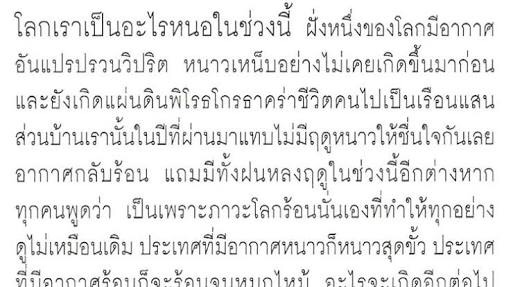
As you can see from the picture, Thai writing has no capital letters and no punctuation whatsoever. To my eye it resembles rows of knitting. The little squiggles above the main letter represents a tone. There are five tones in the Thai

  1. flat (which is how we speak English on the whole)
  2. Rising
  3. Falling
  4. Up then down
  5. Down then up

These tones make the spoken language sound very musical and anyone with a musical ear can learn Thai much easier than those of us who haven’t got a clue!

The tones are actually very important as the sounds change the meaning of the word. I recently learned how to say the word for beautiful which is ‘Suay’, however I didn’t realise that you needed to rise at the end of the word ‘Suaaay’ because if you say ‘suay’ in a flat voice then it means ‘unfortunate or bad luck’ One has to be really careful when complimenting the hairdresser on the cut you have just had!!! Really careful…

There is an anecdote here of a former teacher who had been learning Thai and who wanted to do some research with one of the senior monks. So in Thai he said that he would like to do an interview which should take only about 30 minutes. The junior monks burst out laughing and explained that he had used the wrong tone. Instead of ‘interview’ he had actually said ‘I would like to fondle you gently and it will only take about 30 minutes’!!! You can see the pitfalls. Needless to say the request for the interview was not granted.

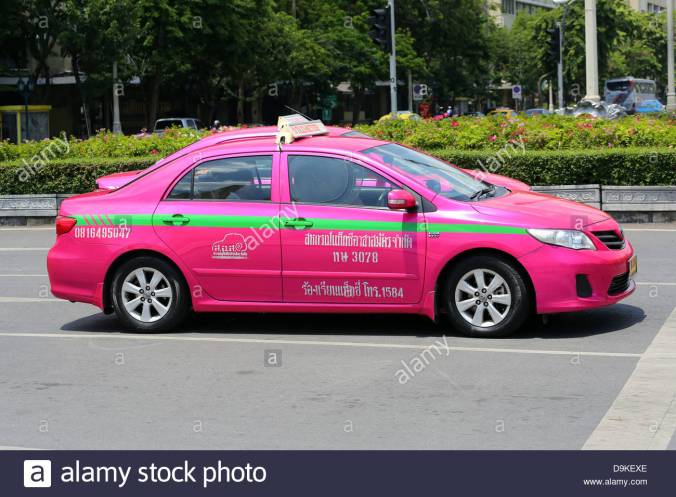
It is so gratifying when you can use a word or phrase just learned. Yesterday I was able to say to a taxi driver ‘Yud trong nee’ and he actually stopped right there. It worked!!! Yay.

pink-thai-taxi-cab-bangkok-thailand-D9KEXE

The only trouble now is remembering it all…


Loy Krathong 

Loy Krathong is a Thai festival held on the full moon of the 12th lunar month (according to the Thai calendar) 

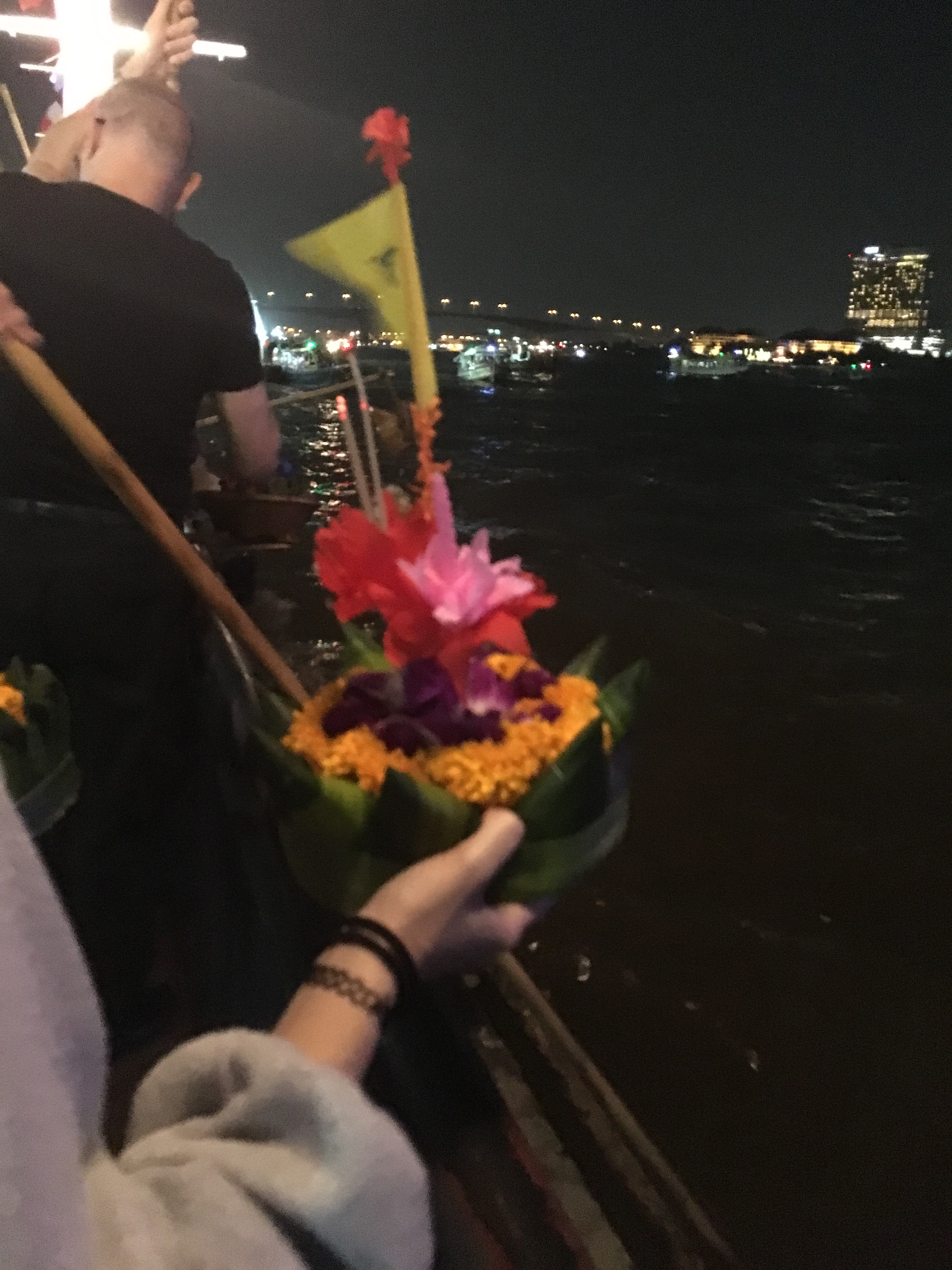
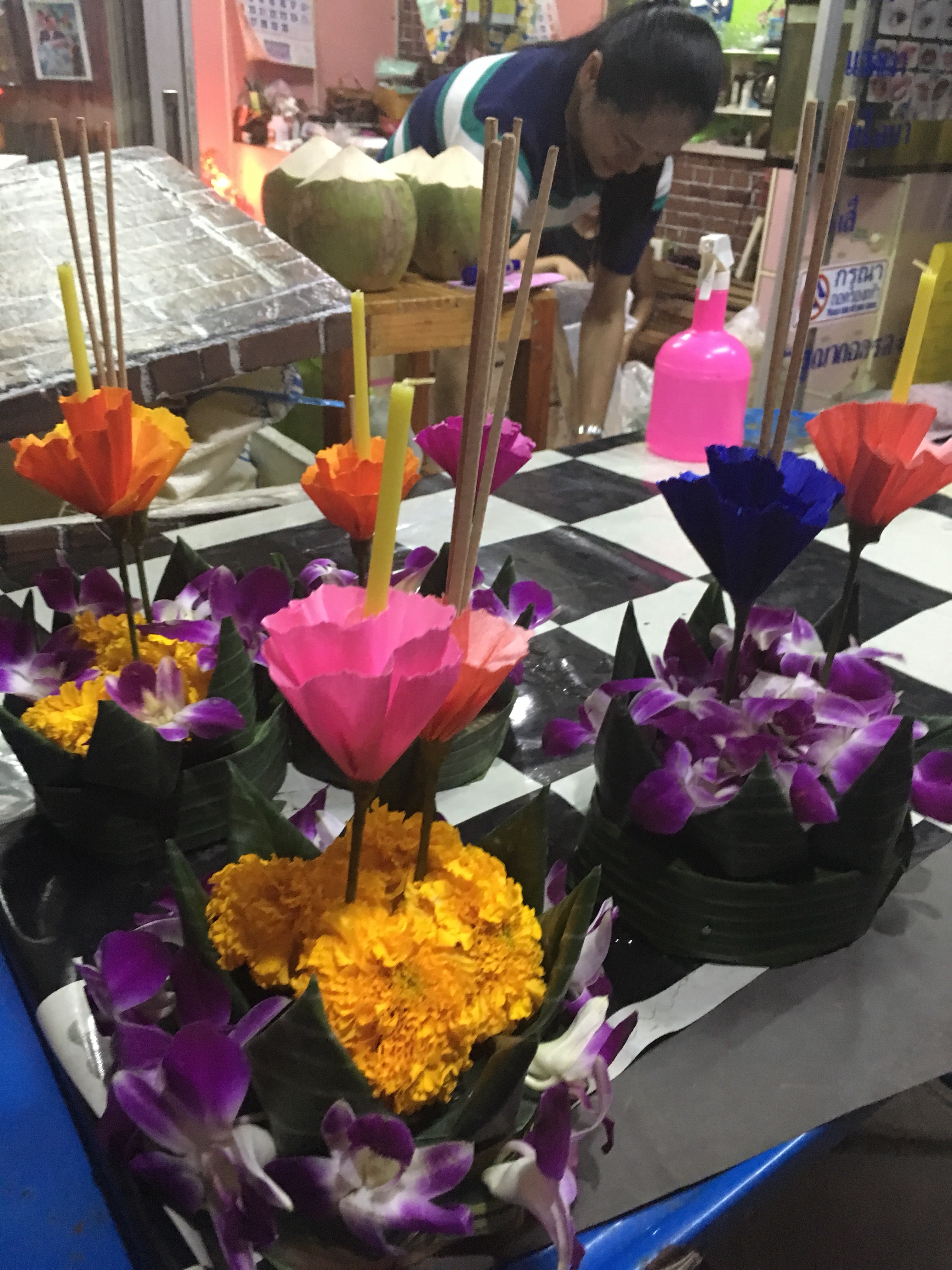
Loy means ‘to float’ and Krathong is the name of a basket. Thais make the Krathong (nowadays from biodegradable materials thankfully) and fill them with flowers. Sometimes small amounts of money are inside as an offering to the river spirits. The basket is topped by a candle and incense sticks which symbolise the Buddha.


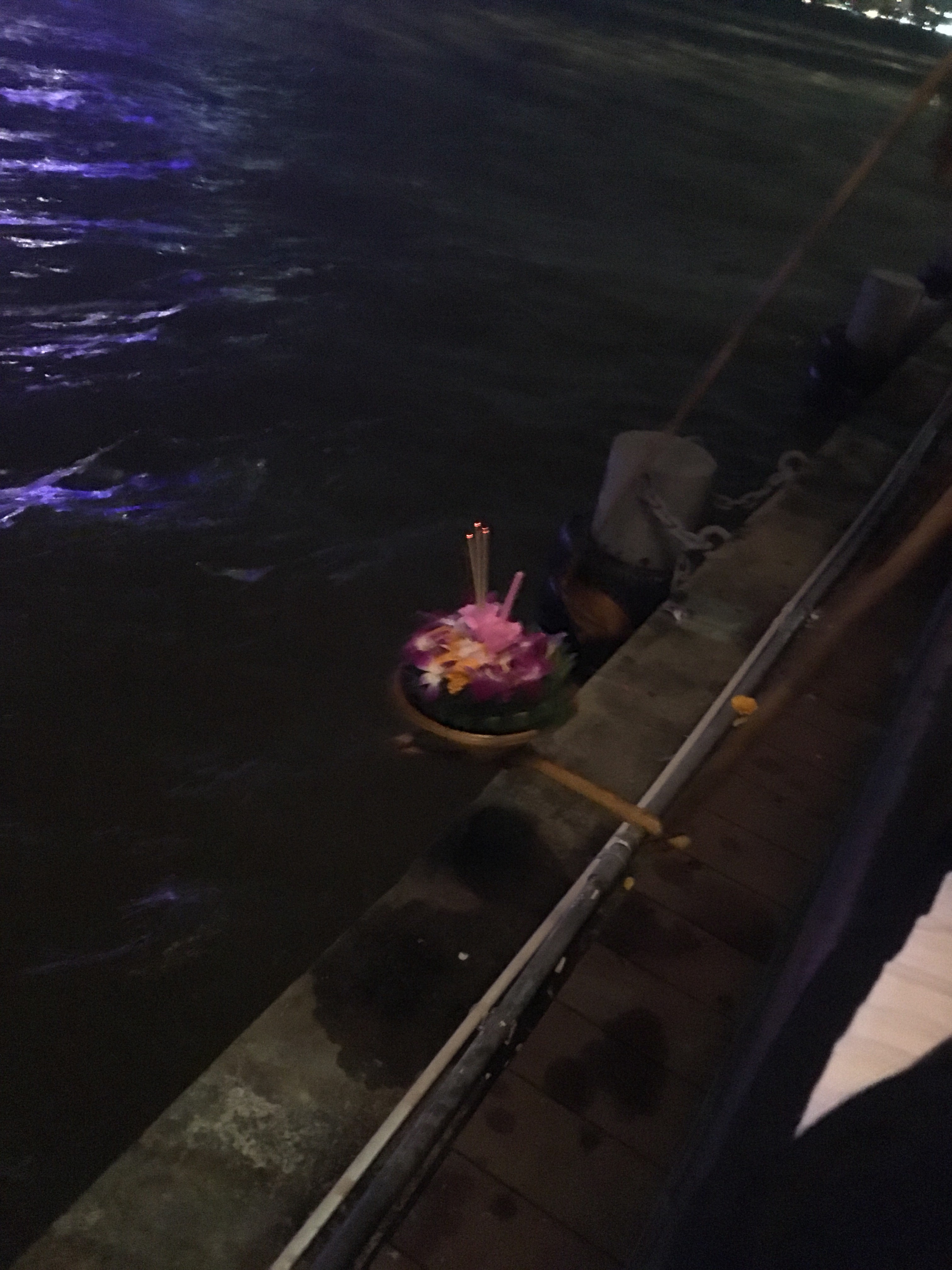
The Krathong are launched after sunset usually on rivers but also lakes and canals. We went down to Asiatique which is a local market on the riverside. It was obviously a popular place as hundreds were there. Because the tide was low the Krathong at our spot were lowered into the river on poles. Unfortunately it was a bit windy so lots of them capsized almost immediately! The candles didn’t stay lit either. 


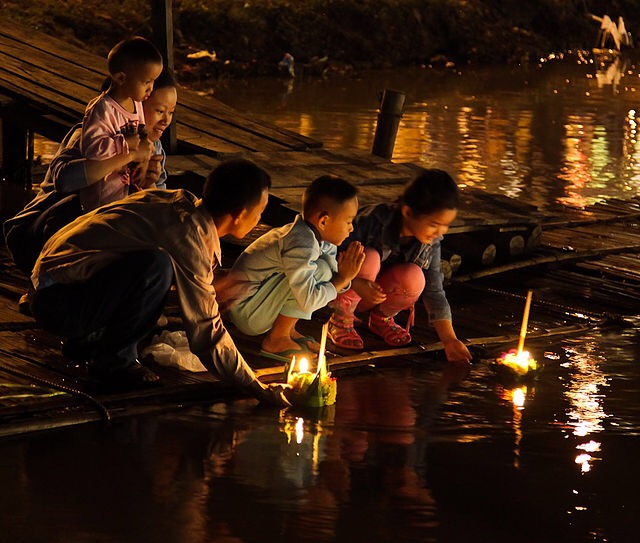
You can imagine what a spectacle it must be on a calm evening. 


This is a professional photo. 

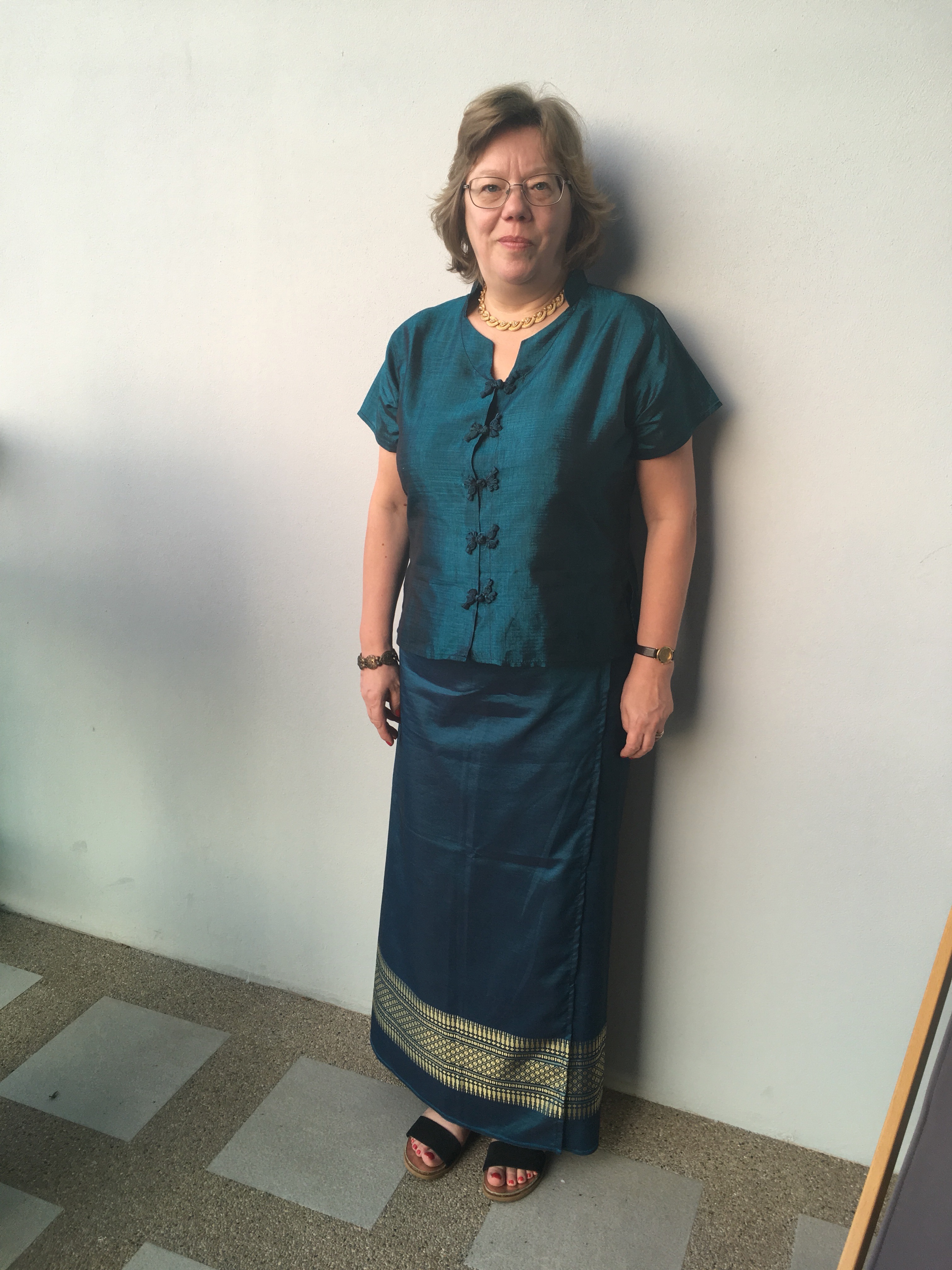
At school we celebrated the day by wearing Thai clothes (although technically mine was Burmese as I bought it on holiday last week in Bagan) 


It looked lovely but I have to say that a long tight skirt is fairly restrictive and I could only take smallish steps. As it was a normal day’s work I found it quite frustrating not to be able to bowl along at my normal speed!!! And don’t even mention stairs!!! I couldn’t carry books AND hold my skirts up. 

The team looked good though 


From left to right it’s: Muay, Ping Ping, Mameaw, Marivic, me, Duck, Charlotte and Tub. 

Myanmar moments

Myanmar has a wealth of natural resources, gold, gas, rubies and teak. As Burma it was the second richest country in the whole of South East Asia with the best educated population. Now it is the poorest and least developed following the departure of the British in 1948 and subsequent internal political and ethic strife culminating in the military coup of 1962 which lead to the country being closed to the rest of the world.

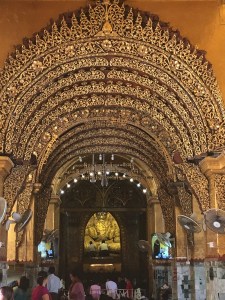
Myanmar is one of the largest producers of teak. This resource was plundered under the British (we apologised) and more recently by the Chinese. Teak was used extensively in building the royal palaces. Unfortunately fire has ravaged most of the wooden structures and only a couple of buildings remain. These were given over to monasteries following the deposing of the king but now are open to tourists. In their heyday both the inside and the outside were completely covered with gold but now only some of the interior pillars remain as an indication of the former glory. The intricate carvings on the roof and doors are testament to the craftsmanship of the country.

One palace is a functioning monastery and in what was formerly the King’s room a monastic school takes place. A far cry from the UK or Thailand.

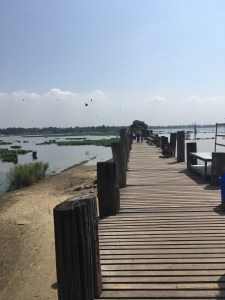
Teak is a very slow-growing but hard wearing wood and was used to build a bridge crossing the Amarpura Lake in Mandalay. With over 1000 pillars this is the world’s longest teak bridge.

img_1673-1

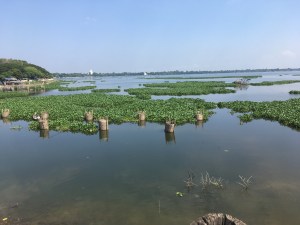
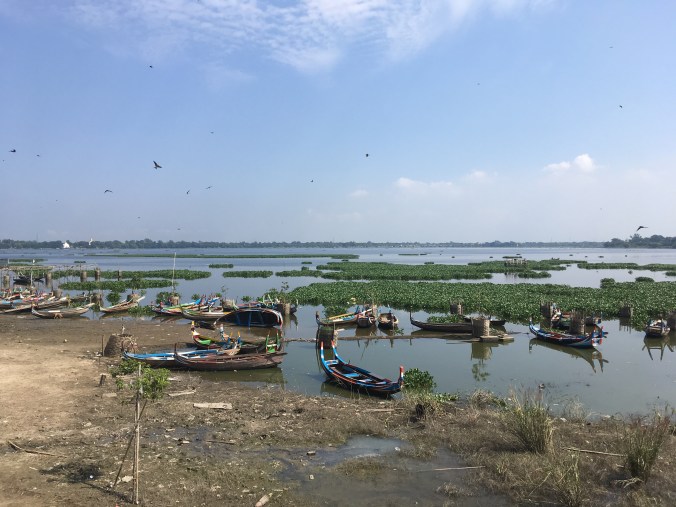
it was a hot walk across but the views it afforded were stunning, This was the rural south east Asia of our imaginings. This is how people have lived and worked for thousands of years.

img_1683img_1672-1

P1030248j

and just to prove that we WERE there…

img_1679I was fascinated to hear that we were going to be taken to visit the world’s largest book as defined by the Guinness Book of Records. The librarian in me was intrigued… This turned out to be Buddhist scriptures, the tipitaka, inscribed on slabs with writing on each side.

img_1709-1

There are 730 of these tablets at the Kuthodaw Pagoda and each one has its own little house. The site is vast. If these ‘pages’ were placed on top of each other then it would be as high as a 26 storey skyscraper!!! This has got to be the ‘anti-kindle’!

img_1710-1

When the tablets were unveiled in 1868 each line of writing had been filled with gold ink and the slabs were decorated with rubies and diamonds. unfortunately in the mid 1880s the British looted the temple and stripped the stones of their precious gems (shame) but the British soldiers left the texts behind as they did not understand the cultural value (fortunately). The writing has been re-filled with black ink so the opulent glory may have disappeared but the message remains.

img_1688-2

As you can probably gather gold is extremely prevalent in this country. 85% of the gold mined here is used for religious purposes. This picture here shows a statue which you can add a gold leaf to (for a sum), well only men can! Adding some gold earns you merit so many people do it and the statue is getting fatter and fatter..

img_1689

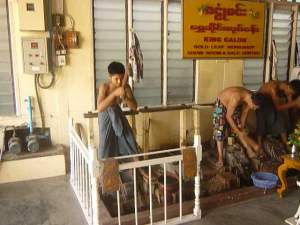
The gold is beaten by hand in a long and laborious process which involves several stages, one of which has 5 hours of constant beating!

P1030261

The women put the gold between sheets of bamboo for each stage. You can see here that one woman has yellow on her cheeks. This was quite common and is a form of sun block. It is a tree root which they grind to a powder then mix with water to form a paste.

P1030262

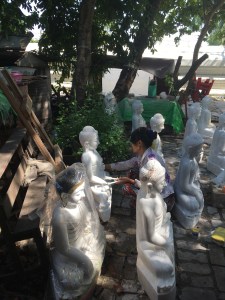
Women only were allowed the job of polishing the Buddha statues by hand as their touch is more delicate to get a smooth finish

img_1687-1

Puppets are popular in South East Asia as a way of re-telling the traditional tales. The craftsmanship which goes into the making of them was remarkable and the puppeteers were highly skilled. I don’t think that I have seen a marionette style show since I watched Andy Pandy but we enjoyed the performance whilst we ate our evening meal.

No blog about Myanmar would be complete without a brief comment on the Rohingya issue. We spoke to several people about this and overwhelmingly the perception on the ground is that it is radical Islamic fundamentalists who have been stirring up trouble. The Rohingya are Bengali immigrants from Bangladesh who began arriving in the neighbouring Rakhine state 1940s but many of them are in the country  illegally. The local Rakhines have accepted and tolerated them but recently tensions have grown. There have been incidences of Buddhist women being raped, temples and shrines being burned and other provocations by the Rohinynga towards the local indigenous population. It is widely believed that ISIS are attempting to establishing a 4th Caliphate in the region which is why the army have reacted to forcefully in expelling the troublemakers but also the illegal immigrants. This side of the story is perhaps not so well portrayed in the media. We were perfectly safe as the area where the troubles are is remote (which is why ISIS wanted to use it I suspect) and foreigners would not be allowed to travel anywhere near there, which is a shame as I understand that there is a beautiful beach there.

This country was an unexpected delight. A hidden gem and I would encourage as many people as possible to visit before it gets over run with commercialism. It is a cultural, historical and architectural delight. And if anyone is interested in visiting I have the details of a tour guide who can arrange everything at a reasonable price. We had a car and an English speaking tour guide for each day. The tour guide cost $40 per day and was worth every penny. We were looked after, taken to every location and learned so much from our conversations. If you are not in a large group then that is the best way to see the country.

To finish here are some of our memories…

Myanmar’s monastic life


Siddhartha Gautama gained enlightenment whilst sitting under a bodhi tree in northern India 2500 years ago. This tree in Yangon is allegedly a cutting from that original tree. I am slightly skeptical although there are 2000 year old trees in the garden of getheseme so maybe…

Buddha gained enlightenment the Middle Way and chose to return to his body in order to teach that path to others. He formed sangha or groups of disciples and this monastic class continues to be revered today. Monks are not allowed to have any possessions except their robes, sandals, a cup and an alms bowl.

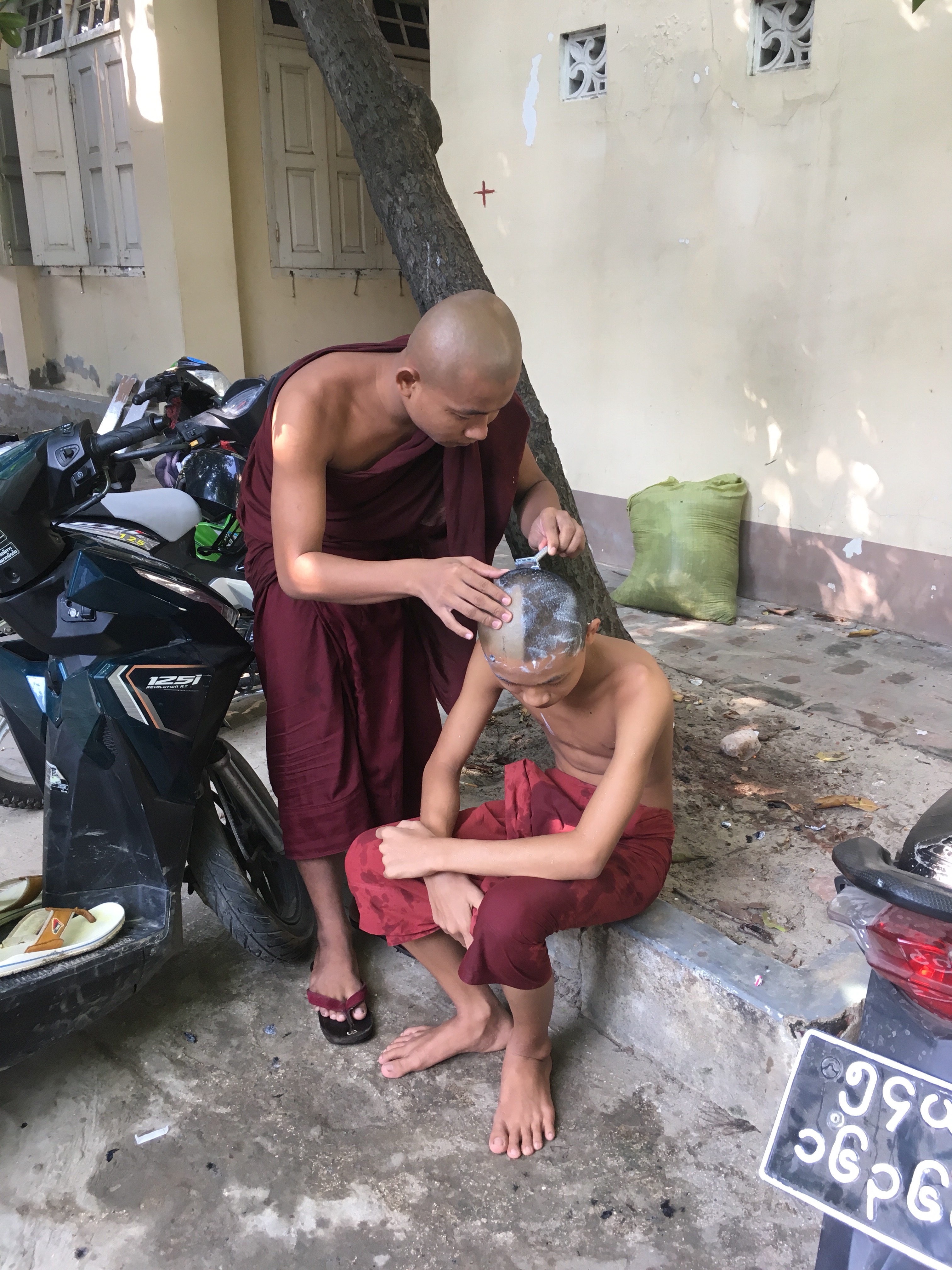
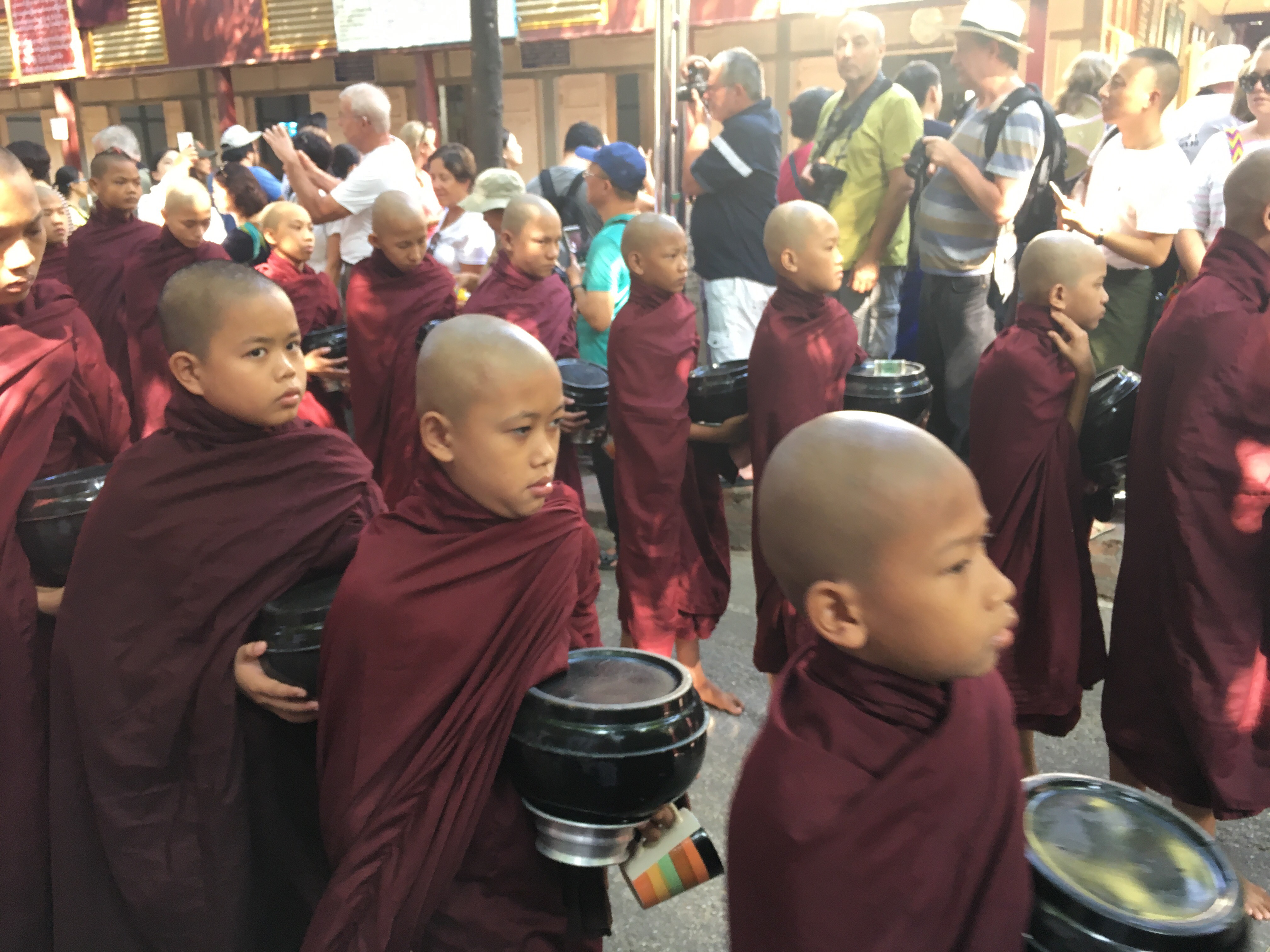
Anyone can join a monastery and be a monk at any time in their lives and in fact it is expected that you will do this at least once for 11 days. Young boys may stay for a couple of years learning Buddha’s teaching before returning to civilian life and jobs. These are called temporary monks.


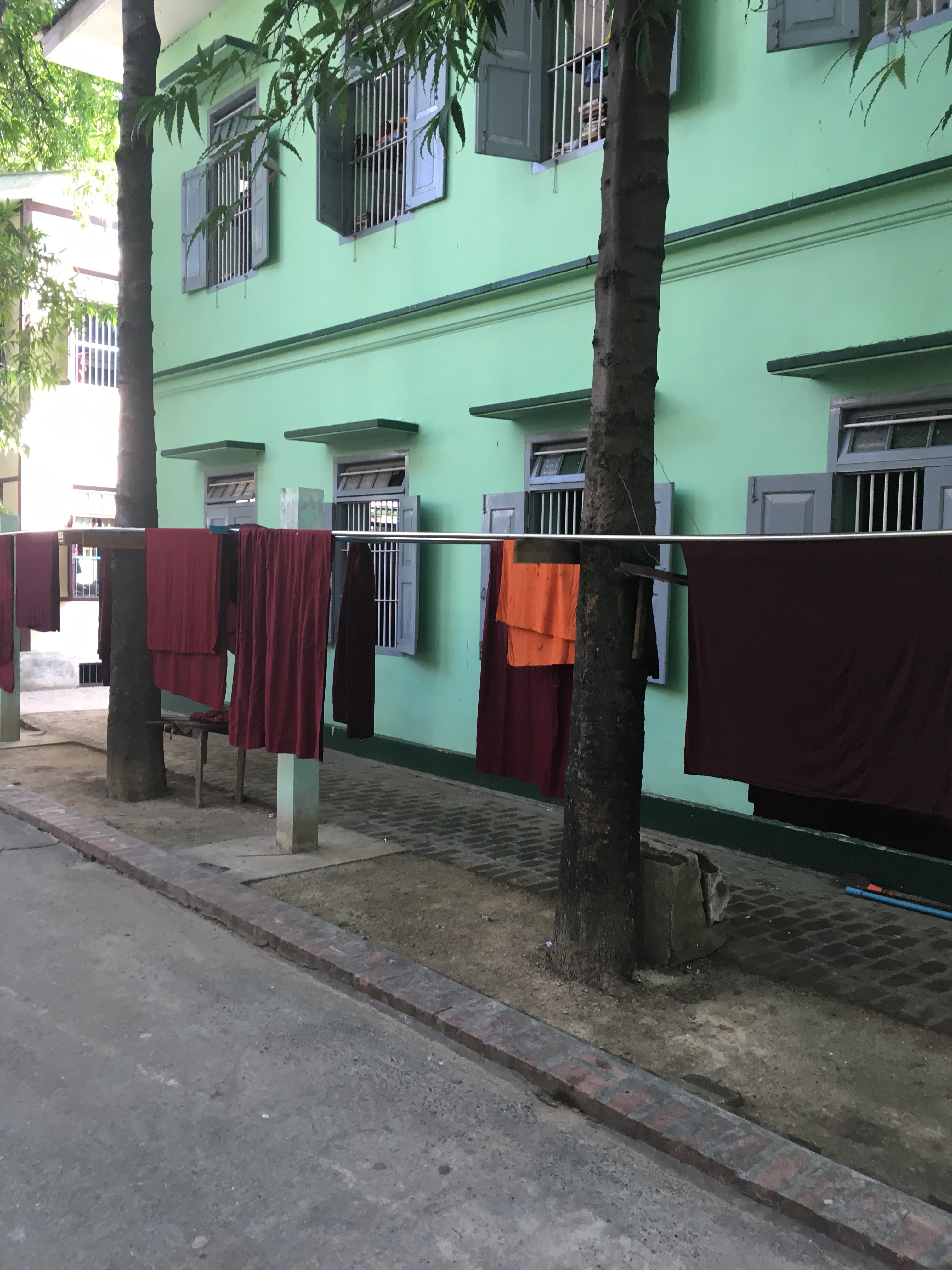
Monks are responsible for washing their own robes – seen here in the monastery in Mandaly hanging out to dry but monks are not allowed to cook anything and rely on donations for their food.

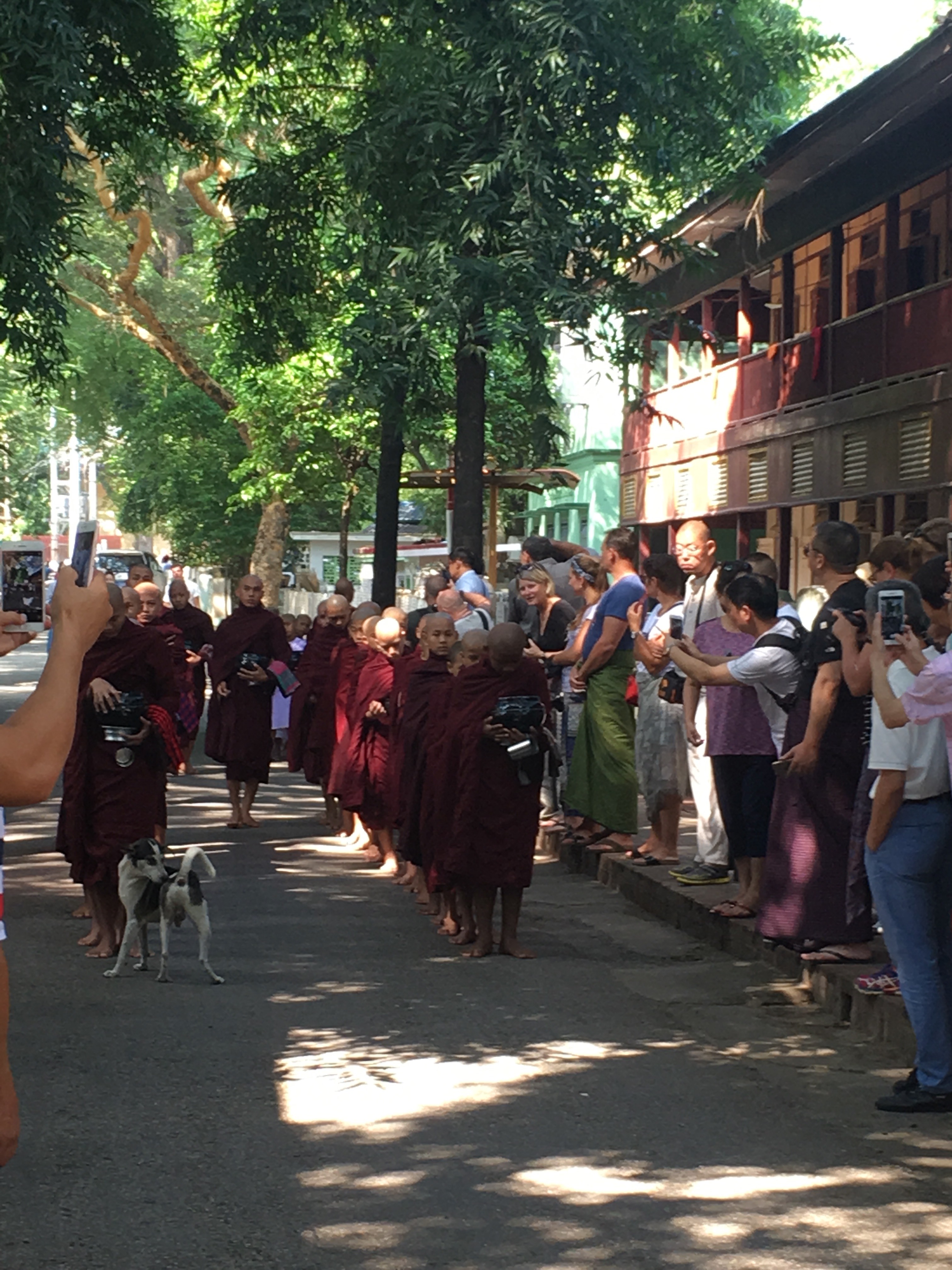
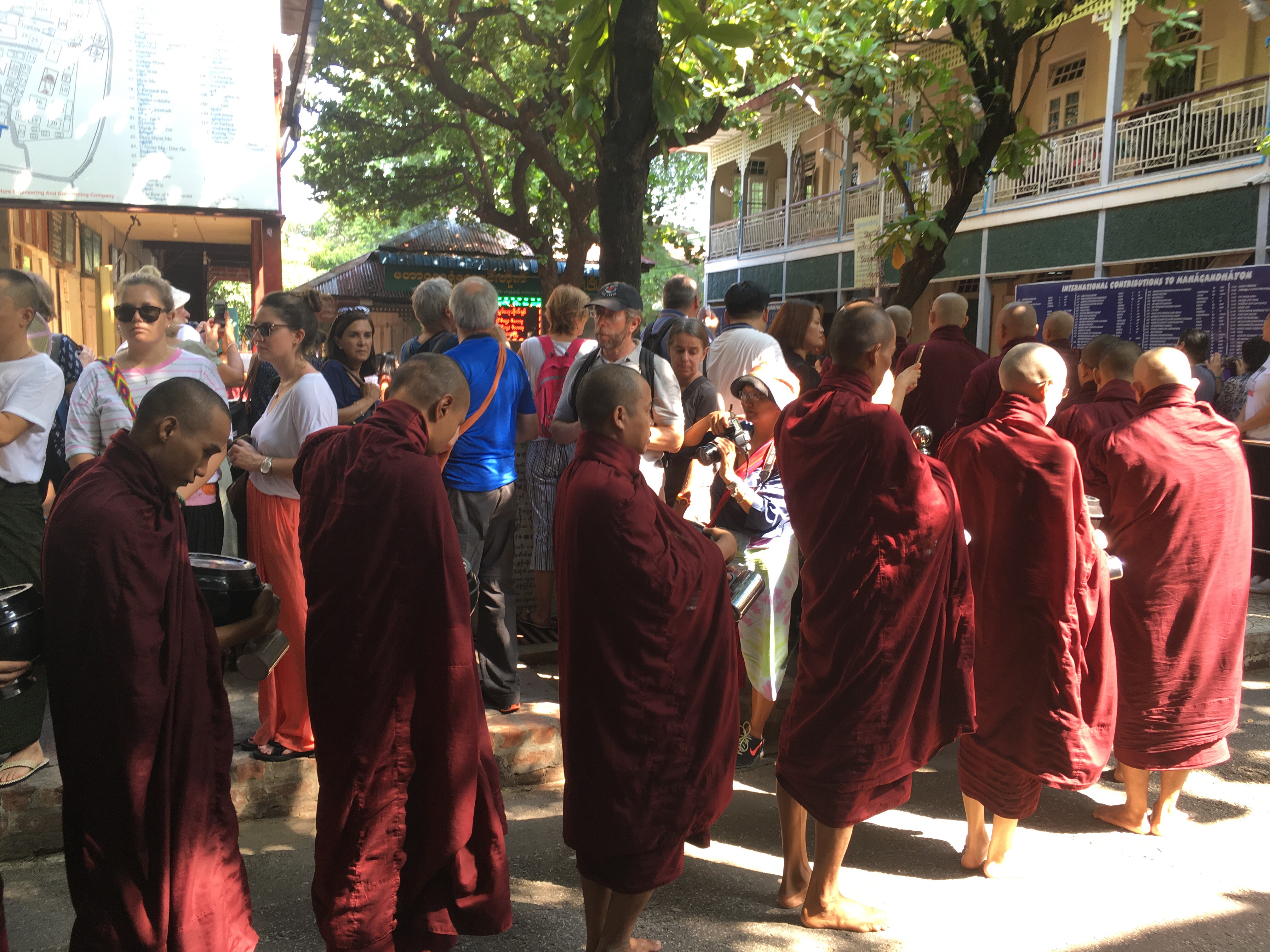
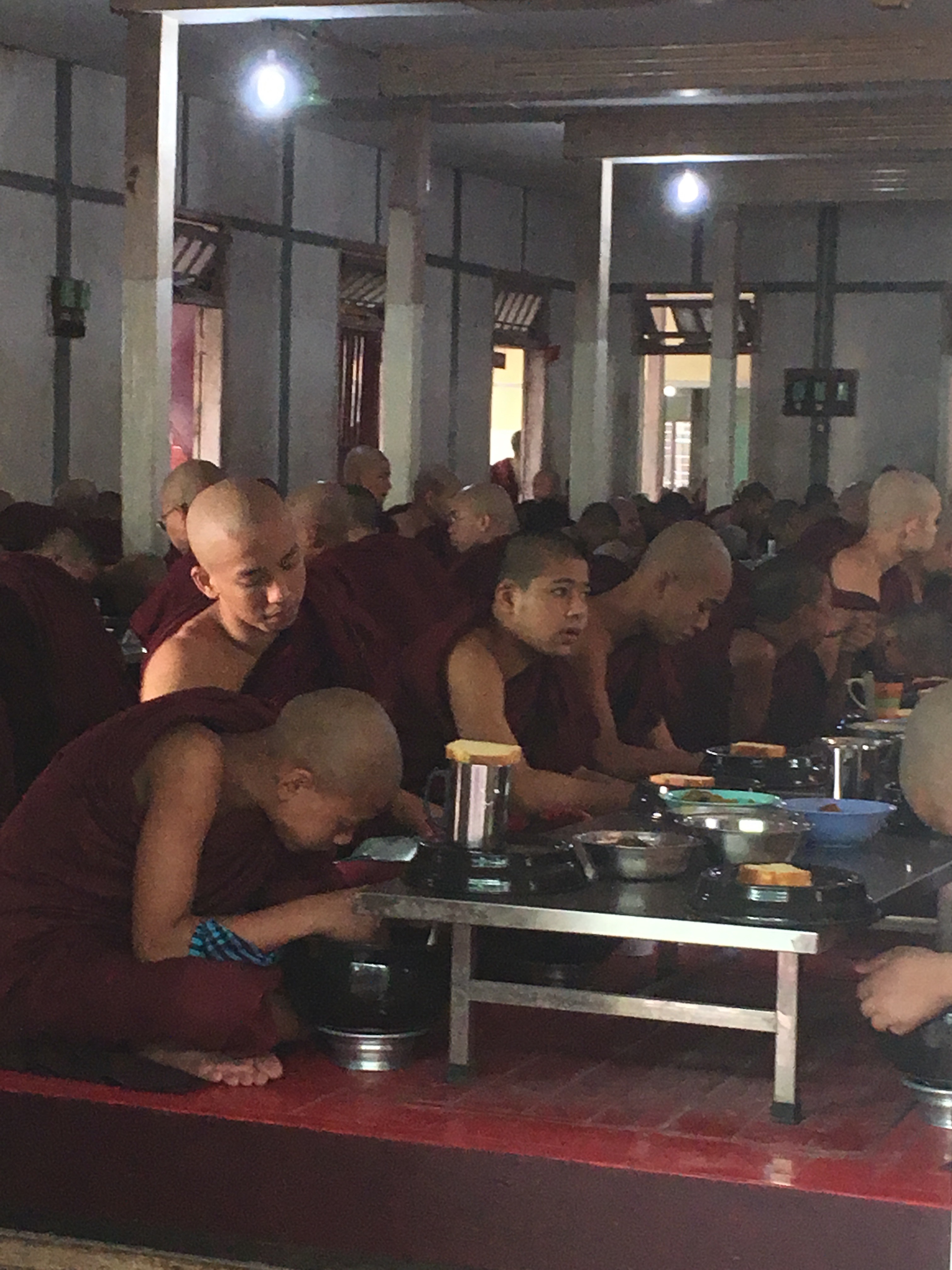
Monks rise at 5am and pray/chant together for an hour before having a simple breakfast. Then they take their alms bowls put into the community. Giving to a monk or to the monastery is one of the deeds which can gain you the highest merit. The monks return for lunch at 10.30 am. They are then not allowed to eat anything at all after mid day.


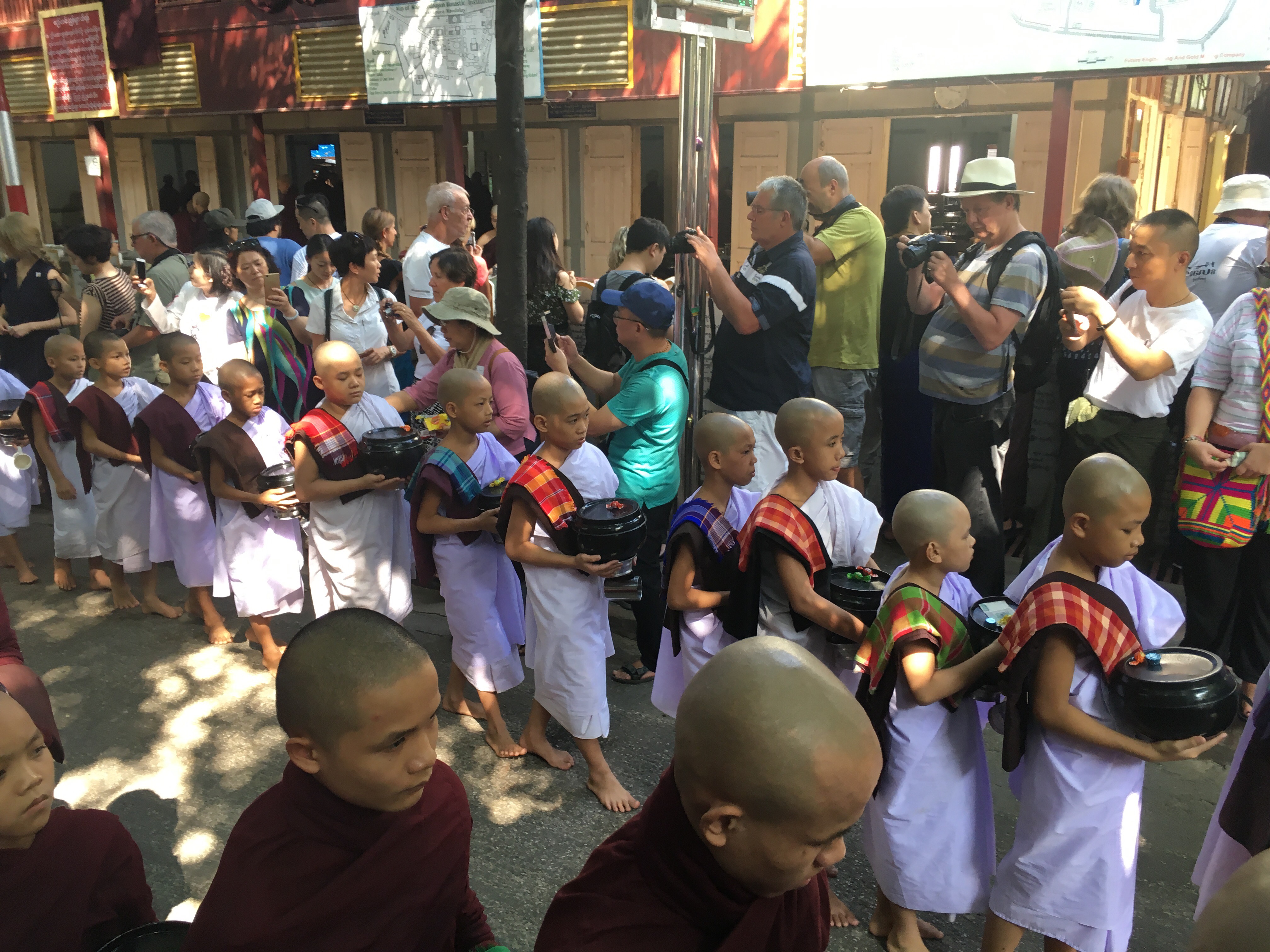
In this monastery there are 1000 monks and they line up to process into lunch. Tourists are allowed to watch (as long as we stayed on the kerb and didn’t touch them)


The donors of the meal are publicised and they are permitted into the compound.

Novices wear white robes and seemed very young to me!


After lunch the monks study Buddhist scriptures which are in the ancient Pali language (a bit like Latin to us) monks have to sit exams to qualify to become a permanent monk.


In Myanmar society there is equality between the genders except In religion. Buddhist philosophy says that only men can gain enlightenment and enlightenment only comes to Buddhist monks. So as a woman you can be a good Buddhist and hope that in the next life you will be born a Buddhist man! The women accept this world view as it does not stop them from achieving in other spheres of life.

Stupa’fied

To be perfectly honest Myanmar hasn’t been top of my ‘must visit’ bucket list and if truth be told I hadn’t even heard of Bagan. My impressions of this country to date have been shaped by the media and so I viewed it as a fairly oppressive, closed country and I made very few links to the jewel that was Burma from history and literature. In fact when Kevin said that we were to visit Manderley my first reaction was ‘du Maurier’s Rebecca’! I hadn’t realised that Manderley was in Myanmar!!!!

How blissfully wrong I was though. This is a green and pleasant land (certainly at this time of year) and although it was hot it was noticeably a few degrees cooler than Bangkok which made a welcome respite for us.

We discovered in Myanmar a country that has culture, character and charm by the bucketloads. The people we met we overwhelmingly friendly and delighted to see us. This country is unspoiled to the extent that this is the only place I have visited which doesn’t have a Macdonalds or a Starbucks. Global corporatism has not yet invaded (which makes a refreshing change) having said that, KFC has recently opened one branch in Yangon so I suspect that this may change. You need to visit now before it becomes too developed.

In Yangon we saw splendid colonial-style buildings and many run down sections of the city which if restored could rival the French Quarter in New Orleans for style. We saw the beautifully reconstructed Royal barge which is used as a restaurant & theatre but which gives a glimpse into the splendour that was once the prerogative of the Burmese royalty.


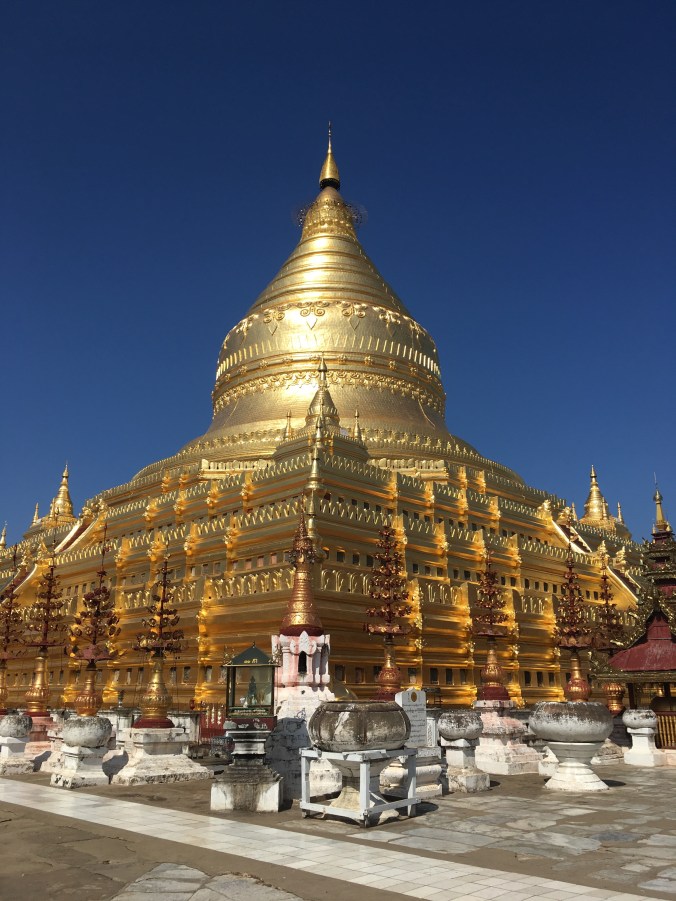
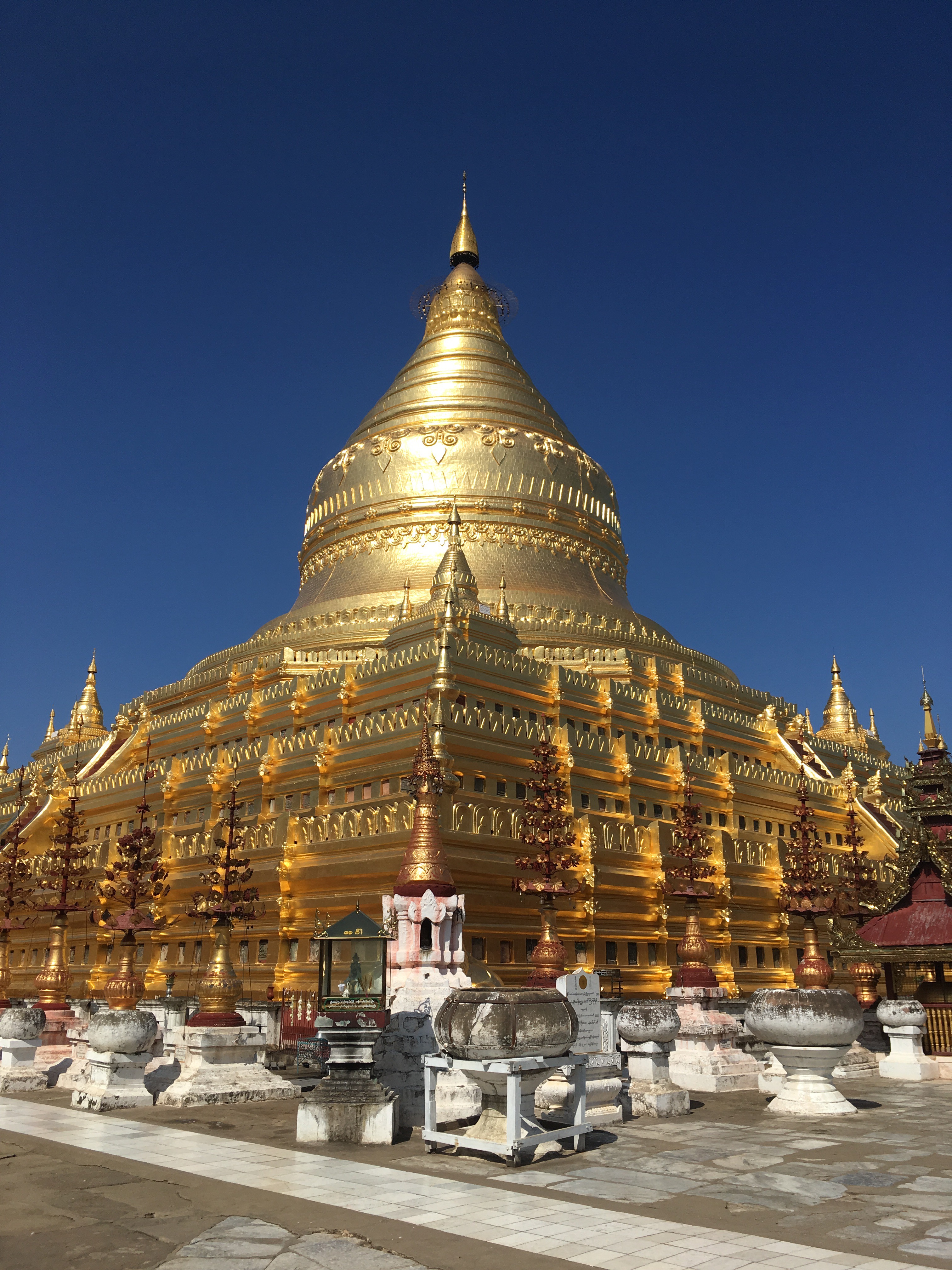
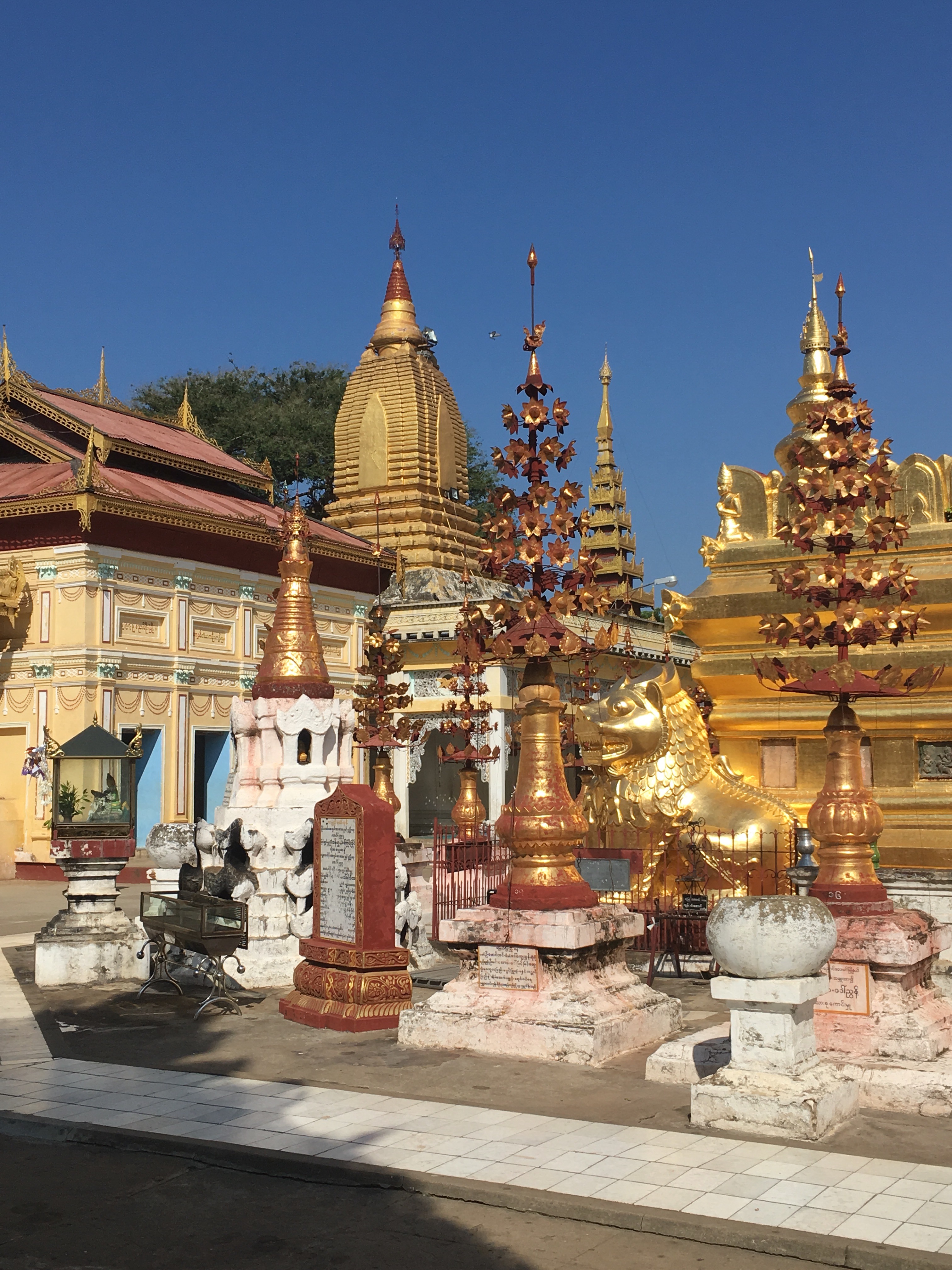
After that we commenced our ‘pagoda pilgrimage’. We started at Shwe Dagon, the biggest and most splendid of all the temples. In Buddhism there are two types of temple, the stupa which is a solid dome- like structure sometimes containing a relic and in this case the Shwe Dogon purportedly has 8 hairs from the Buddha. A stupa is surrounded by 8 points, one for each day of the week (Wednesday is divided into two as the observant amongst you will notice that there arent 8 days in a week). Each day is represented by an animal.  You make offerings and say prayers on the corner for the day of your birth. We visited on a Tuesday so the Tuesday corner was busy with all the people born on a Tuesday. I was born on a Sunday which is a mythical bird. Kevin was a Friday which is (sniggers) a guinea pig. But that is better than Thursday, which is a rat (sorry Inigo)

Monday is a tiger (that’s you Oliver)

Tuesday is a lion

Wednesday morning is a tusked elephant

Wednesday evening is a tuskless elephant

Thursday is rat

Friday is guinea pig

Saturday is dragon

Sunday is a mythical bird
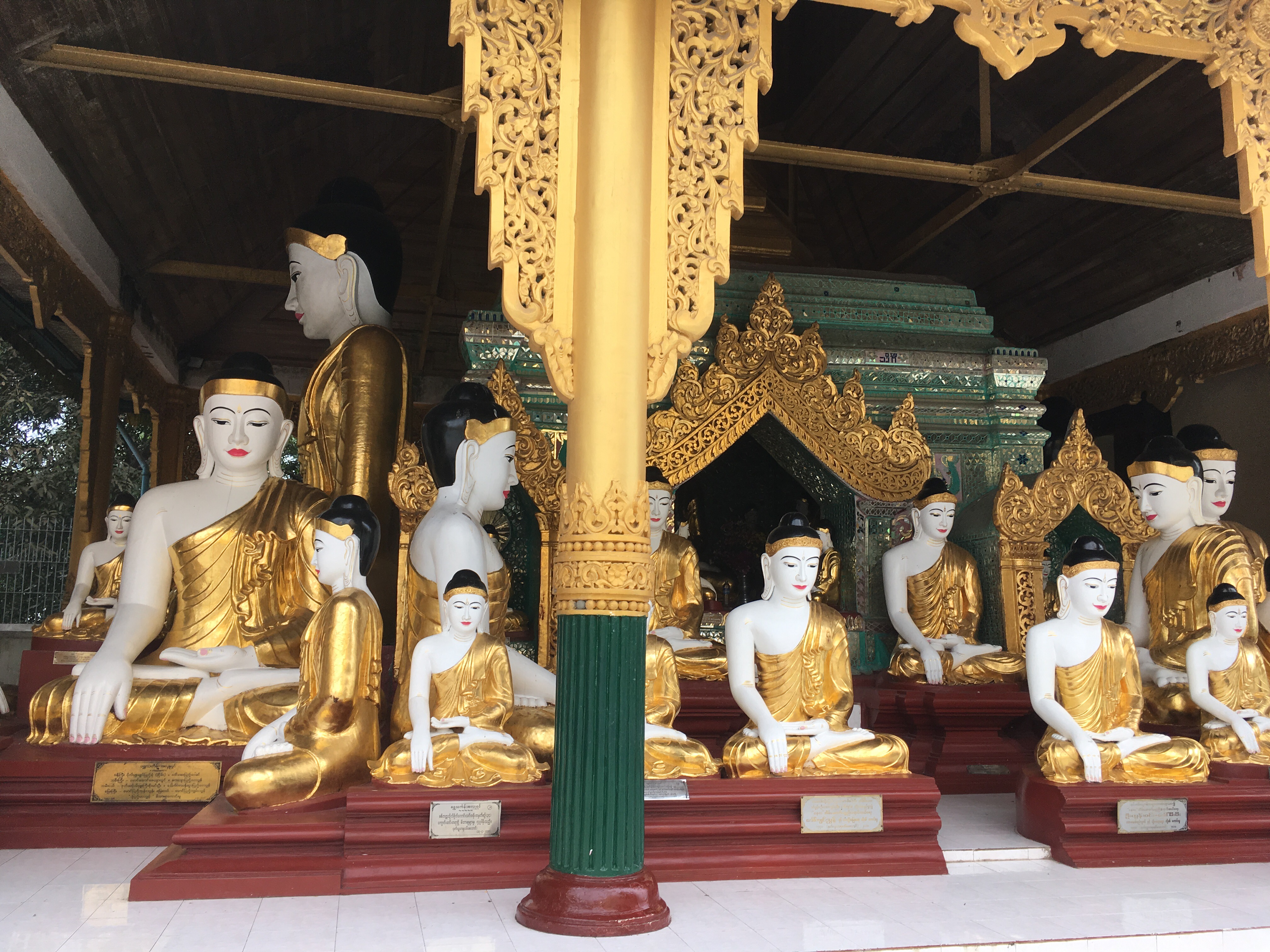
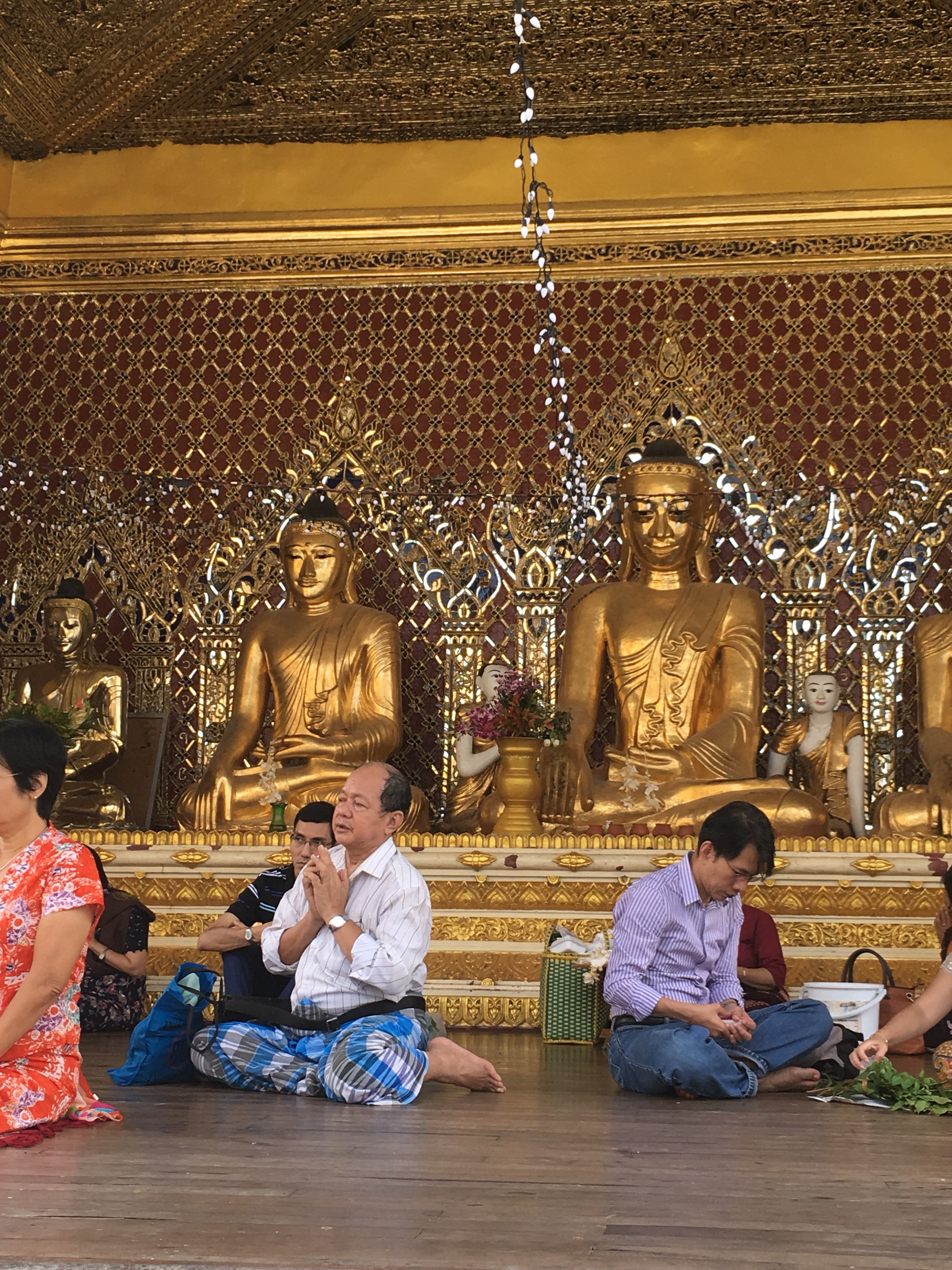
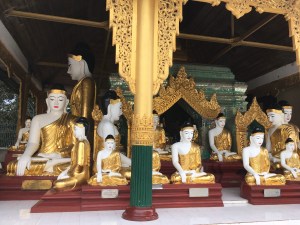
Buddhists gain ‘merit’ by doing good deeds but the highest merit is gained by making donations of either food, flowers or money to the statues of the Buddha in a temple. Merit means that you can influence your next reincarnation to be a favourable one. Wealthy families will donate a whole statue or a mediation pavilion. While we were there the marble floors were being replaced courtesy of a donor. These pictures show the multiple donated statues in different styles. Members of that family may place offerings there or by the main statues.
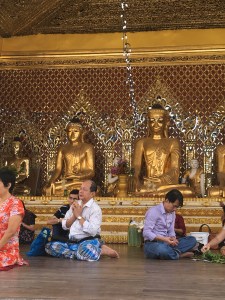
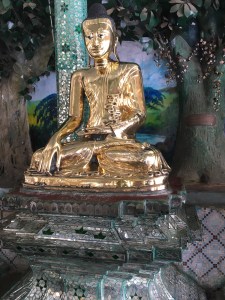
Wherever you turn there is gold, glittering jewels or polished jade. Apparently mant jewels encrust the weather vane at the very top and the thinking is that if the structure is damaged by an earthquake then there is sufficient funding there to build a replacement temple (forward planning)

We learned a great deal from our guide who had formerly been on the temple board (a bit like a PCC from what I could gather). I did ask & the food offerings remain before the statue for at least half an hour before being taken away & eaten by the monks or distributed to the poor which is good because I’m not sure that any god needs this much gold!
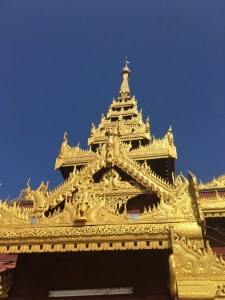

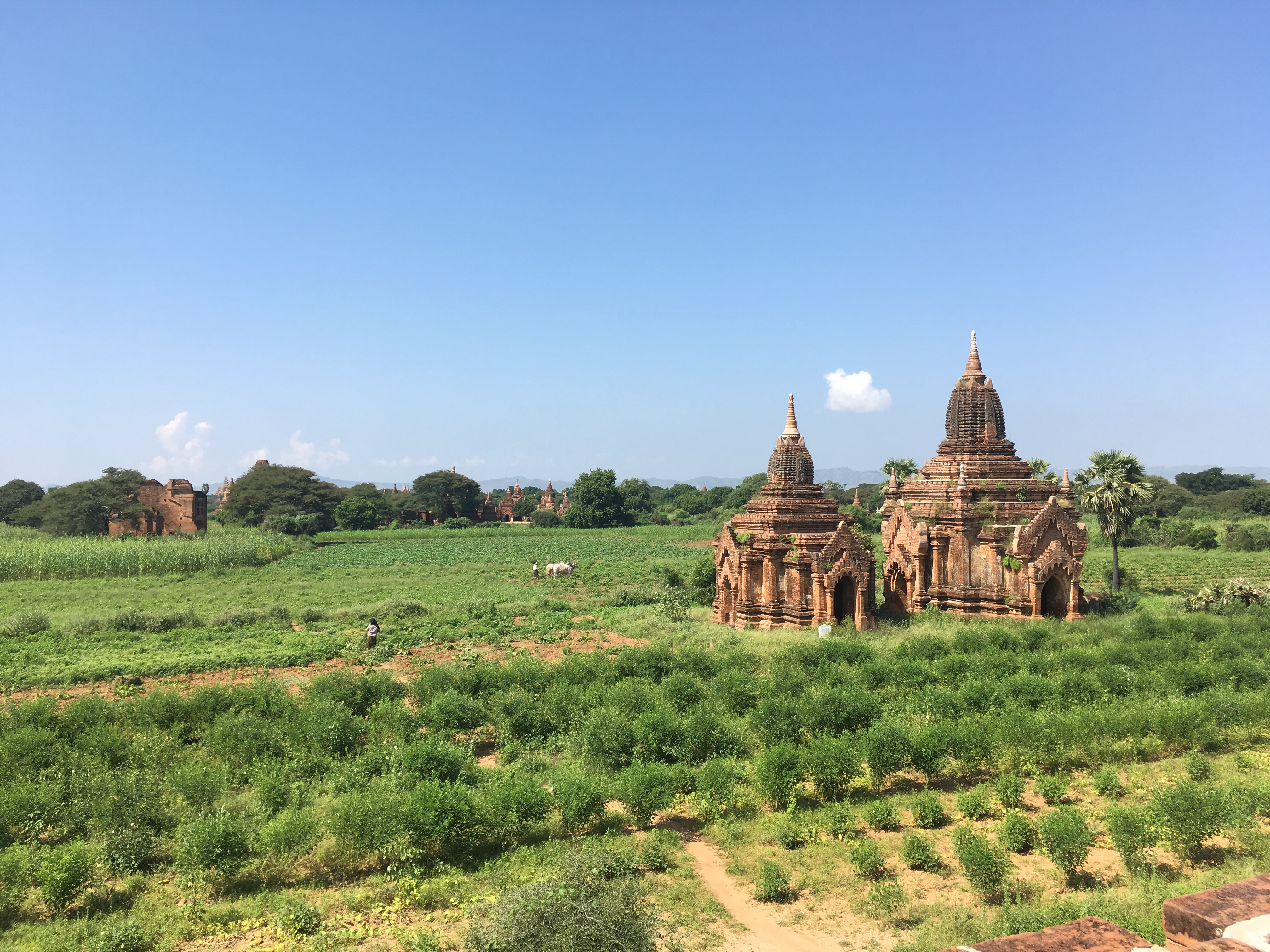
The lost city of Bagan is quite a wonder. This area which spreads over 26 square miles has over 2000 temples, pagodas and shrines. It was green and lush and if you imagine that most important houses would have built a brick stupa outside but the house itself made of wood or bamboo perished long ago- you can get a sense of the lost city from these  fields of remains
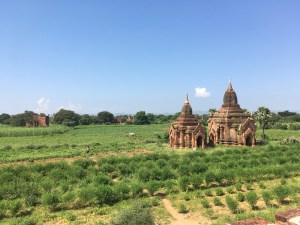


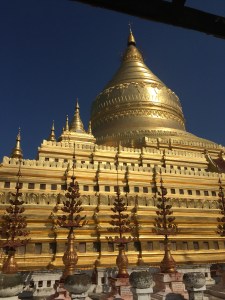
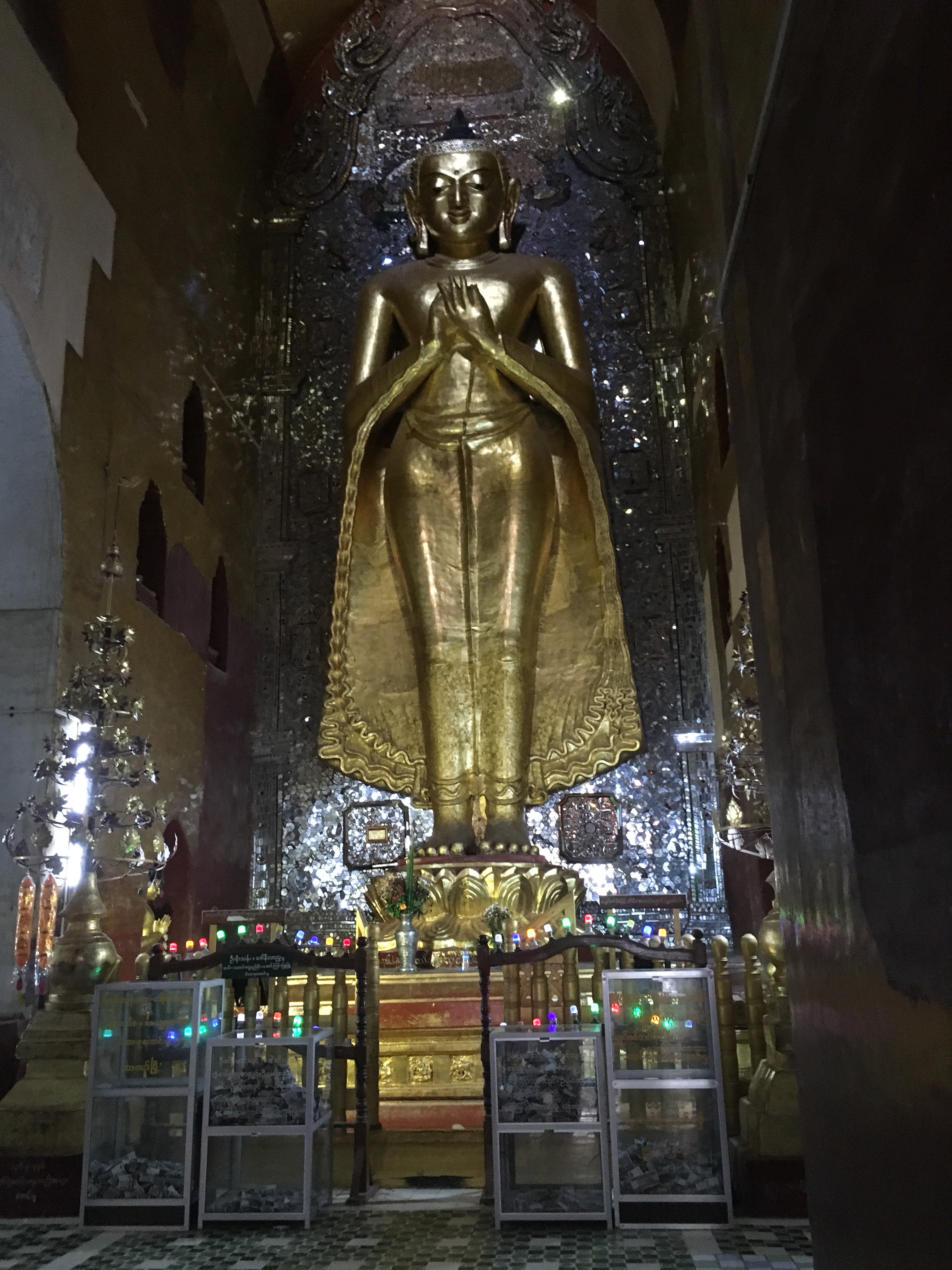
The second main Buddhist religious structure is the pagoda which from the outside may resemble a ziggurat or a more squat style of structure than a stupa. All Buddhist buildings point upwards to direct your thoughts heavenwards whilst praying or meditating. The main difference between the structures is that you can walk inside a pagoda. The interior is a cross shape with Buddha statues placed facing north, south, east and west. The statue facing East is usually the biggest as this is the direction the Buddha was facing when he gained enlightenment.


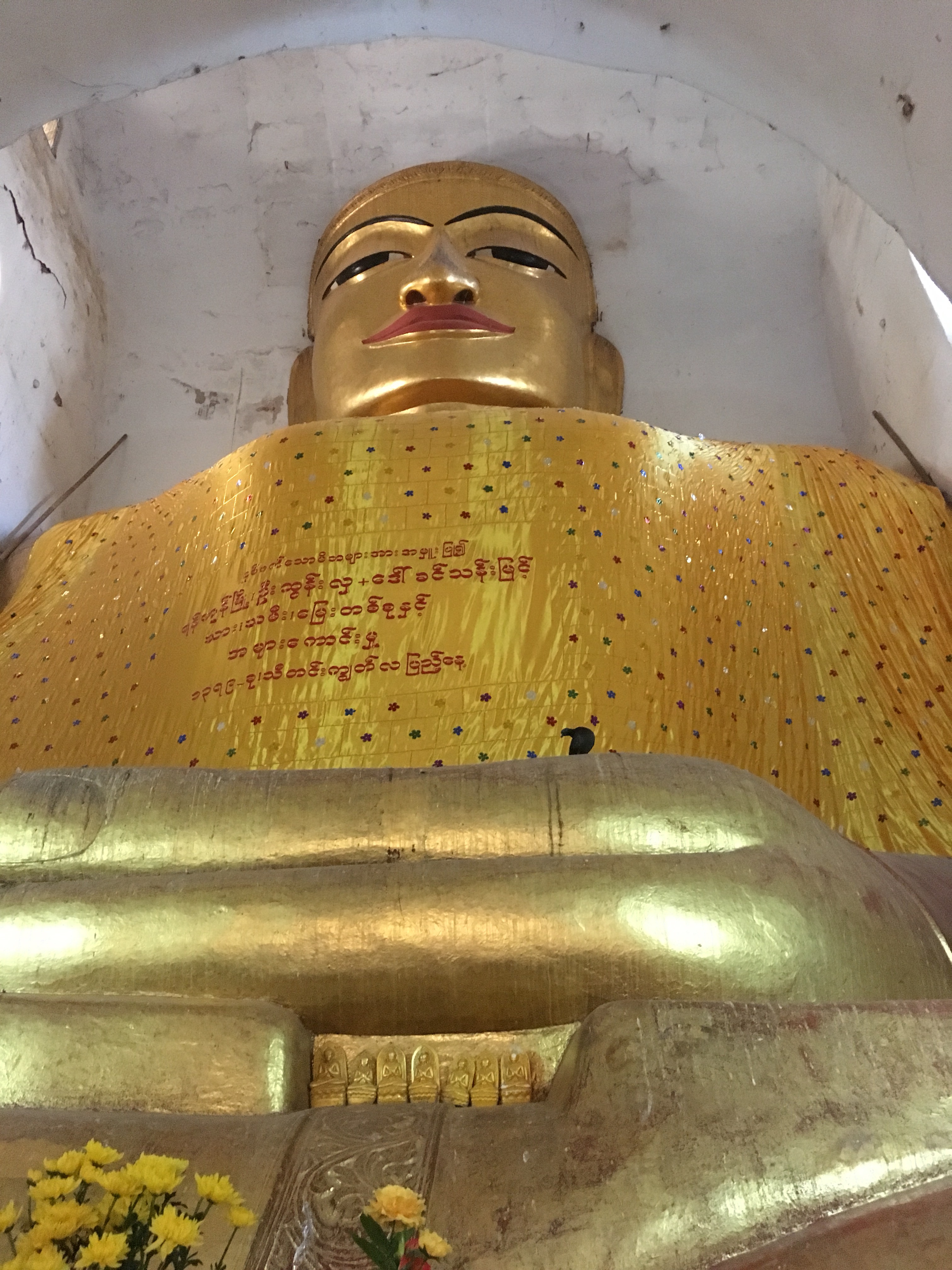
Some statues are sitting, some reclining and some standing. Some were absolutely ginormous!

There are subtle differences between the styles from the various periods which largely escaped me!!! The one pictured above has Indian influences and therefore looks more feminine.


This was a surprising gem and I would recommend a visit- a word of warning though, you have to take your shoes off at every temple. Buddhists consider the head to be sacred but the feet to be dirty. No shoes are worn inside houses and no shoes or socks in temples which was quite a challenge to our poor delicate western soles!!!!


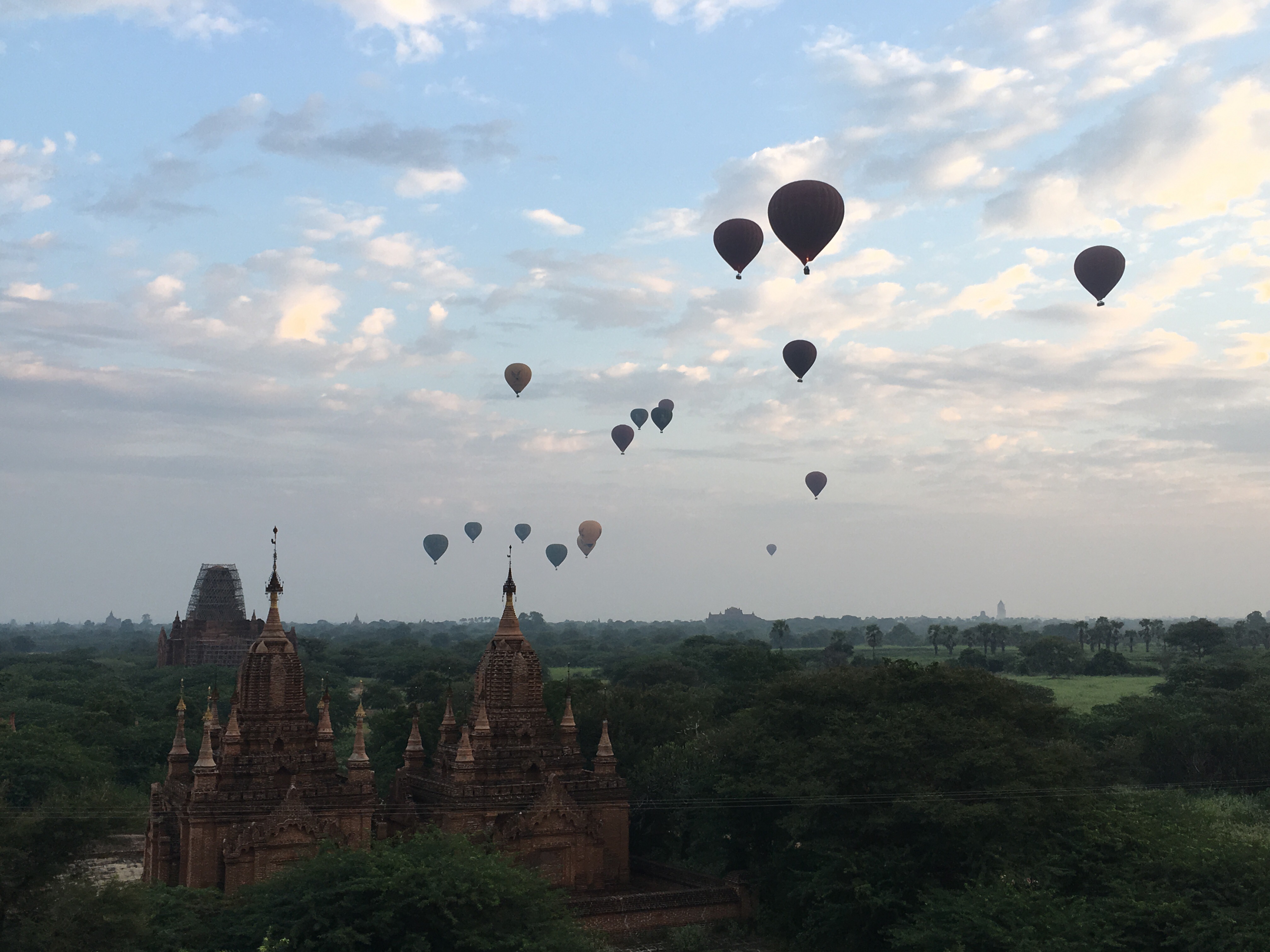
As we left at dawn we saw the hot air balloons raw which must be quite a trip!

More anon…
Myanmar’s markets

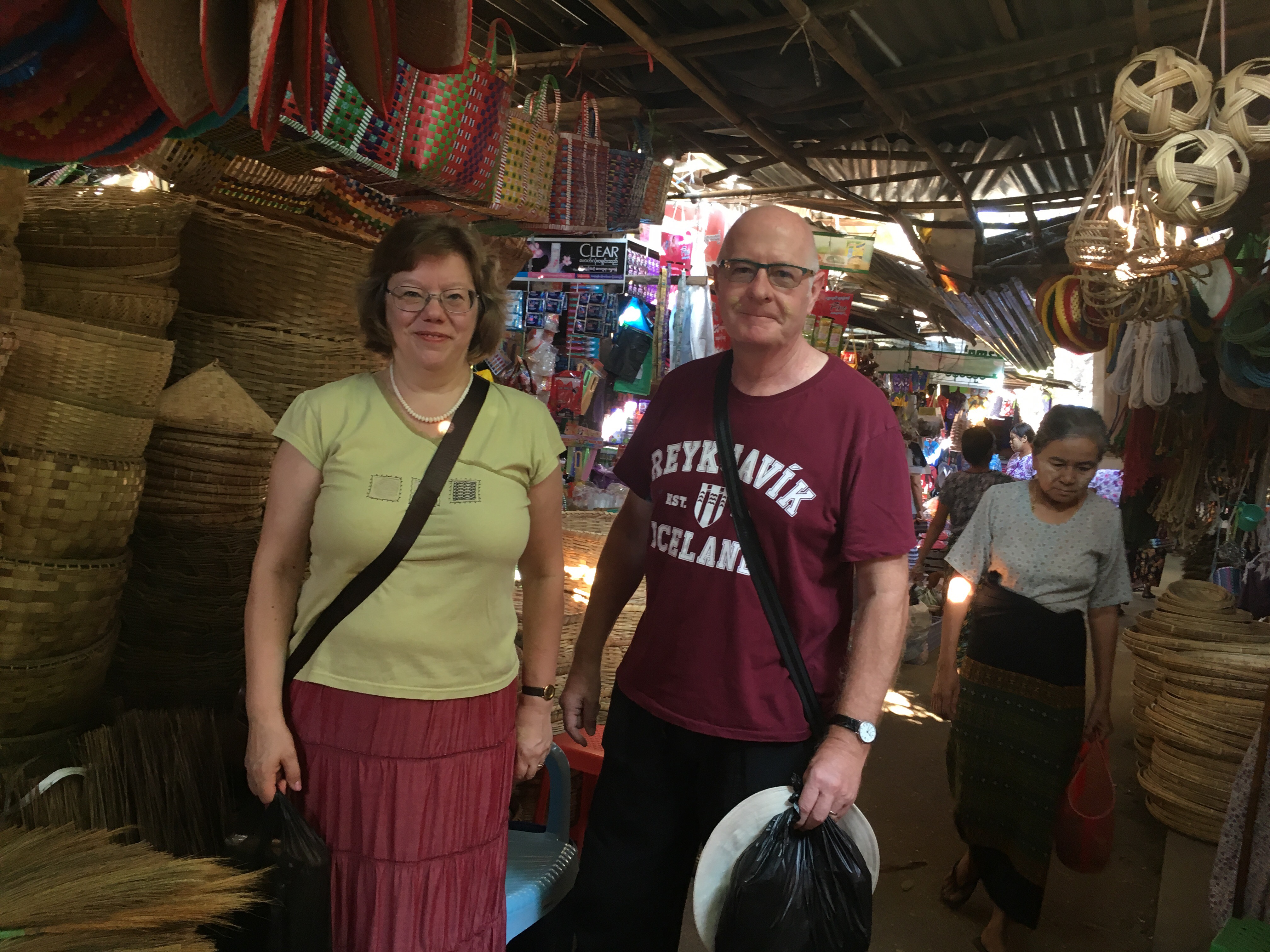
We love experiencing markets abroad. The ones in Myanmar have been so vibrant, bustling and full of wonderful items to buy. Everything is piled higgeldy piggeldy into a tiny space. The photos don’t really capture the atmosphere but we had a fascinating time.

I loved it that in Bagon the market sellers sit elevated along with their wares


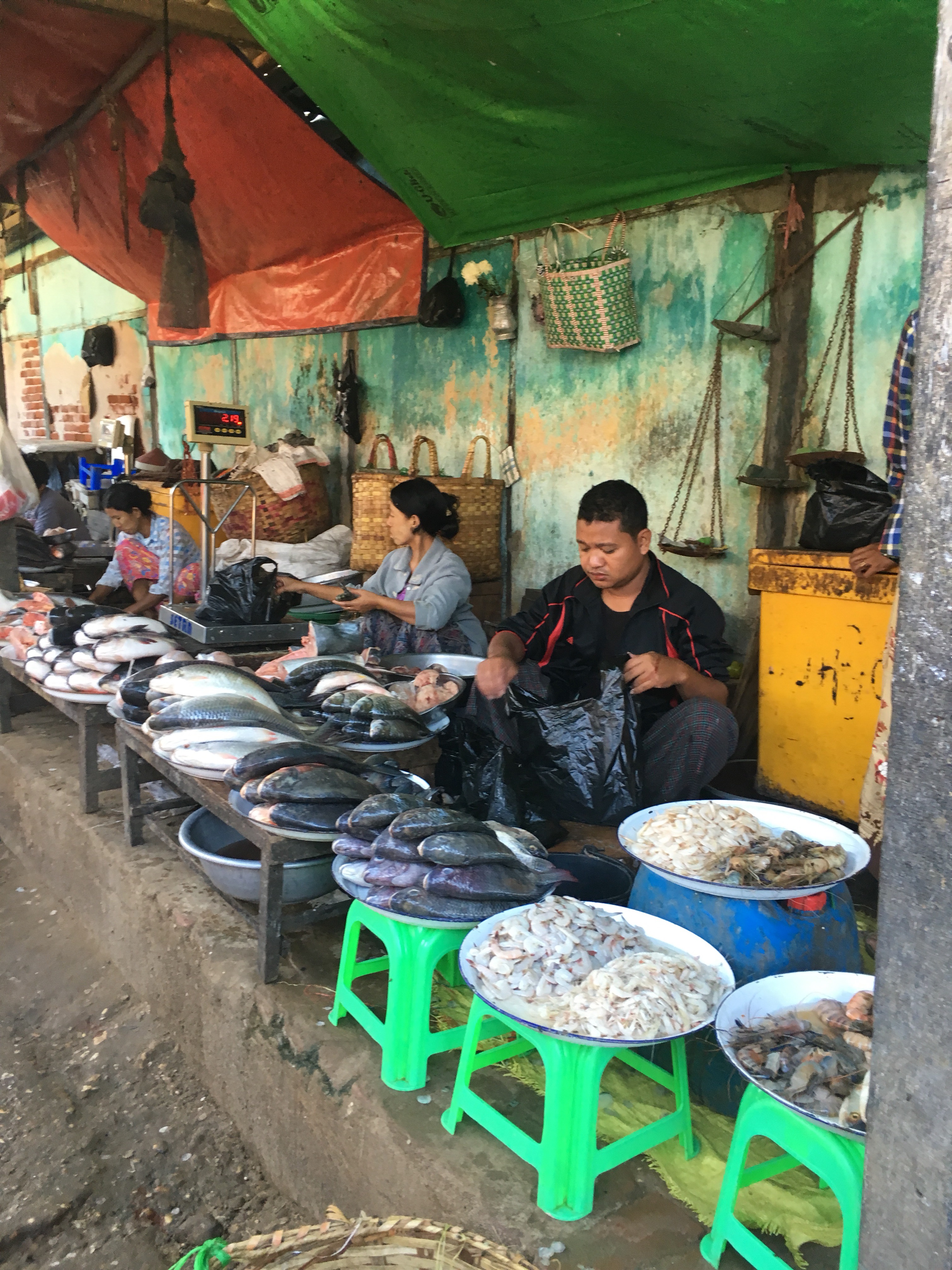
In Bagan few locals have a fridge so the market is very busy early in the morning as people shop for their fresh produce to cook that day. Here is the fish section


We were quite the attraction being one of very few foreigners here so we had quite a few beggars following us. They are nothing if not persistent.  You can’t help feeling sorry for them though.


Of all the markets I have visited this was the one which is probably the most like markets were centuries ago (apart from the plastic chairs)

The other interesting shopping experience were the brilliantly coloured puppets which were strung

from trees all along the roadside to attract you into the stall.


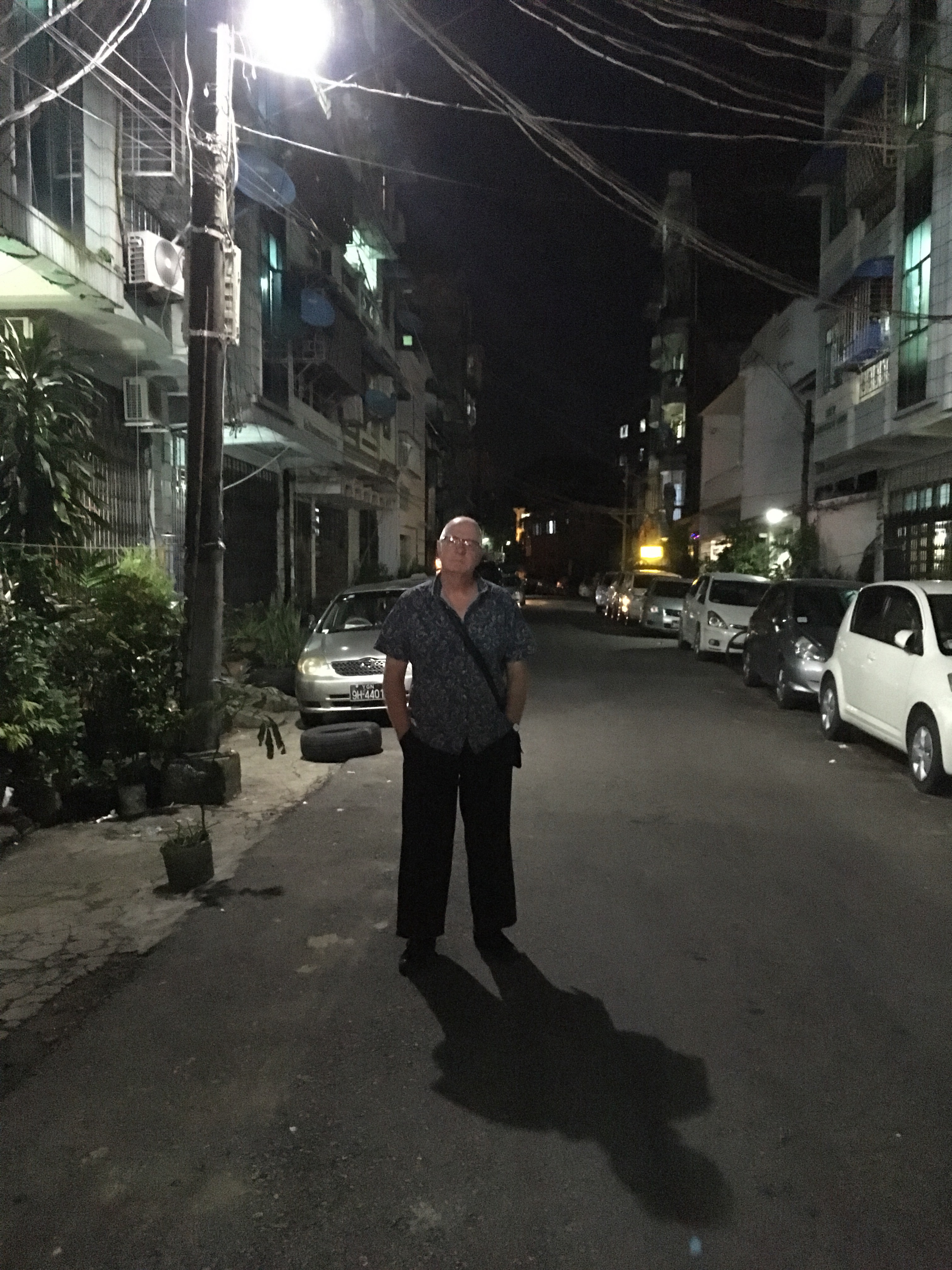
Night life in Yangon

We decided to be intrepid so speaking not a word of Burmese we went out for a beer. No one in our bar spoke any English at all but through a lot of pointing we obtained 2 large bottles of local beer for £1 each (probably an inflated price as we were foreign)

We sat back to enjoy the nightlife on the streets of Yangon. Pretty soon we were approached by a beggar boy wearing a Man U t shirt. Kevin was pleased to see his team being supported out here so gave the boy a note worth about 60p. Soon after the boy’s friend appeared but as he wasn’t wearing the appropriate t shirt Kevin said no. The little chap raced off and appeared moments later wearing his friend’s t shirt and earned his 60p. A very enterprising young chap!!!