The original ‘Middle Earth’

While not the geographical centre of China, the Henan Province is the heart of the chicken (see previous blog) so it has cultural significance. This is the area where the Han peoples originated and they are the ones who eventually dominated all the other ethnic minorities in the country imprinting their culture and traditions as standard.

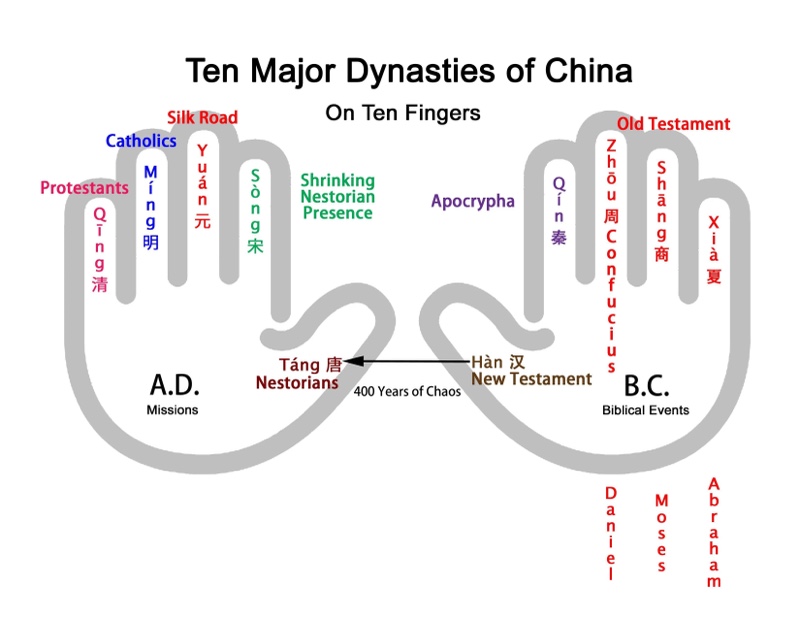
Today we visited an astronomical garden in what was the former capital of one of the early dynasties. The dynasties are numerous and complex. This is a handy (!) chart which superimposes the Chinese timeline with the Biblical one for an easy comparison. Remember to read it from right to left.

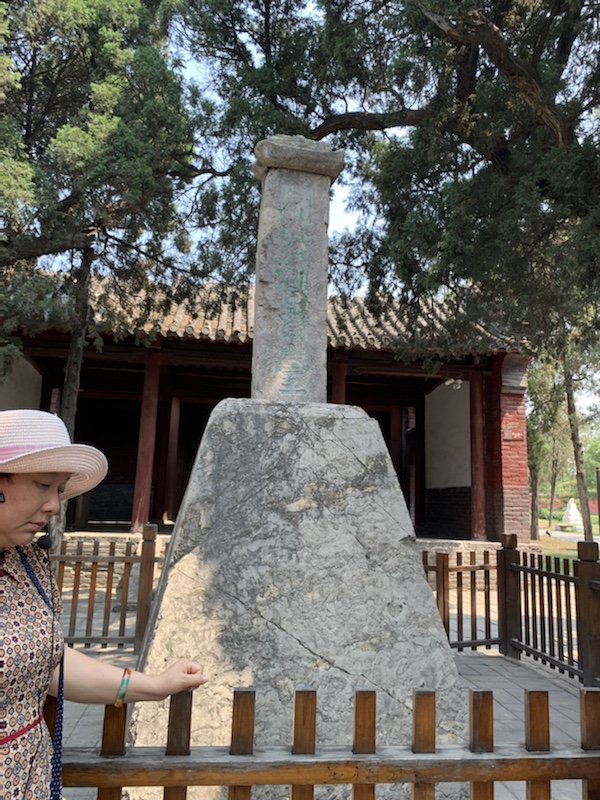
In approx 700AD Master Zhou (Ji Dan) developed this structure , an early Chinese sundial or instrument to measure the passage of time. Using the shadows he was able to calculate the longest and shortest days of the year and from that to break the year down into the seasons that we now know as the equinoxes.

This was of huge cultural and political significance. The Chinese at the time believed that the stars in the heavens were a dome and the earth was a square underneath. The Emperor used the astronomical data gathered to determine when crops should be planted or harvested. These decisions helped to reinforce the belief that this place was the literal centre of the world.

Interestingly, the mandarin for the word ‘China’ is Zhong guo. Zhong means middle or centre and guo is country or earth. So in effect this is the original ‘middle earth’

In the garden there were 19 pieces of early Chinese timekeeping technology- most developed centuries before Greenwich Mean Time existed.

This one below is a 24 hour clock but each segment measures 2 hours. The 12 symbols are the animals of the Chinese zodiac.

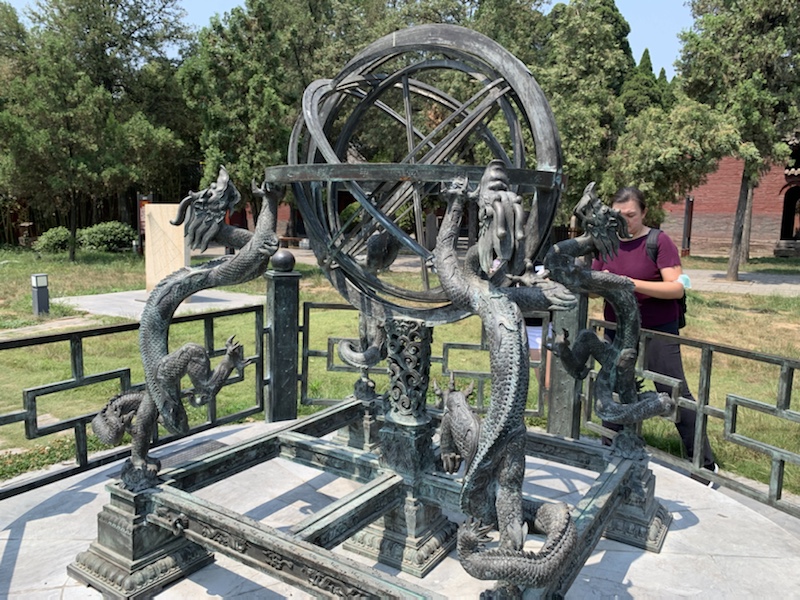
I do like a good dragon. This instrument above is for measuring the night sky. The Chinese also used this site as an observatory.

The name ‘China’ I was as told, was bestowed by the English after they discovered the fine porcelain that is produced in this region. Not able to pronounce Zhong guo (pronounced jong goar), they just kept saying the easier word ‘China’ until it stuck!

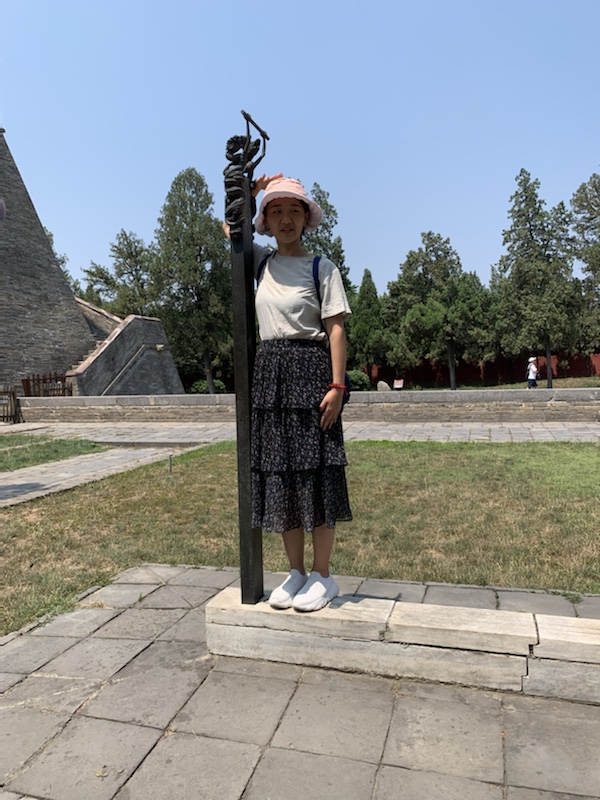
This is an unusual sundial. While many are circular this is a bar held aloft by two dragons. The shadow of the bar falls against the blocks indicating the month of the year.

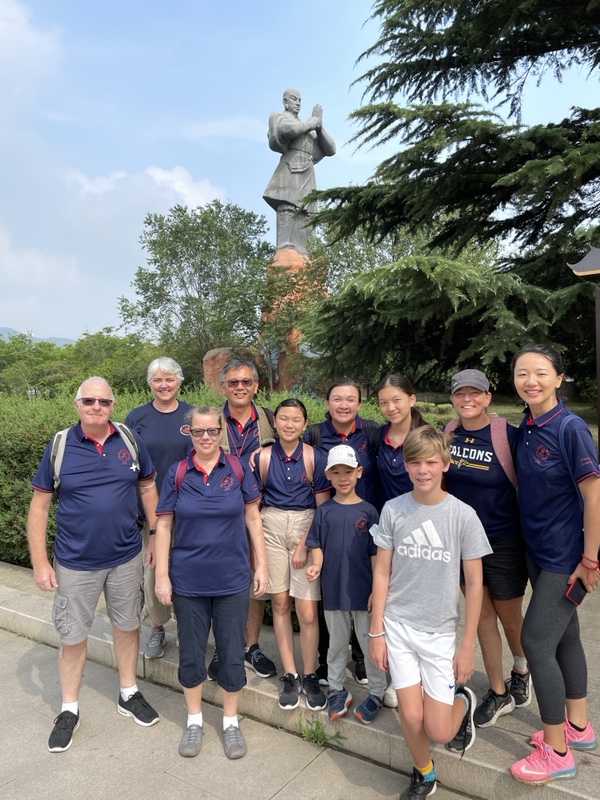
Here we had fun measuring ourselves in height order! I am down with the kids at the ‘short’ end. Although technically Annie and I are the same height. Lol

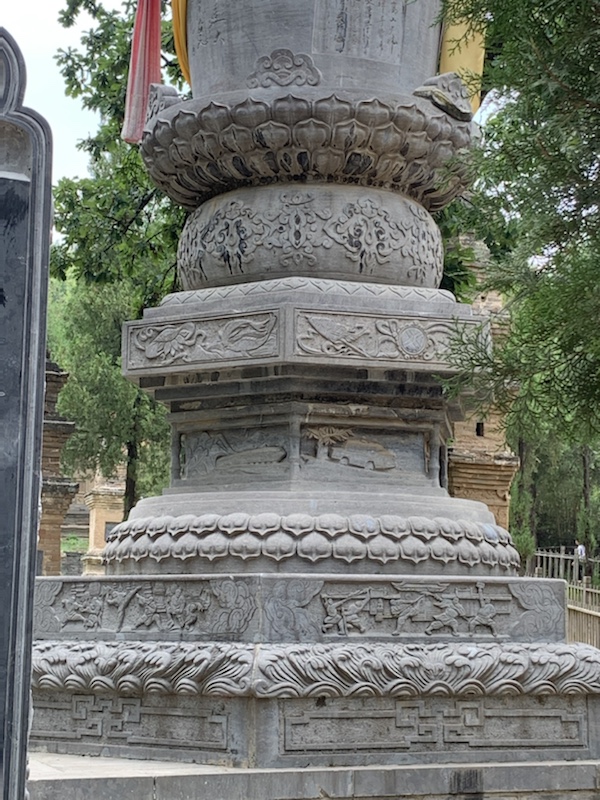
The large structure below does the same job and is accurate to 35 seconds in determining the length of the year when compared to modern time pieces.

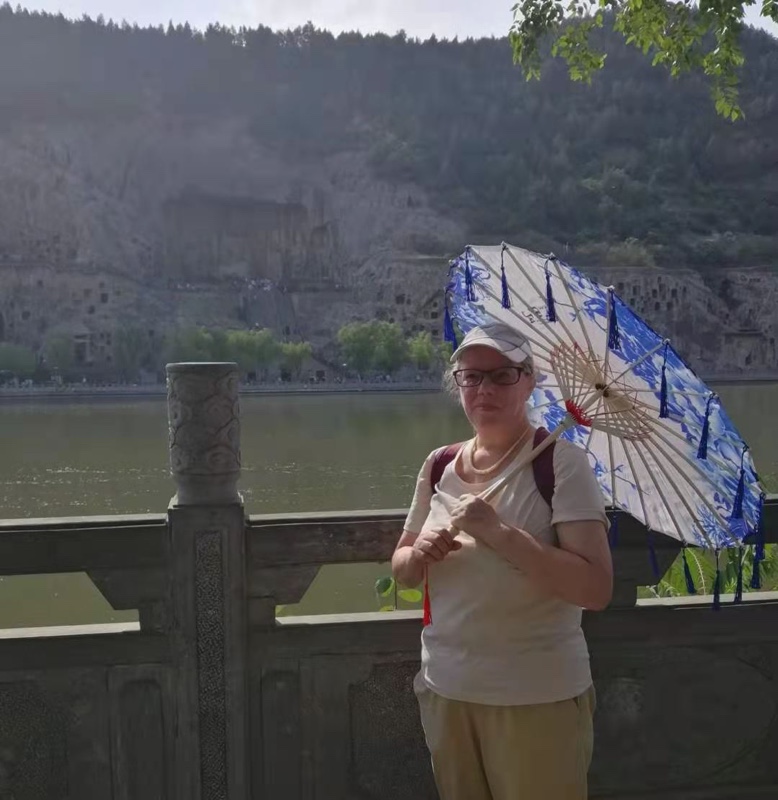
In the afternoon we visited the Longmen Grottoes in Loyan. This is the best example of Chinese Buddhist art work in the whole of China.

The grotto contains 100,000 statues of the Buddha in various sizes carved into niches in the cliff face. Many are now weathered or decapitated but some are in remarkably good condition considering that they are 1600 years old.

In grueling 38.5 degree heat (it was HOT) we walked the western cliffs and admired the many many Buddhas.

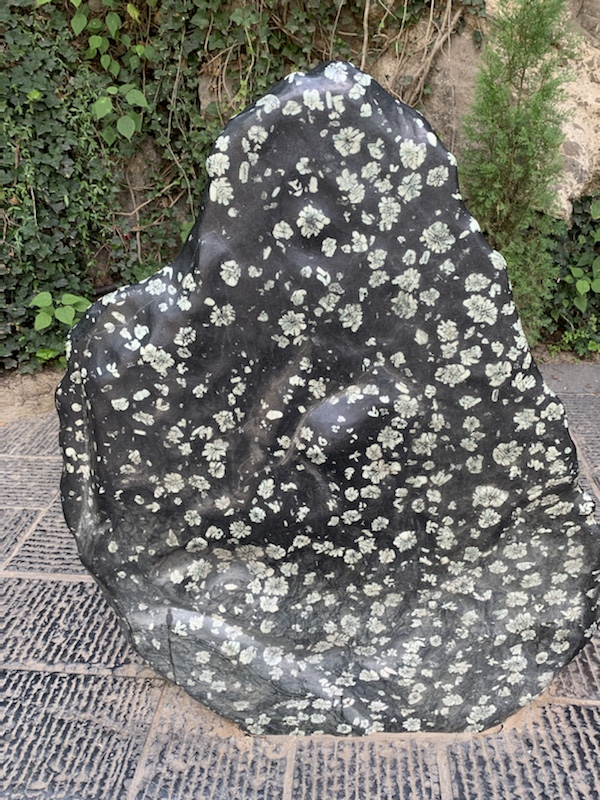
This was a stunning geological feature. Called a peony stone because the natural marks resembles the flower.

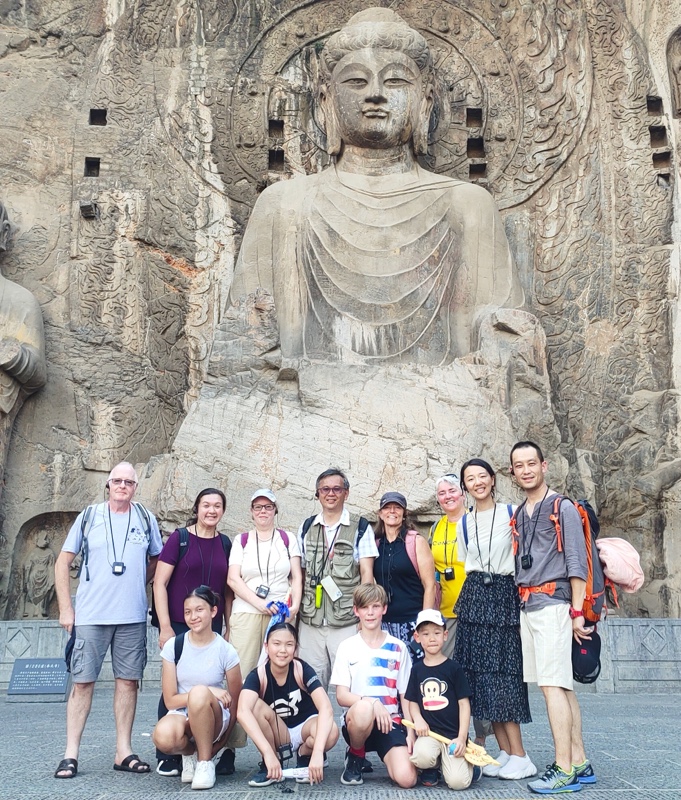
This large Buddha has a very feminine face which is thought to be that of China’s only female Emperor Wu ZeTian

She was a bad-ass ruler who governed through her weak husband who wasn’t really interested in politics at all. On his death she had her eldest son killed because he made it clear that he wasn’t going to let her rule through him as his father had done. The same fate befell each of her sons in turn as they reached their majority. She liked her daughter though (!) and let her live.

It was Wu ZeTian who popularized Buddhism among the Han peoples. She had her own male concubines (why not, if it’s acceptable for the men then why not the women?) She called them monks, however to give them credibility among the populace. It was one of these men who commissioned the Buddha statue with her features to show his loyalty to her.

In a slightly bizarre turn of events, the next morning at breakfast we were discussing and allocating Chinese names to those of us who didn’t have them. Kevin is called LieLang which means ‘wolf hunter’ because Leping had dreamt about him saving her from a wolf attack! I am WuZetian because the Empress’s name actually means strong martial arts in heaven (or something like that) not because I have any intention of filicide.

The Dragon Pavillion

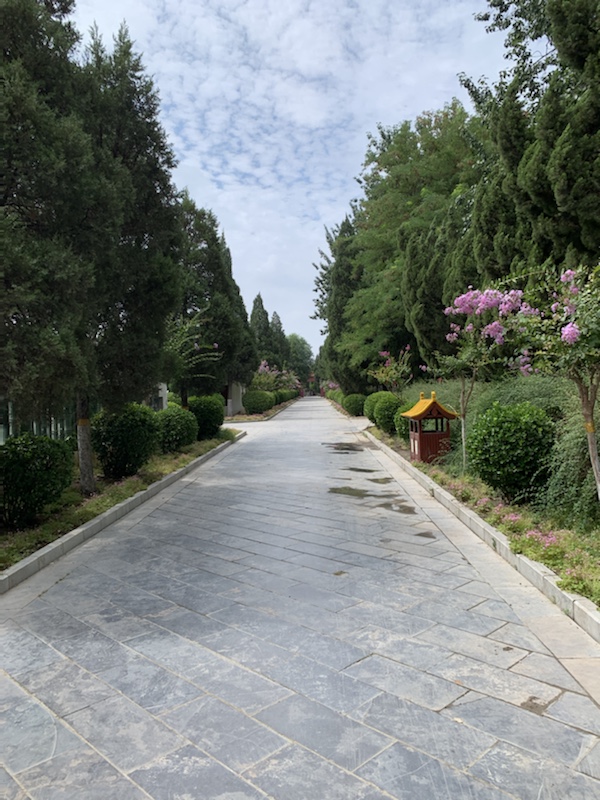
While yesterday was spent in the reconstruction of the Imperial Gardens in Kaifeng, today we visited the actual palace, or what remains of the vast complex from the Song Dynasty.

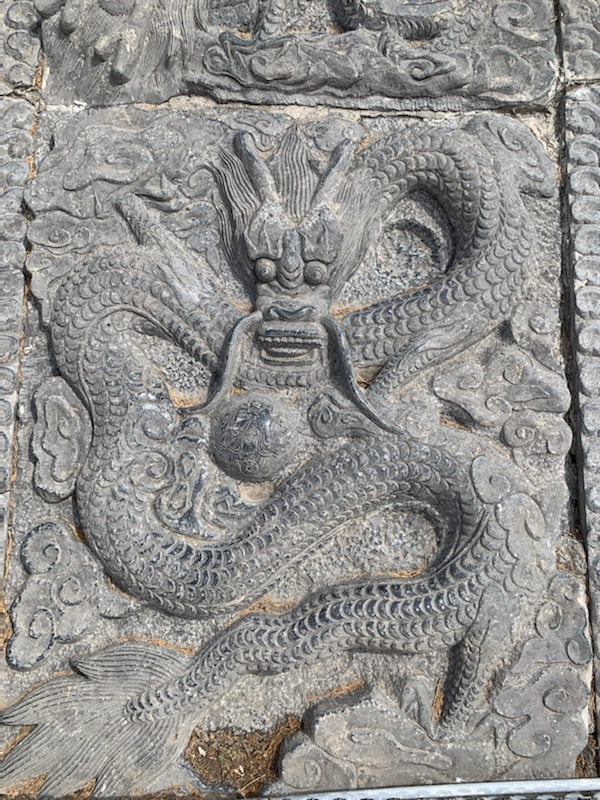
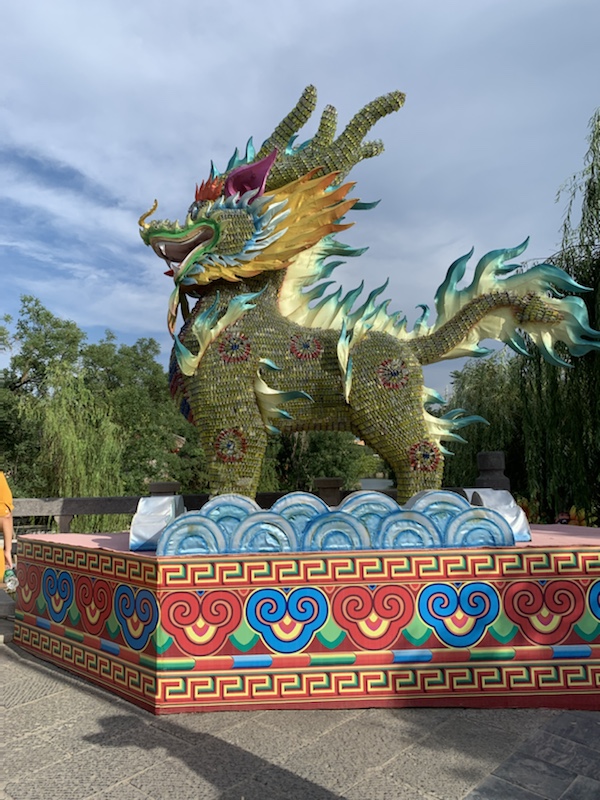
Dragons were thought to be the most powerful creature. This is called the Dragon Palace because only the emperor can use symbol of the dragon. no one else was allowed to.

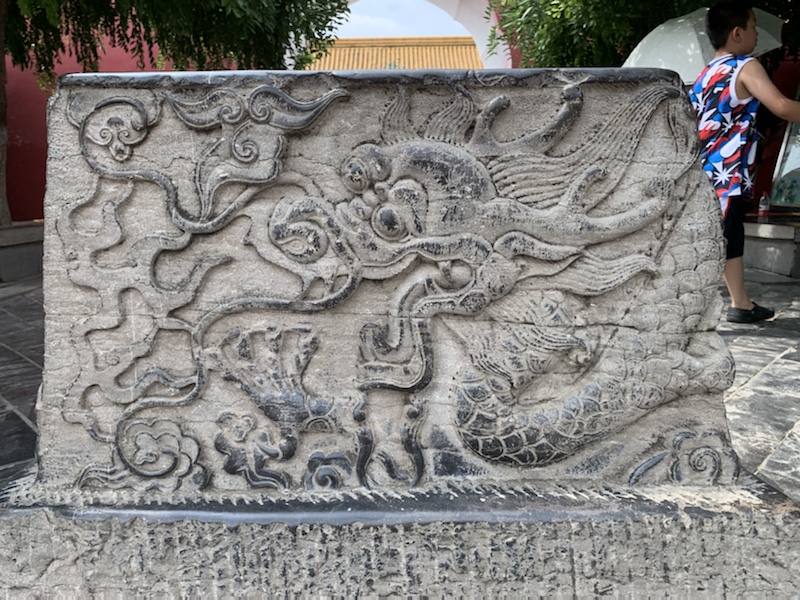
And everywhere you can see dragons

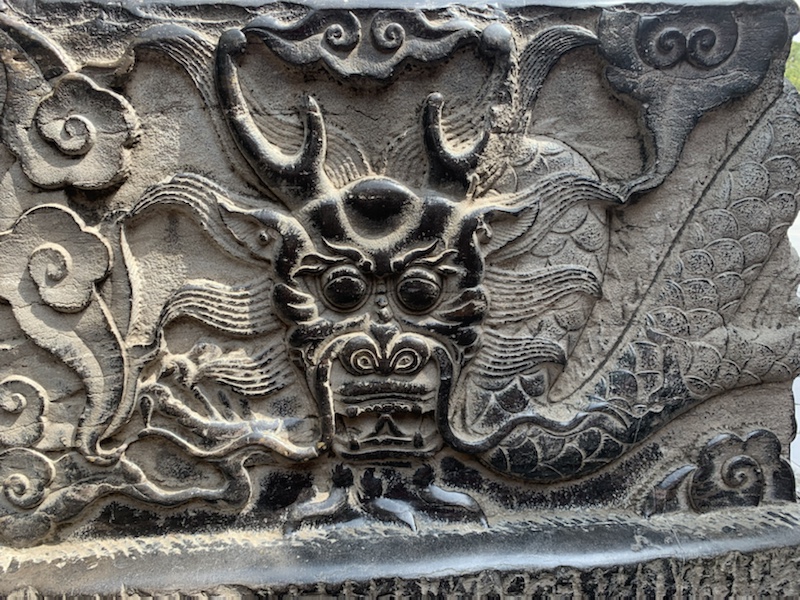
Such expressive dragon faces
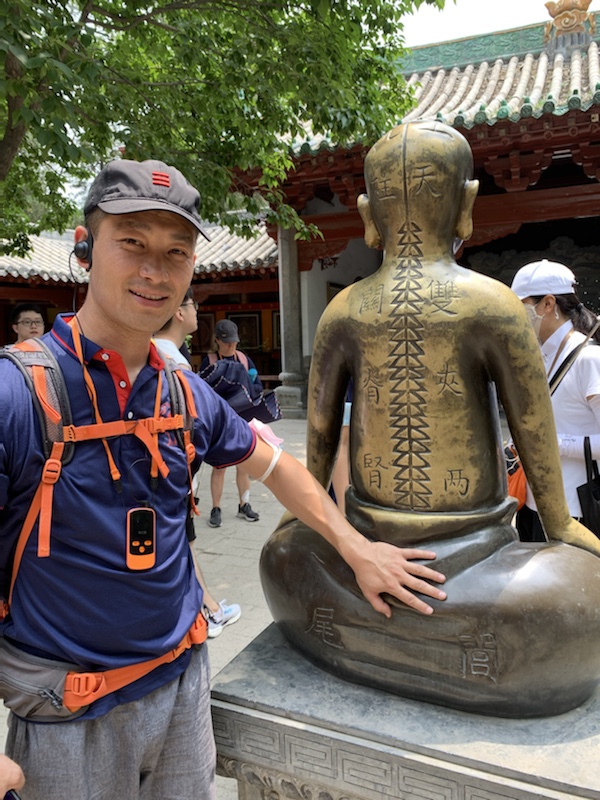
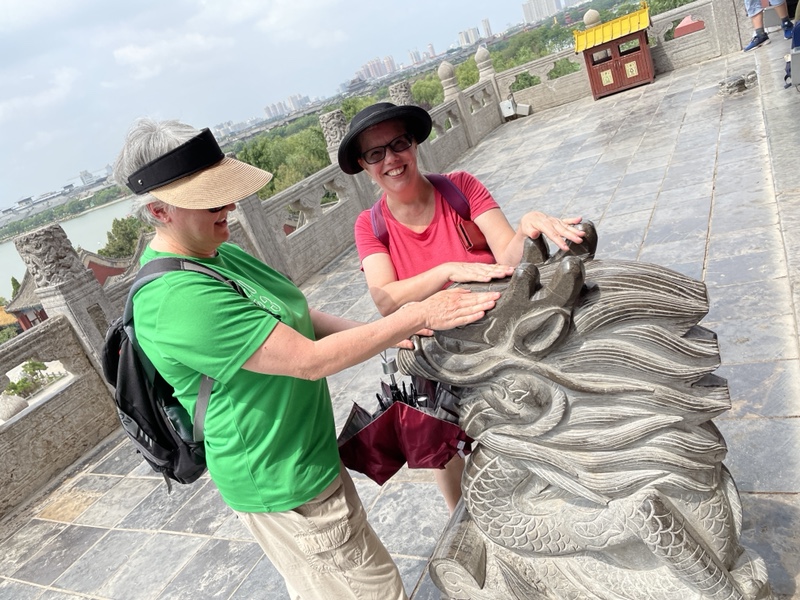
This dragon statue is 1000 years old so people massage the stone to get good energy. Sara and I tried but didn’t feel any!
Maybe she did…

From the door of the pavilion you can see the view across the lake. Notice the road dividing the lake in half. The two sides are like Yin and Yang.

Legend has it that the lake on the left was well maintained and clean like some of the courtier families in their service to the Emperor. They served with purity. The right hand lake however was dirty and not well cared for. This lake represents those courtiers who only serve the Emperor with words and platitudes but no good deeds. The wise Emperor knows that he needs both to be able to rule.

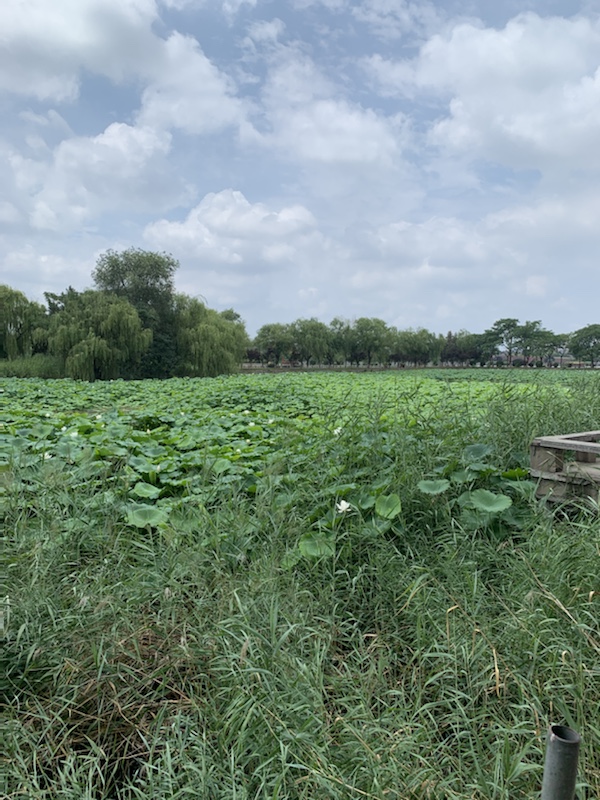
In the gardens was a large lotus pond. When all the flowers are in bloom it would look like a white carpet.

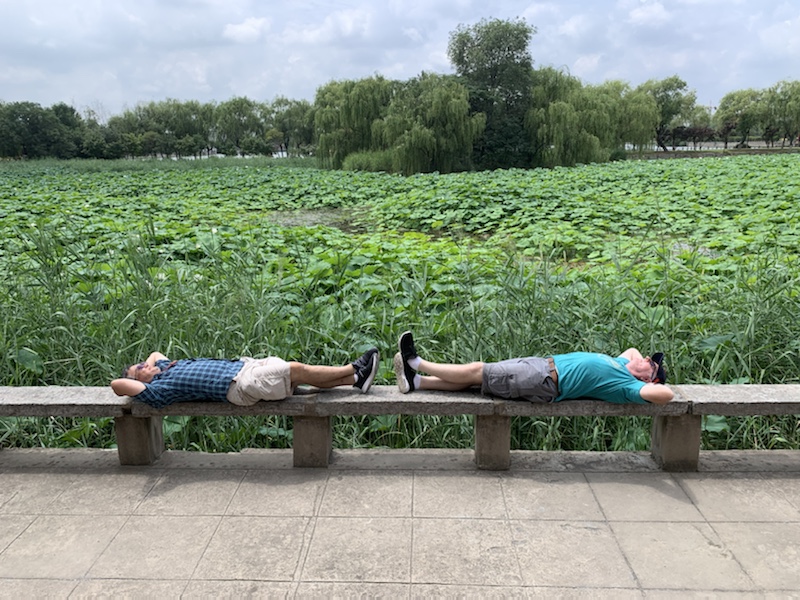
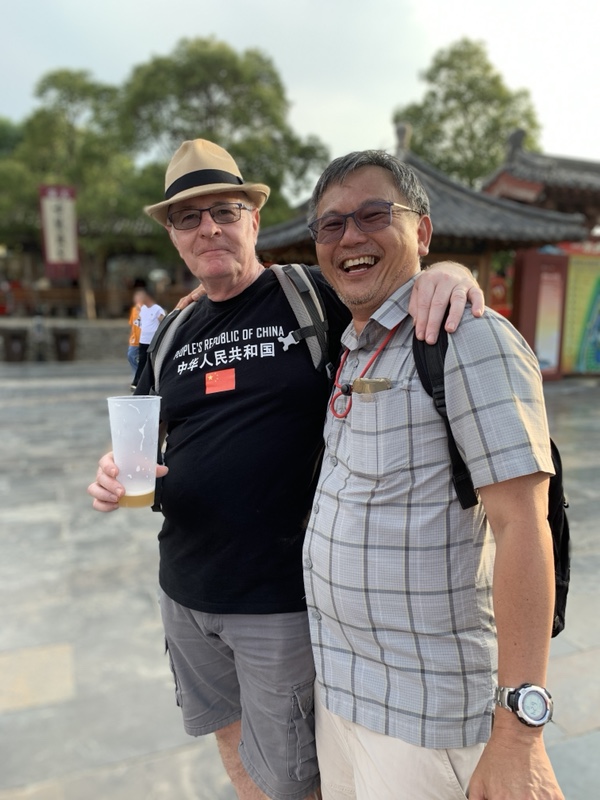
Kevin and Peter enjoyed a brief respite
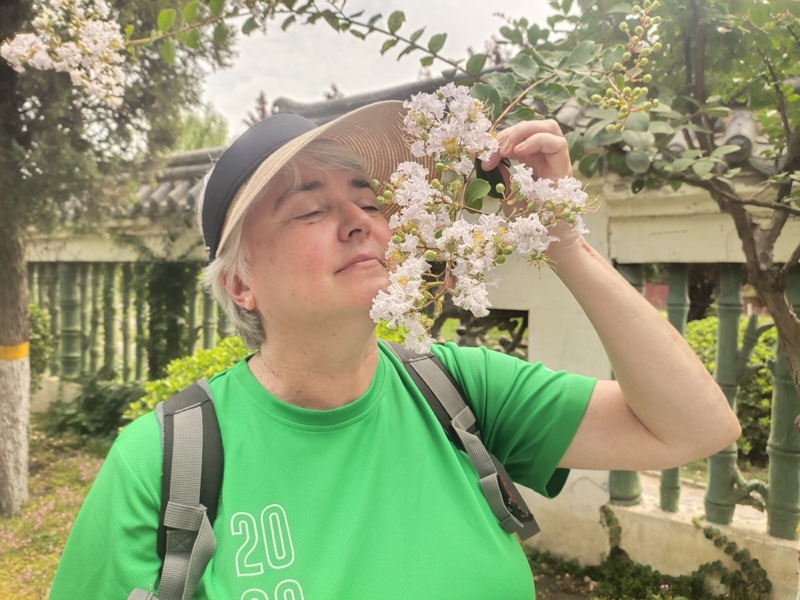
Sara enjoyed the fragrant flowers

Then it was on to Lord Bao’s residence.

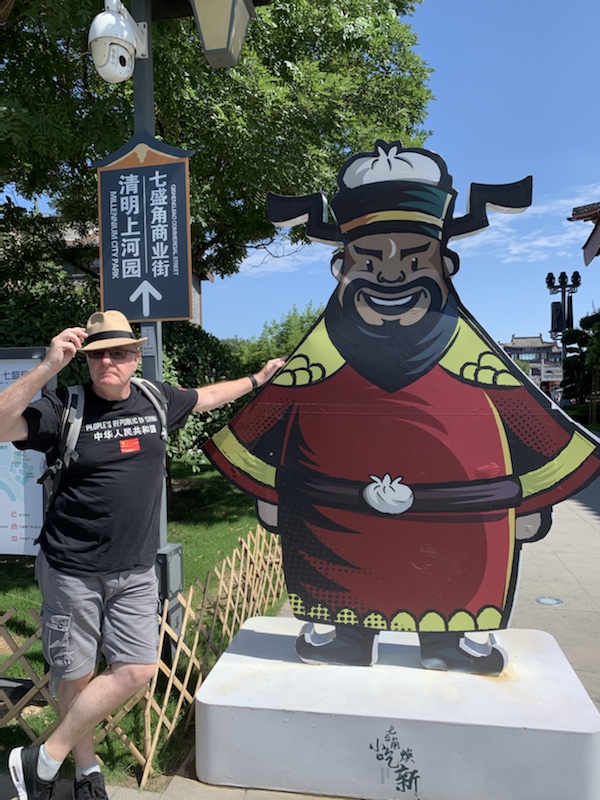
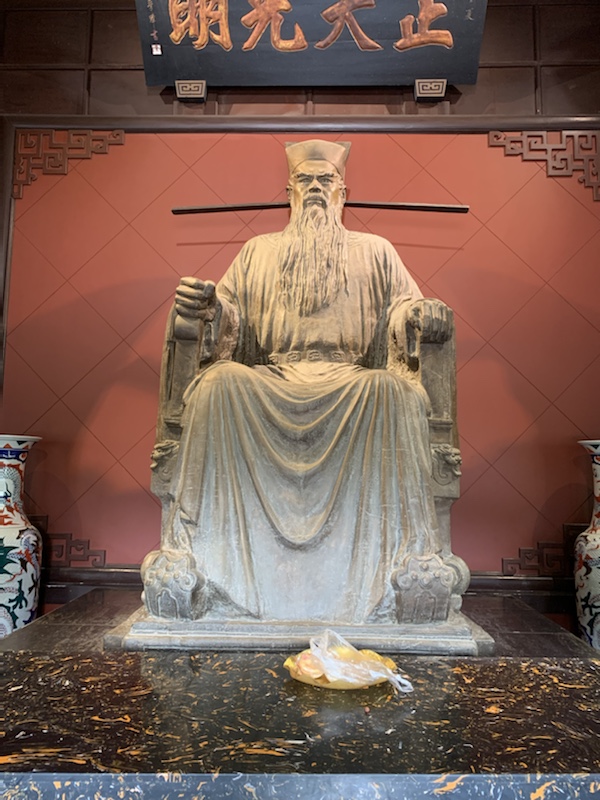
Lord Bao was a judge in Kaifeng from 1057 to 1058 who was famous for his adherence to justice and fairness. He took the civil service test and was one of three chosen in his year from the whole of China to serve the Emperor. He worked his way up gaining a reputation for steadfastness and honesty. He was so strong and stable that he was referred to as being ‘like iron’. As iron is a dark metal he became popularly depicted as having a black skin.

Here in this statue you can see one closed fist representing the way he dealt firmly with corruption at court and his relaxed open hand which shows how he treated the rest of the population.

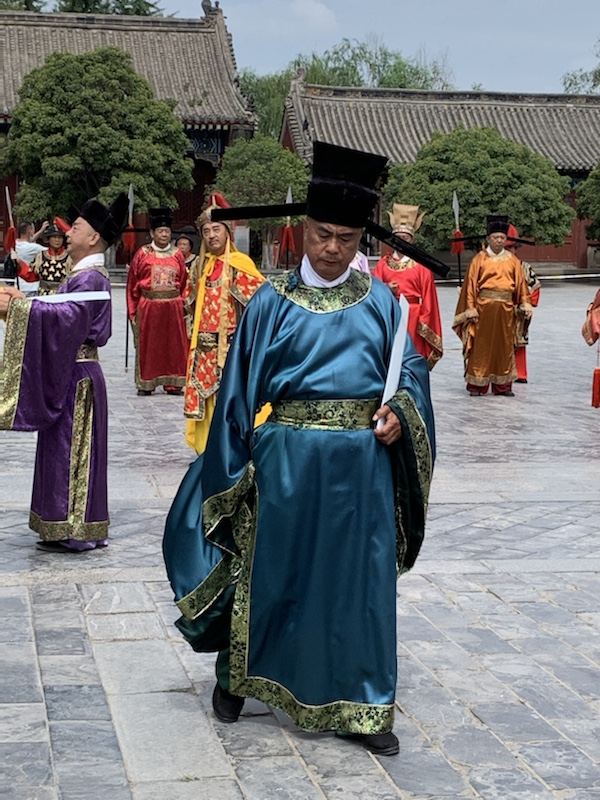
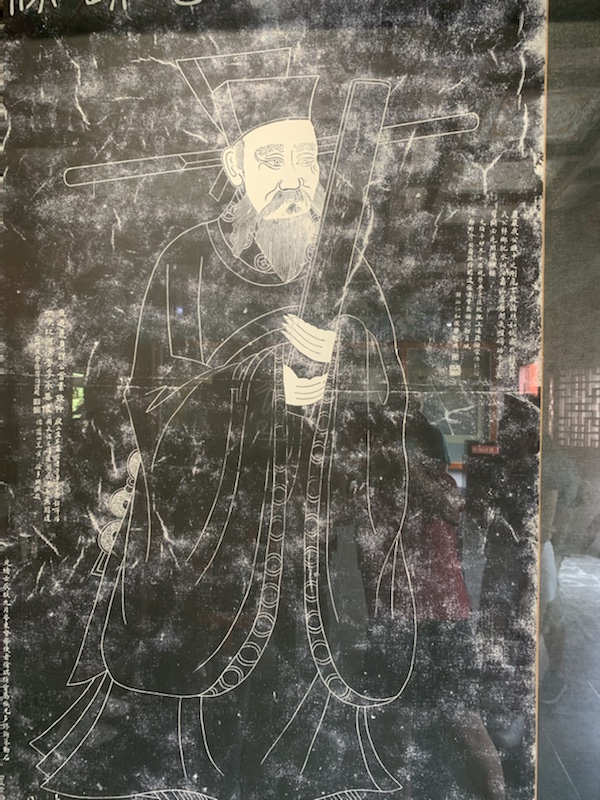
Also interesting is the hat with the metre long projection from the back of hat. This was designed by the first Song Emperor who did not want his courtiers to whisper among themselves during the morning audience. He wanted to be able to hear everything they said. In effect this was a very early form of social distancing!!!

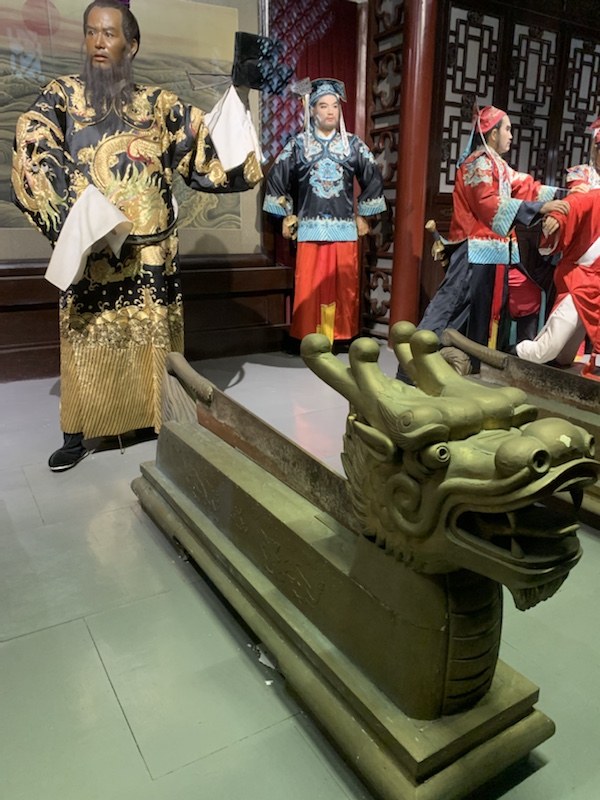
The first 3 Song Dynasty Emperors all wearing the special hat! I didn’t get their names.

This particular dragon was quite interesting because it is actually a guillotine. Look carefully and you can see the blade with its handle.

Here Lord Bao is holding a piece of wood or bamboo in his hand. Only high courtiers carried these and the purpose was to ensure that they kept their eyes respectfully averted from the Emperor during their audiences. Plus they could write their briefing notes on it as prompts for their daily reports.

Check out these shoes! Platforms for men way before the 1970s!
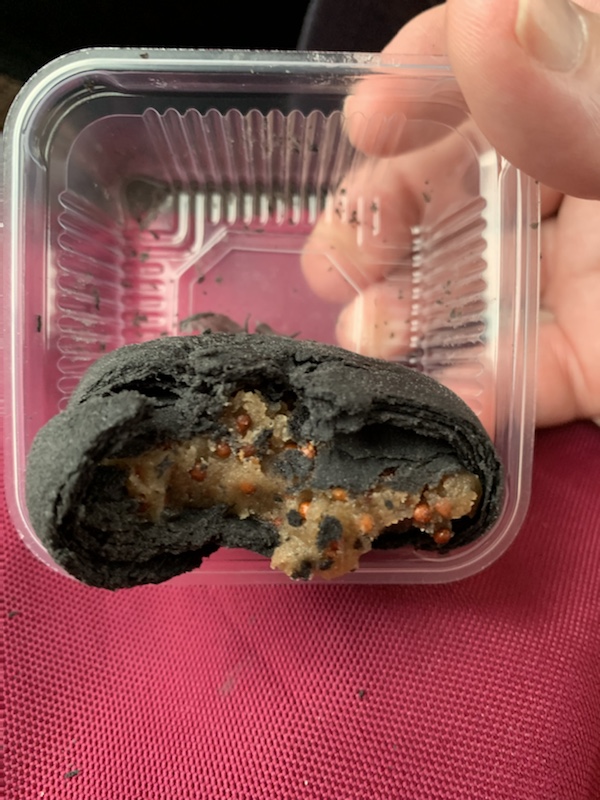
And at lunch we were treated to a Lord Bao cake (in black obviously)
The inside was sweet and crunchy and a little like a fig biscuit.

Henan Province.

Our second trip of the summer is to the Henan Province, the capital of China for 8 dynasties (that’s over 2000 years) the most important of which was the Song Dynasty from 960 – 1279 AD.

Chinese people say that the map of China resembles a chicken and they often refer to places as the chicken head or the chicken feet. The Henan Province is known as the heart of China because it is in the location of the chicken’s heart.

We took the high speed train and even traveling at speeds of up to 300km per hour the journey from Shanghai still took over 5 hours.

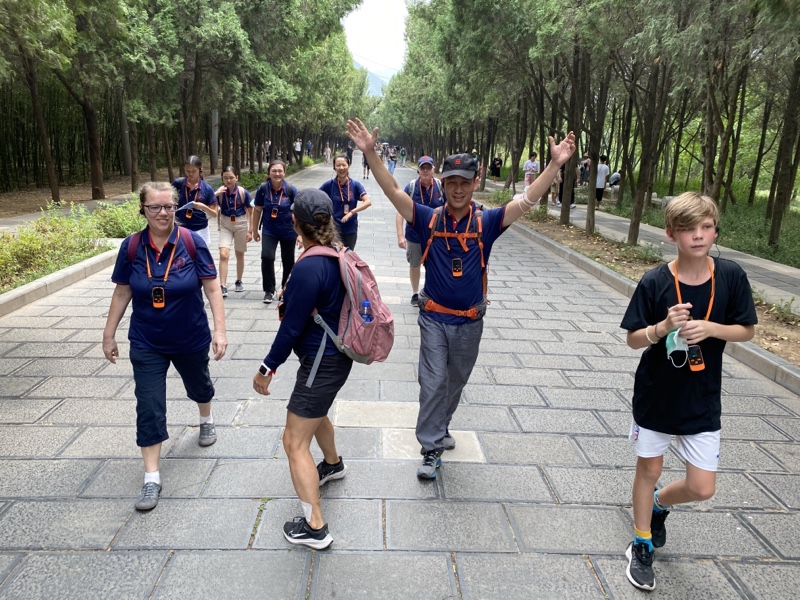
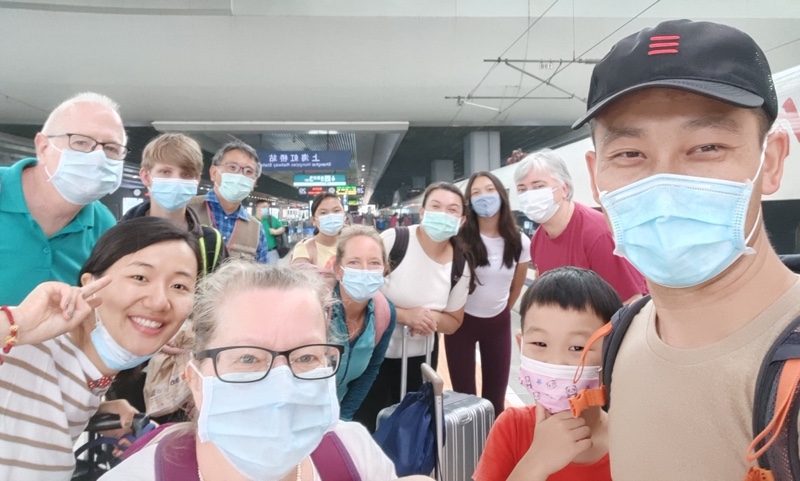
This trip is with the Concordia Taiji class (& families). Here we all are ready to board the train. Masks are compulsory on public transport here.

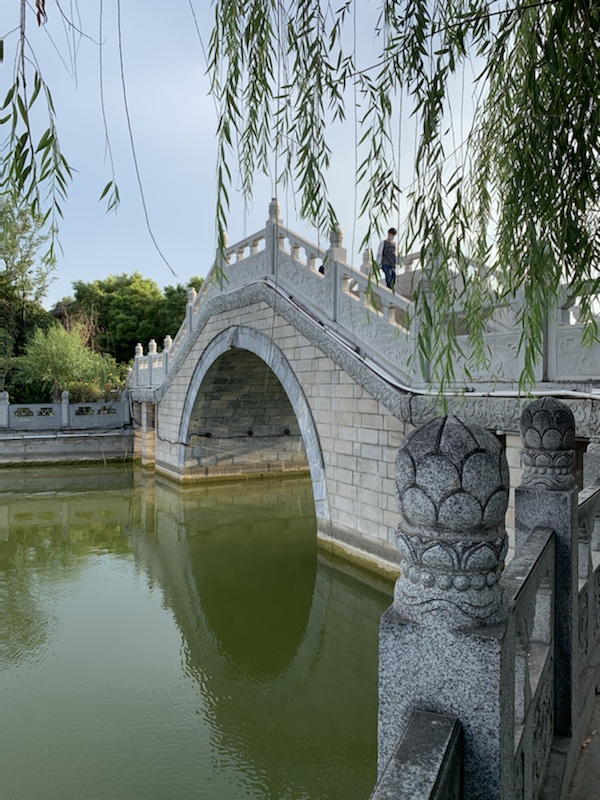
Our first day was spent in Kaifeng in the Millennium City Park. Built 20 years ago, this is a modern reconstruction of an ancient garden designed by Zhang Zeduan, the only record of which is a long thin painting.

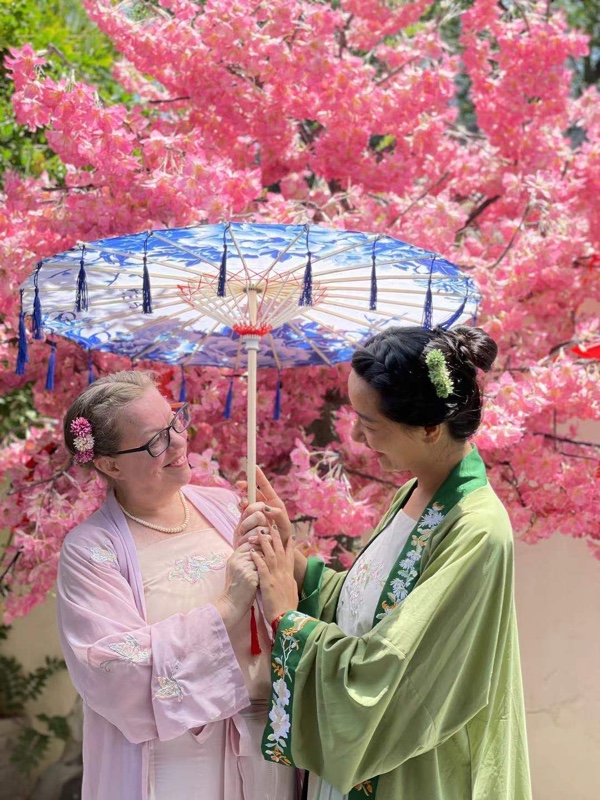
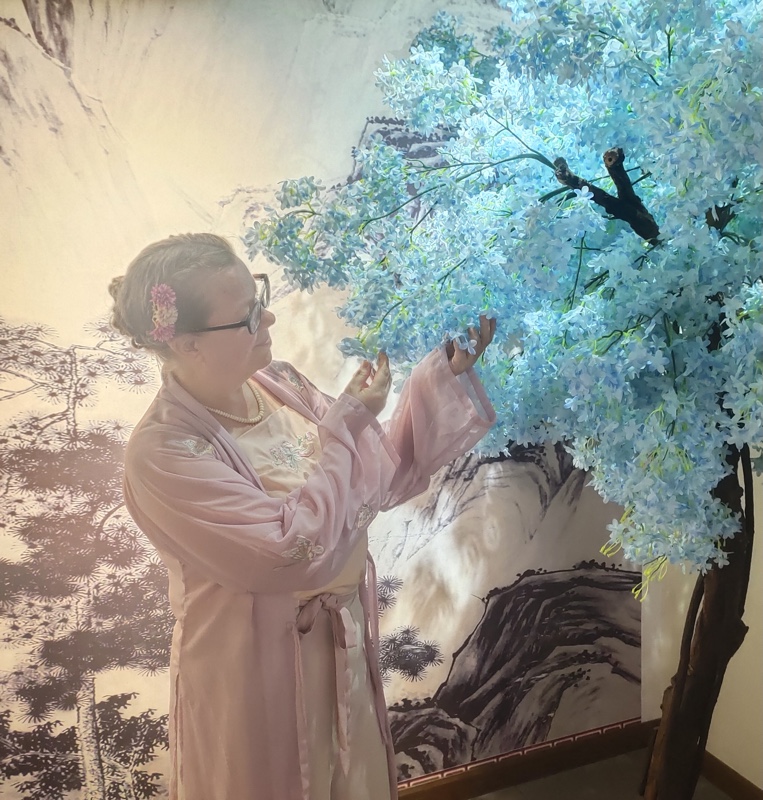
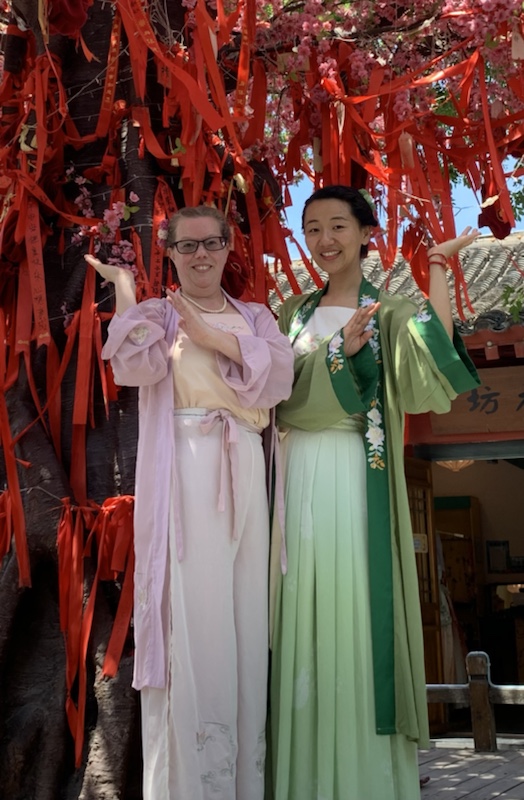
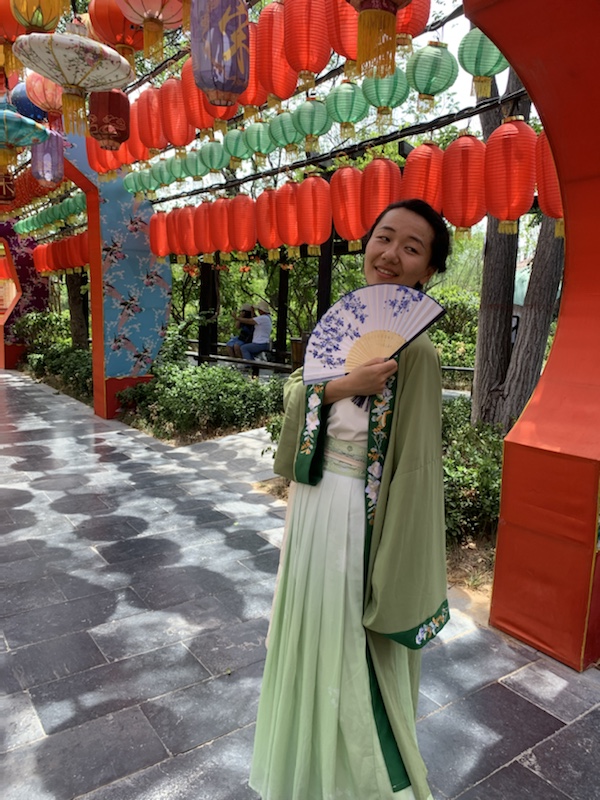
Being in the park is like stepping back in time and immersing yourself in the Song Dynasty. To start off you can hire traditional costumes so Leping and I did just that. It was great fun dressing up and even having our hair done.

For about £5 we could wear the costume around the park all day. This gave plenty of opportunities for posing against various backdrops.

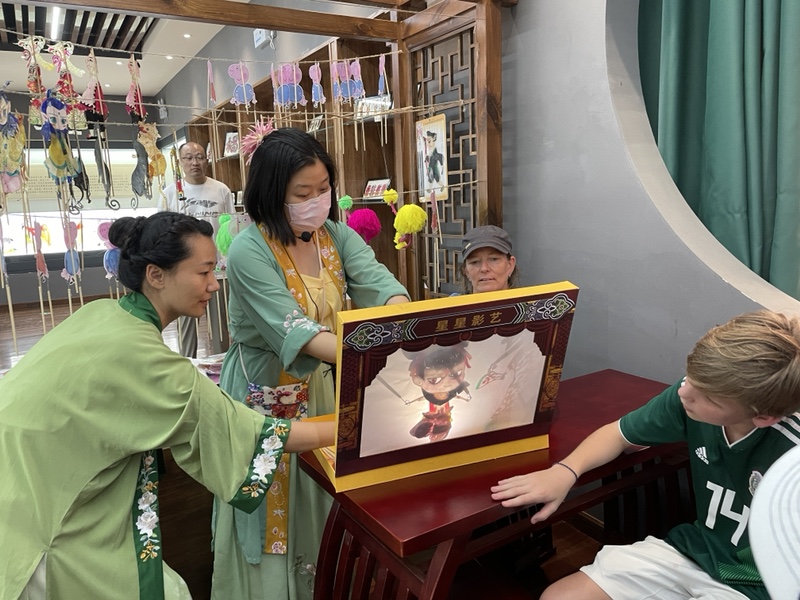
Then it was time to wander around the park. Dotted among the food vendors and shops were various shows and displays from stilt walking puppets to magicians.

One that you don’t see very often anywhere else was cock fighting. I had never witnessed this as it is a sport that was outlawed in the England 200 years ago. To be honest, not my favorite… poor birds!

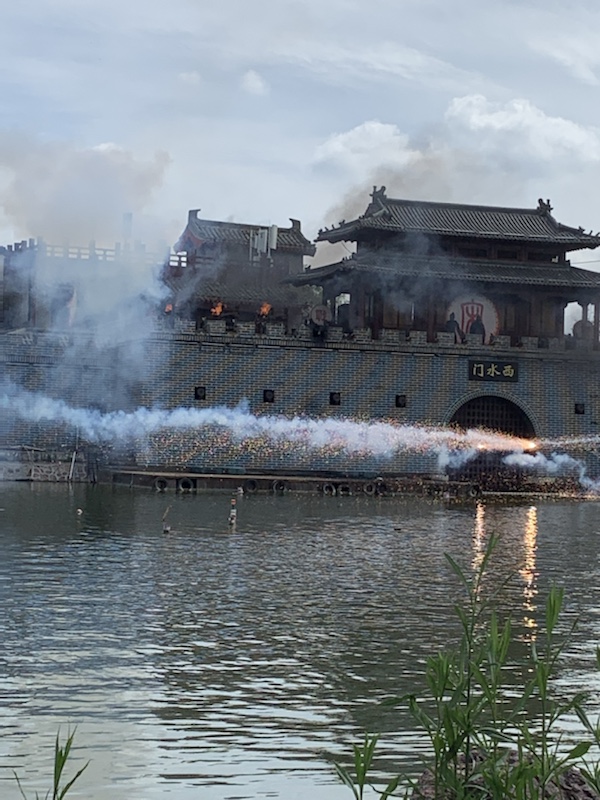
The ancient battle re-enactments were quite stunning though with particularly loud explosions and dramatic effects.

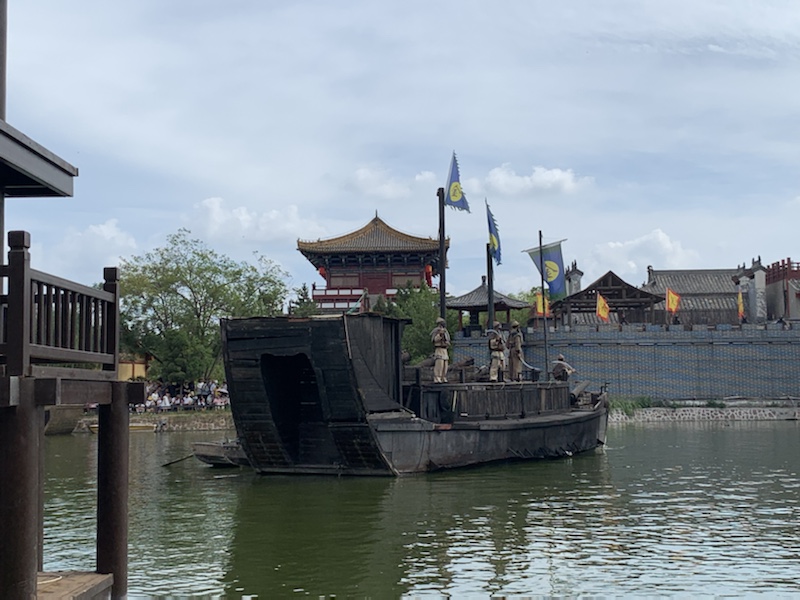
This was the sea fight

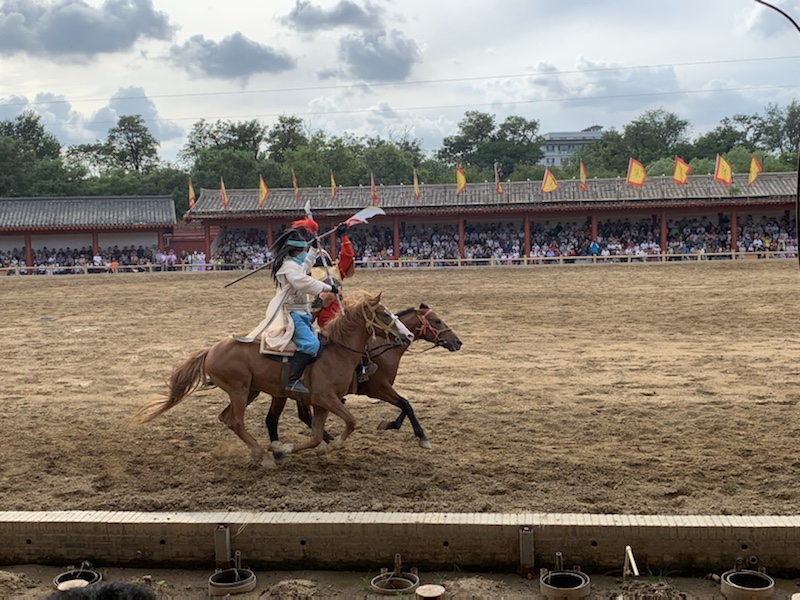
And then there was some pretty impressive horsemanship with close fighting at a gallop.

But there were two occasions today which were hilarious. The first was the fire eater when Noah, one of our younger members at 14 years old, was picked for some audience participation and to his mother’s horror was given a cigarette to light from the guy’s breath.

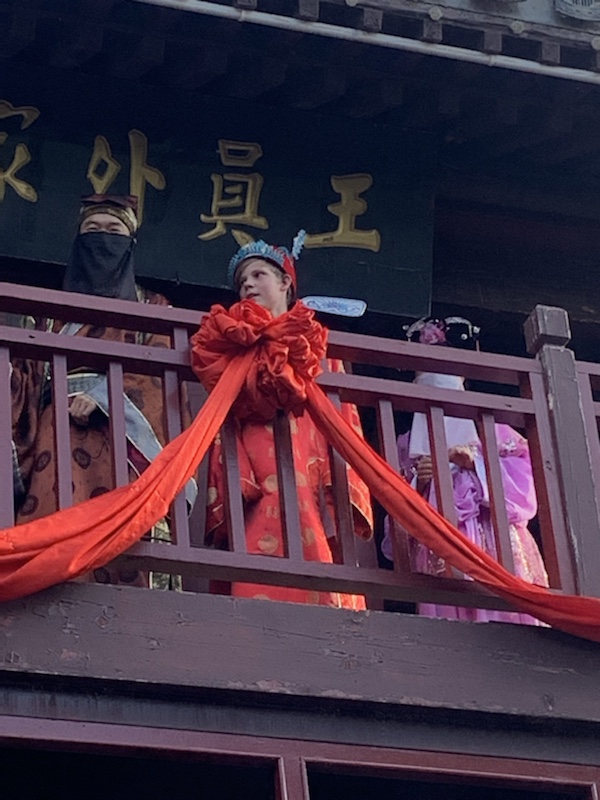
Then there was the balcony show where the richest merchant in Kaifeng was offering the hand of his beautiful daughter in marriage to whoever caught the ball that was thrown down. Noah valiantly jumped and in a move worthy of a rugby forward clutched the ball of red cloth and managed to hang onto it despite being mobbed by all the surrounding men!

Up he went to the balcony where he was dressed in red robes and duly married to the daughter. It was the cause of great merriment in our party.

It was a beautiful place and a great time was had by all. I couldn’t have wished for a better day of cultural immersion.

Tianmen Mountain

View from our hotel room

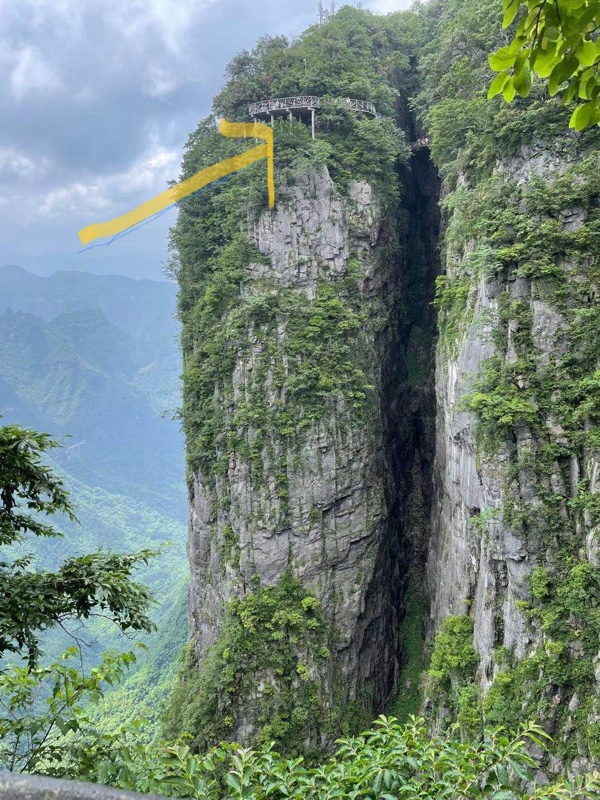
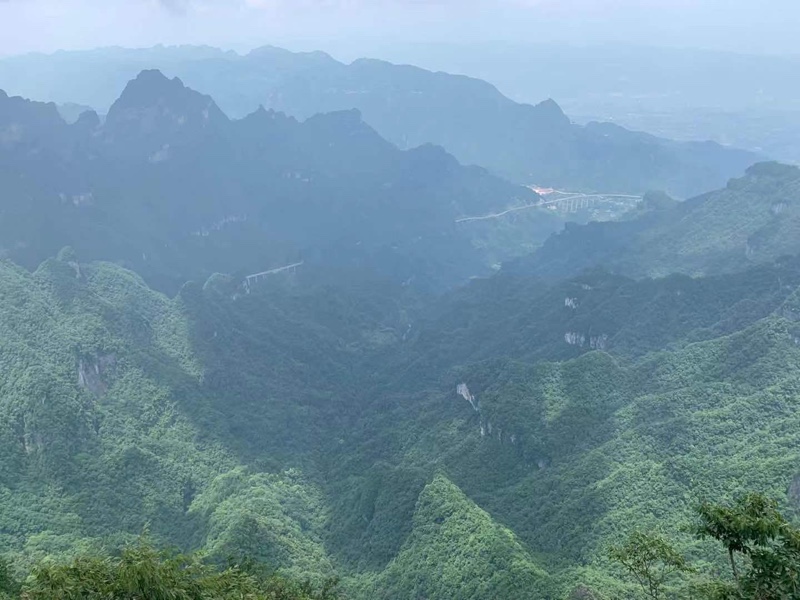
This mountain is high. Higher than the previous scarily high mountains that we have been up. It is over 1500 meters high (4980 feet) which for any UK readers is higher than Ben Nevis. But unlike any British mountain which has a wide base and gentle inclines, this again was mostly sheer cliff faces rising majestically towards the clouds. It is the highest point in the whole of the Hunan province.

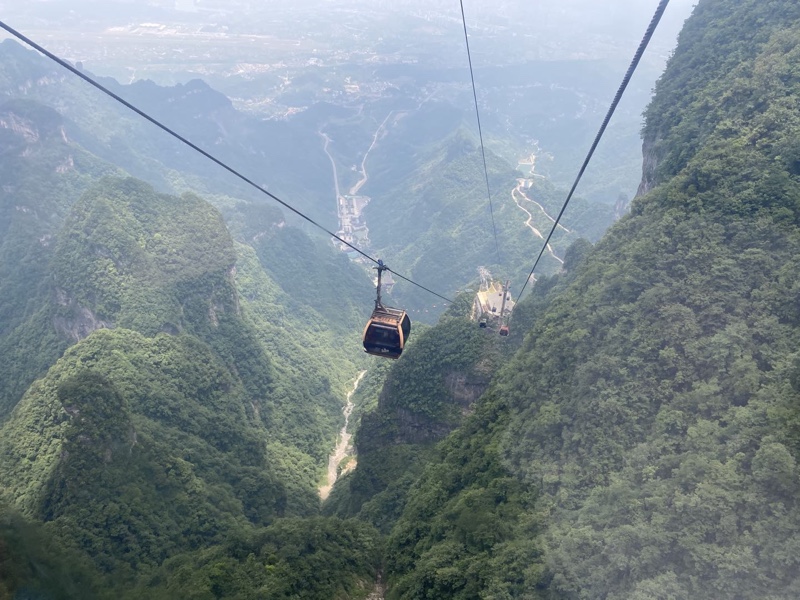
To reach the summit you take a cable car which alone took half an hour. HALF AN HOUR of swinging precariously over great gaping yawning sheer drops!!! I tried not to look! It is apparently the longest passenger cableway of high mountains in the world.

Drops like this!!
I looked up rather than back which helped (slightly)

Alternatively there is a road with 99 bends which also reaches the middle of the mountain. 9 is an auspicious number in Taoism. Some keen (crazy) drivers do challenges on this road.

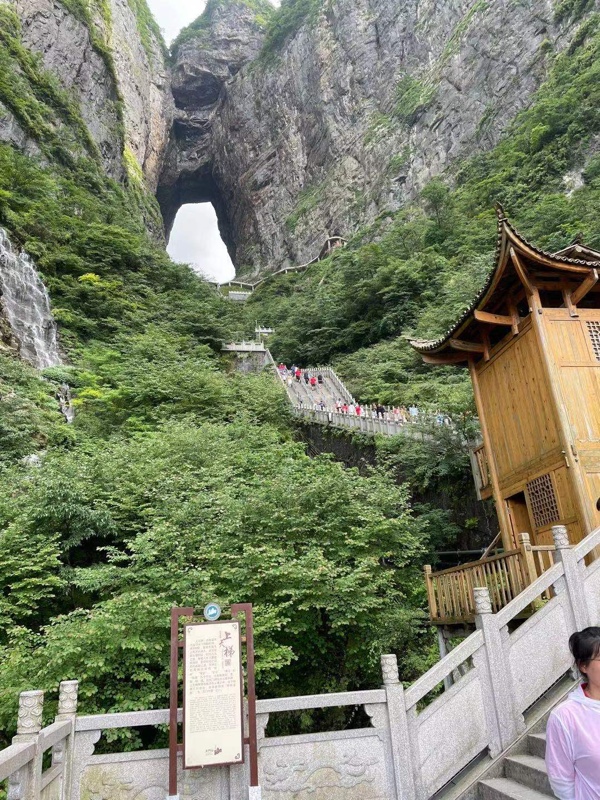
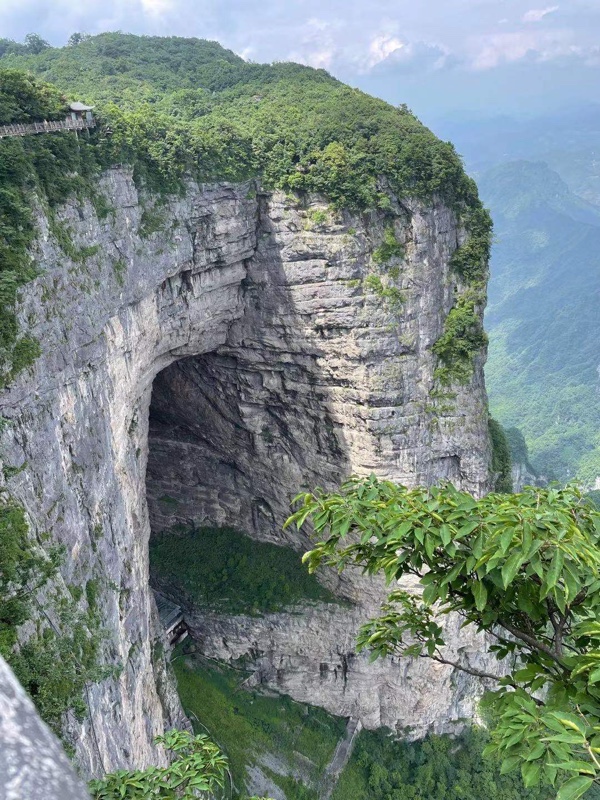
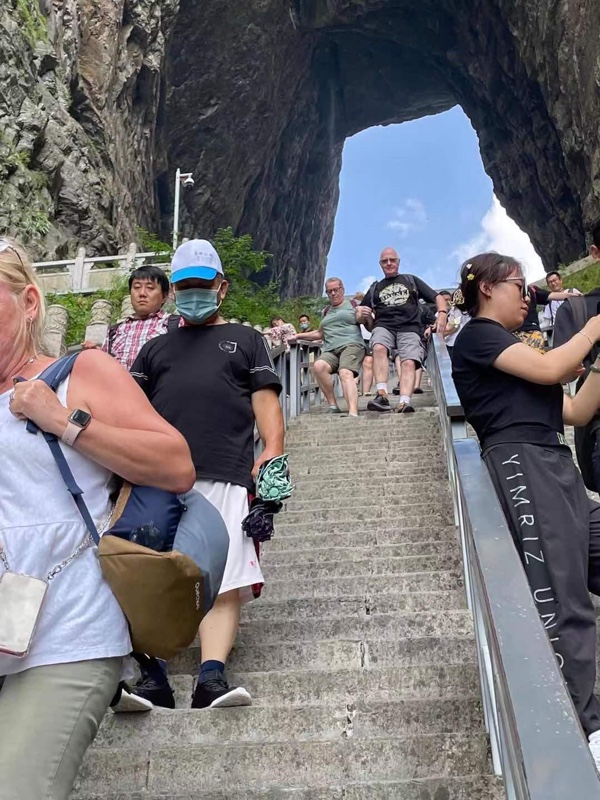
Tianmen means ‘Heaven’s Gate’ Mountain. The name comes from the feature hole near the top. There is also a myth that an ancient general hid stolen treasure in the mountain because it was so inaccessible.

The hole from below
The other side of the hole

Some keen (crazy) pilots have actually flown through the hole, which is impressively skillful flying!

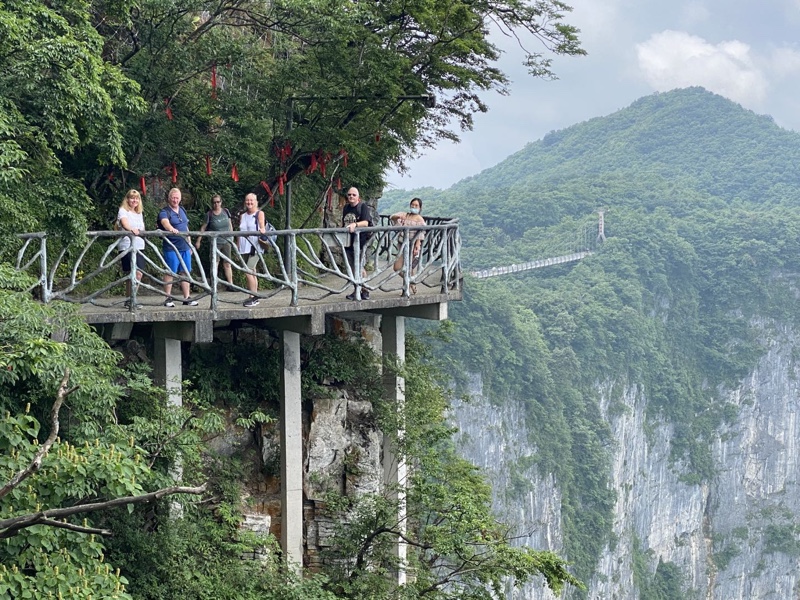
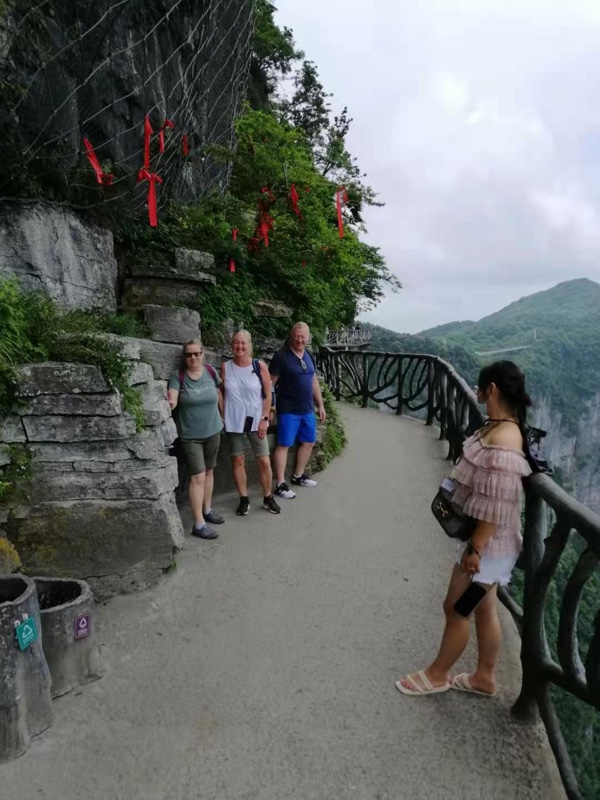
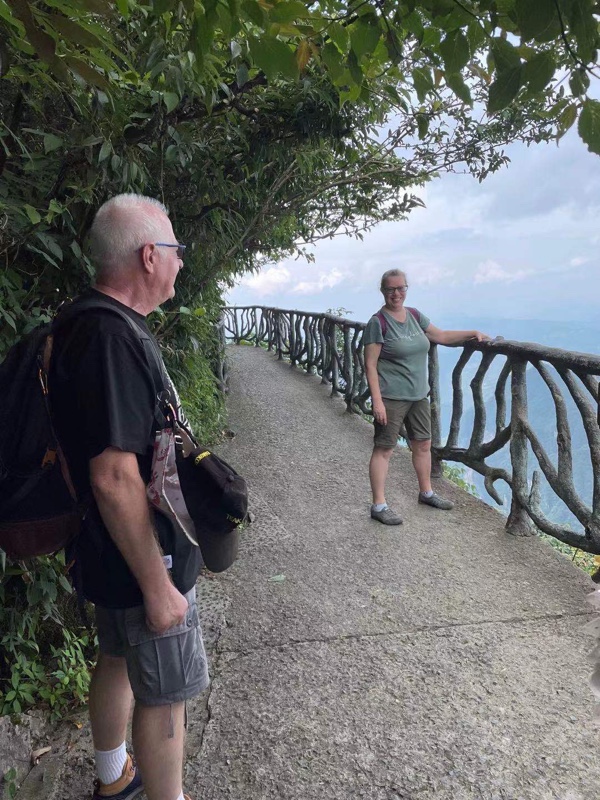
For us, we spent the day walking around the flat top. There are several routes you can take but ALL of them include the solid but narrow paths built on the side of the cliff face.

Like this
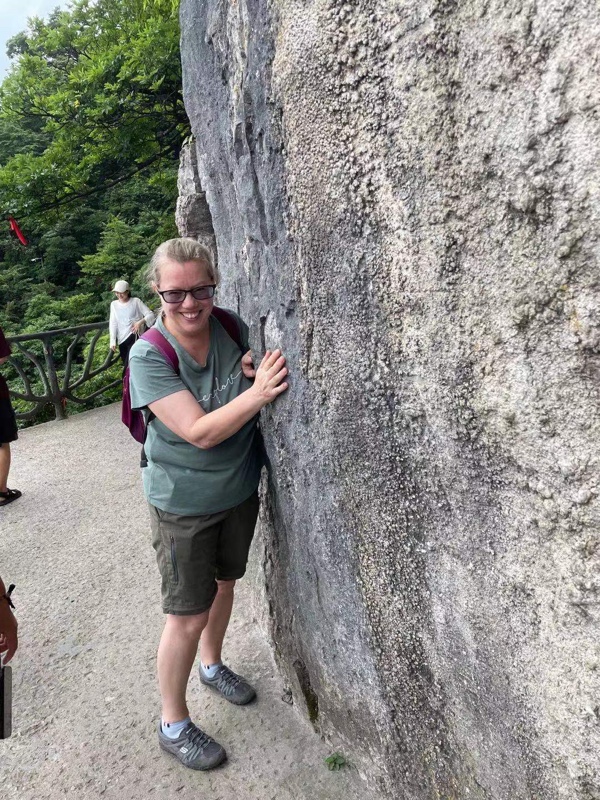
And this. You will notice that while I made it up there I was not near the sketchy safety rail!

In fact for much of the walk I was like this

Or this

Or clinging onto Kevin’s hand, especially the highest, narrowest and most exposed sections. The group were very good at saying encouraging things to me as we walked. They even tried singing to take my mind off it but only came up with ‘Yesterday all my troubles seemed so far away’ or ‘Don’t fear the reaper’. To be honest even some of our group who don’t have vertigo said that their stomachs were churning a little at those points.

These were the views I was missing.

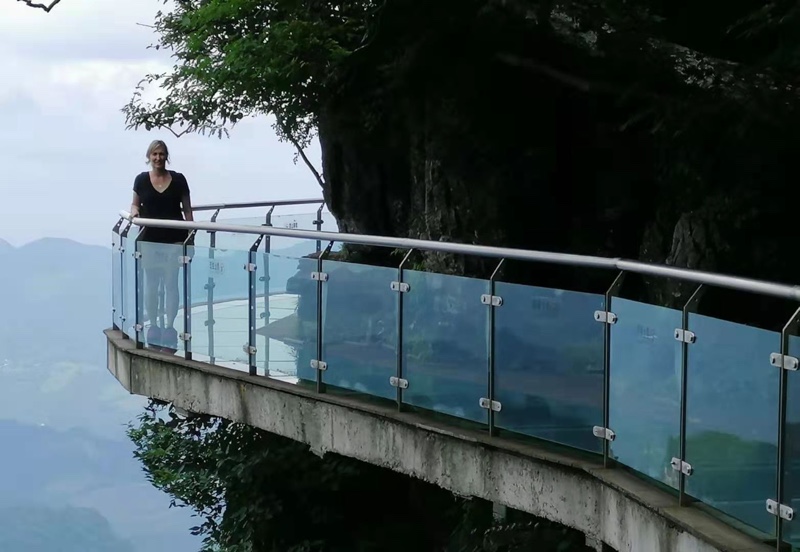
I did at least have the option of avoiding the glass walkway. Phew!

Lisa B on the glass Braver than me.

We didn’t go to the very highest point which was here.

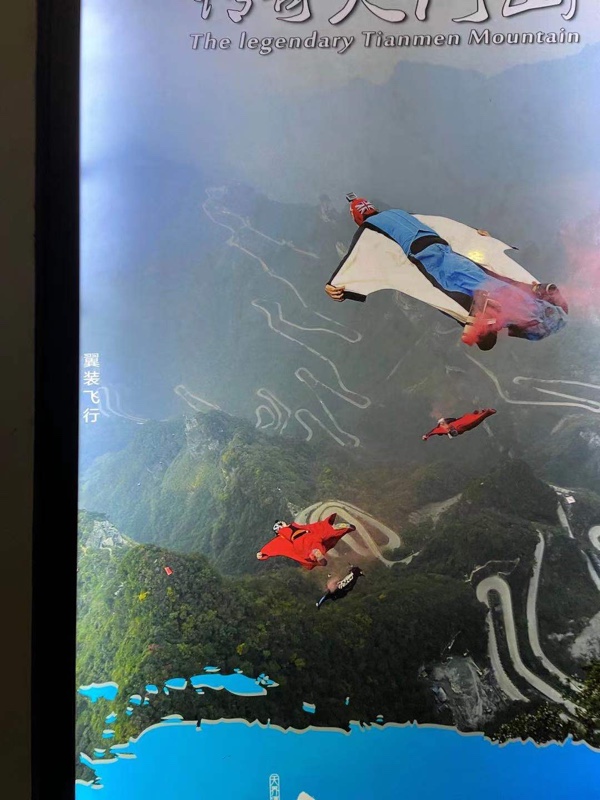
The platform you can see is the point from which the totally insane launch themselves off in wing suits. This daredevil sport (!) is known as flying squirrels and even the most hardy in our party blanched at the thought of doing that.

No, thank you.

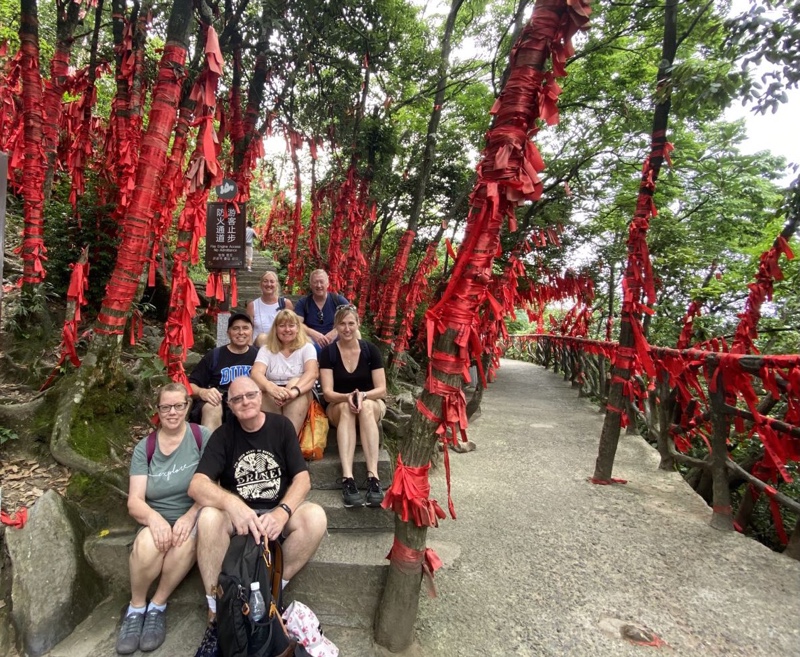
What was stunning was the beautiful red ribbon area. People write wishes or prayers and tie them to the trees. It’s nearer to heaven I suppose.

We wrote one for the family and I very bravely went near-ish to the edge to find a space to tie it on.

The walkways were fortunately very sturdy and made from concrete. It made me shudder just wondering HOW they built them at such heights. I later learned that they would have constructed bamboo scaffolding like this on the cliff face.

The scaffolders must have been as crazy as the flying squirrels!!! I just hope that they were well paid but I suspect not.

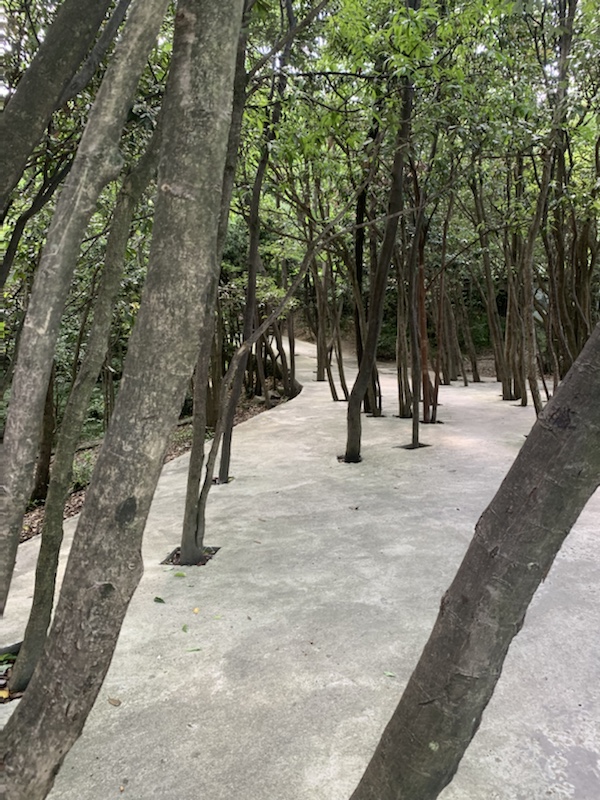
What was fascinating was the way the concrete was constructed around the trees

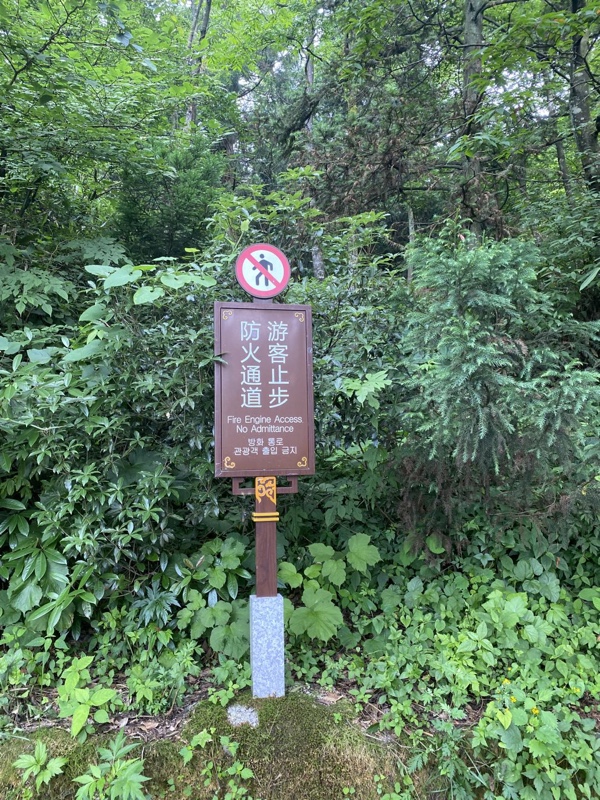
Oh and you have to laugh at some of the translations on the signs

Fire engine!!!! Up here!!!!

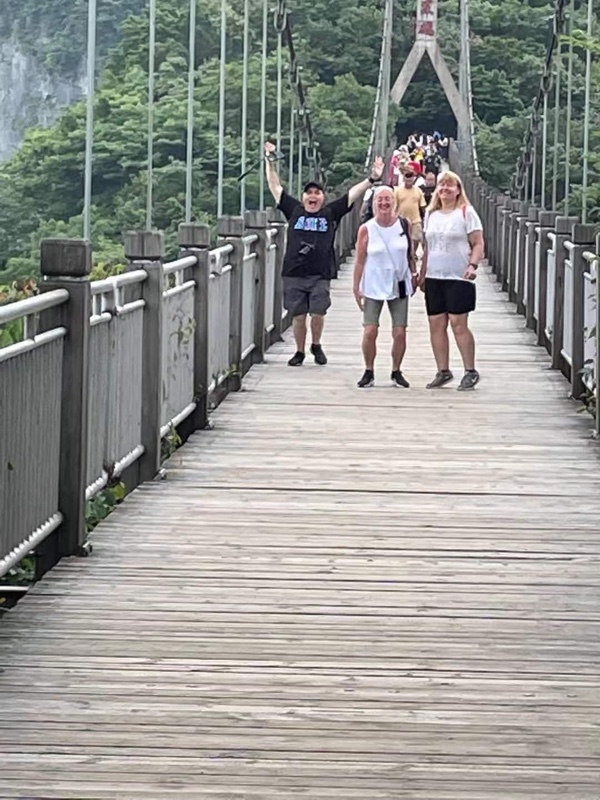
Then there was a short suspension bridge which I liked least of all because it MOVED as we walked across. I traversed that as rapidly as I could.

The others enjoyed it and waited until I had crossed before jumping!!!

I decided that I needed to conquer this fear so I tried very hard and did this

Take a look at the railing. It was strong but it does have gaps in it. What was most shocking to us all were the number of people up here with small children. Toddlers who were not on reins! Would you bring a small child up here?!?! We were extremely glad that we visited while the Chinese schools were still in session. We might all have had heart attacks if there were more children running around.

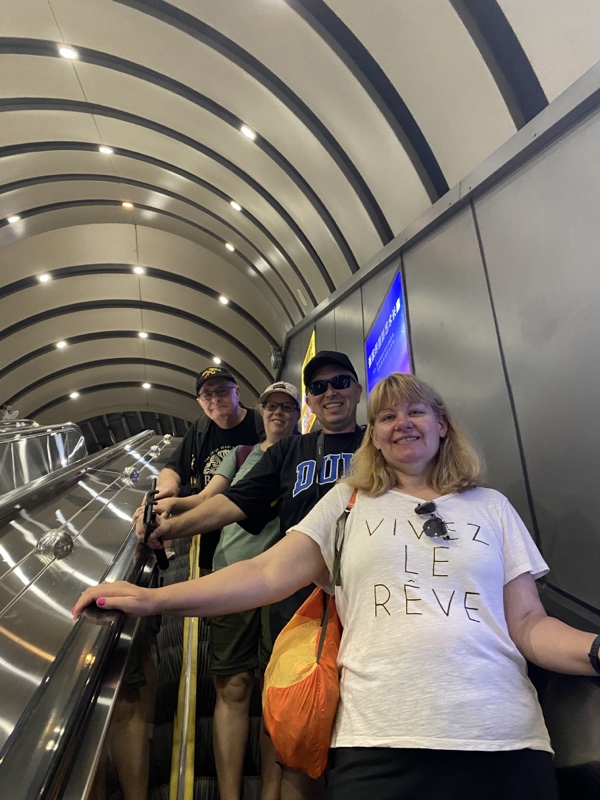
The way down was easier with an extremely long escalator ride inside the mountain which just felt like being in the London Underground.

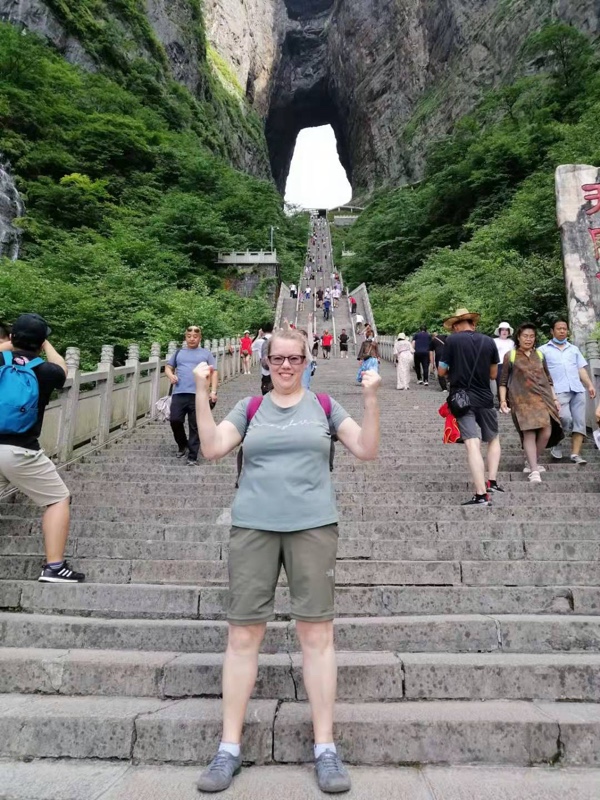
Then there was the final challenge. 999 steps. Those auspicious numbers again. And they were STEEP

Each tread was quite narrow

In 2018 a Range Rover drove up the 99 bends and 999 steps as a challenge. They did it in 23 minutes 41 seconds which was quite an impressive feat. Check out You Tube if you are interested.

I made it!

We certainly put in some steps and stairs over the 4 days. All in all it was quite an adventure and I feel proud of what I achieved. Well I do now that I am safely back on the ground! As the book says ‘Feel the fear and do it anyway’ and I certainly did that.

Next holiday should perhaps be somewhere flatter.

Many thanks to Ron, Laurie, Janice, Arthur, Lisa B and Kevin for sharing their photos

The great glass elevator and other scary tales!

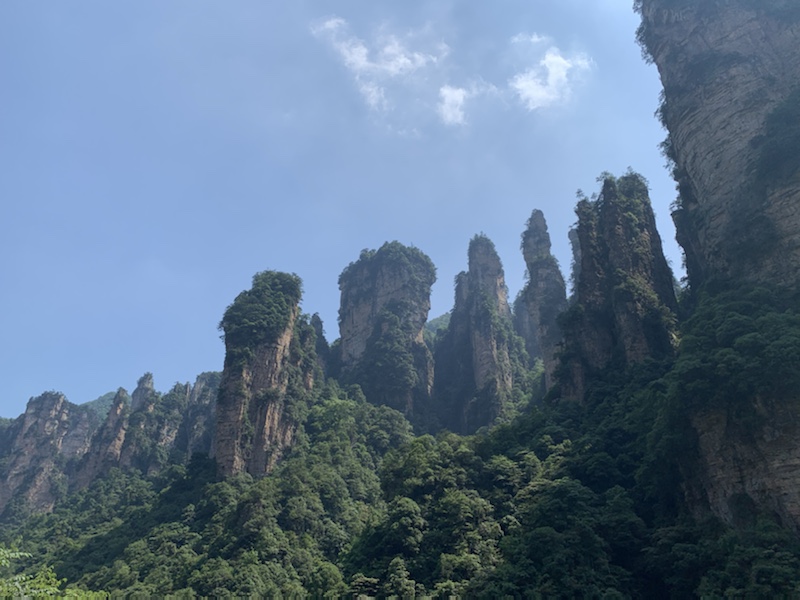
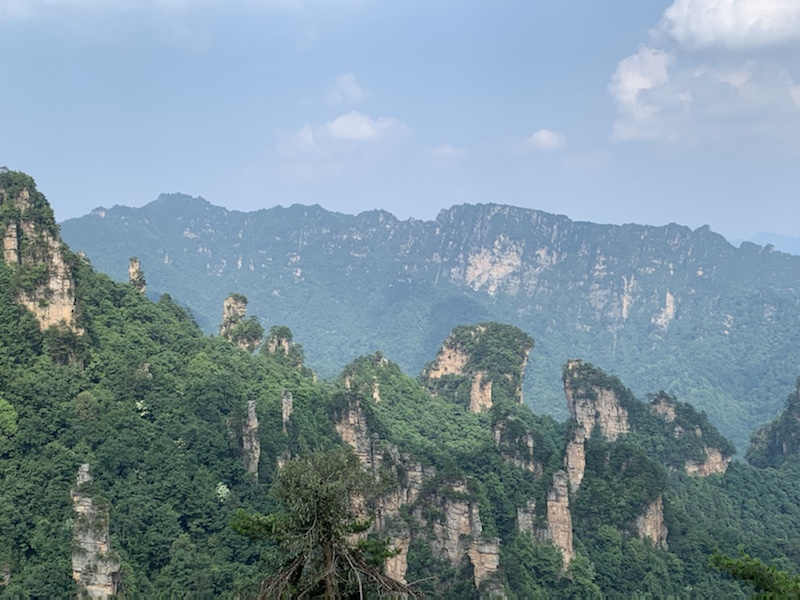
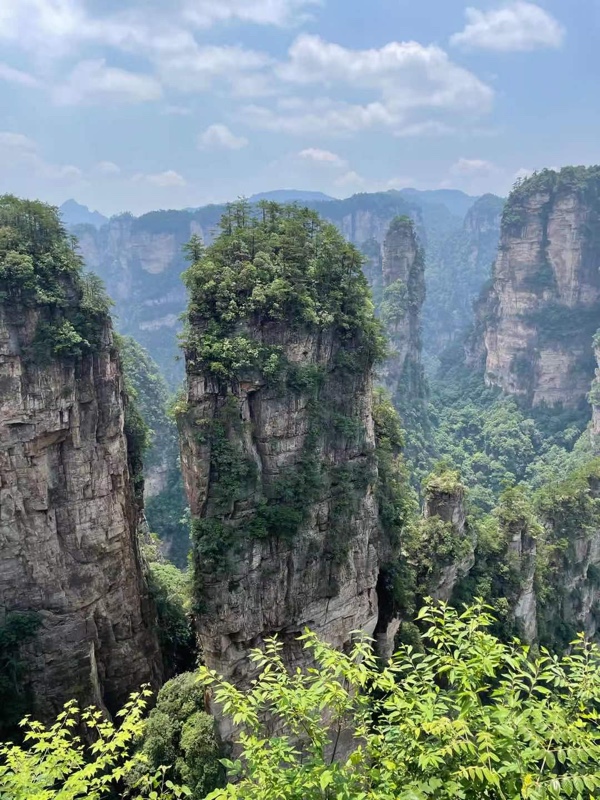
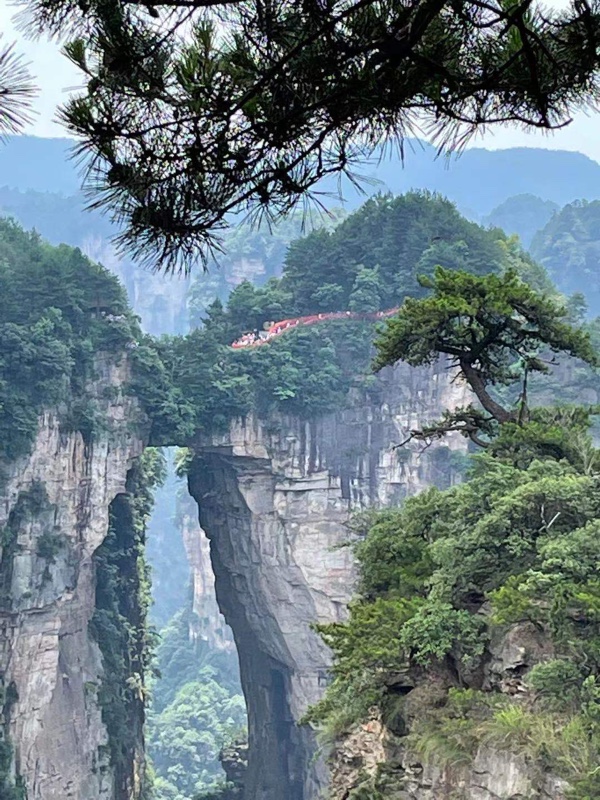
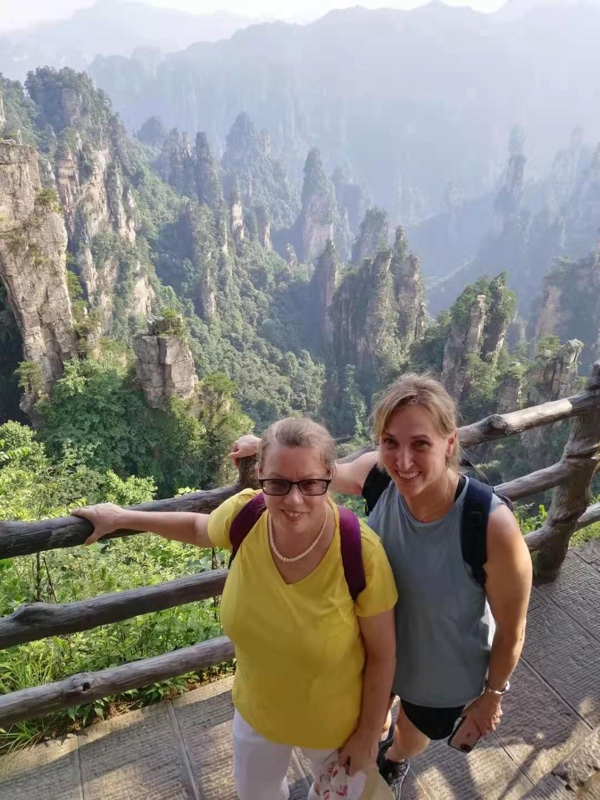
The Zhangjiajie region has soaring towers of quartz sandstone topped with tufts of vegetation. These rise to some spectacular heights with sheer vertical sides. It makes for the most amazingly breathtaking scenery and today it was our turn to go UP them.

I don’t really know what possessed me to think that this trip would be a good idea! It seemed fine when it was all theoretical from the safety of our sofa in Shanghai. But other people said they had enjoyed it, so now we’re here.

Those who know me well will know that as I have grown older, I have developed vertigo. I not only get scared of heights but I also don’t like other people going near the edges. I have even found myself holding the handrails every time I go down any steps or stairs.

It is a real nuisance and it has been getting gradually worse. I don’t like sheer drops. I don’t like going anywhere remotely near the edges and looking down makes my stomach clench in gut wrenching sickening spasms accompanied by cold sweats, heart palpitations and something akin to a panic attack. So why in the world would I agree to go on a trip here? The place in China that is famous for its heights! Not only that, I arranged the whole trip!!!

This morning as I faced the glass elevator gliding effortlessly up the sides of the mountain I asked myself that very question. Was I out of my tiny mind? Did I really think that I could do this?!? What on earth possessed me?!?!

It is nothing if not HIGH. See…

But by now there was no turning back. I had committed to this and I was determined to do it! No matter how hard and how scary it was. Not only was I about to step into a great glass elevator in a Roald Dahl-esc way but I was then going to spend all day wandering around on the tops of these monoliths!!!

This is what the ascent looks like on one of those days with wispy ethereal clouds. Everyone in the lift Oooohed and Ahhhhed as we ascended but I show this video here because if I am honest, I didn’t actually look at the time.

Here I was doing one of my least favorite things but I did, have one secret weapon in my campaign against vertigo. I have been learning Taiji.

There are a great many benefits to Taiji but one of them is improved balance. I had noticed that over the course of the 10 months that I have been learning, that my balance has improved noticeably. I can now do all the standing on one leg exercises without wobbling much at all! My core feels stronger and I generally feel more stable. I have been delighted with this and I was banking on that being a huge factor in what was causing the physiological reactions when it comes to heights.

The views up here were stunning and spectacular

But we were high. Oh boy we were high!!!

Now normally even just a photo of this kind of drop would have me sweating and feeling peculiar. But I was ok (ish)

Look I went near the edges (sort of) I’m rocking it.

Actually I am pretty proud of myself for managing this. Only months ago and I wouldn’t have even entered the glass elevator never mind stood as close to the edge as this.

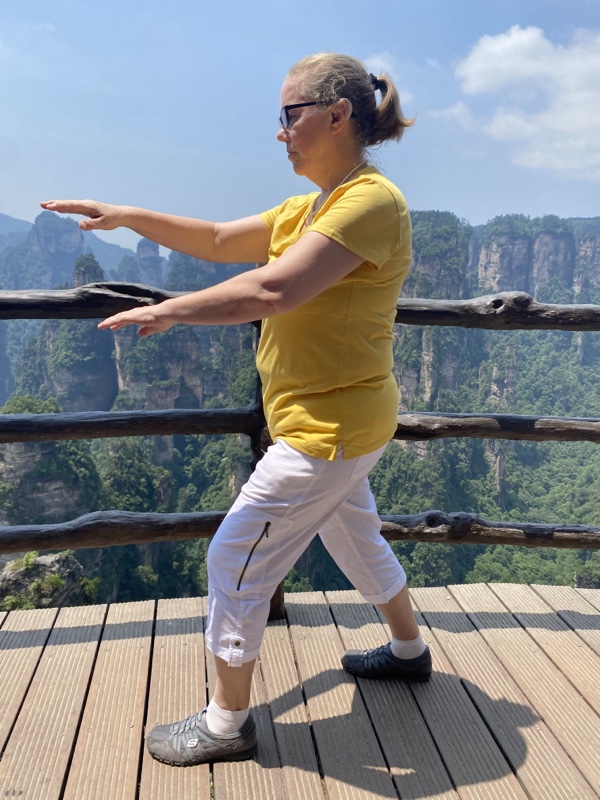
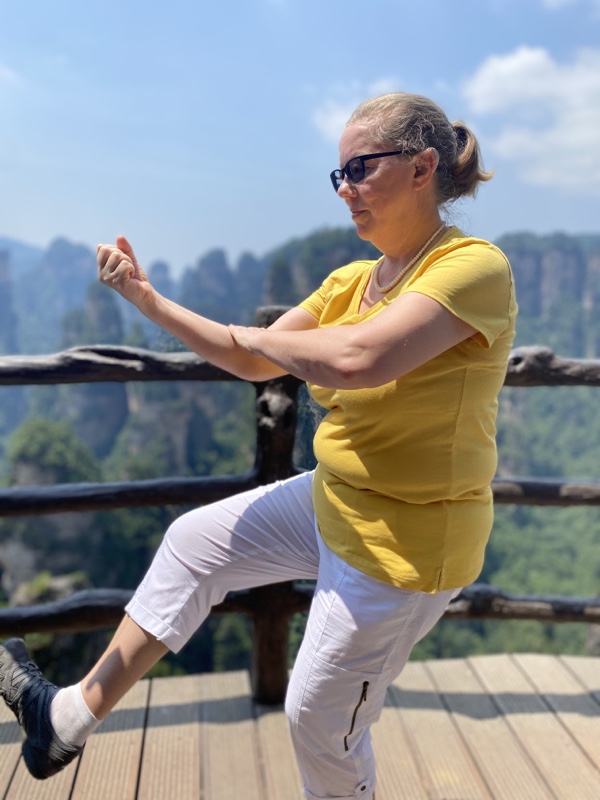
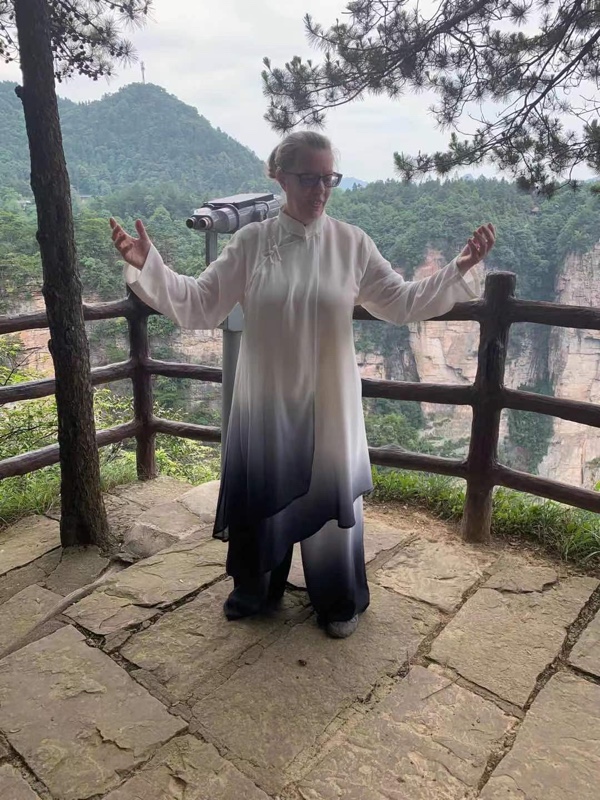
So, to celebrate I did some Taiji. It really helps to keep me calm, balanced and focused. Was i scared? You bet. But I did it anyway. I was up there. Not maybe as close as everyone else. And I certainly didn’t lean over the rail like others did or anything stupidly ridiculous like that. But I did it.

And the Taiji had really helped.

Then came the big test. The GLASS BRIDGE

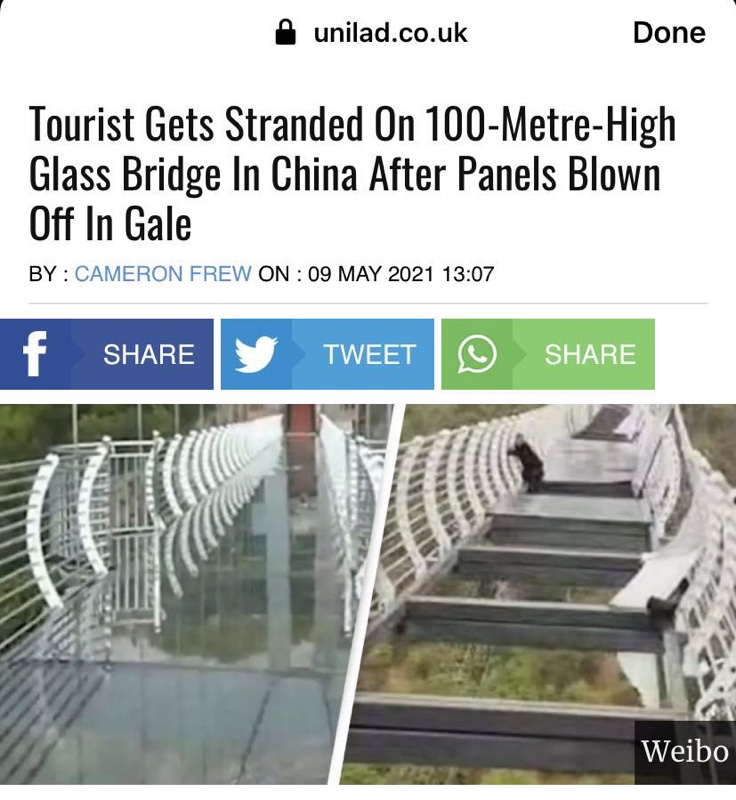
This was easily the most terrifying part of the entire holiday. I had seen previous news reports of a tourist being trapped on a glass bridge in China during a gale when the glass panels blew off (possibly my worst nightmare). What on earth was he doing out there in a storm anyway?!?! He had to be airlifted off and I cannot imagine how he felt being buffeted about over a gaping void.

So it was with some trepidation that I approached THE BRIDGE…

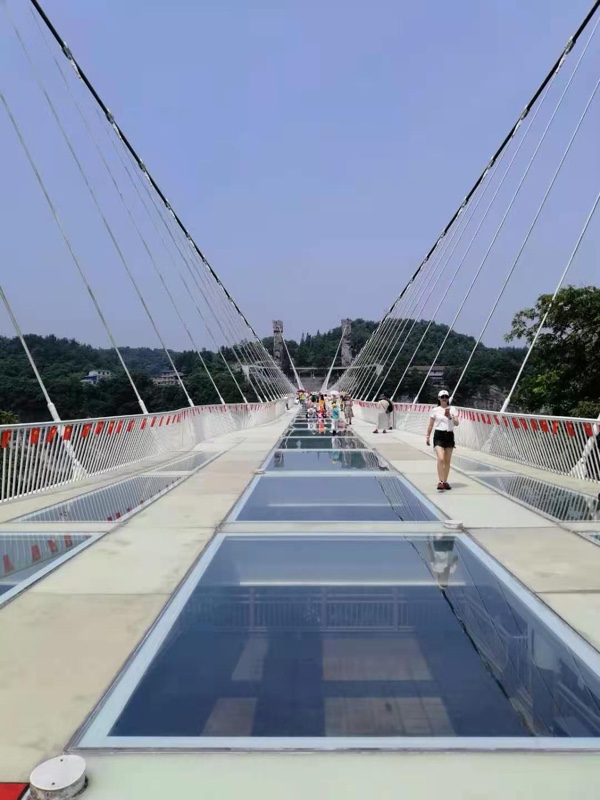
This was what I was facing.

We were surprised to see the grandstand at this end as we didn’t think that crossing a glass bridge was a spectator event!!

We were not allowed to bring heavy cameras on the bridge, only phones and I could not bring my flask of water. We were told that it was in case the heavy items dropped and cracked the glass!!! Hearing that did not exactly inspire my confidence in the strength of the structure!!

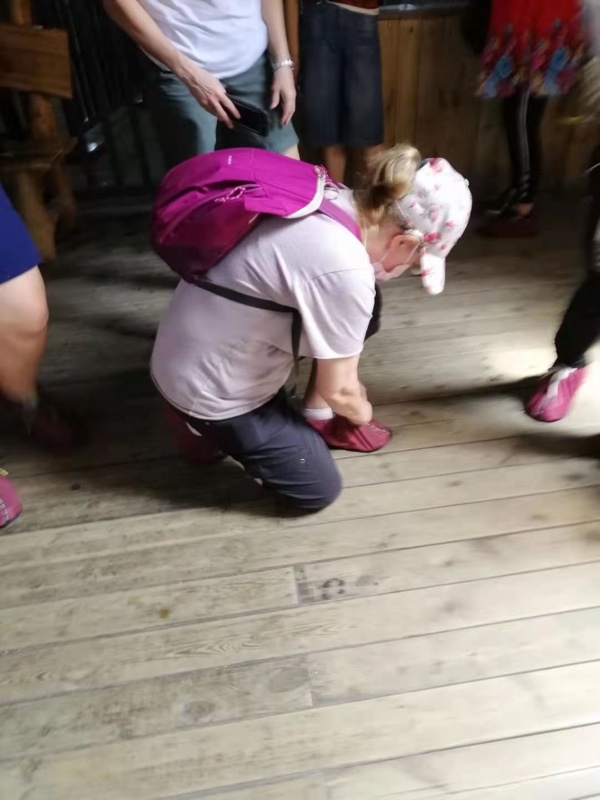
But I was determined to do it. We had to wear special overshoes to protect the glass.

And then it was off. As you can see from the picture below, the glass is interspersed with metal sections so my plan was to walk briskly on those parts and not to look down. The other end seemed to be very far away!

Like this. ‘Don’t look so scared’ said Kevin!!!! But I was. Holding the Qi helped

It worked though. I kept my focus on the destination and did not dare look at the drop below. Others strolled and admired the view but I had one goal and one goal only – to make it across to the other side.

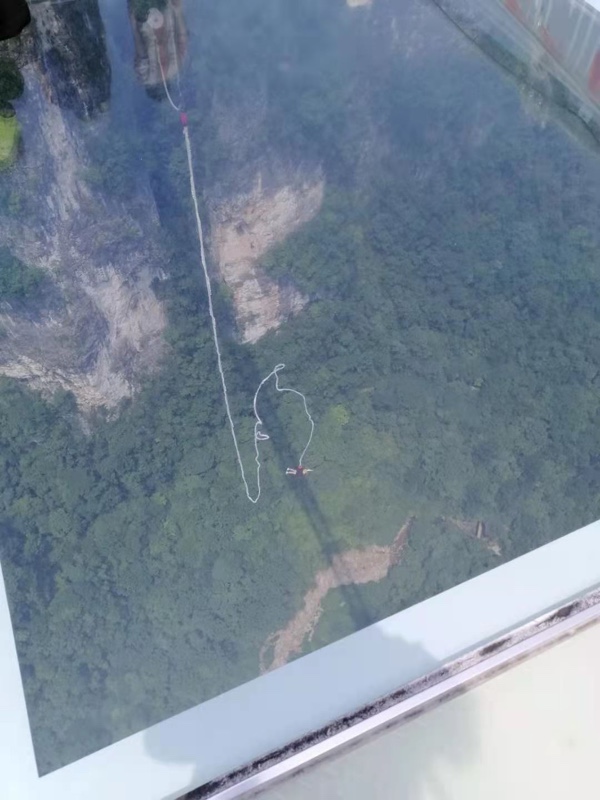
People got in my way but I didn’t deviate. I waited for them to move. At one point everyone was crowded round a couple of panels which I later learned was the bungy jumping view point. Like this.

Not my photo, obviously!!!

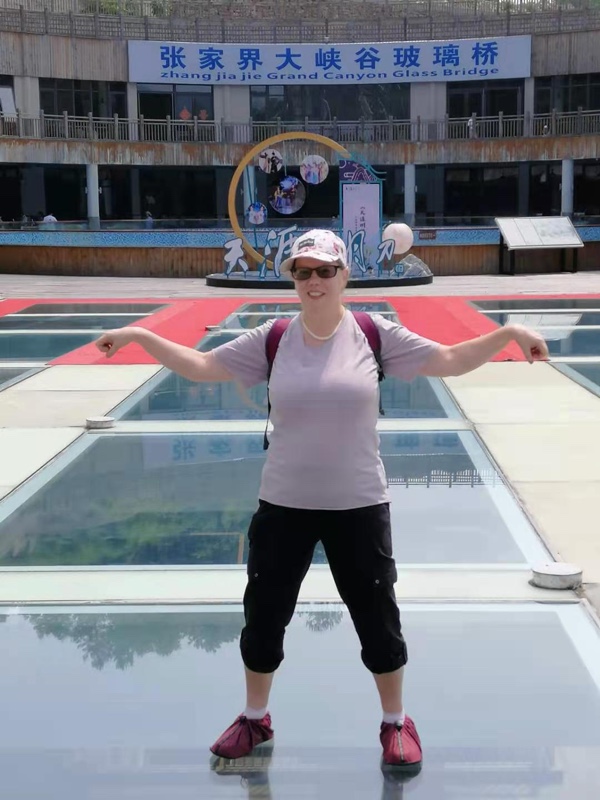
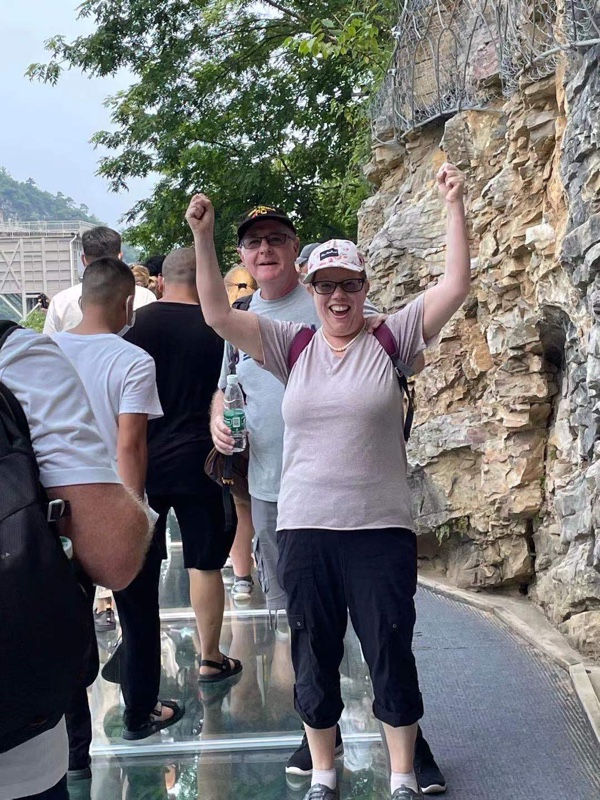
Mad fools!!! Then I made it!!! I got all the way across. Kevin helped and held my hand for some of it. And he wanted a couple of photos to prove that I had done it. On the glass.

It was quite an achievement and although I was pretty sweaty by the time I reached the end I was really pleased that I had made it! All thanks to Taiji.

I did though draw the line at the zip wire descent. You can have too much of a good thing!!! Maybe with another year of lessons I might be more able to do that.

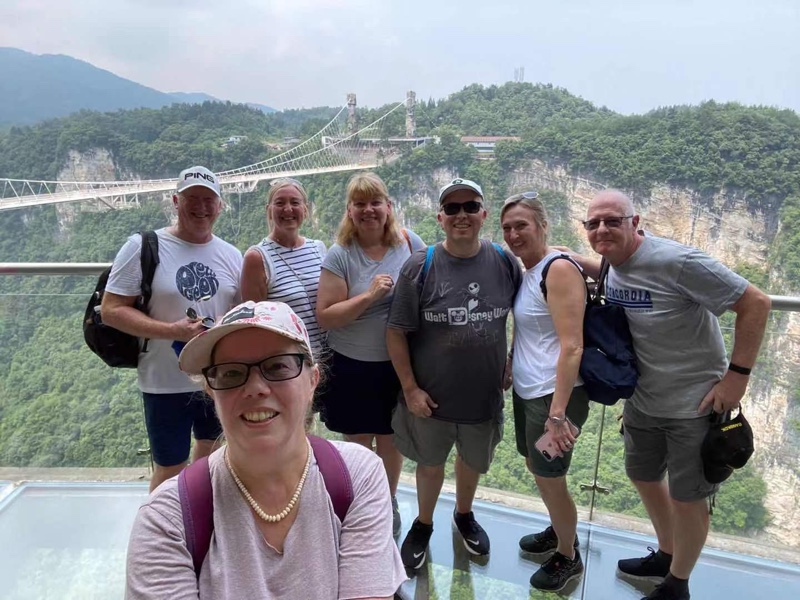
Just when I thought that it was all over, I discovered that we had to traverse a glass walkway that wound along the cliffside in order to get down!!! They wanted a group photo but this was as near to the edge as I was willing to get!!!

Huge thanks to my fellow adventurers for permission to use their photos as I wasn’t up for doing any photography myself!!!

Zhangjiajie: the world of the Avatar Mountains

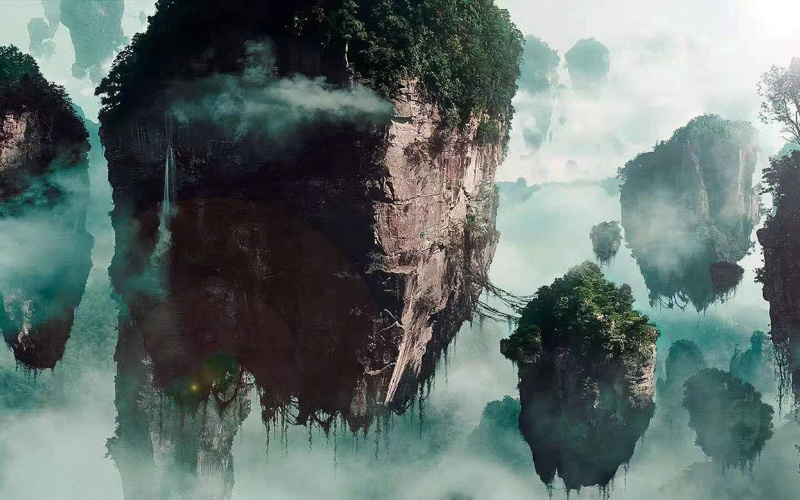
Pronounced Jang-jia-jee, this region in the Hunan Province of Southern China is just over 2 hours away from Shanghai by plane. It is a area of outstanding natural beauty which inspired the setting for the film Avatar (see picture below)

The region is a geological marvel comprising over 3000 quartz sandstone peaks shaped over 380 million years by weather, erosion and water cutting to create a ‘forest’ of sheer towers, capped by exotic vegetation. Coming from the urban mega-sprawl that is Shanghai it was a pleasure to see some natural beauty.

As there is no heavy industry in Zhangjiajie the air is particularly clean, even though the main city has 1.8 million people living there.

This is an extremely popular tourist destination and a must see on any visitor’s list after the Great Wall and the Forbidden City etc. Making the most of our early release from school, 2 weeks ahead of the local school summer holidays, we headed here before the crowds hit.

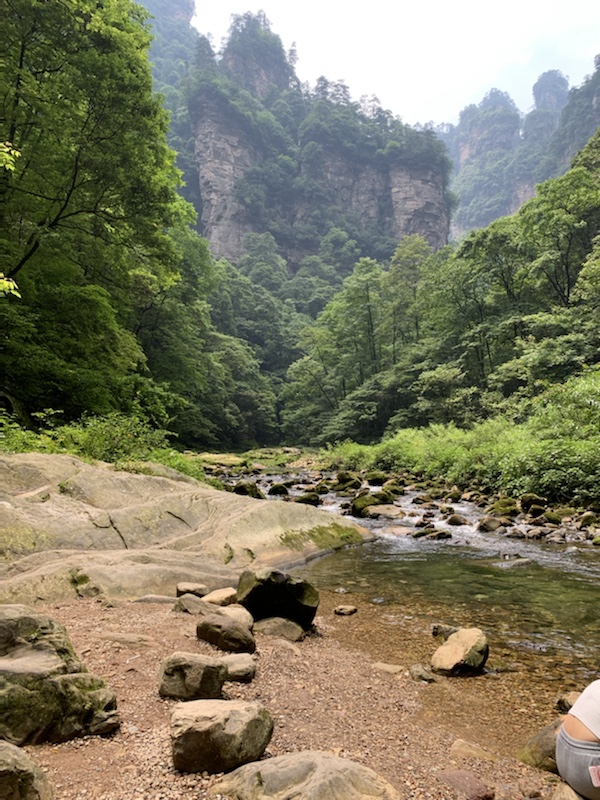
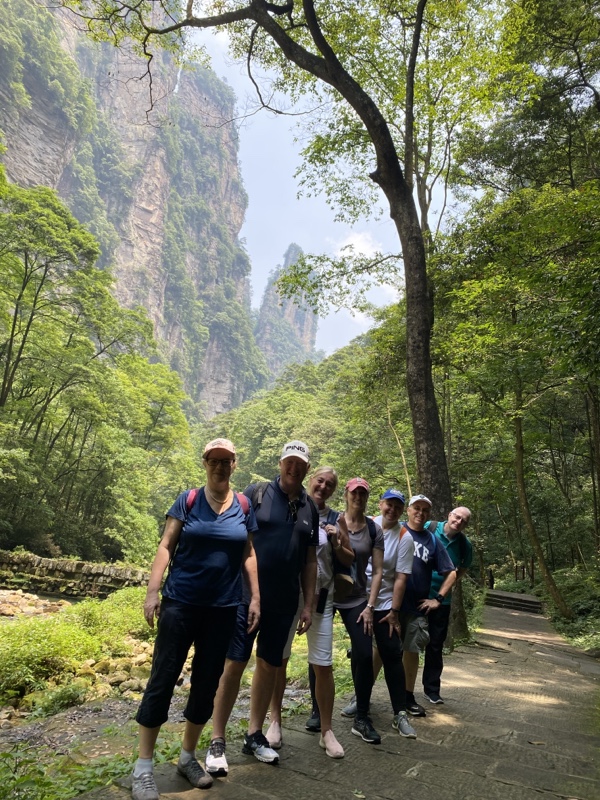
After an incredibly early start and a most disappointing meal on the plane, we arrived to begin our adventure with a hike along the Golden Whip stream. This stream is 7.5 km long with crystal clear water babbling through the verdant lush forest floor. It is not surprising that it is a designated World Heritage Site.

As a National Park we walked along a well maintained path and were advised not to step into the vegetation at the sides in case of snakes. We were more than happy to oblige with that!

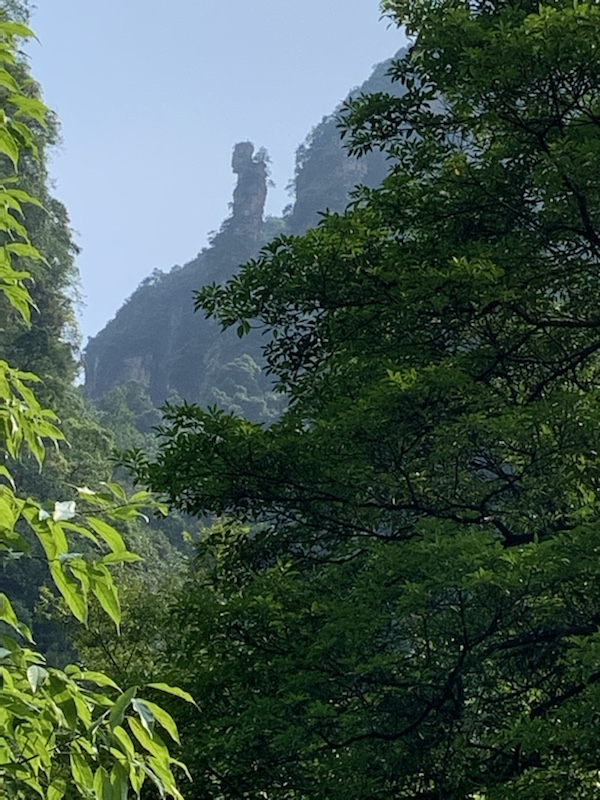
We admired the lofty pinnacles which all had been named after their shapes. The one below, for instance, was called ‘the old man gathering herbs’ as the vegetation gives the appearance of a basket on his back.

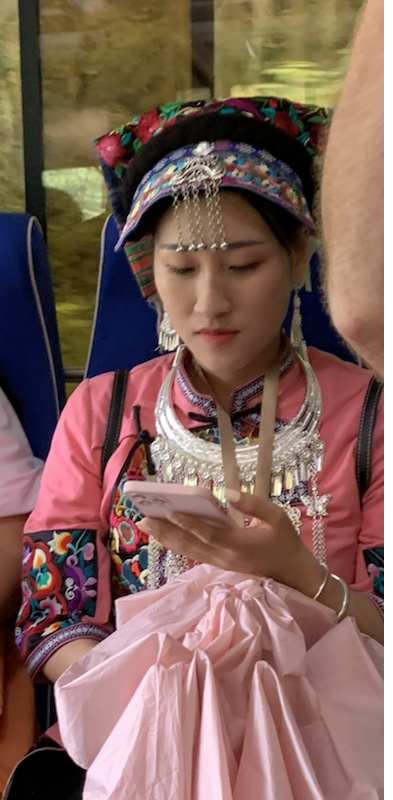
The local minority group who live here is called the Miao (pronounced meaow) and they dressed in beautiful silver-laden costumes.

This lady was on our bus

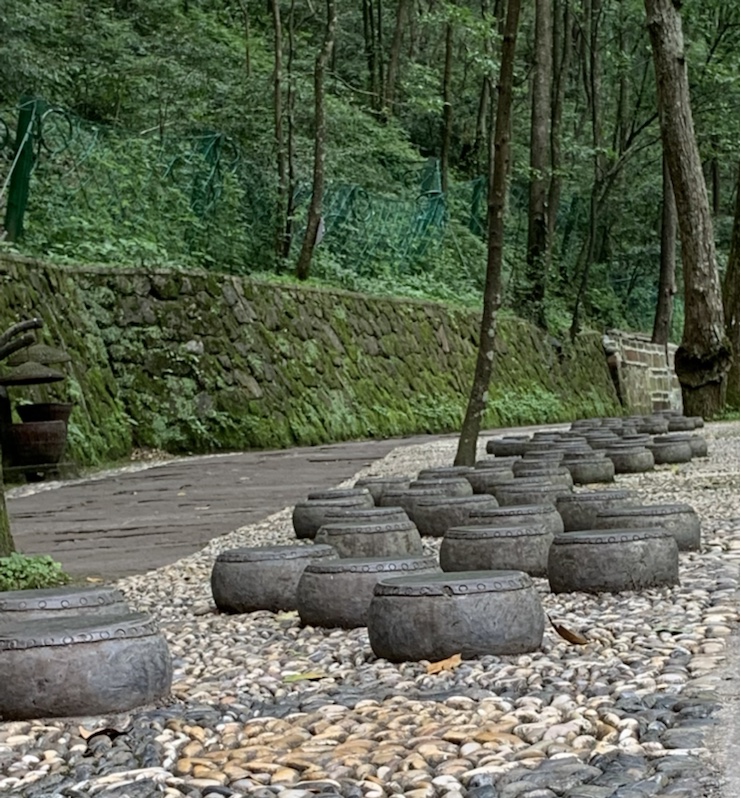
Drums are very important to the Miao and walking on these drum shaped stones is supposed to bring serenity.

We will see if it works…

At intervals along the path we came across little shrines full of sticks.

The Miao put straight sticks there and make a wish. They wish that their bones and their spines will remain as straight as the stick. Generations of Miao carried heavy baskets on their backs causing them to have spinal curvature and consequently be in great pain so this is a very understandable wish.

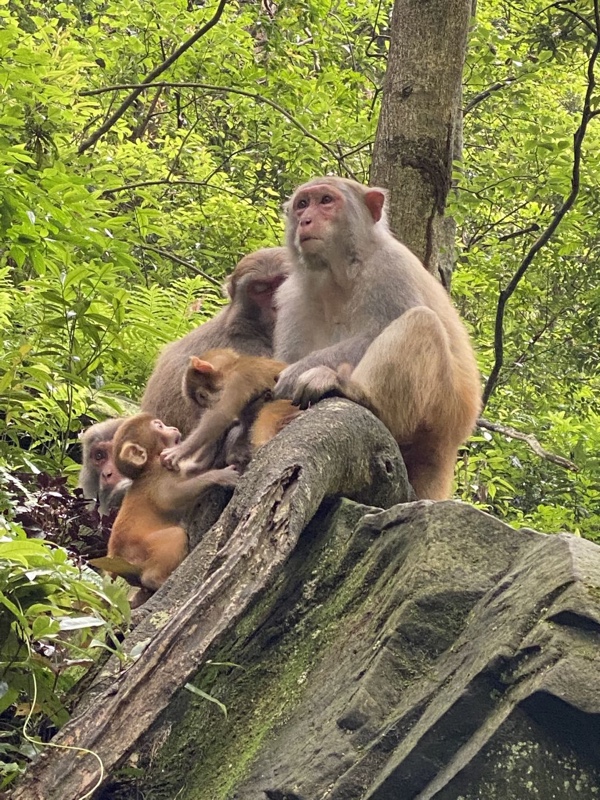
The forest is also home to wild monkeys. In fact they call it an ‘infestation’. These creatures whilst they look adorable can be vicious and we took great care not to let them have any food.

The dragonflies and butterflies that darted around us were captivating. They were huge. I have never seen any this big. I didn’t manage to capture any of the midnight blue butterflies but they resembled small bats! This is one of the dragonflies on the leaf in the foreground

It was extremely hot and humid and we were soon dripping wet with perspiration and resembled ripe tomatoes but it was so nice to be out in nature again. We were delighted not to have rousing Chinese music blaring at us (like last summer)

After lunch we hiked again, this time along a gorge called The 10 mile Gallery (we didn’t walk for 10 miles though) I reckon that we probably did 10 miles altogether which was enough in the 30 degrees heat!

7 easy Qigong morning wake up exercises

Since doing Taiji I have been feeling increasingly healthier, more stable and have much greater flexibility. I do put the hours into daily practice and learning my routine , but I always begin my day with some Qigong wake up exercises. These are very simple and can be done in about 15 minutes.

Many of the Taiji routines need a Shifu (Master) to keep an eye on your posture etc but these exercises are very simple and can be done at home by yourself, and they will have noticable effects. I have been asked by a few people to share some of what I am learning. If you want to start your day energized and refreshed you can try these 7 easy qigong moves.

Taiji is not strenuous. All the exercises are non impact and all are good for stretching your joints, tendons and fascia network.

Number 1

Even if you don’t do anything else, I recommend that you try this one. It wakes up ALL the meridians and should be done first thing in the morning when you get out of bed.

Bend your knees and tilt your thighs inwards slightly and tuck your tailbone in. Then place your hands palm down at hip height. Push upwards until your palms are facing the sky. Keep the stretch then relax and flop forwards letting your hands, head and arms hang down. Repeat six times.

This is quite a powerful exercise and can also be done any time in the day if you are feeling sluggish. It will help you re-energize.

Number 2

This is a nice neck stretch when you lift your head upwards and drop it to your left shoulder. But the main purpose of the exercise is to then drop your left shoulder and relax it. Let your arm hang loose. Then gently twist your shoulder, elbow and wrist very slightly. You will be releasing the energy down your arm and getting your Qi (chi) flowing. You may experience some tingling sensations, that is your Qi (chi) moving. Just enjoy it. Don’t worry if you don’t feel any tingling, it doesn’t always happen in the beginning.

Now bring your head slowly back to the centre. repeat with the right side. You can do this as many times as you have time for. I usually do 2 or 3 per side.

Number 3

The next exercise is for your heart so this is an important one to do regularly. Part of Taiji is self-massage and this is one of my favourite exercises.

Use the heel of your hand and place it in the centre of your sternum just below the neck. Then gently but firmly massage in a smooth sweep down the centre of your body 10 times, alternating the hands.

Use the heel of your hand again but this time start in the centre of your chest and sweep up to your shoulder, over and down the outside of your arm. Repeat with the other hand on the other arm. Do this 10 times. This also massages the heart meridians.

Repeat, but this time massage down the inside of your arm. This feels just incredible! Do 10 strokes of your inner arms.

Number 4

The next exercise is to wake up and support your kidneys. Do have a bottle of water handy for this one as you will be thirsty afterwards. Not iced water though as this is quite bad for you. Your blood vessels contract making it impossible for your energy to flow. The best temperature water to drink is 40 degrees. So not as hot as a cup of coffee.

We often take our kidneys for granted but they perform such vital functions for us of eliminating toxins. Be kind to your kidneys and do this exercise daily.

Bend at the waist and place both hands on your lower back. Rub up and down 100 times. This can actually make your shoulders feel tired at first but it it ok to have a rest and then carry on. At the end hold your hands in position on your back for a minute, then sweep them downwards.

Number 5

Now place the left hand on your lower back left side and do 50 rotations anticlockwise then 50 rotations clockwise. Repeat with the right side. Your kidneys will LOVE you.

Number 6

Standing straight with your knees slightly bent again, now bring your palms face up to the centre of your chest. Push your hands together so that your fingers interlock. Then rotate down and out so that your palms are facing skywards. This is a smooth movement. Continue pushing upwards until your arms are stretched then pull apart and slowly lower your arms, keeping your wrist at a right angle.

Do this three times.

I love this exercise because it is one of the ones where I can feel the Qi (chi) quite strongly in my palms. If your palms are tingling then that is a sign that your Qi is flowing.

Number 7

The final exercise is very good for your brain and an excellent one to do if you need to improve your memory as meridians in your feet connect to your brain.

Stand on one leg and rotate the foot at the ankle 9 times in an outwards direction, then 9 times inwards. Repeat with the other foot.

Enjoy

If anyone does try these please let me know how you get on. I would be interested to hear.

Battle of the Books

Battle of the Books in an American Schools Reading Challenge which began in the 1930s in Chicago but slowly gained popularity and is now played, not only all over the US but also in International Schools, world wide.

Here at Concordia I have just had my first experience of The Battle.

Battle of the Books is a unique reading incentive program which encourages children from upper Elementary and Middle schools to read from a selected list and then answer questions on the books competitively. Here in Shanghai we have separated our Battles into a middle school one for the older kids and an Elementary School one for the 10-12 year olds.

Unlike other American schools, Concordia’s Elementary School finishes at Fourth Grade (UK Year 5) so other schools had a mixture of grade 4 & grade 5 whereas I just had grade 4. I worked with 20 of our children who volunteered to take part as one of their after school activities. I ran two sessions a week during the autumn and spring after school clubs and saw roughly half the kids in each session. They were very excitable and often noisy!

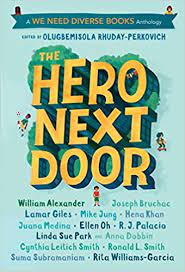
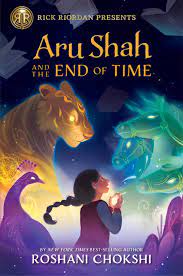
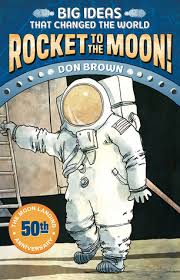
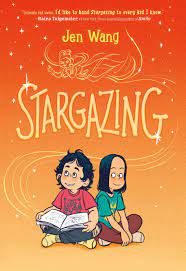
8 books had been selected by the Librarians from across the International Schools in Shanghai and purchased in bulk. The titles this year were:

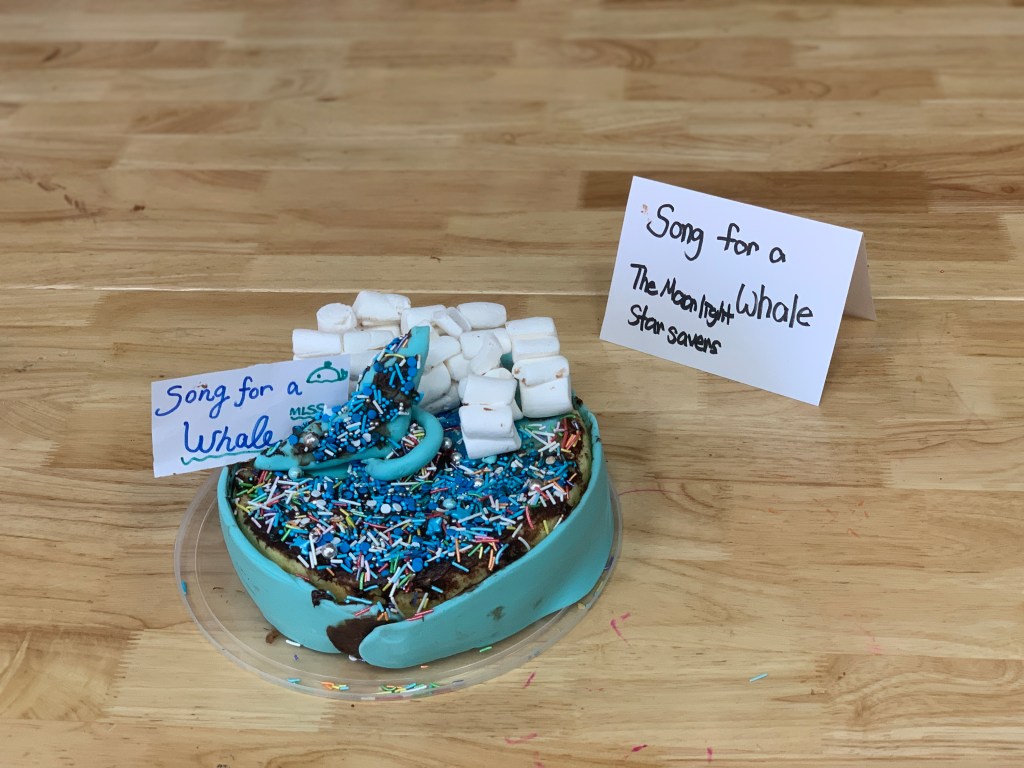
A story about a deaf girl who decides to help Blue 55, a whale who sings at a different frequency from the rest of his pod. A beautiful book all about communication.
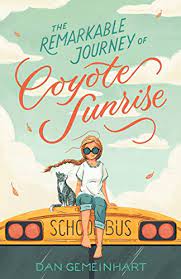
Coyote and her dad journey across America in a converted school bus following the death of her mother and two sisters until Cotoye hears that the woods near her old house are being torn down. She realises that she must return to rescue her memory box and both of them must confront the truths that they have been running away from
Short Stories from outstanding international authors showing that heroes can be ordinary people who have the courage to do extraordinary things.
An adventurous romp throgh Indian mythology when Aru lets out The Sleeper from the Lamp of Destruction and has to travel to the underworld to rescue the universe, all in her Spider-Man pajamas!

Rocket to the Moon by Don Brown is a non-fiction graphic novel which charts the history of space flight from the earliest invention of gunpowder in China through the space race of the 1960s to the famous moon walks.

This graphic novels tells a story of frienship between two girls, one of them develops a brain tumor which threatens to derail their friendship. The characters are Chinese American, but the situations and experiences of wanting to have fun, friends and fit in are universal.
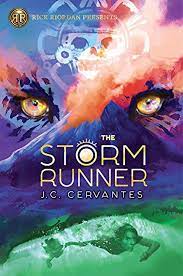
This was a longer book with a more complex plot which weaves through the darkest, strangest, and funniest twists and turns of Mayan myths. There are the scariest gods, the creepiest denizens of the underworld, and the most amazing and unlikely heroes, who have to save our world from being ripped apart.
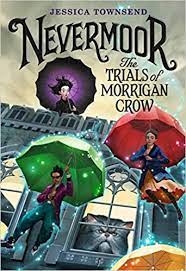
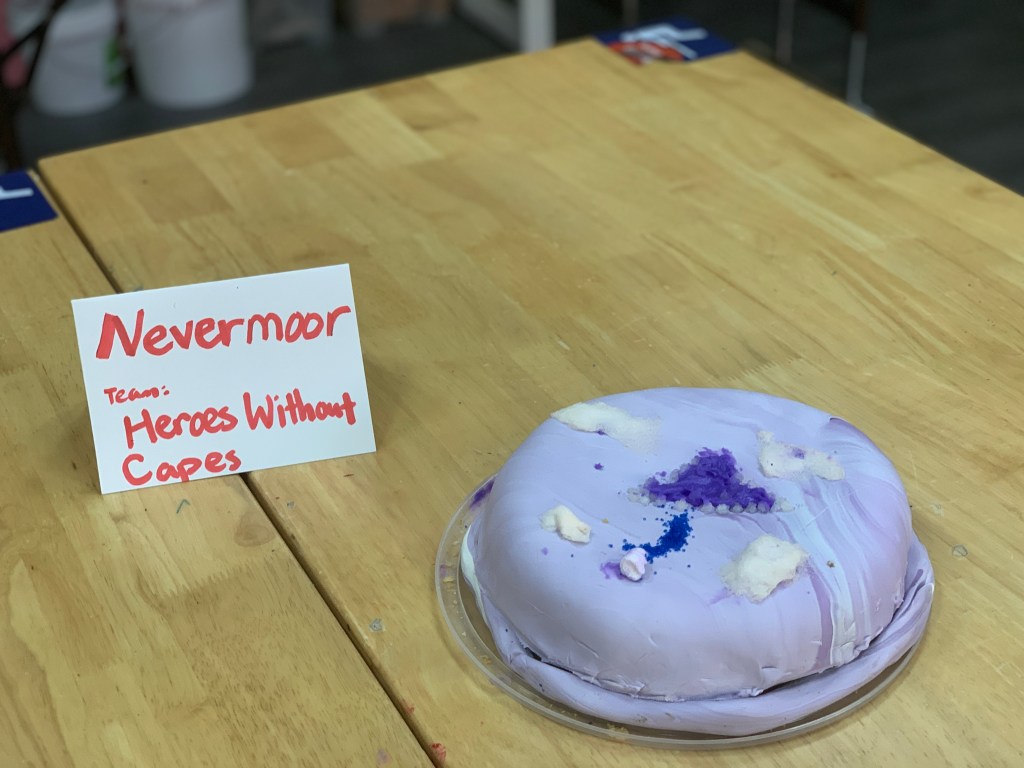
Ideal for fans of Harry Potter, this is the tale of Morrigan Crow who as a cursed child is doomed to die on her 11th birthday but who is rescued by the enigmatic Jupiter North and taken to Nevermoor where she finds herself entered for the Wonder Society trials. Morrigan will have to prove herself to the judges and Jupiter, even if she has no idea what her ‘knack’ is!

The children were divided into teams and encouraged to read as many books from the list as possible. Some enthusiasts read ALL of them while some teams made sure that each book had been read by at least one team member.

In normal years the event would be a day away at a neighbouring school with the different elements taking place amidst other fun activities like meet the author etc. COVID, however meant that each school had to work remotely.

This year 6 Shanghai Schools took part with 21 teams. The Battle itself has three components:

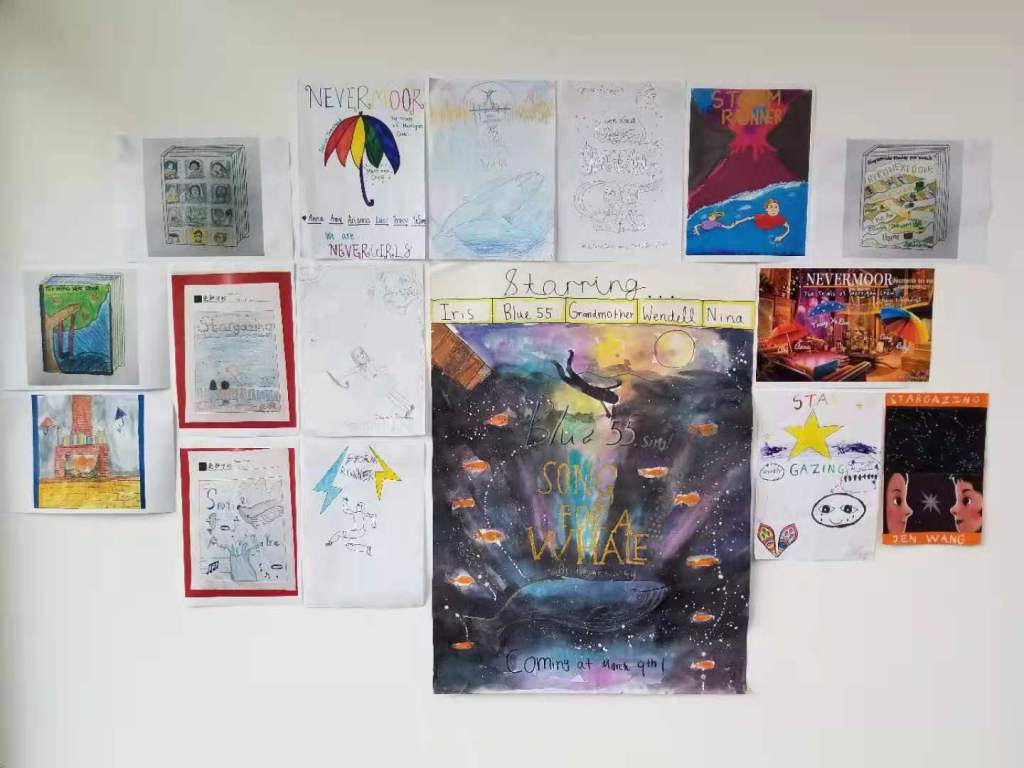
The first was to redesign a front cover from one of the books.

Here are sone of the team submissions from across the schools. I was very impressed with the art work.

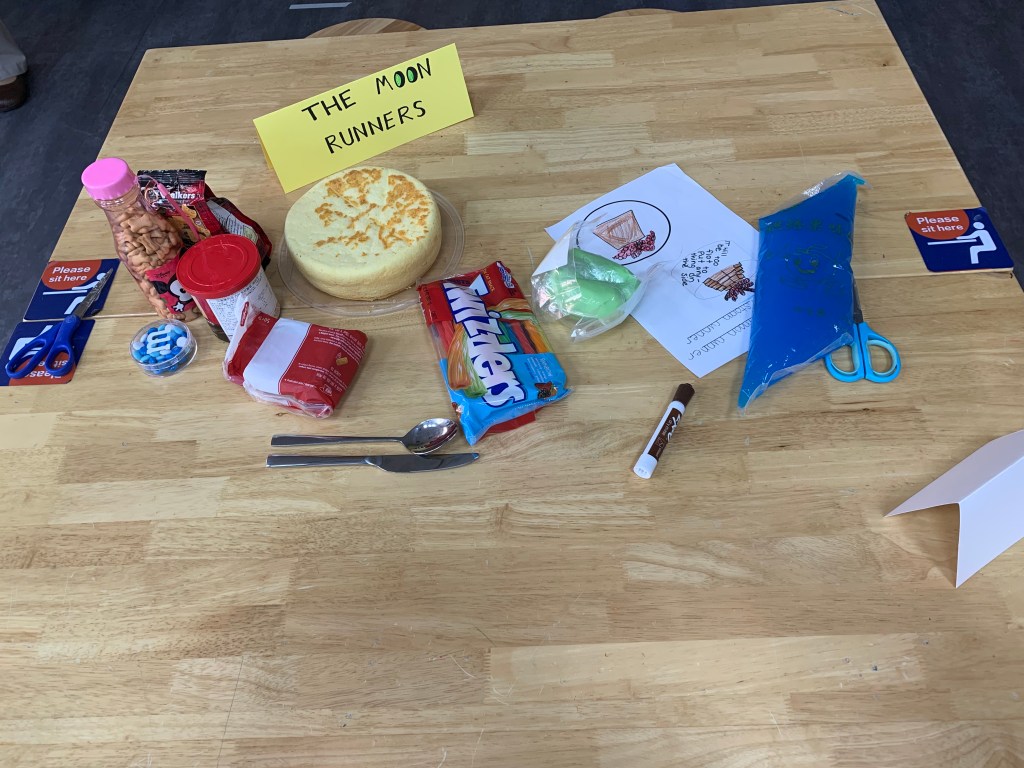
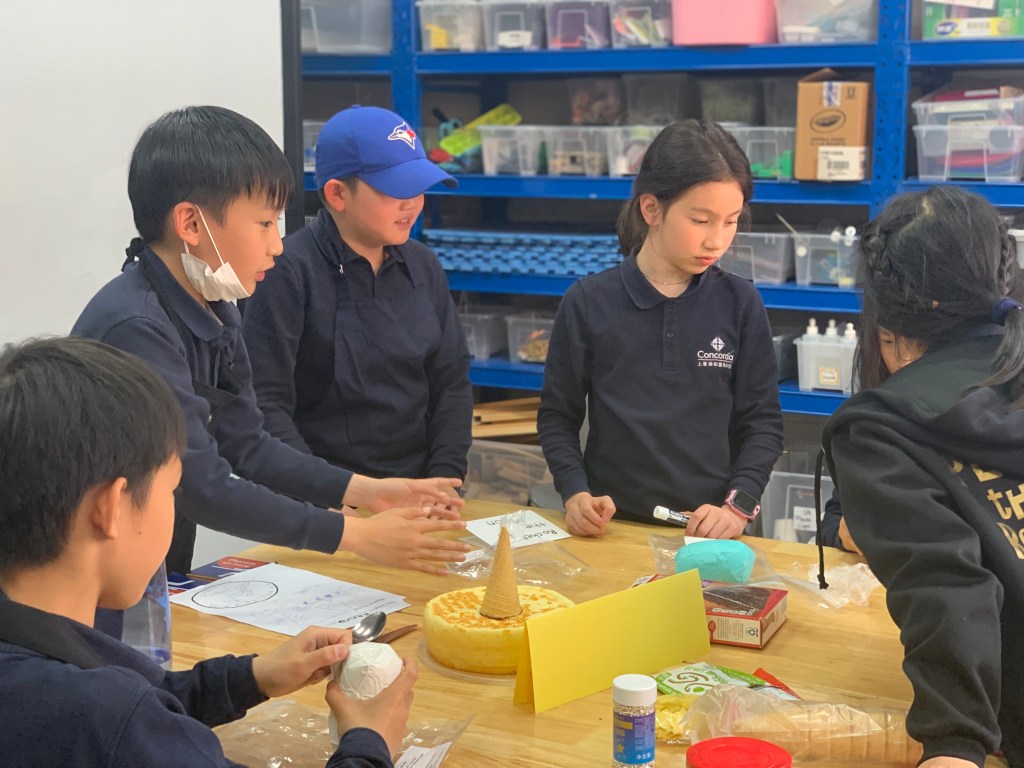
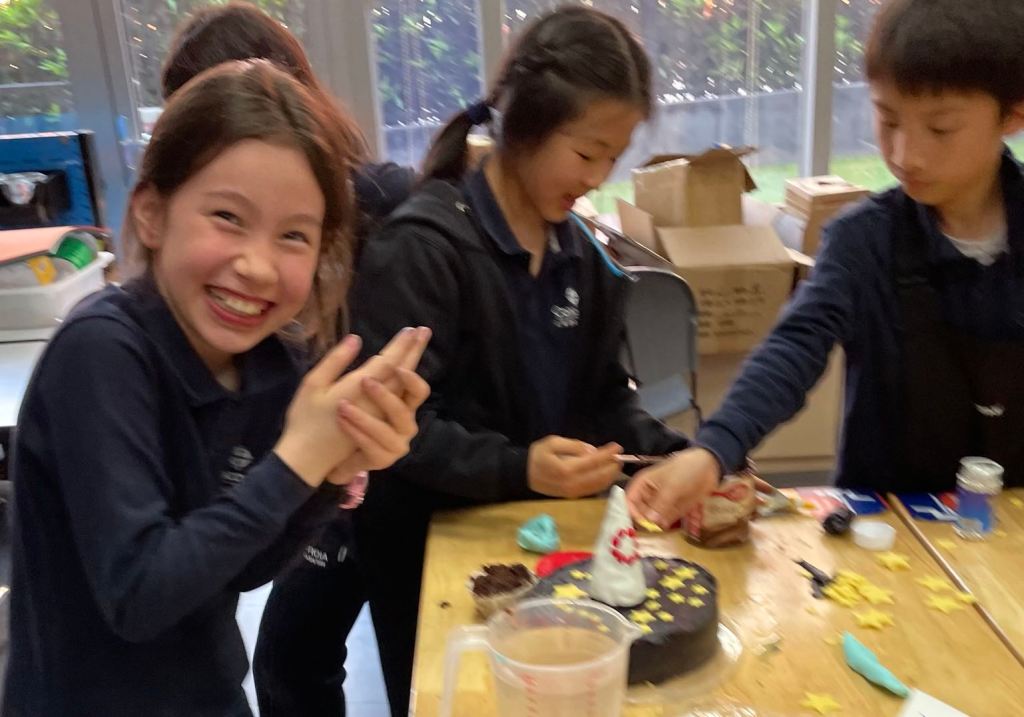
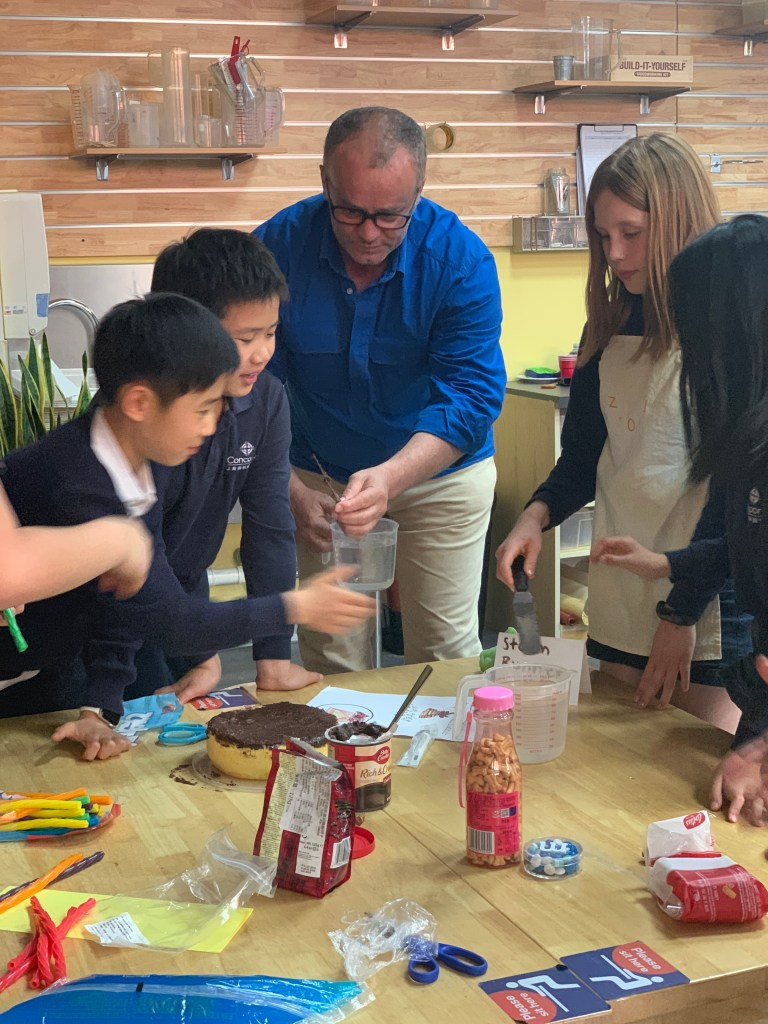
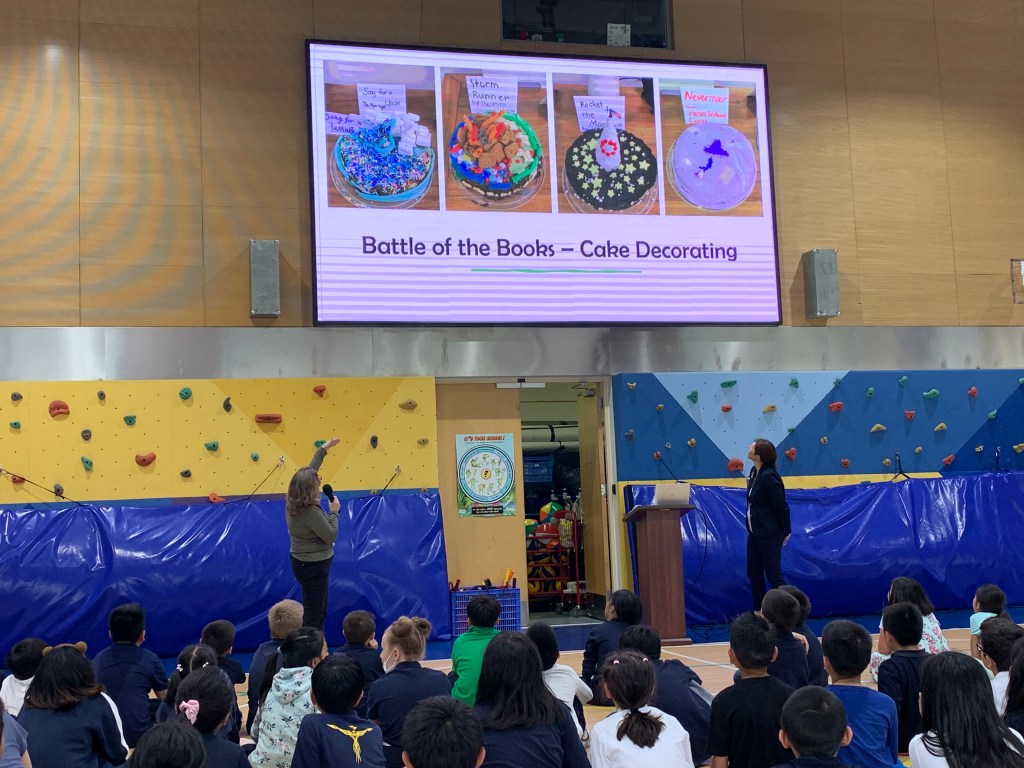
The second round was to decorate a cake with themes from one of the books. This was the most eagerly anticipated and exciting part of the Battle. Each team chose a book and then spent several weeks designing a decoration. All teams were supplied with a round cake so that all had the same basic size and shape to work from.

Much fun was had on the day but previous to this the teams had to use project management skills to plan the ingredients that would be needed very carefully. By the end of that process I was presented with a shopping list from each team that comprised, different coloured icing, frosting, sprinkles and even twizzlers and cotton candy (in purple!) among other things. We are fortunate to have an amazing online shopping system here called Taobao, which made my life MUCH easier.

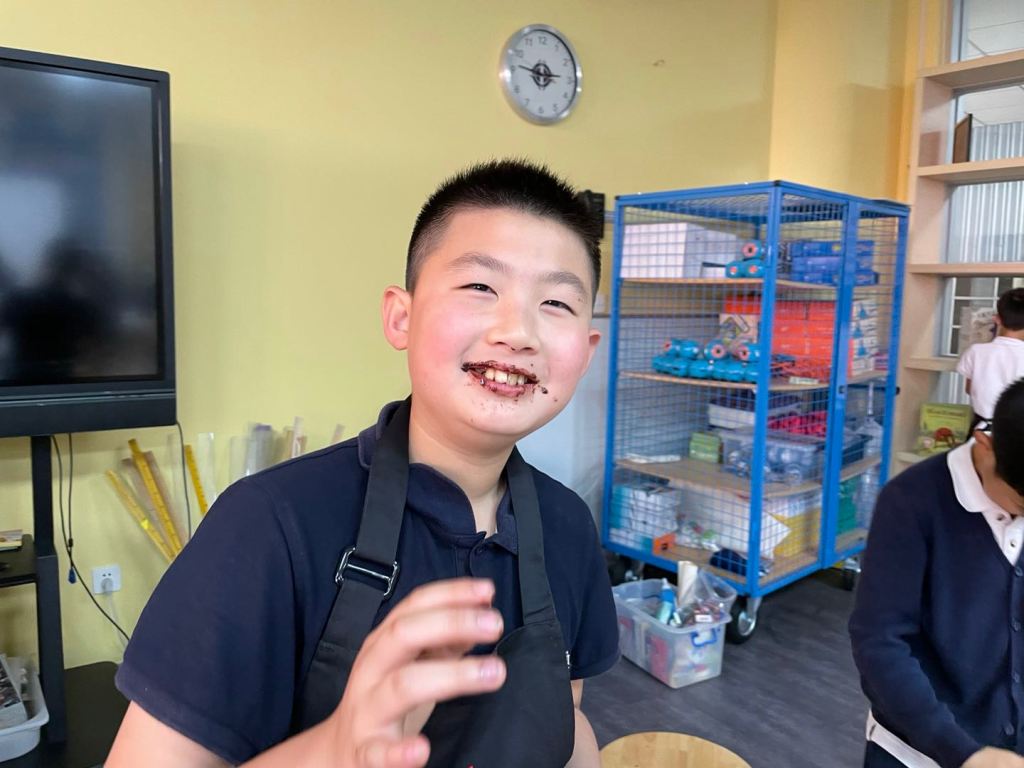
Because the ingredients for the cake were not sourced through approved school suppliers, we were under strict instructions NOT to eat anything. This was a source of much discontent and the most frequently asked question that I heard was ‘when do we get to eat the cake?’ So to counteract any temptation I purchased muffins from our school cafe (all approved for consumption) and the kids ate those. Eagerly.

We judged our cakes locally and decided that Song for a Whale by the Moonlight Star Savers should get a Concordia prize. This was awarded at our assembly

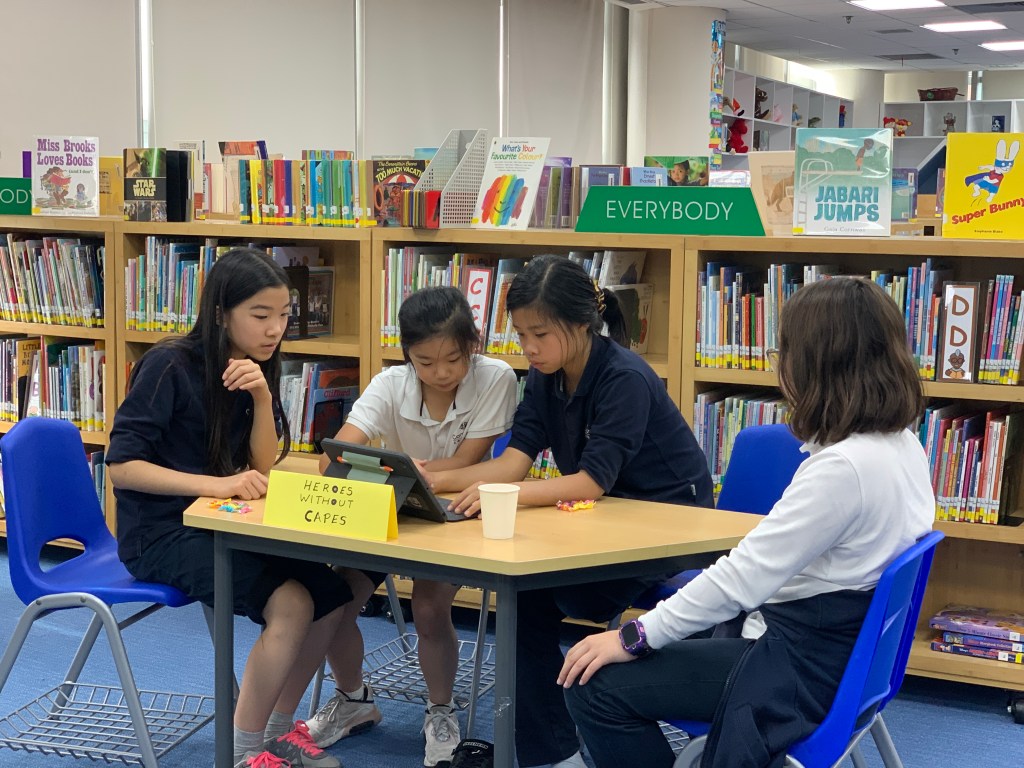
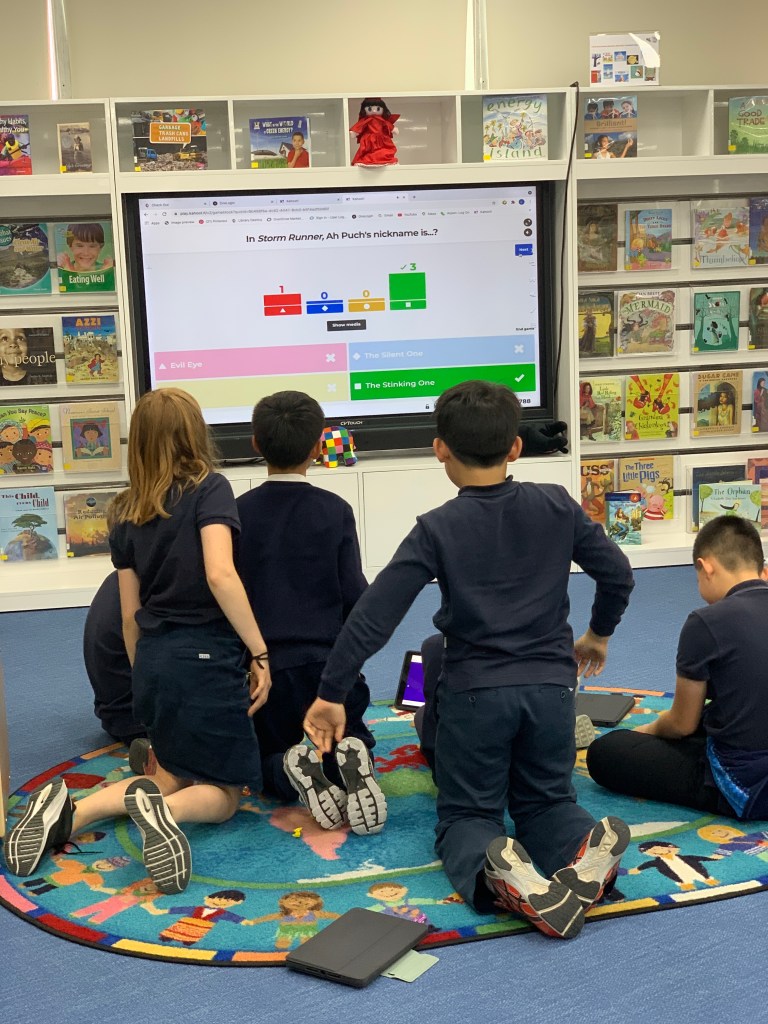
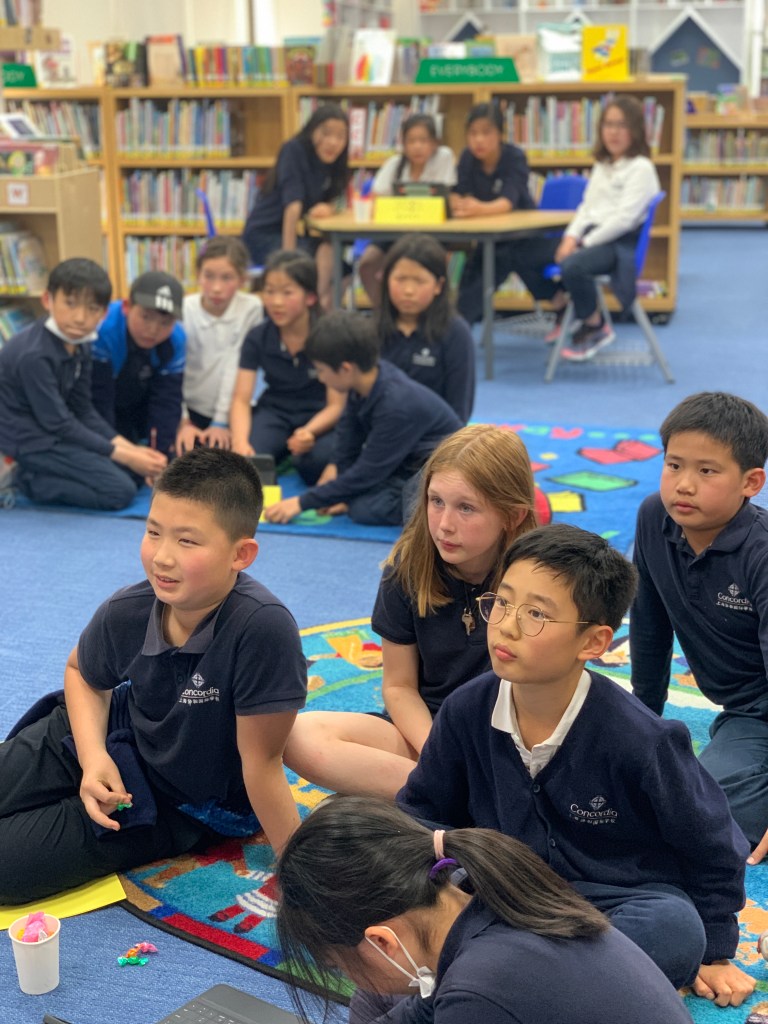
The third element was perhaps the most challenging. After reading the books, teams had to answer questions using Kahoot, which is an online quiz software. It was important that someone in each team had read each of the books. It was a test of their knowlledge and understanding. We had to use our library so we were a little cramped.

Teams had a team leader and they each chose their own team name based on the books. We had: The Moonlight Star Savers; The Remarkable Coyotes; The Moon Runners and Heroes Without Capes.

The quiz was a test of the children’s knowledge, recall and their ability to work together as a team to come up with the correct answer. There were 120 questions to be answered and we had only an hour available so concentration ran high. I was delighted with the way eveyone co-operated (well nearly everyone, there was a little bit of rolling around on the floor, but not too much). It was incredibly tense and exciting. Scores are awarded on Kahoot not only for the correct answer but also for how fast the answer is given.

We were able to tell which of our teams was the local winner on the day but I had to add our scores into a central spreadsheet and await the outcome from the other schools who were doing their rounds on different days.

The teams were asked to evaluate the Battle and here are some of ther comments…

“Before if I didn’t have time to read then I didn’t really read. But when I came to the Battle I would read every day”

“This has made me read more in my life and to take more notes”

“I thought that this was really fun. I got to bond with more friends and laugh with more people”

“It has positively impacted my life by letting me see how much and how fast I can read. Before I didn’t really know that it would be this much fun.”

“I had a team to work with for the first time”

“It helped me to exercise my brain and my memory”

“It helps me READ more books and enjoy reading!”

SUCCESS

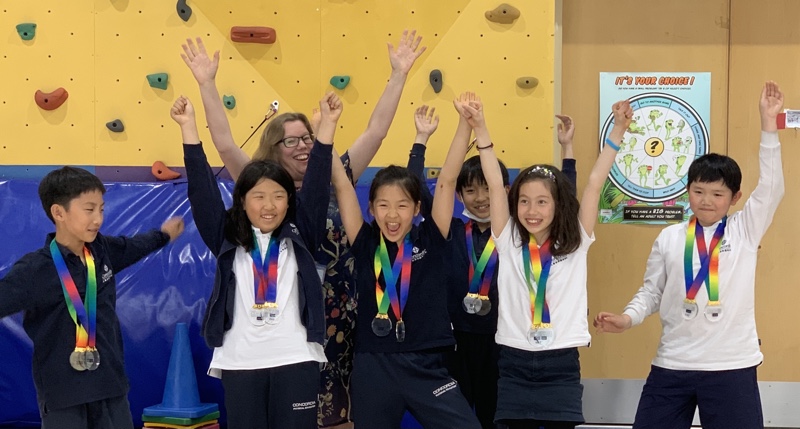
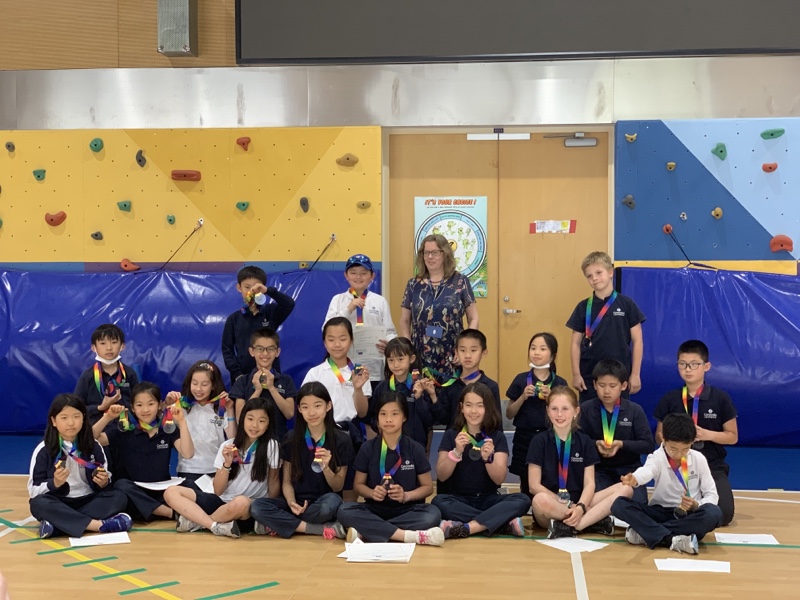
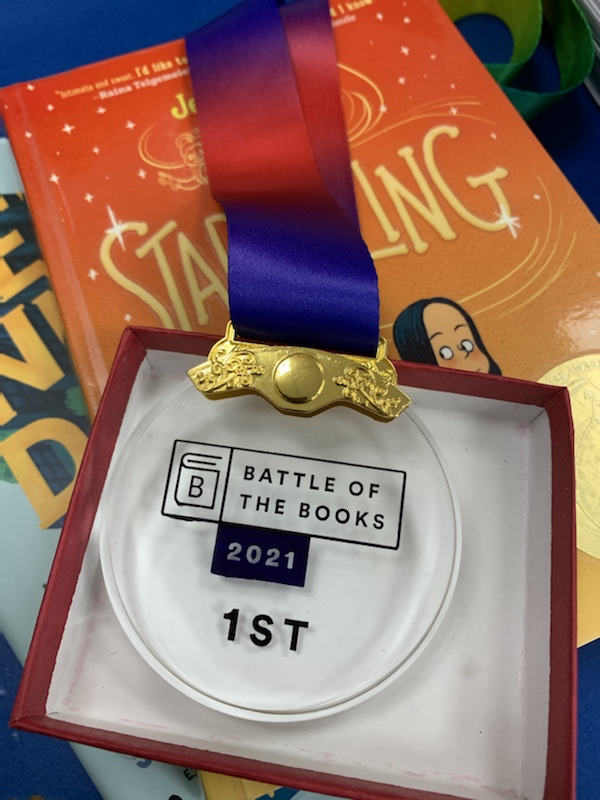
We presented each child with a participation medal and to my huge delight The Remarkable Coyotes’ hard work paid off as they took FIRST PLACE.

There was much celebrating all round.

Hangzhou West Lake and Temple

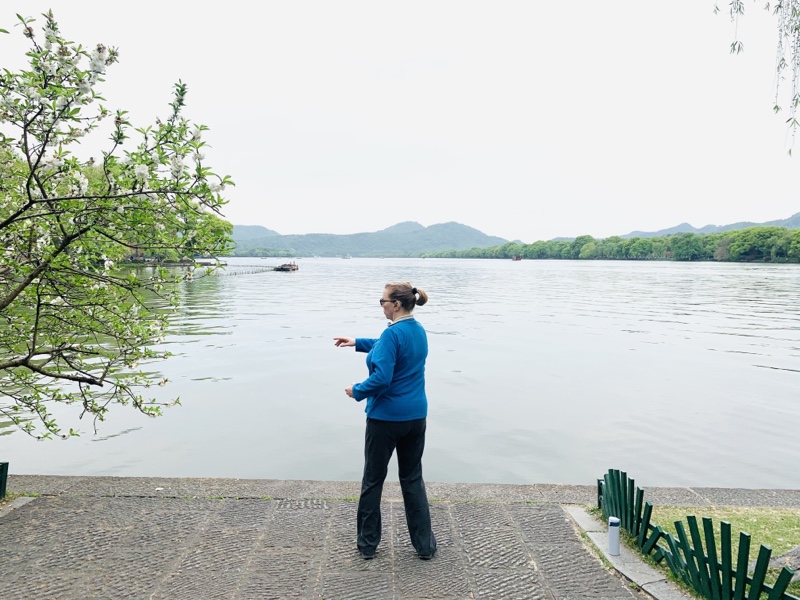
Day 2 of our mini trip to Hangzhou started for me with a spot of Taiji by the lake. It was wonderful to be outside in the fresh air. Doing Taiji in natural surroundings can be very beneficial as you can absorb energy particularly from trees or water. I was certainly buzzing by the time I got back to the hotel (I was going to need that extra energy later on). It was actually quite busy by the lake with joggers walkers etc but I ignored them all. I did find it funny though when I spotted one Chinese lady videoing me! Especially as tai chi in the park is a very common sight here. Maybe they just don’t get many foreigners doing it!

Photo courtesy of Lisa our tour guide who was out for an early morning walk.

We were staying at the Shang-ri la hotel which interestingly had accommodated some of the G20 heads of state back in 2016 including Angela Merkle, Francois Holland, Theresa May and Recep Erdogan. We had a drink in the bar which Vladimir Putin had patronized. Who knows we could even have sat in the same seats!

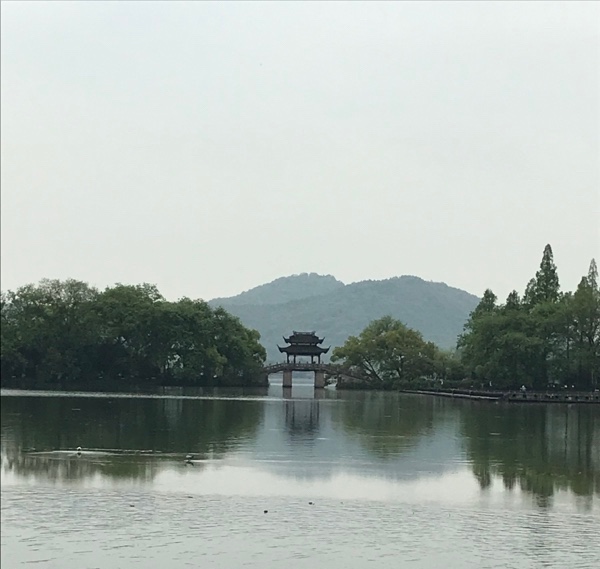
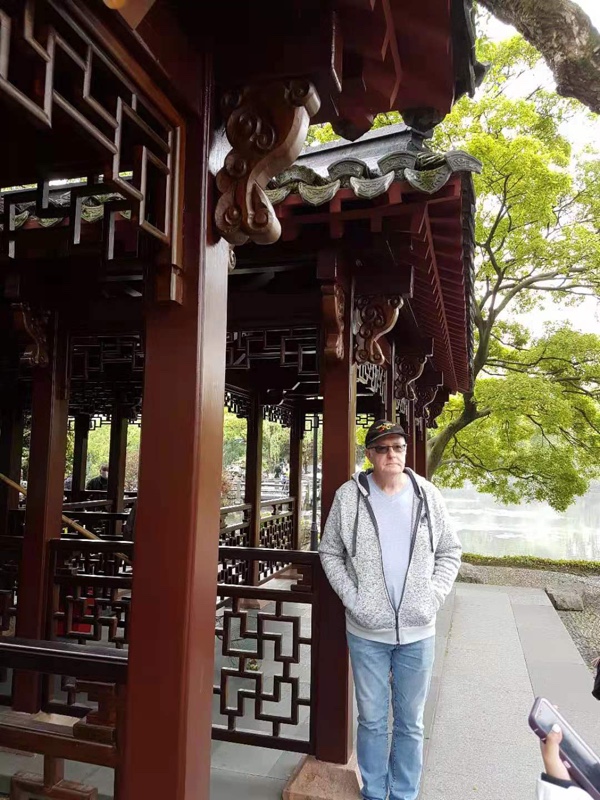
After a delicious breakfast of noodles and dumplings (not at the hotel) we crossed the West Lake. This lake is one of the largest in a city in China and has over 300 bridges. This was a particularly beautiful one.

The weather was overcast and at times a little chilly but that didn’t deter us.

In the middle of the lake was a large island. And in the middle of the island was another lake. It is called the lake in a lake!

Around this lake were several pagodas including this one which was unusual because it has three corners on the roof instead of four. It was designed to represent a ship pointing out to the water. On the top is a white crane which symbolizes longevity.

Note also the zigzag bridge across the water leading up to the pagoda. This is because ghosts can only move in a straight line do they can’t follow you as you go across the water.

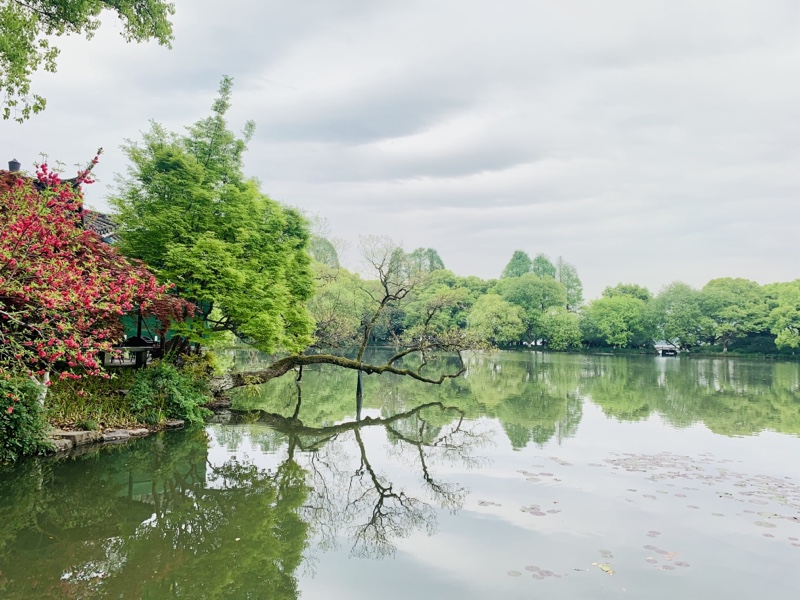
The lake itself is segmented into four so you can walk around or across it. The flowers we saw on the island were just starting to bloom.

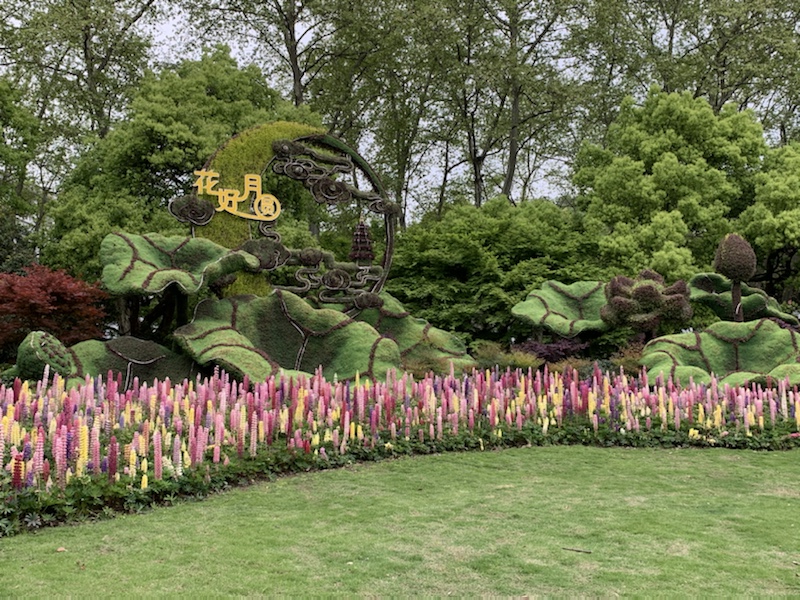
This was a magnificent display of lupins around some shaped floral art

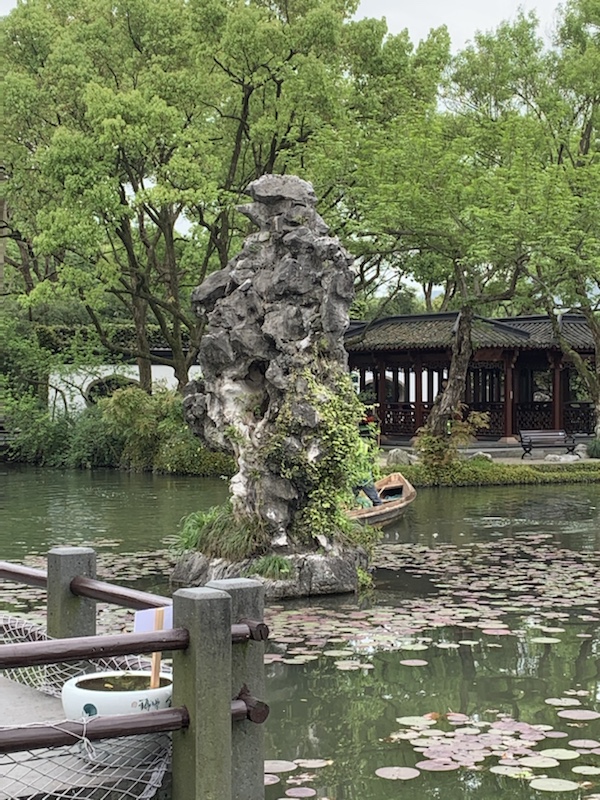
In the water we saw these rocks. They are very popular in traditional Chinese gardens.

Called Scholars Rocks, they are limestone which has been eroded by wind and water to form delicate and aesthetically pleasing shapes. Representing wealth and status, they symbolize the impermanence of life and how we are all shaped by nature and our environment. The holes in the rocks are to remind you that you can always see things from lots of different perspectives.

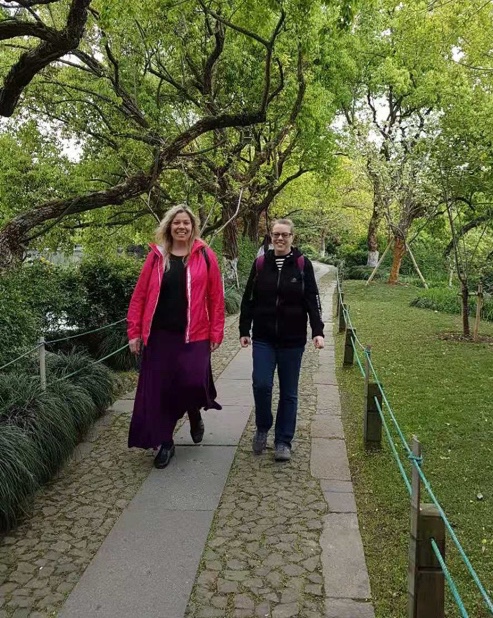
It was very pleasant to stroll in the greenery after being in an urban sprawl for so long.

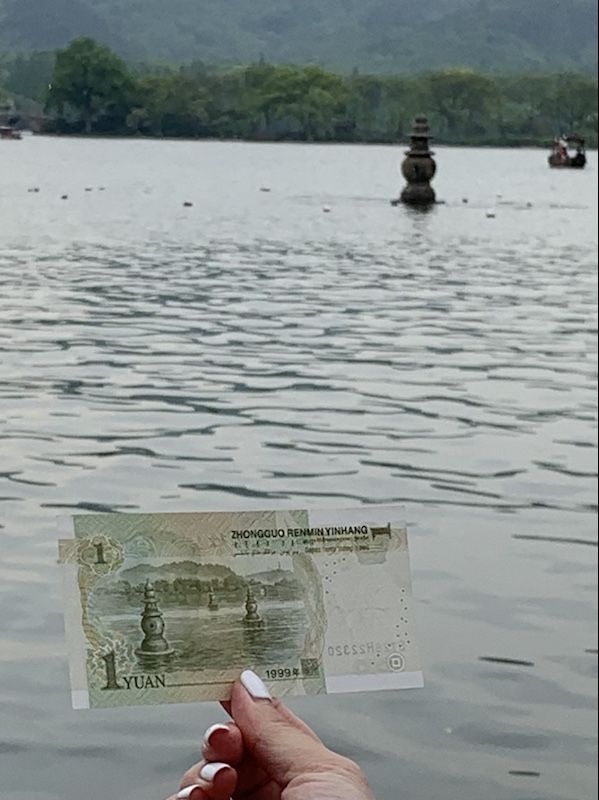
In one part of the lake are three structures. They each have three holes so on a certain night during the mid autumn moon festival you can see three moons reflected in the water, thats 9 shimmering moons on the lake plus one in the sky and they say that we each have a moon in our hearts. So 11 moons in total. This is quite a famous landmark and features on the 1 yuan note (not that cash is used much here anymore!)

There were lots of interesting buildings on the island with delicate and ornate carvings.

He was enjoying it… honest

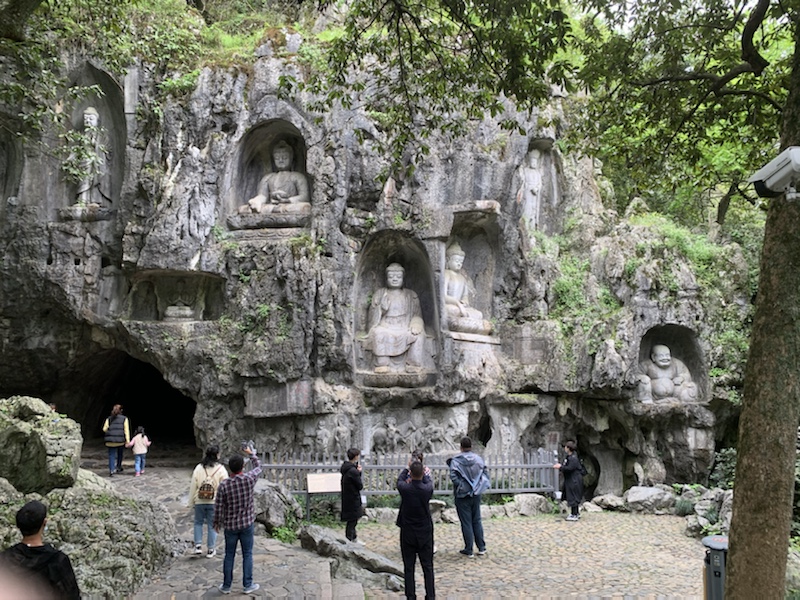
Back on the shore we travelled to another park which was famous for the Buddha’s carved in the rocks. There were hundreds of them and each had been commissioned and carved by a family as their shrine. Fortunately many survived the cultural revolution although some were defaced.

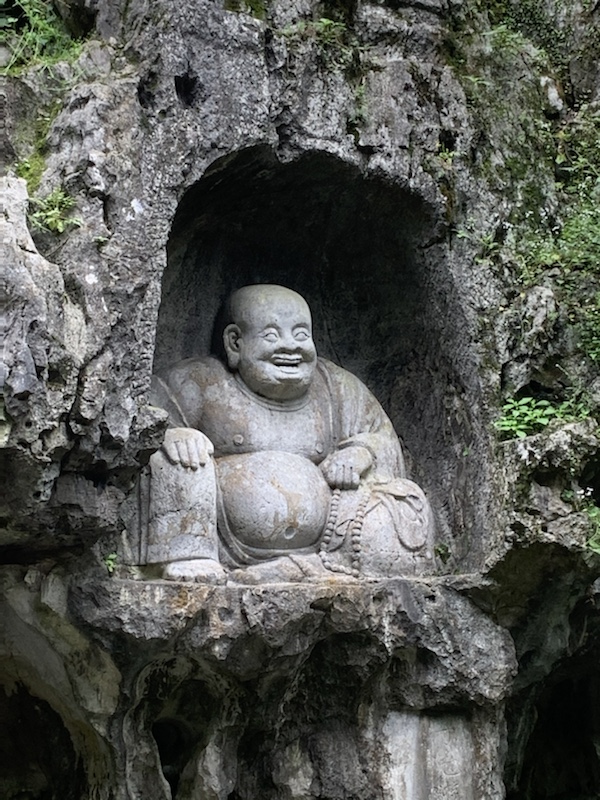
This laughing Buddha is very popular with locals.

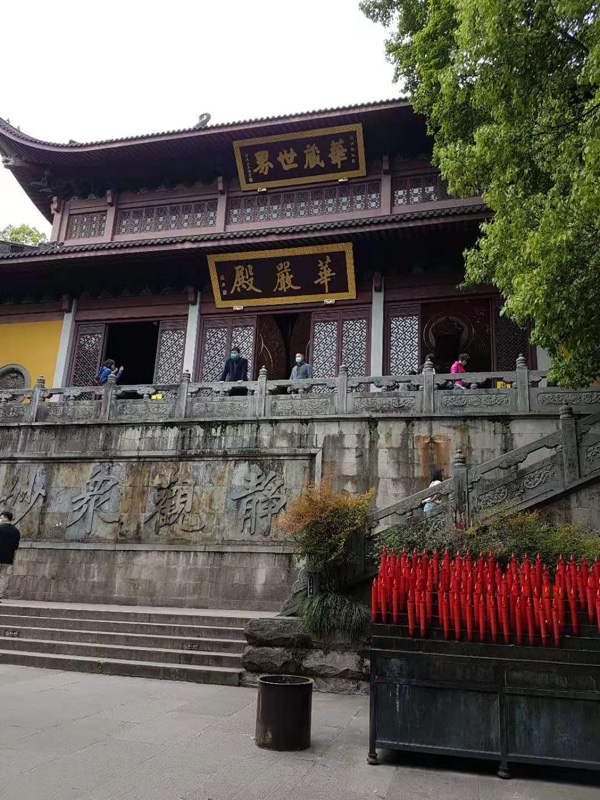
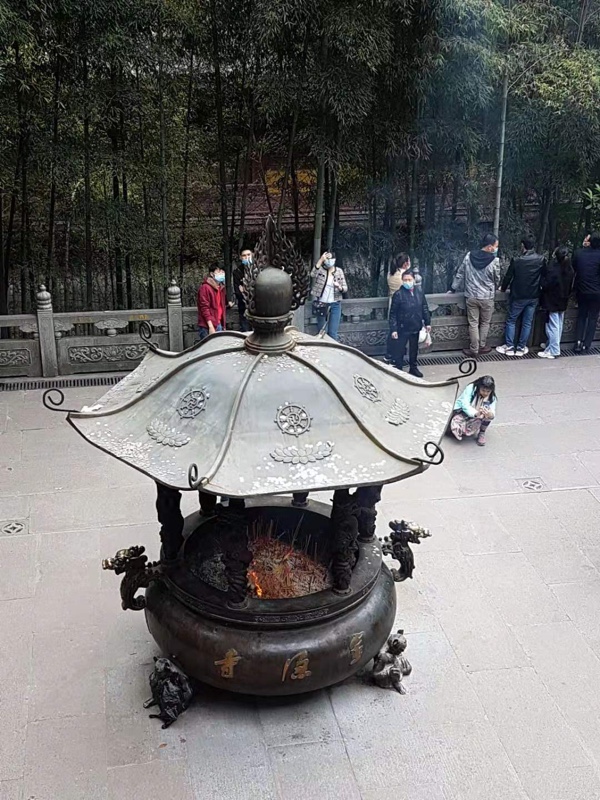
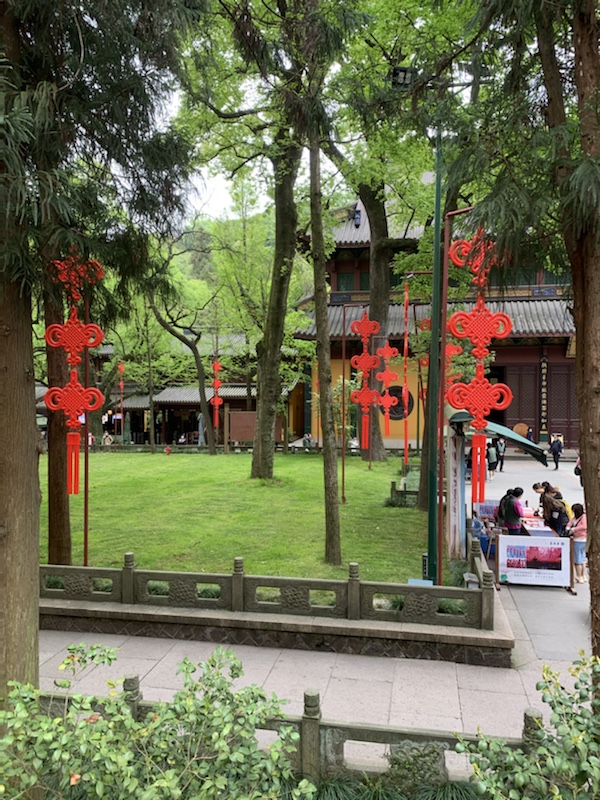
Then it was on to the Taoist Lin Ying temple. Ying means ‘hidden’ and Lin means ‘spirit’. This was quite a large temple complex which had many Buddha halls and featured large incense burners.

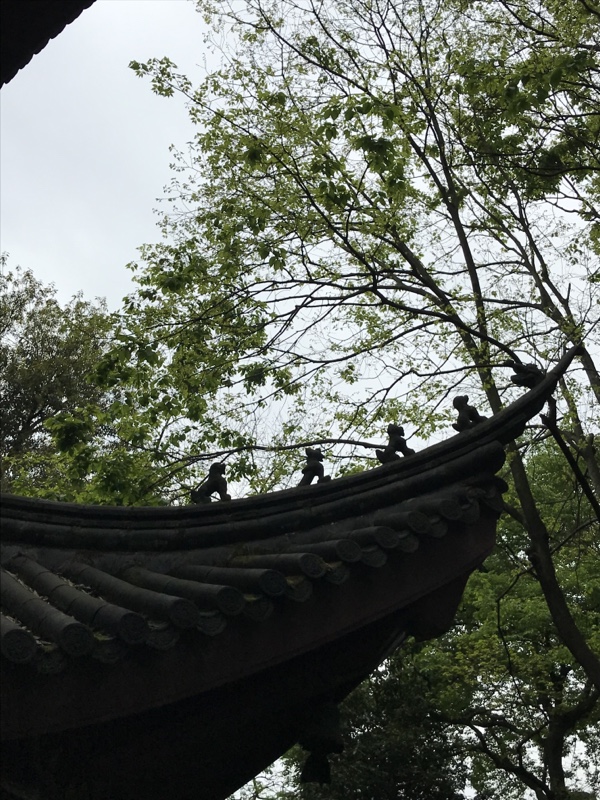
I love the details on the rooflines
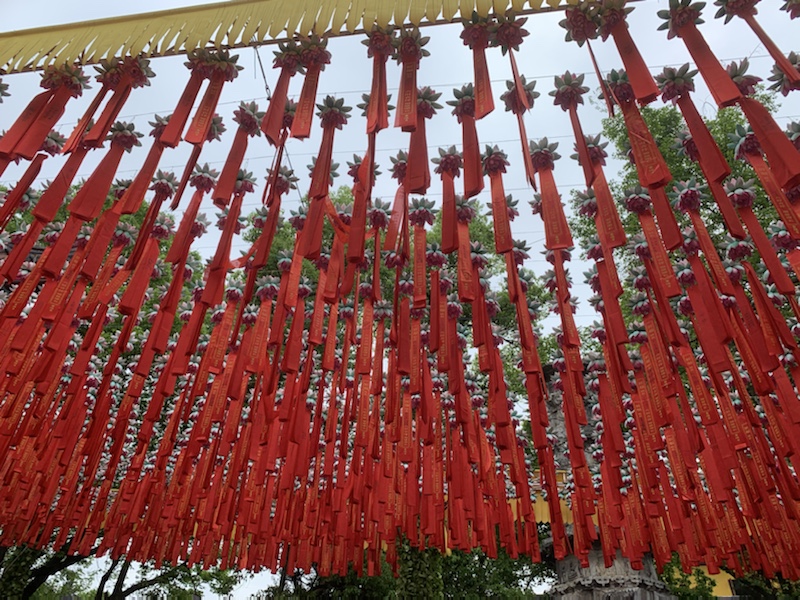
And the curtain of vivid prayer flags

We finished off with a simple vegetarian lunch in the grounds of the temple. This is supposed to be an auspicious thing to do. it was certainly very tasty and a great setting in which to eat.

Our return journey wasn’t as easy as we had hoped. We missed our train, which shouldn’t have been a problem as our tour guide, Lisa went to swap our tickets for the next one. What should have been a straightforward transaction took her well over an hour, the station manager, a party official and quite a lot of shouting! For some reason they couldn’t get Kevin’s passport to work with their system, which was a bit ridiculous as we had bought the original ticket and had used the passport to travel in the day before. Officialdom in China is not particularly flexible and was a point when Lisa feared that we might have to take a car back to Shanghai!!!

Anyway, all well that ends well and after standing (no seats) by the door in the cold we eventually got inside and were able to get a warm drink. We had missed about 3 trains by then!! We were pretty tired by the time we reached home but glad that we were back safely. We couldn’t have managed without Lisa.

“ For all the tea in China”

After spending the last 7 months and 3 vacations stuck in Shanghai we were resigned to our spring break being the same. But at the 11th hour, literally the Friday afternoon before we finished, we got an email to say that we can travel to other low risk areas in China. Yippee!!!

While lots of my colleagues headed straight to the beach at Sanya (known as the Hawaii of China) we opted for a more cultural experience with a trip on the bullet train to Hangzhou.

Hongqiao Railway station in Shanghai is massive. This was the scene at 8am

Hangzhou is about 4 hours away from Shanghai by normal train but by high speed train it takes just over 1 hour (which is quite incredible when you think about it). We were delighted to be able to get out of the city and into a more rural area. The air quality has been good this week in Shanghai but we have recently had yellow fog and some very nasty pollution days.

Hangzhou is a Tier 2 city in China and has a population of 10 million, so when I say go out to the countryside, it’s all relative. Our destination was actually the west lake area which is a scenic spot and from there to the tea plantations. This was a drive of approx an hour from the train station.

Tea is big business in China and in fact the UK originally got all its tea from here. The tea in Hangzhou though, is a specialty green tea and it is so highly prized that most of it does not make it outside of Hangzhou.

We began our trip dressing as tea pickers with traditional hats (needed against the sun) and baskets which were surprisingly comfortable to wear.

The type of tea grown here is called Long Jing which means ‘Dragon well’ and it is an exclusive tea. One of the reasons for that is that it is picked only once a year and the picking season lasts only about 6 weeks. So if it rains the workers have to carry on picking because there is not a moment to lose. They are given these waterproofs though. Fortunately, although overcast, it didn’t rain during our visit.

We were given access to the tea terraces belonging to one family and we walked up narrow paths between the tea bushes to get some simply stunning views

It was wonderful to be outside in the fresh fragrant air surrounded by tea.

The ladies who do the picking get paid approx £20 per day and they pick from 6-6. Once up on the terraces they don’t leave, food is brought out to them. But most of these people do this job for fun rather than as their living. They do it to help out. It’s a real labour of love.

The leaves that they pick are the young tender shoots and not the darker tougher leaves. Like the pale green leaf below.

There are tea plantations all over but the most prized and better quality tea is grown high up. This is because the higher up you go the colder it is and the tea grows more slowly which gives it a better flavor.

It would take all day to pick a full basket (if that)

The leaves are then taken down to the village to be dried and roasted. Mostly this is done in a machine but the more expensive varieties are roasted by hand which is a highly skilled process. You need to take out a small mortgage to buy some of that.

Drying racks

Interestingly, we saw several tombs dotted around the terraces. Normally Chinese do not go near graves but these tombs are strategically placed among the tea so that the spirits of their ancestors can guard the terraces (& the family business)

And then down to lunch where we had wonderful exotic dishes such as this one which is pork ribs in tea!!! I would never have thought of combining those two ingredients!

I am not a huge fan of green tea as I find the taste can sometimes be a bit bitter but this was very different. You can see here that all the shoots have sunk to the bottom which is a sign of good quality. But more than that, the stalks are floating upwards and the leaves downwards. I have never known tea to do that before!!! It actually tasted very smooth and refreshing. I was pleasantly surprised.
If you ever get the chance I would highly recommend this trip.