Living with CKD

It is a while since I have blogged with a health update so it is probably time.

For regular readers of this blog you will remember that in August 2021 I had my kidney removed here in China. Then in May 2023 I had a major bleed following a routine thyroid biopsy which resulted in surgery to removed a large blood clot in my neck. At that time I was pumped full of antibiotics as I was on the life threatening register and i believe that they worked. However, unbeknownst to me 16 bags of the drugs also damage your gut lining which can take months and months to repair.

So, when in August only weeks after the whole botched biopsy and subsequent surgery, Kevin inadvertently fed me with some dodgy dumplings, I didn’t havde the internal resources to fight off the infection. I suffered a vicious dose of food poisoning which lasted for 7 days and left me weak and dehydrated. I saw nothing of our mini break to Nanjing except the inside of the hotel room!

A visit to the GP confirmed that I had a massive infection. My blood results showed 142 for the infection marker when in a normal person it should be under 10! Further test results told me that the whole episode had also damaged my remaining kidney. I was now suffering from Chronic Kidney Disease Stage 3 and I was referred to a Nephrologist.

CKD can be divided into 5 stages. Stage 1 is normal kidney functionality and Stage 5 is renal failure and dialysis. I was slap bang in the middle at half way through stage 3 but the bad news was that in all likelihood the damage was permanant. There was a chance that with some dietary and lifestyle changes that I might nudge the numbers back a bit towards Stage 2. Thus, under medical guidance I have been on an extremely strict diet.

I am monitored very regularly by my nephrologist who is very good and explains every thing so well. I am not allowed any alcohol or red meat and I have targets for drinking water each day. I also have a nutritionist who put me on a low protein diet with the intention of removing pressure from my kidney in an attempt to allow it time to heal itself a little. She is a lovely lady but VERY strict.

For the last 6 months I have had to eat the same food every day. I can have one egg in the morning (scrambled) and a bowl of low protein rice congee. I can confirm that low protein rice is not as nice as regular rice! Using the online shopping APP Taobao I thought that I was ordering 5 bags of this special rice but inadvertantly ordered 5 boxes so I have ended up with 25 bags! I have a good supply now so can continue this regime for quite some time!

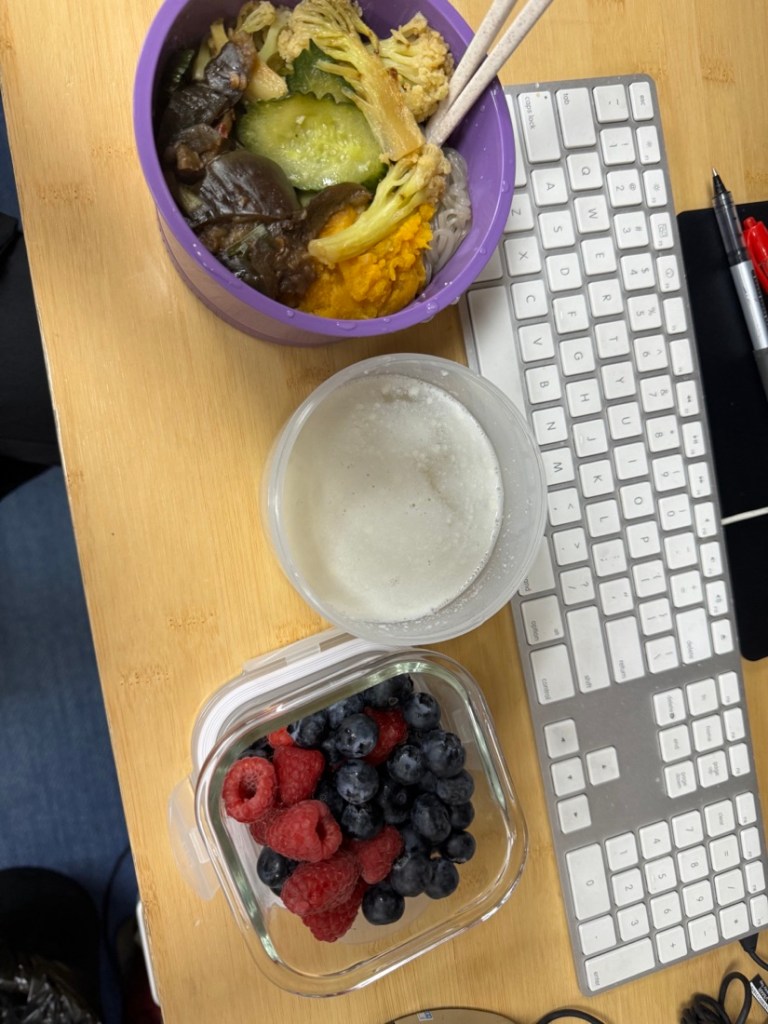
For lunch and dinner I have the same food just in slightly different quantities. Every thing has to be weighed out carefully to ensure that I can have the correct amounts of plant and animal proteins. For a VERY long time I have not been allowed to eat any meat at all and instead have had a soluable protein powder. Yay! Actually, it doesn’t taste bad… but then again it’s doesn’t taste particularly appetising either. I can have 40g of boiled low protein rice, 40g of sweet potato vermicelli, 80g of mashed sweet potato and 150g of (some) green veg. Try weighing out 40g and you will discover that it is not much.

I can also have 150g of fruit, but that is restricted to blueberries, raspberries or strawberries only. The highlight of my day however, is a cube of Choc Zero (sugar free chocolate) which I had previously thought tasted a bit like washing powder but now is ABSOLUTELY delicious!!!

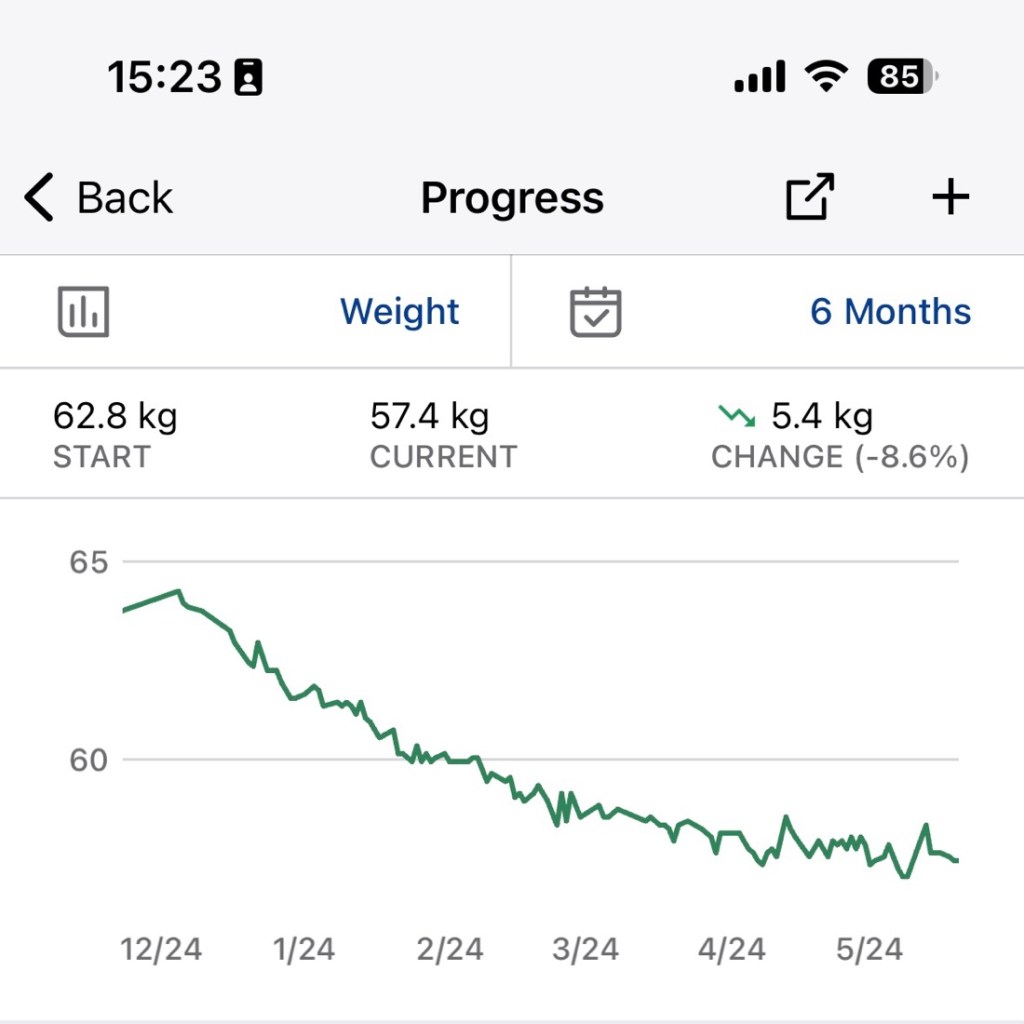
Not only do I have these dietary restrictions but I am required to send photographic evidence to my dietitian every single meal! Plus a screen shot of my weight each morning. So basically she can tell if I am sticking to it correctly or not!

This diet is tough but it has worked. I have lost some weight and feel better for it.

My ayi helps by cooking in bulk than boxing up what I am allowed into lunch or dinner portions and so fortunately I still get to eat some chinese flavors. Eating at work and home is fine but when invited out I have to ask for a glass of warm water and mix up my protein powder. Then have some fairly disgusting lotus root powder to compensate for the sweet potato carbs. Then weigh out 150g of whatever green veg is on offer. This is hard, especially when I can smell all the delicious dishes that the others are eating…

Funnily enough I haven’t missed alcohol at all but I do get cravings for a nice bread roll or a slice of toast with butter. I am permitted either 80g of natural unsweetened yoghurt per day (which is less that a small tub) or 1/2 a latte. So I do make sure that I have that.

Has it worked? Well yes, but only very very slowly. My kidney numbers were gradually inching towards Stage 2. But then some things happened at work (more on that later) which were quite stressful for me and low and behold I was back to square one! Stress is a bit of a bugger and can affect you in ways that you don’t realise.

For now though, I have improved enough to be allowed to have 40g of either lean chicken, shrimp, salmon or duck to replace the protein powder for one of my meals. This is hugely exciting for me. I am also now permitted 5g of nuts per day but when I went to weigh those it turned out to be only 3 nuts so hardly worth bothering with!!! Even so, I don’t turn my nose up at small mercies.

Facing CKD is scary especially when it is your remaining kidney. But I have to commend the service from the doctors and staff at Sino United. I am monitored and checked regularly. I understand now what I need to do to stay as healthy as possible and I feel much more in control. I do crave a lovely toasted teacake from time to time and if I am honest, I do sneak the occasional treat. But I know that when I cheat it is only cheating myself. The biggest problem that I find is that there are no signs or symptoms for kidney disease so I don’t feel any adverse effects of my ‘cheats’. That makes them more tempting so I need to be super disciplined which is easier some days than others.

I am now the proud owner of a new set of weighing scales which are just amazing. Honestly this technology just blows me away. These scales bluetooth to an app on my phone and they record not just how heavy I am but also my body fat, visceral fat, BMI, heart rate and much more! This is absulutely incredible and will really help me to self manage my condition.

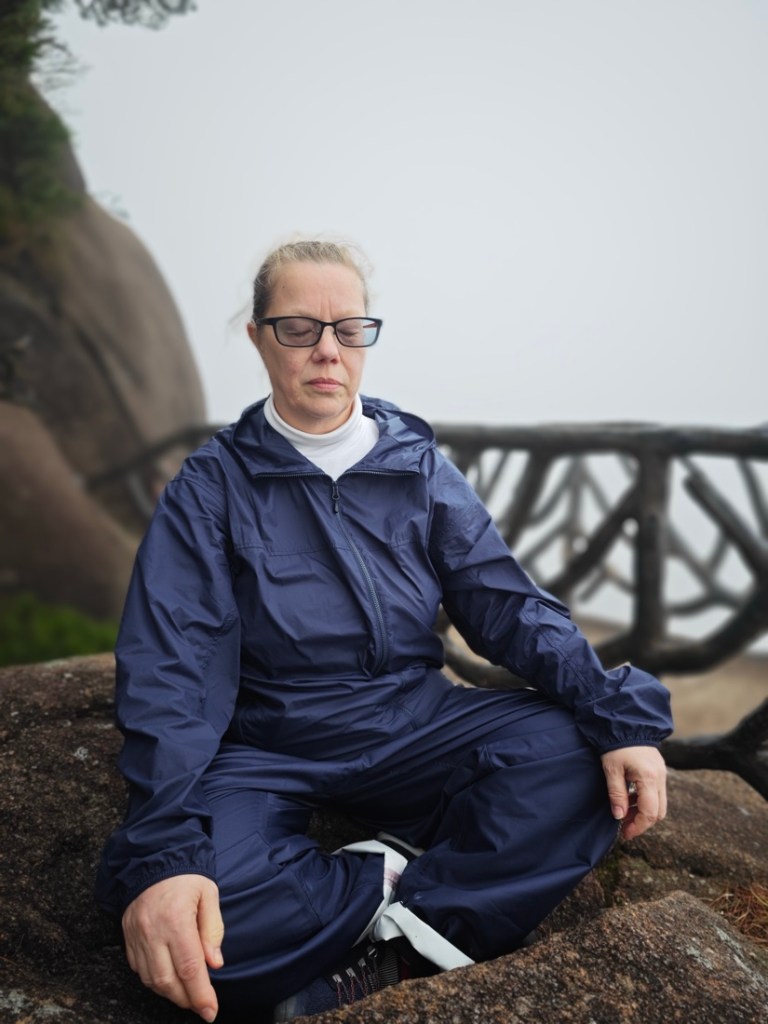
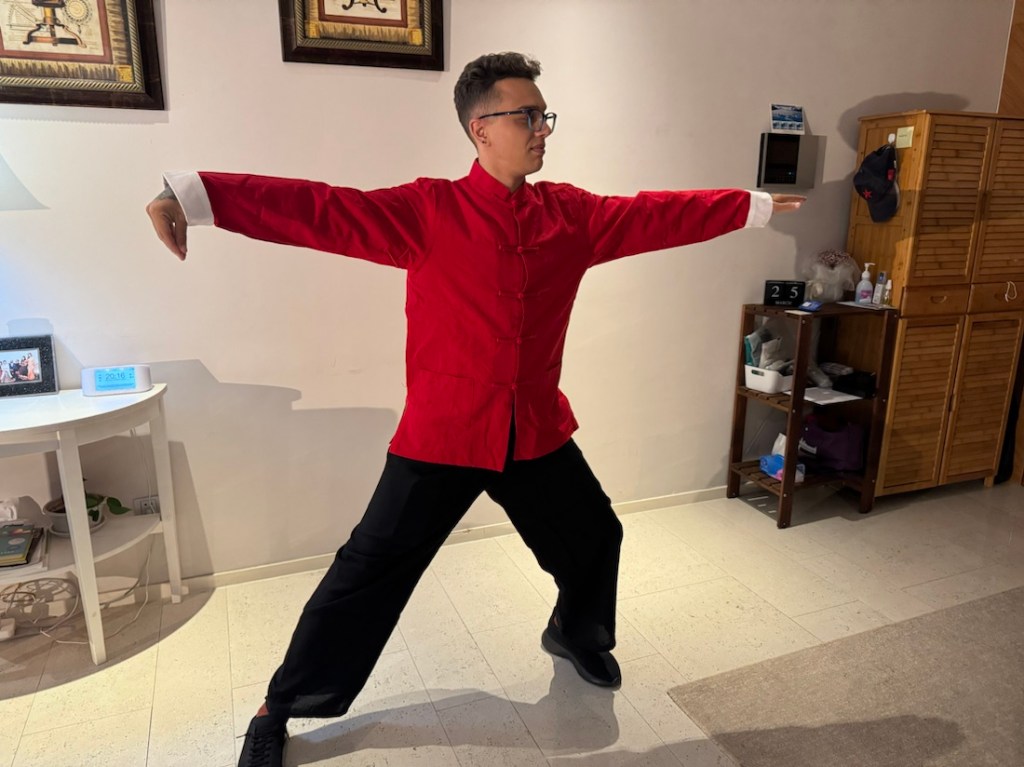
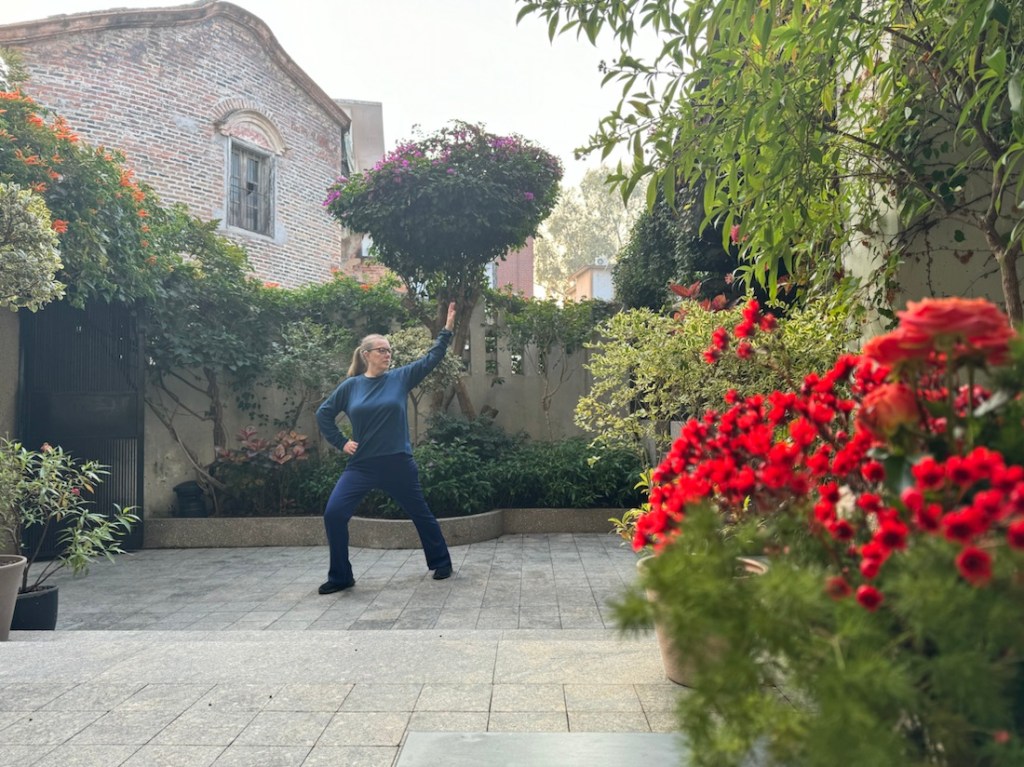
Taiji has also been enormously helpful in managing my stresses and emotions over this last year and I know that I would probably be in a much worst state without it. But more on that in a future blog…

Weekend in Ningbo

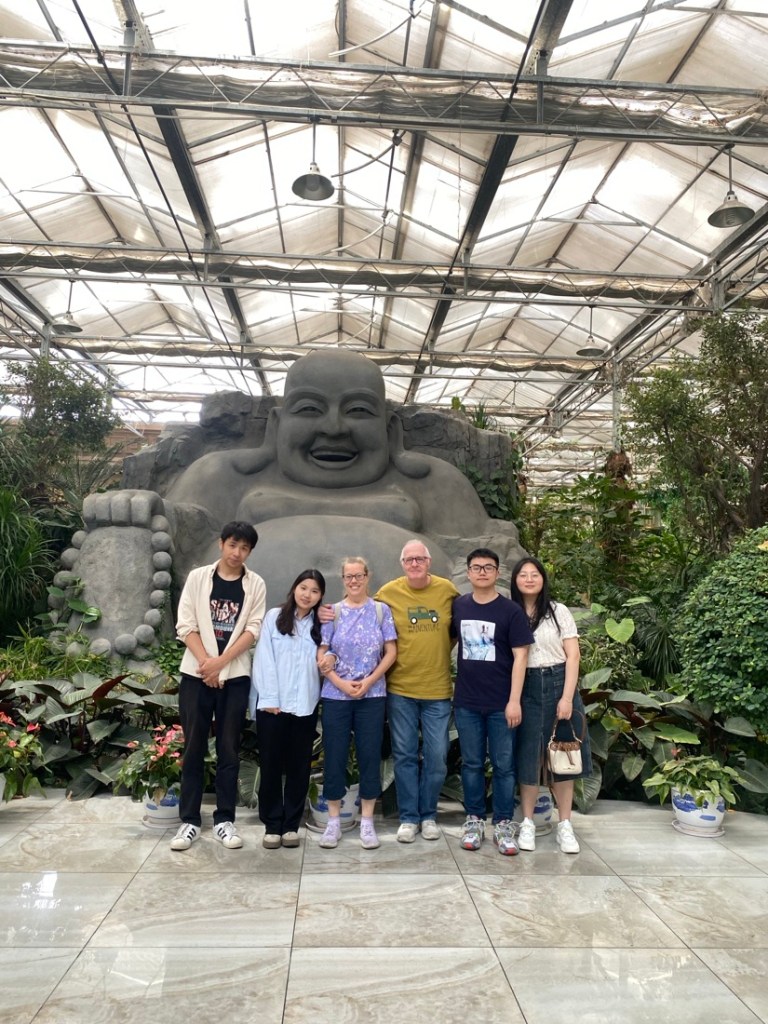
Before the end of the school year we managed to squeeze in a wonderful weekend in Ningbo. We took the first metro of the morning to Hongqiao Railway Station and travelled (2 hours) to YuYao Bei (YuYao North) where we were met by Rofoam and his wife Dani. Readers of this blog will remember that he is one of the students who we hosted at Christmas back in 2015.

We hadn’t seen Cathy since NouBei’s wedding back in October 2019. Since then she had married but we had been unable to attend the wedding due to Covid restrictions. Rofoam also hadn’t seen Cathy since then so it was a good catch up weekend for us all.

Rofoam drove us a further hour to Ningbo where we met up with Cathy, her husband Bei Ning and their 2 year old little boy, jiuTian (which means 9 days). This name is to wish that he has longevity as 9 (Jiu) is a strong Yang number and Tian means day. So it literally means to have many days or a long life.

Cathy is fortunate to have her parents and parents in law on hand to help with her childcare so both she and Bei Ning are able to work full time. After we met the cute little one we were taken out for what would be the first of several sumptuous meals.

Lunch was in the hotel restaurant where Cathy got married

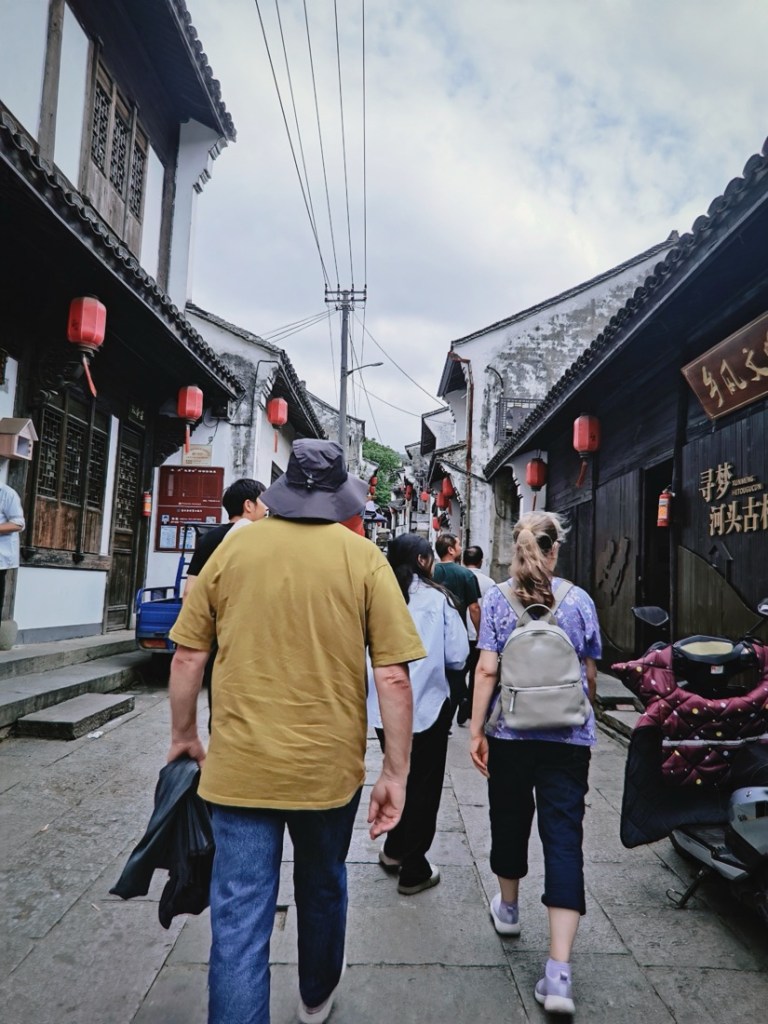
In the afternoon we went to the old scenic street which gave a flavor of old China intermingled with market stalls lining the narrow streets selling food and plastic toys

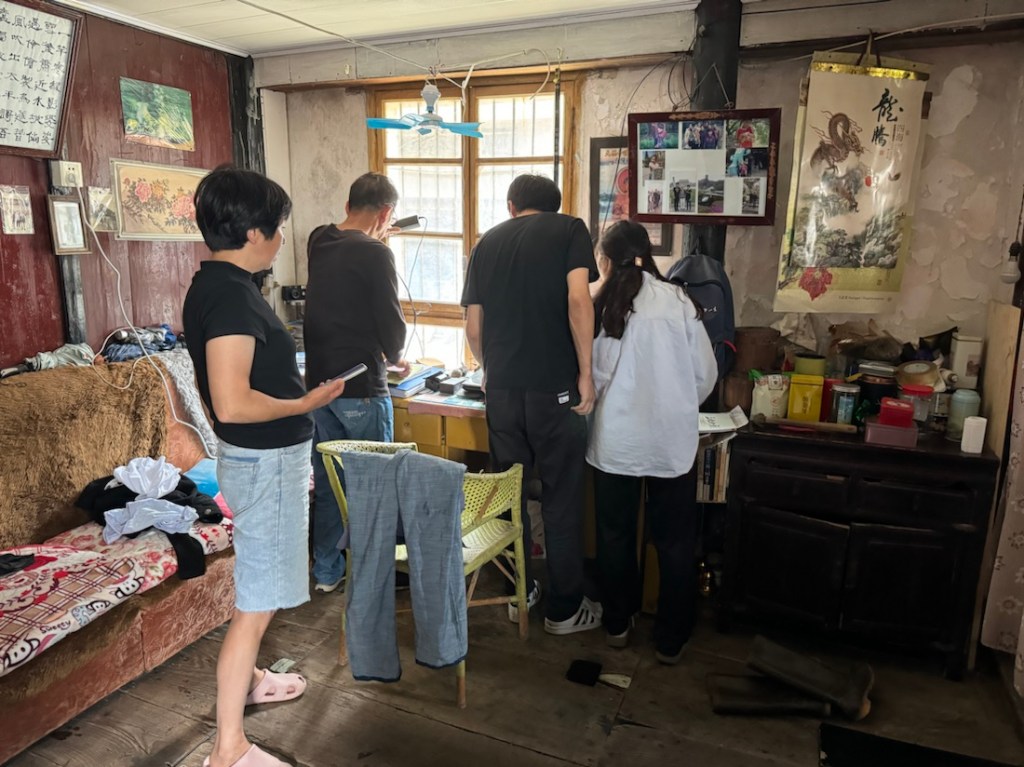
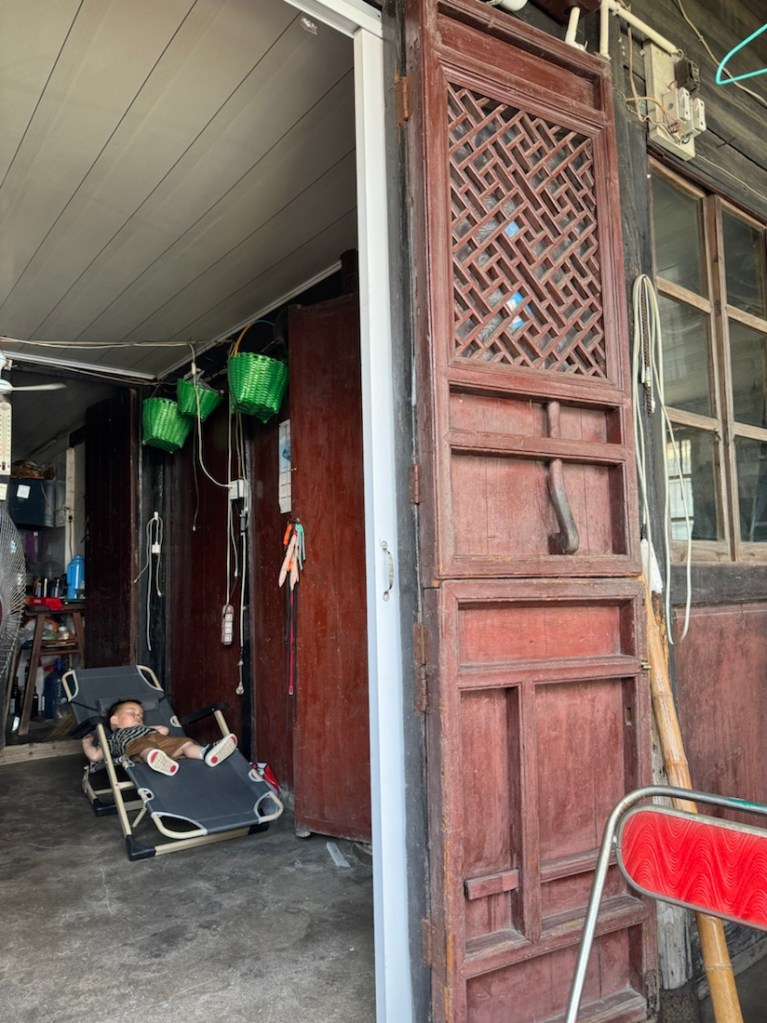
Off one of these lanes was Cathy’s grandparents house. This house is quite rare in China as it is 60 years old and it was a pure delight to see such a rare historic dwelling.

The house is so unique that it has been used in a Chinese movie. Here you can see JiuTian having his nap.

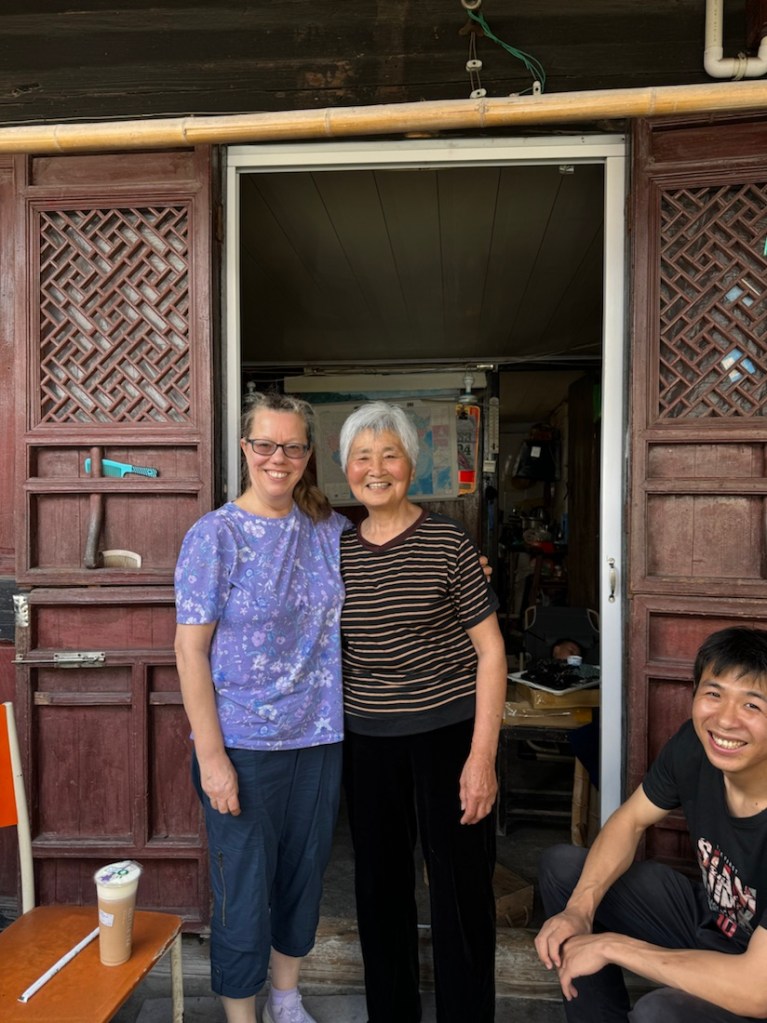
Here I am with Cathy’s 77 year old grandma who is a lovely lady with a beautiful smile.

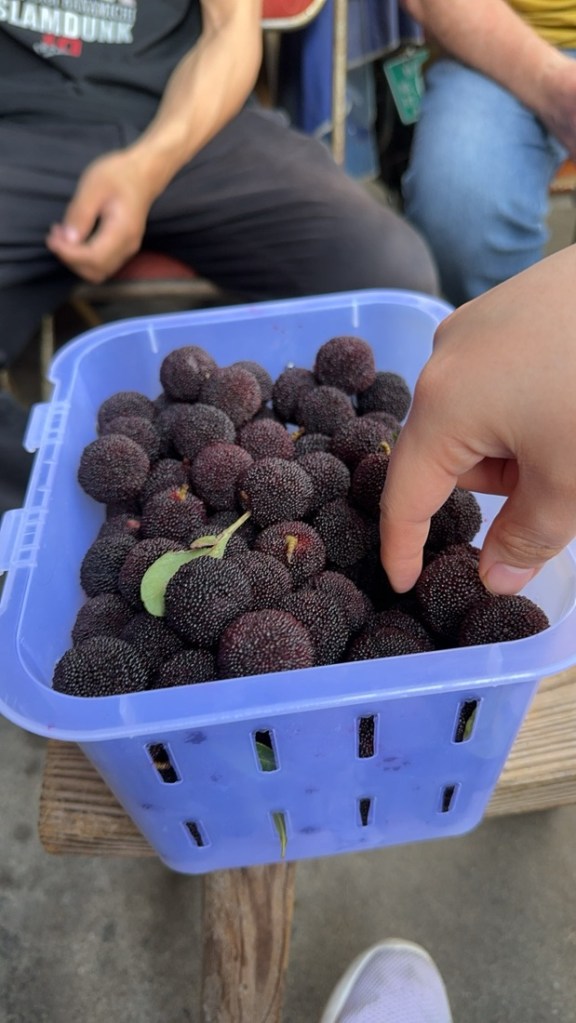
The local speciality fruit is called Aborutus or more commonly known as wax berry.

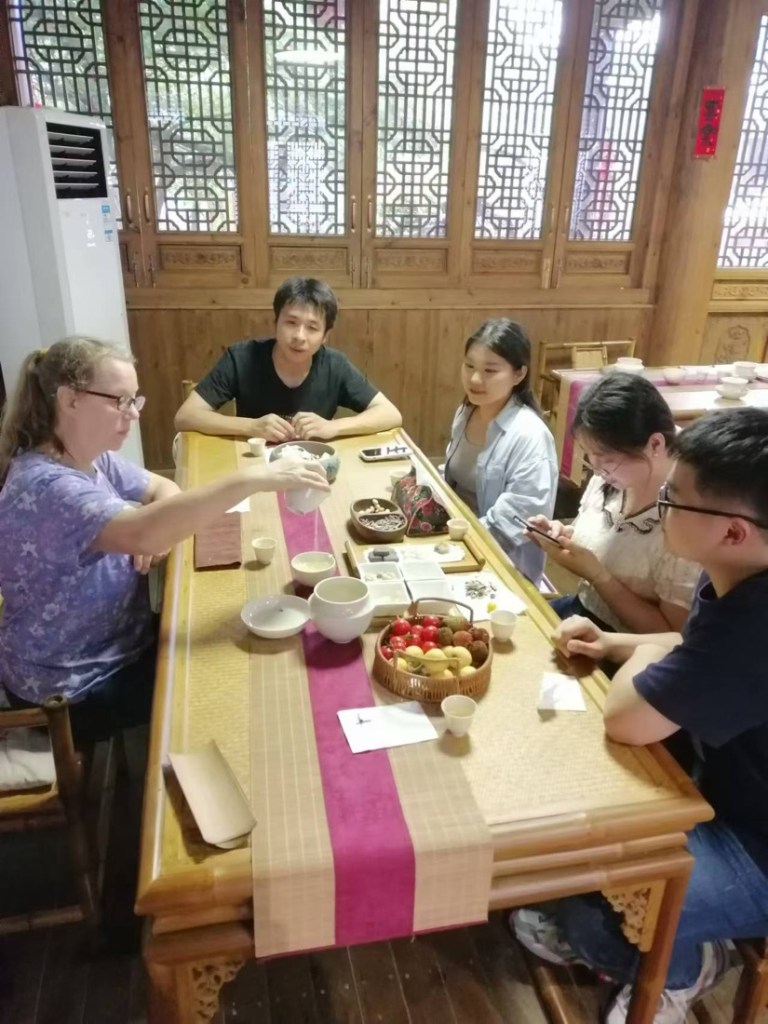
After that we walked up the lovely old street to a tea house where I was able to put some of my tea ceremony skills to good use while we ate lots of snacks! I am now a fan of sunflower seeds.

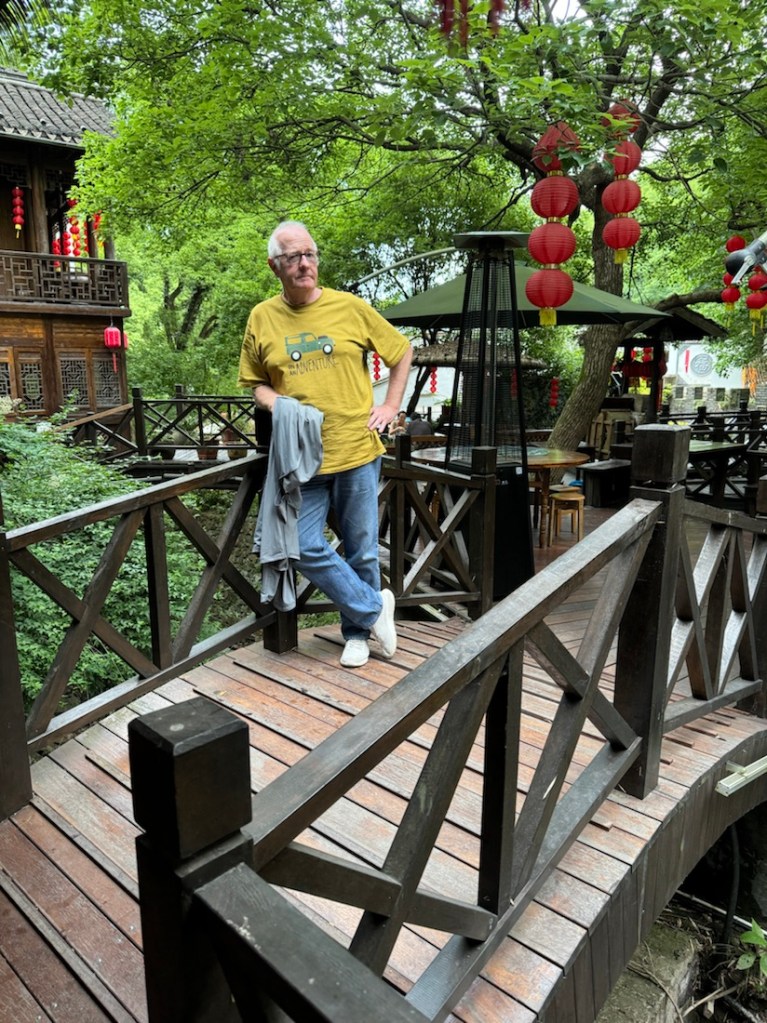
Our evening meal was in a restaurant where we had not only a private room but also a private bridge to get to it! Our very first private bridge! We were impressed.

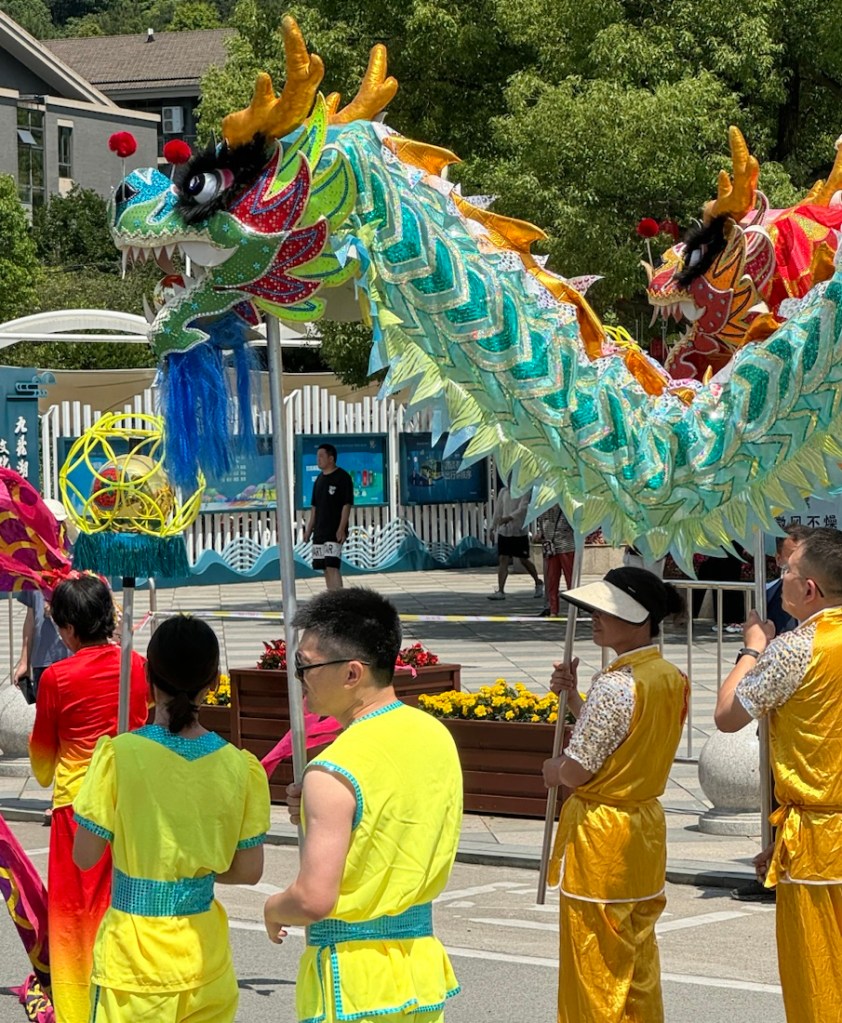
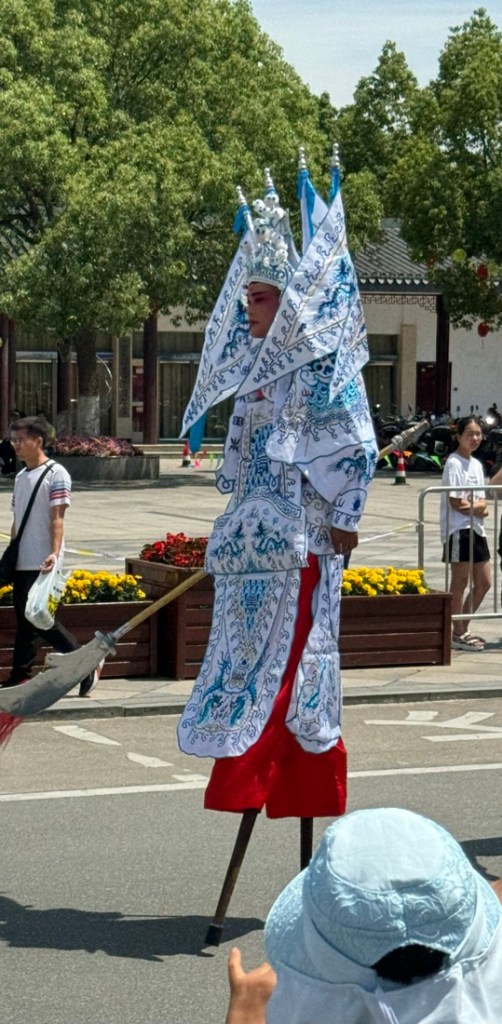
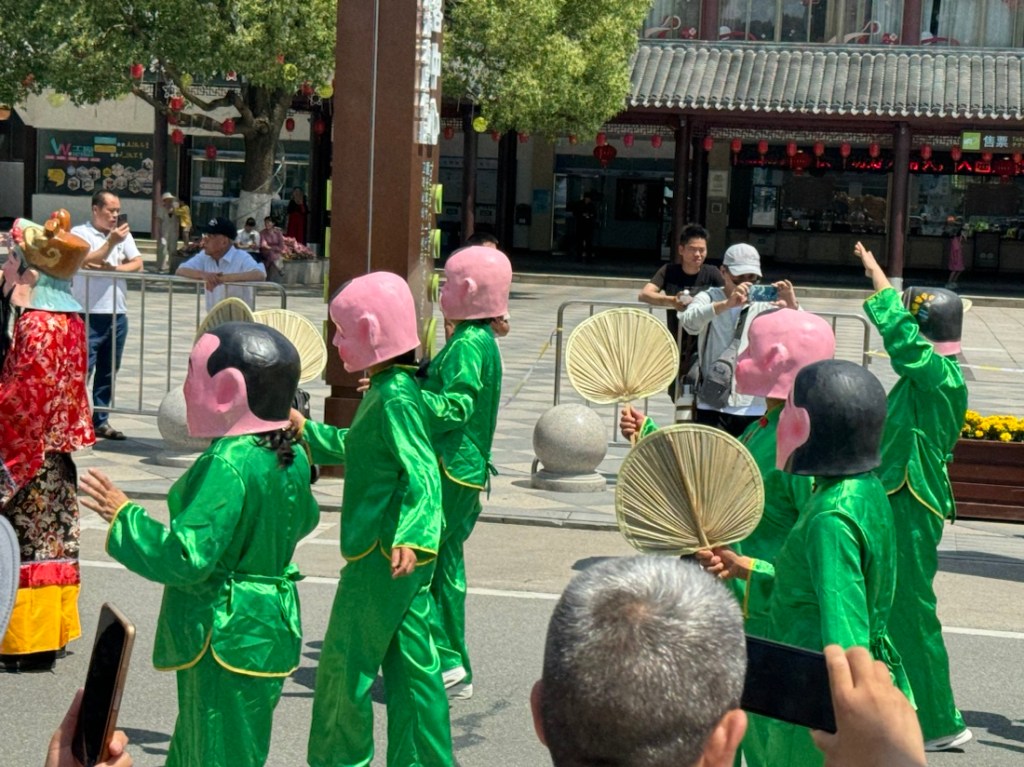
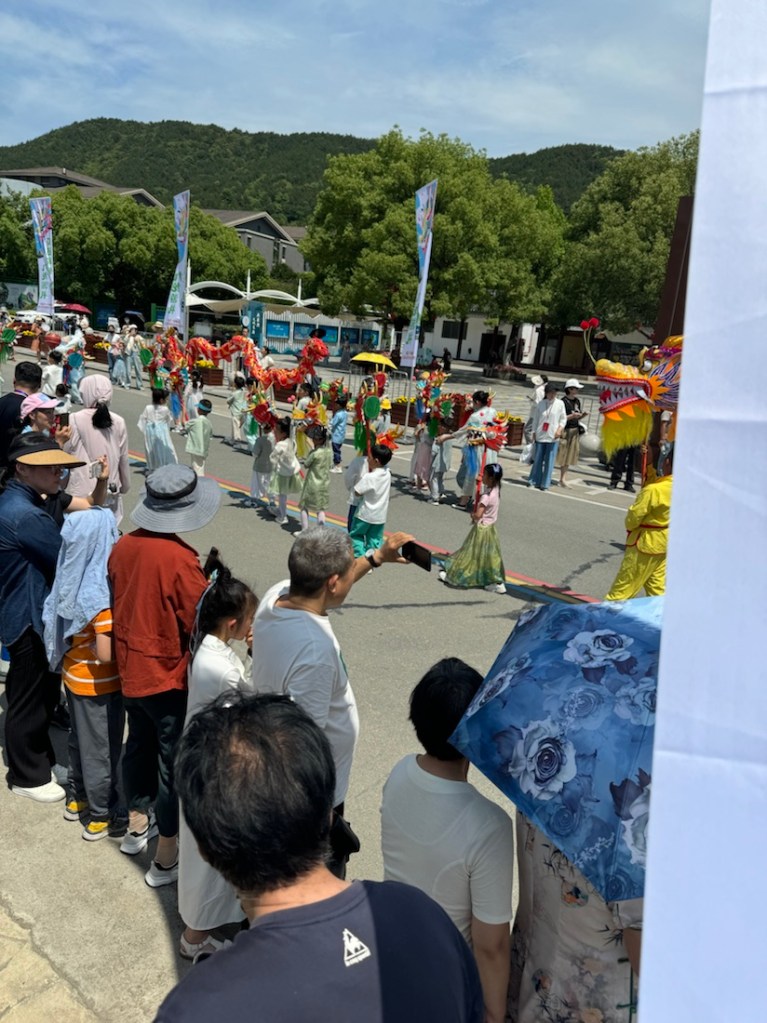
On Sunday we went to a park where we chanced upon a dragon boat festival parade. We don’t see this sort of thing in the metropolis of Shanghai. It was a very hot day but the costumes were spectacular in the sunshine.

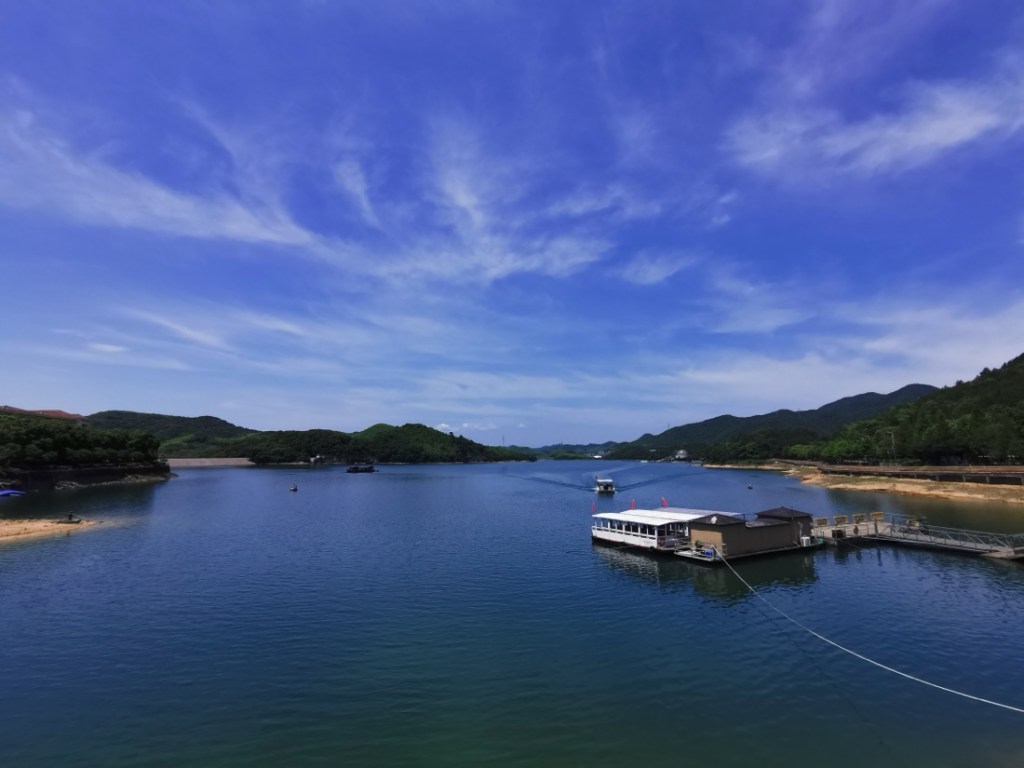
A short walk up the hill and we found a stunning lake which I think was actually a resovoir.

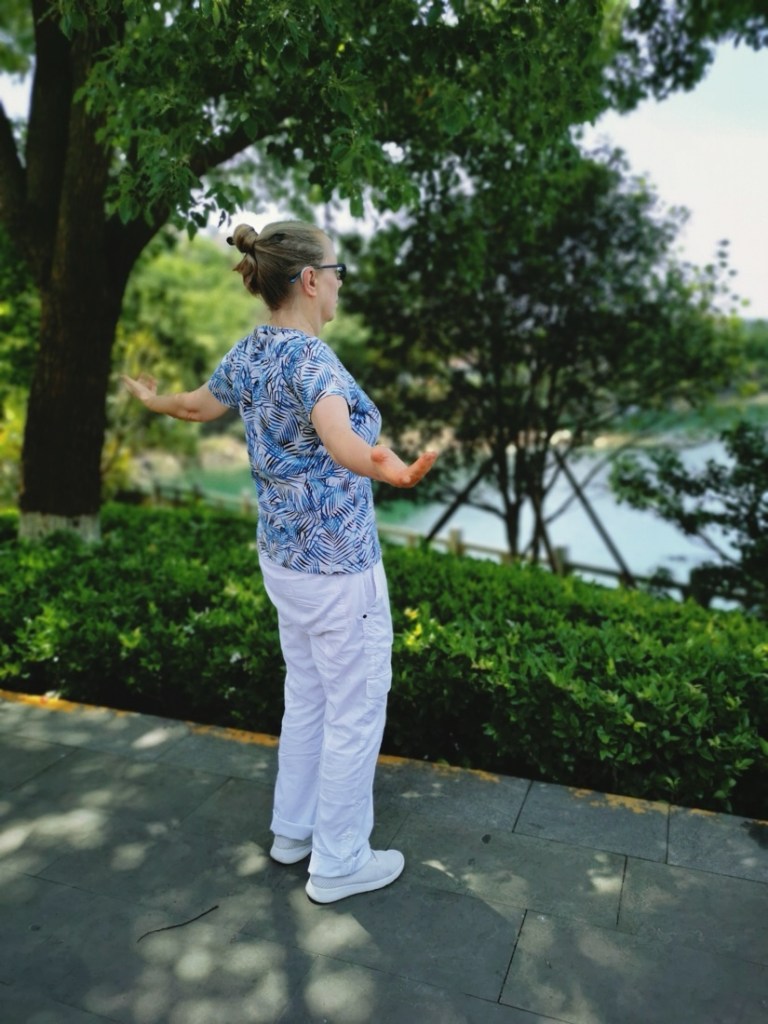
But is was a good place to practice some Qi Gong moves

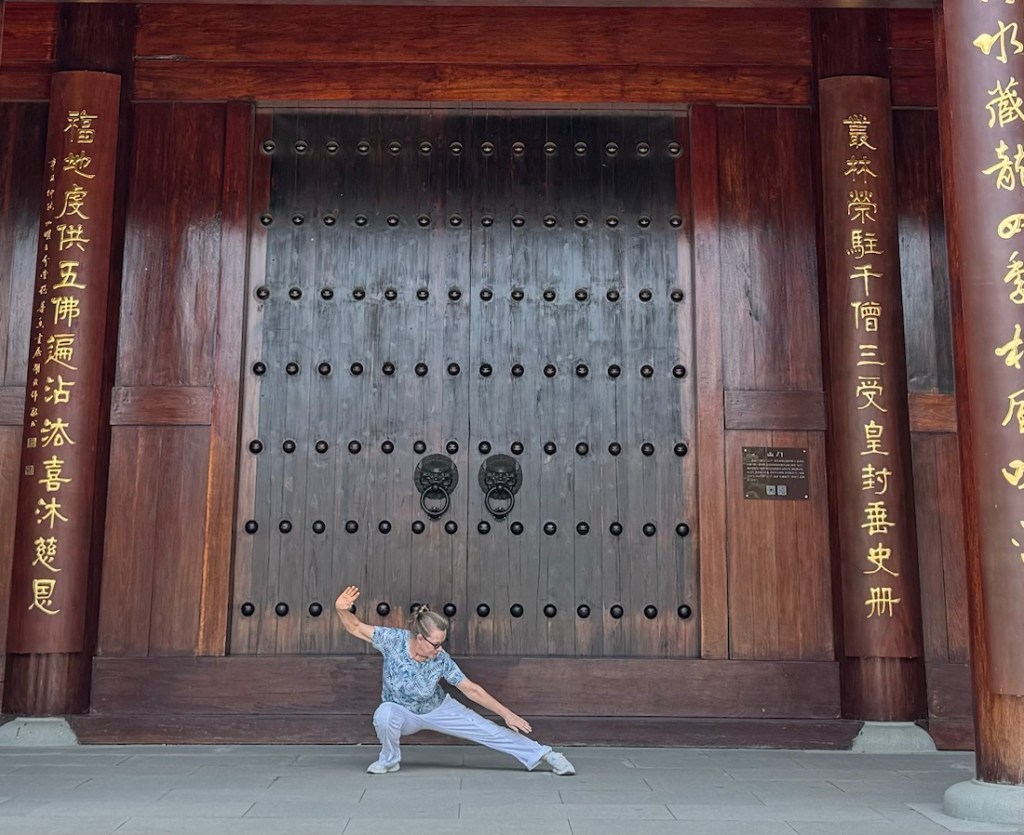
Beside the lake was a new temple complex which smelled of the gorgeous teak pillars.

We chatted for hours about everything and anything. Cathy and Rofoam both have excellent English and we were treated royally. It was Chinese hospitality at its finest. we are lucky to have such good friends.

Inigo in China: The highs and lows of WuDang Shan

Inigo likes Shanghai but it is a mega city, a concrete jungle like any other big city in the world and he is not a city boy. He has been looking forwards to our visit to the Hubei Province with Shifu which we have planned for a long time so that I can visit the WuDang Shan or Wu Dang Mountain, home to Wu Shu Taiji and a famous location for Taoists.

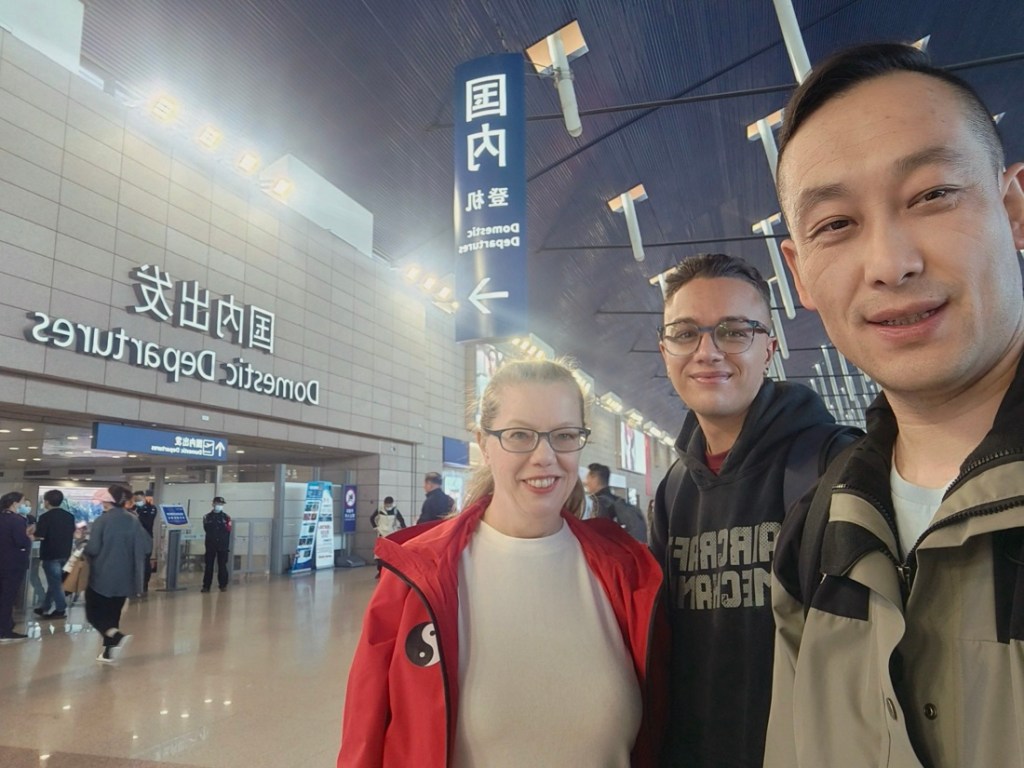
To get there is requires a 2 hour flight (China if SO big)

We arrived late at night and stayed in a lovely hotel with the most handsome breakfast spread that Inigo tucked into. Huge thanks to Leping for once again researching and making all the bookings for us.

Our adventure began in the morning with a somewhat scary 30 minute bus ride at speed along winding hairpin bends with sheer drops sometimes on either side! This took us to ‘base camp’ from where we could see the spectacular mountain peak.

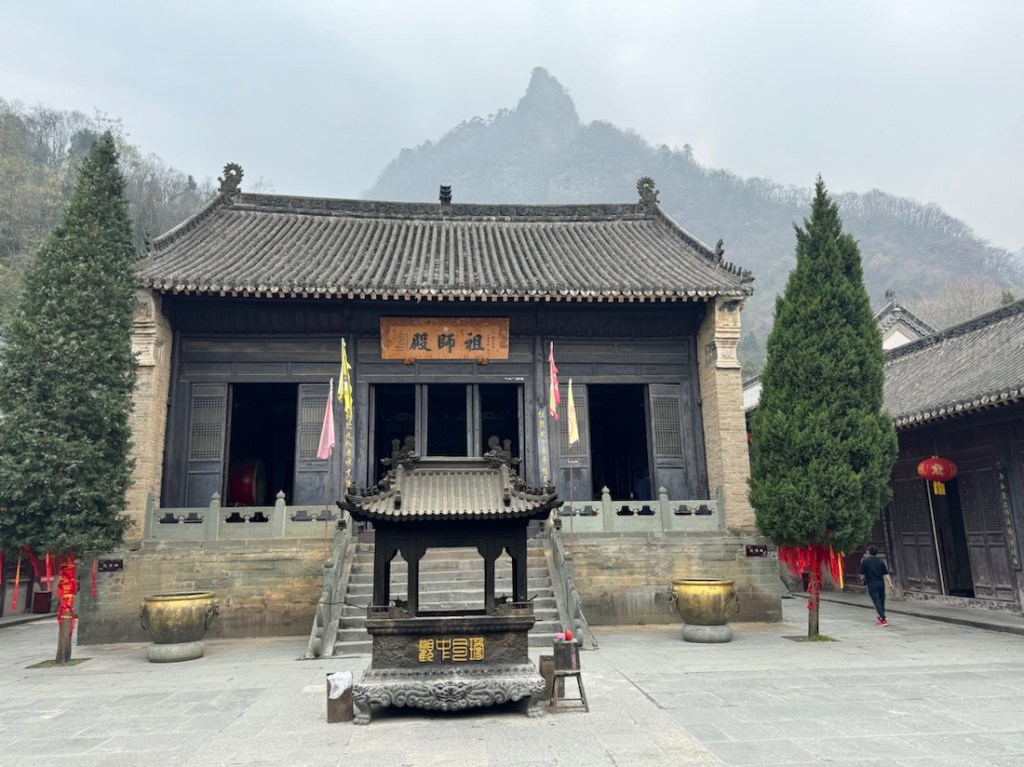
First stop a large temple

As you can see the weather wasn’t great but at this point it was warm and dry

We were all excited, even Shifu as this was his first visit here.

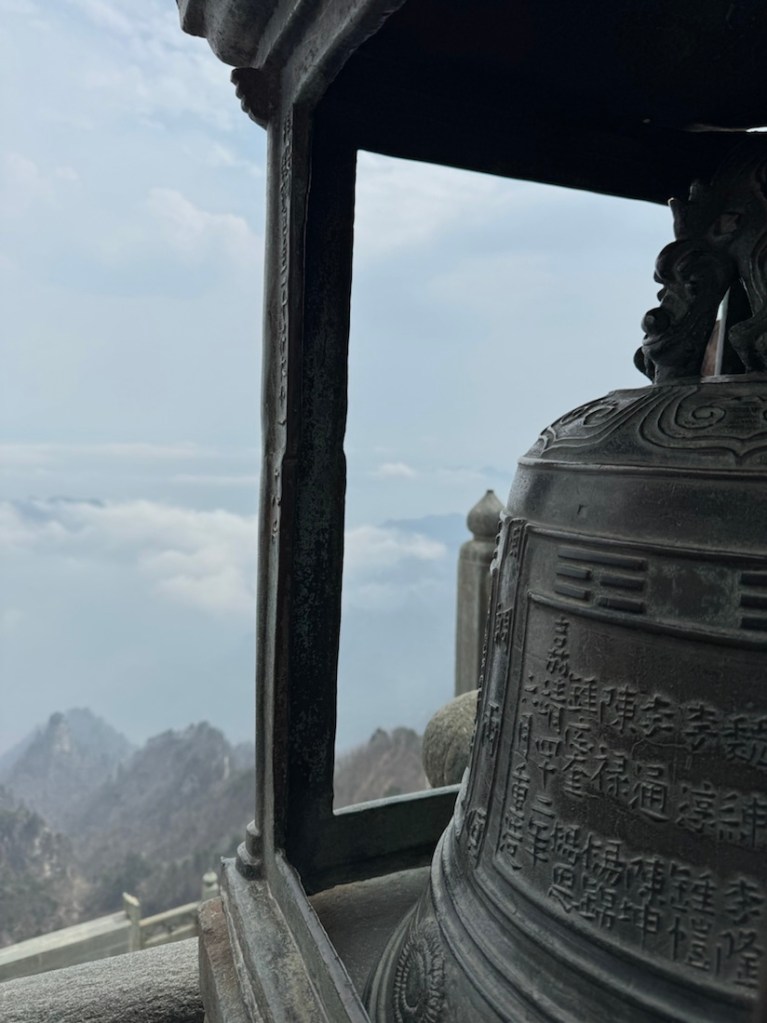
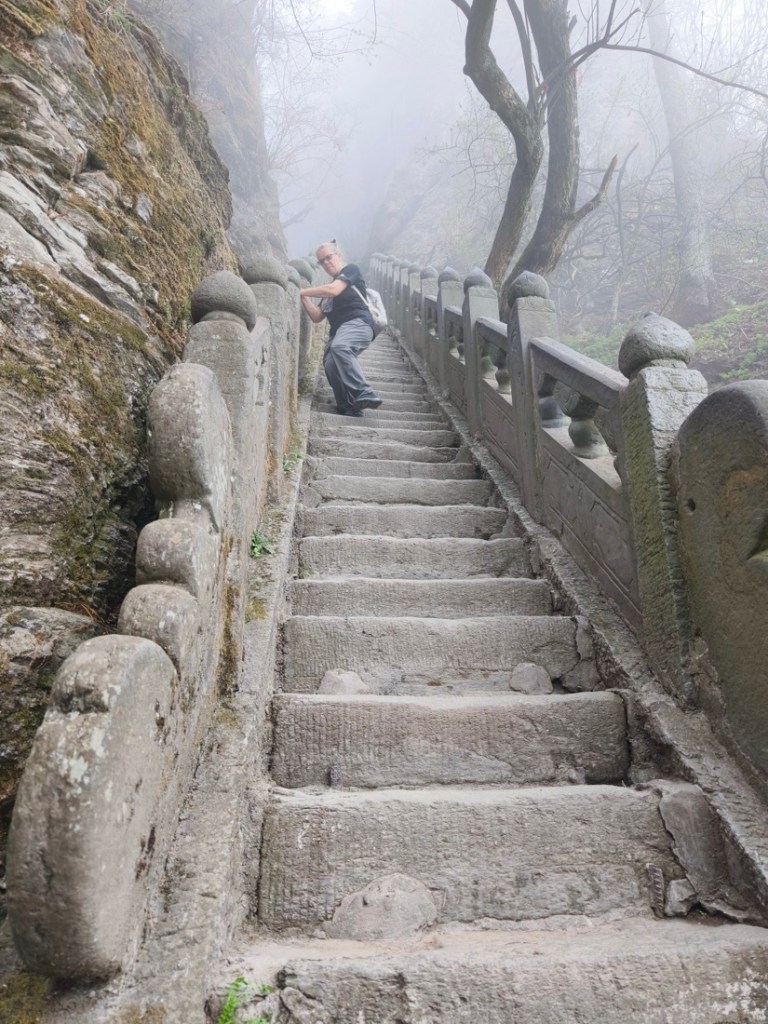
The second leg of the journey was up a cable car to a point just below the summit of Tianzhu peak (which means reach to the sky). From here we climbed up some incredibly steep steps and saw some pretty spectacular views.

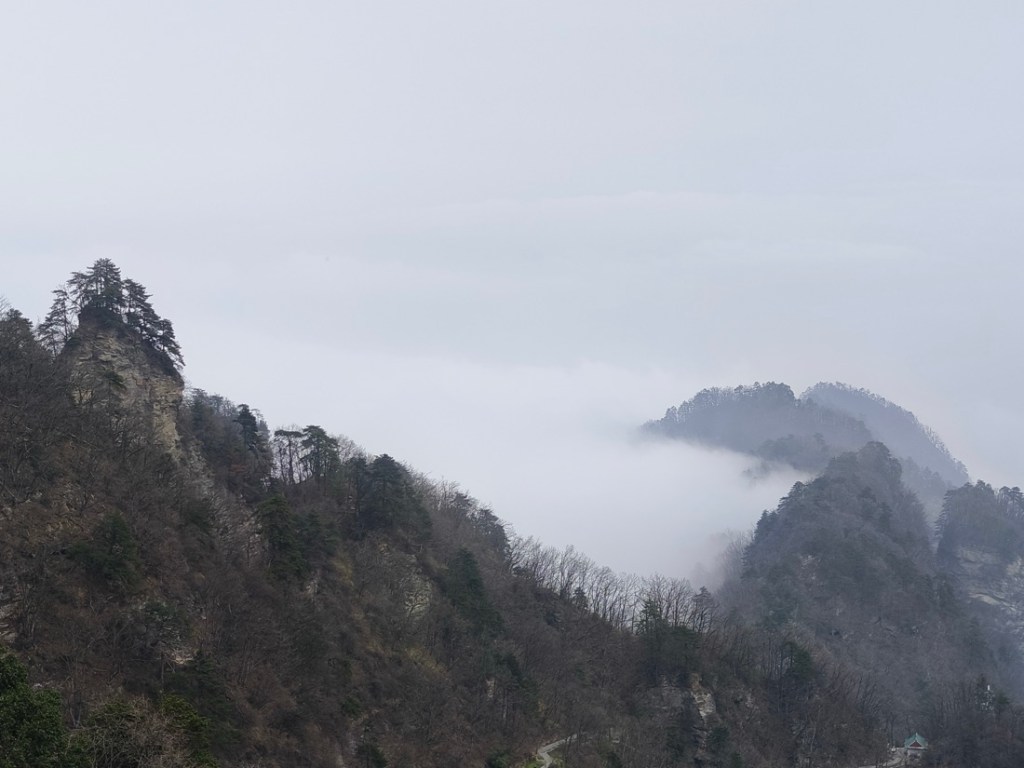
Tianzhe is 1612 meters high and we felt that we had an ‘eagle’s eye’ view at the top of the world.

Spread below us were soft white clouds between the jagged mountains ranges around. The air was pure and clean.

As a former vertigo sufferer I was curious to see how I would be this high up but as you can see I was relaxed and able to go near the edge with no problems at all.

I felt very proud of myself.

Once on the summit we walked in a large circle to visit several temples or shrines. The very top being called ‘Gold Top’ (which reminded me of milk bottles from my childhood!).

The steps up to here were the steepest and had chains or rope sound around the balustrade to help you to climb. I was grateful for those. The top here was crowded with a large group from Fujian so we couldn’t get close to the actual shrine. At base camp Shifu had purchased 3 bags of incense so I did all that climbing carrying 2 of them!! Quite an accomplishment I felt.

Built in 1416 as a shrine solely for use by the Emperors and royal family of the Song Dynasty we visited the Taihe Palace, the Golden Hall, the Yuxu Palace, the Gutong Palace and the Jade palace. All small but very impressive that they constructed all this at that time so high up! Imagine carrying all the building materials with no bus/cable car!

Bamboo and dragon detail from the Jade Palace roof

Once we had completed the circuit which easily took an hour with lots and lots of up and down staircases we stopped for a bite of lunch. Everything tastes better in the fresh air after all that climbing.

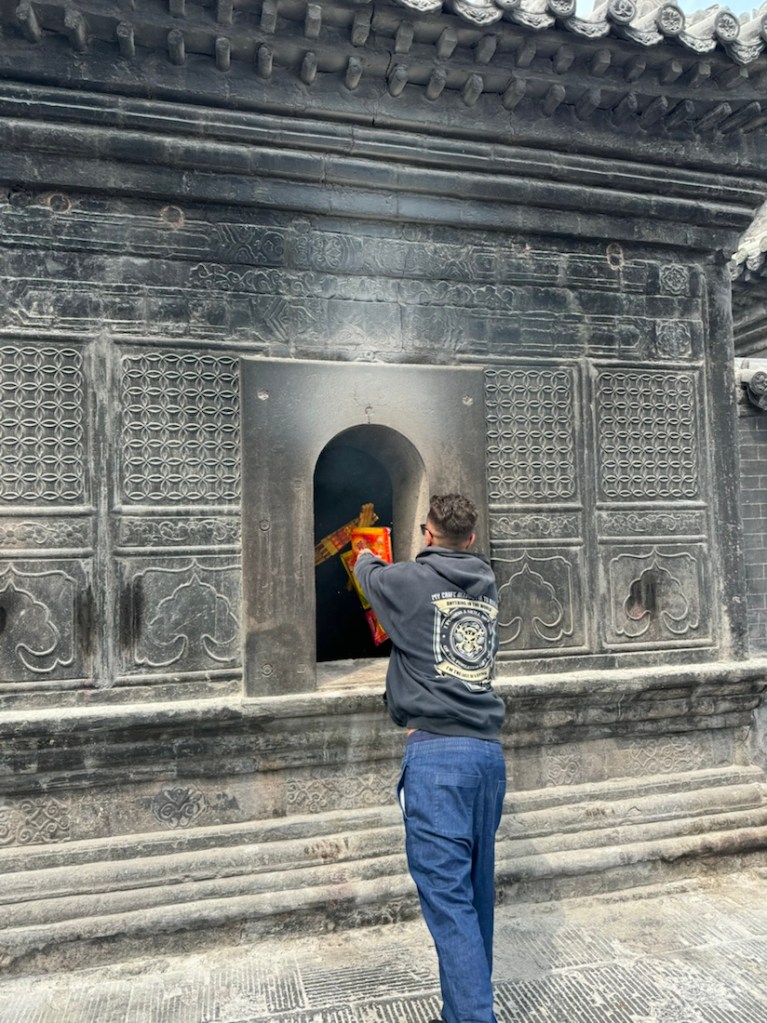
Then the descent began. But first we found a furnace to throw our incense into. Plastic wrapping and all.

Surprisingly it didn’t smell gorgeous there considering that was all that was being burnt! Maybe the fumes were directed into the temple somehow.

Anyway, off we set. It was a 2.5 hour hike and downhill all the way. Or should I say down stairs! Lots and lots and lots of them. Did I mention how high we were?

The steps were legion and very steep but I did ok while I had a balustrade to hang onto.

There were 4 super long staircases which were so long that we couldn’t see the bottom! I just looked at the stair in front of me and kept going. One step at a time. Hanging on in there.

Then the sides of the stairs disappeared and my aging knees were starting to feel the strain. Actually my long time knee injury held up pretty well all things considered as Shifu has been working on it for me over the previous months but the continual descent was taking its toll.

Then about half an hour into the descent the rain came in.

Not just a little bit of rain but heavy rain. The stair treads turned to pools and became slippery and more treacherous (oh great! Just what I needed)

Inigo would like me to say that he was actually having a really good time despite how his face looks in this picture.

The men were fine and did lots of these steps down with no problem at all but I am not ashamed to admit that I needed a helping hand. By the time we reached the bottom the backs of my knees were painful and the tendons hurt with every step that I took.

The hot shower at the mountain hotel was one of the most delicious we have ever taken. Unfortunately the few supplies that we had brought for this excursion (Inigo carried those) also got damp in the heavy rain so we didn’t really have nice dry clothes to change into which was a shame.

According to my phone’s health data we had climbed down the equivalent of 97 floors. So maybe it was not surprising that my legs were sore the next day. After all I am an old woman!

Inigo in China: Shanghai section

We have been here for 5 years now and Inigo is our first (& only) visitor. He has been living and working in Ecuador now for 2 years without a proper break so this is a 6 week holiday where he first travelled to the UK and Kevin helped him to sort out a visa for China, He caught up with family and friends, then both of them flew to Shanghai. We were so excited that he was able to make the trip here and we are delighted to show him aorund this mega city.

But first he needed to complete some health checks and get some dental work done. He had a wisdom tooth that was growing horizontally which needed to be removed (& better not to get that kind of surgery done in Ecuador!)

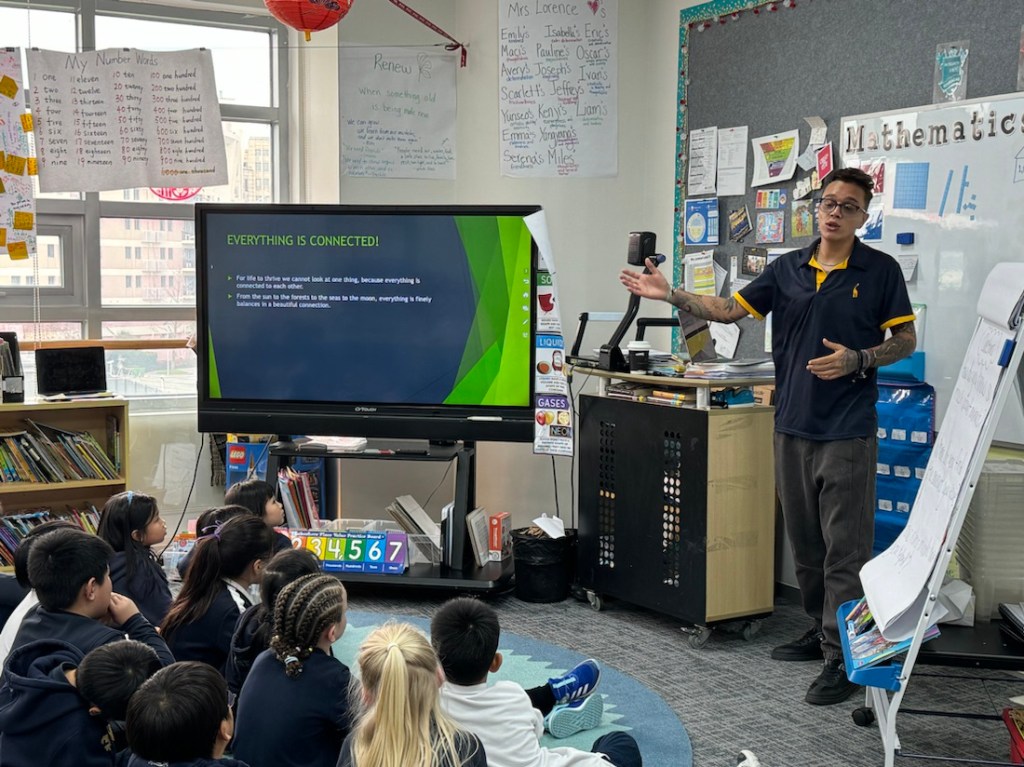
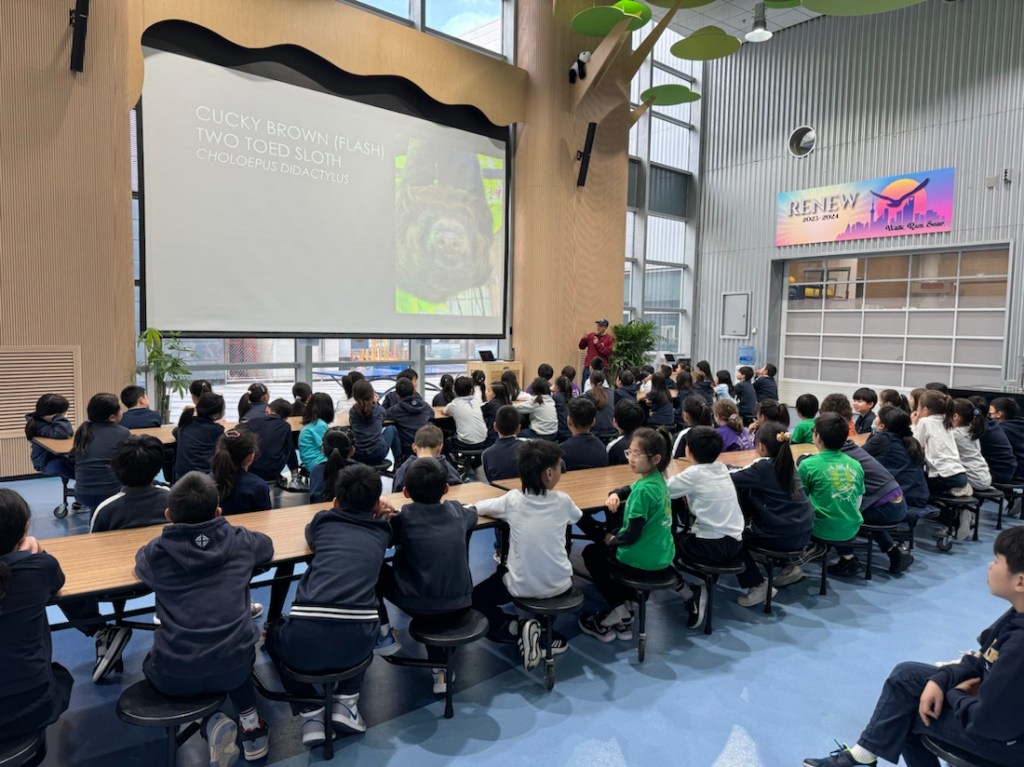
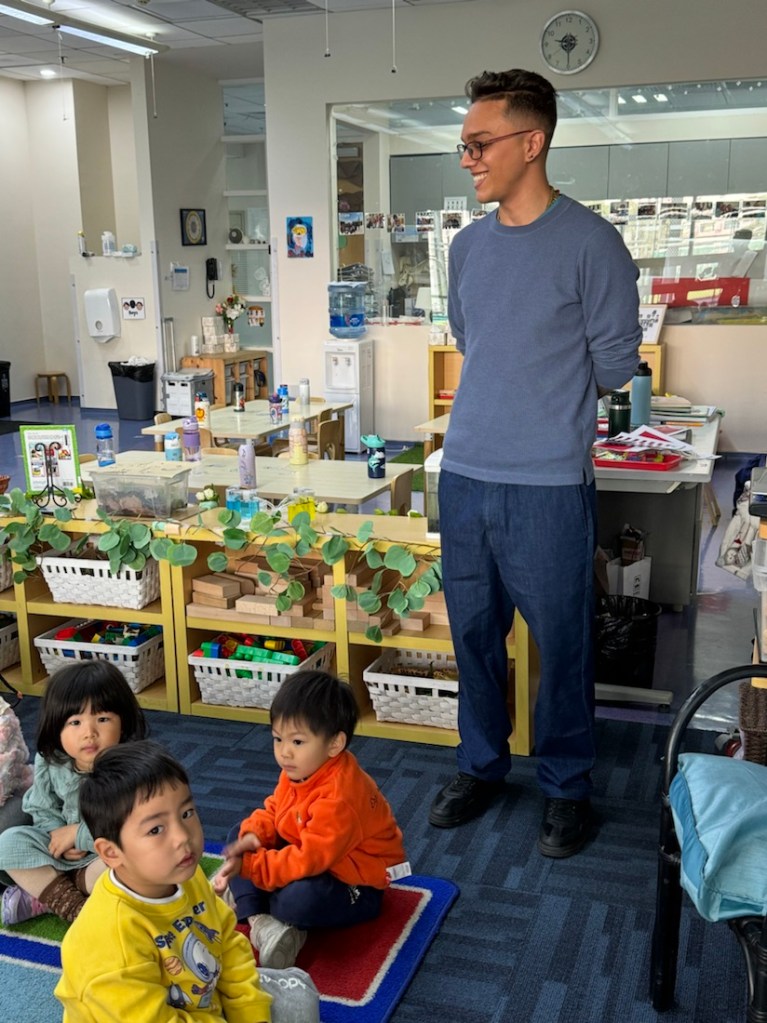
Inigo also agreed to come into school and talk to some of our kids about the animals that he works with at Yana Cocha. We have an after school Zoology club where he spoke about how they train the animals at the centre and why. Our Preschoolers had been learning about different animals so he showed some videos of the ones he cares for. Third grade had just finished a social issues unit and were just about to begin animal research so he was able to talk to them about the exotic pet trafficking trade and how they help the animals that have been rescued. Finally second grade heard that he was around and requested a couple of talks about ecosystems.

I

I must say that Inigo did very well. He was a bit nervous but he soon got into his stride and the kids LOVED him. It was hard at times to stop all their questions they were so keen. One particularly cool spin off to this visit is a potential partnership between Concordia and Yana Cocha with the High Schoolers helping to design tracking devices that would help the centre know what is happening to the animals that are released into the jungle as well as providing big data as part of the higher level mathmatics course.

Inigo has also had some Taiji lessons and I was very impressed with how quickly he picked up the movements and how well he can do the meditation. Shifu calls him my ‘Taiji Baby’. I have really enjoyed having him in my classes.

With all this going on we haven’t done as much sightseeing as we had expected but we have managed a few days in Puxi seeing some of the highlights. It was quite cold when he first arrived and I took him to Yu Yuan Gardens to see the zig zag bridge (ghosts cannot turn corners so you are safe from them on these bridges!)

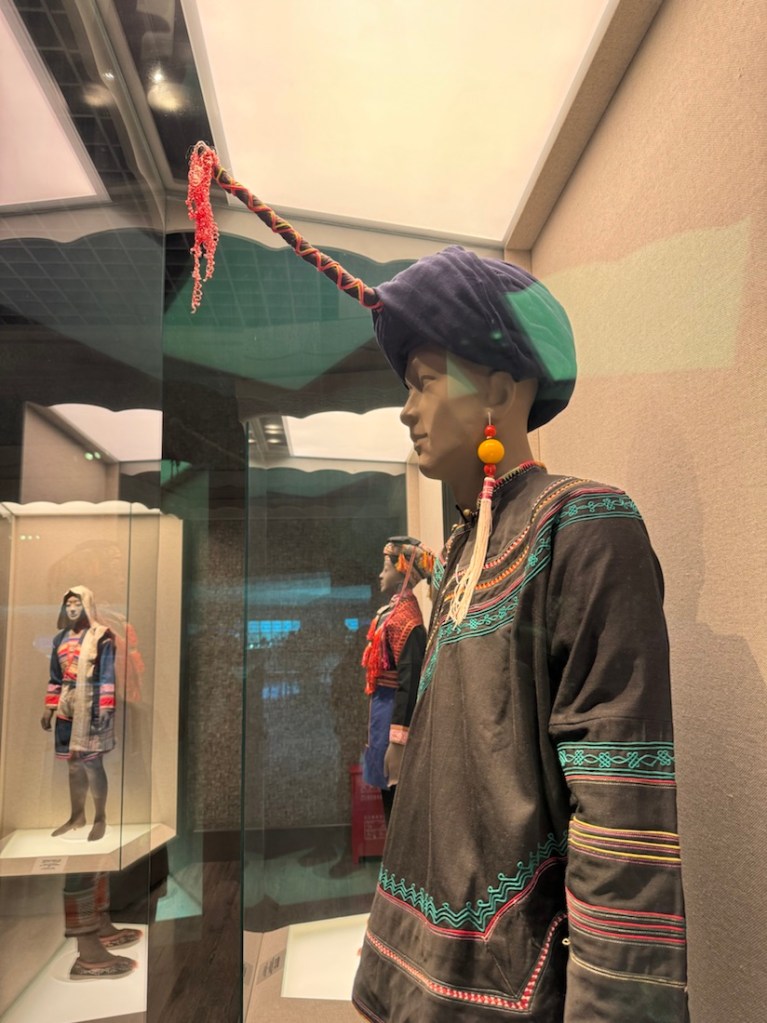
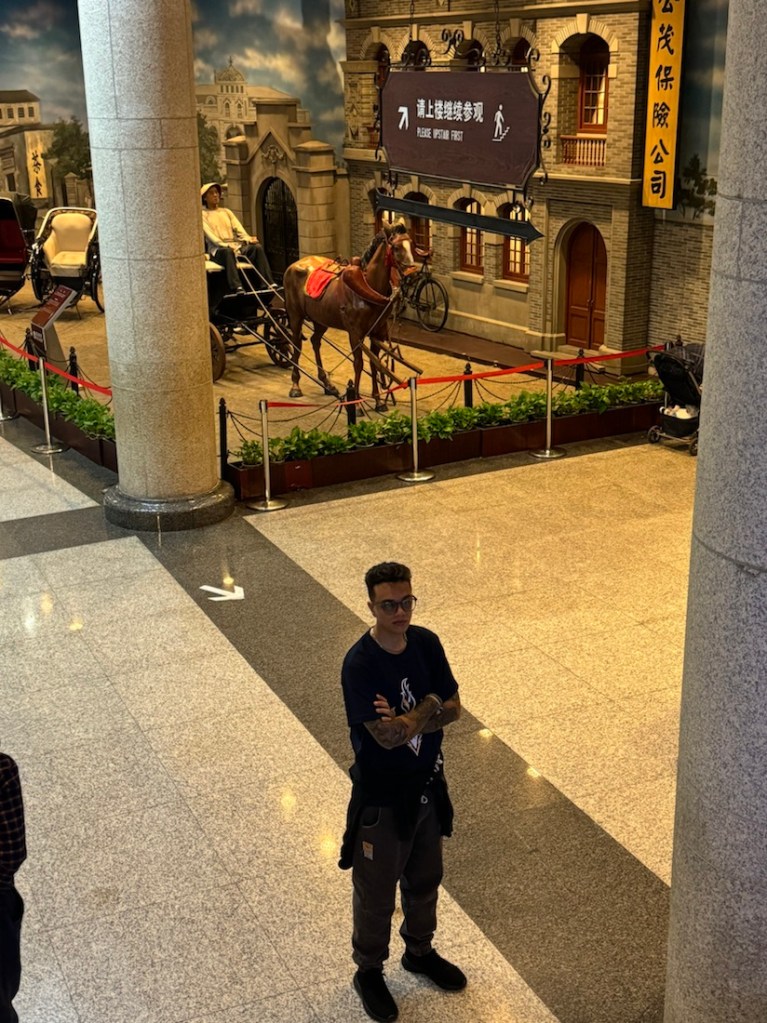
I took a special day off school and we visited the Shanghai Museum with Shifu and Xiaoma

I would love a dragon bonnet on my car!
One of the minority ethnic groups in China has a unicorn hat!

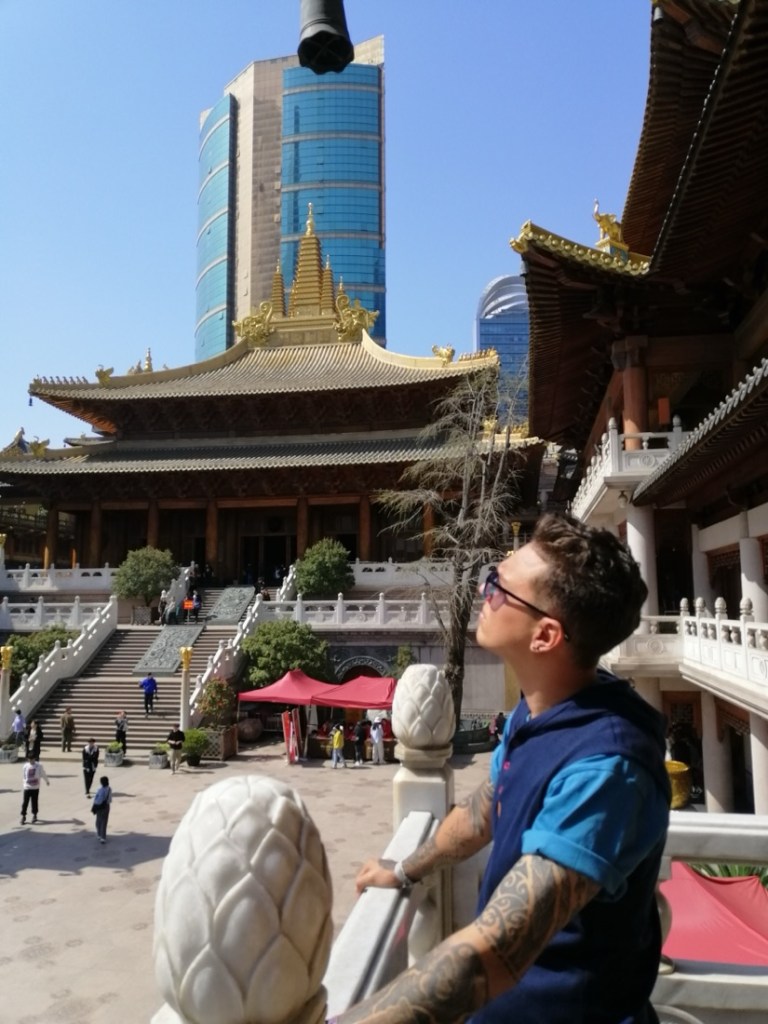
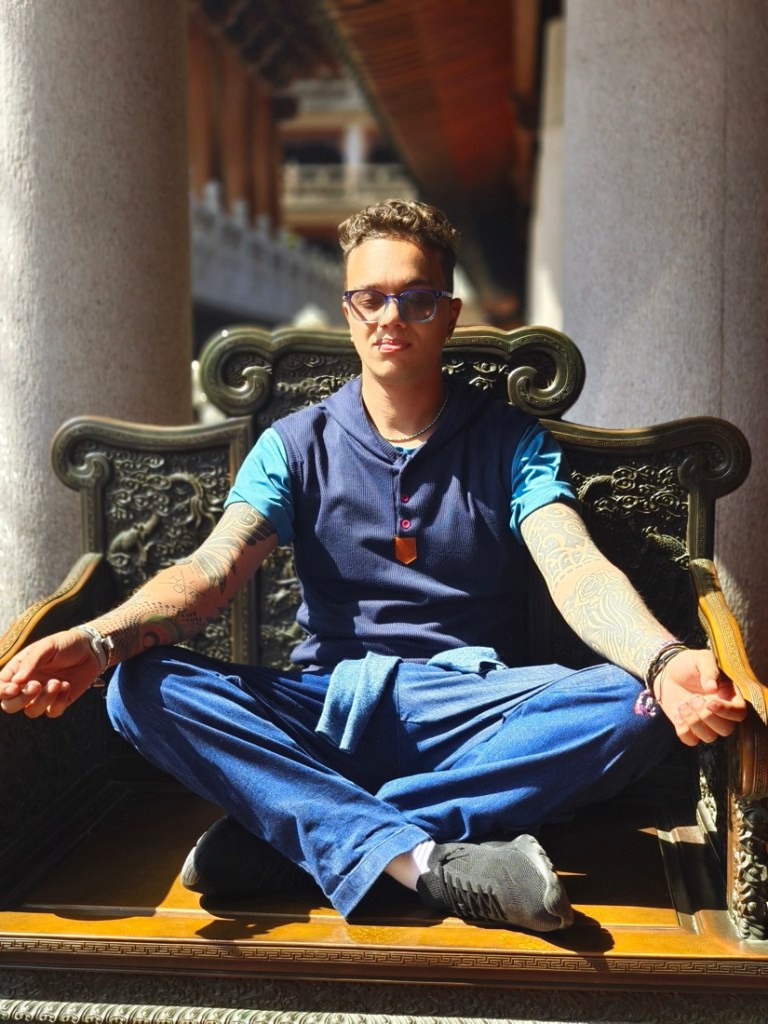
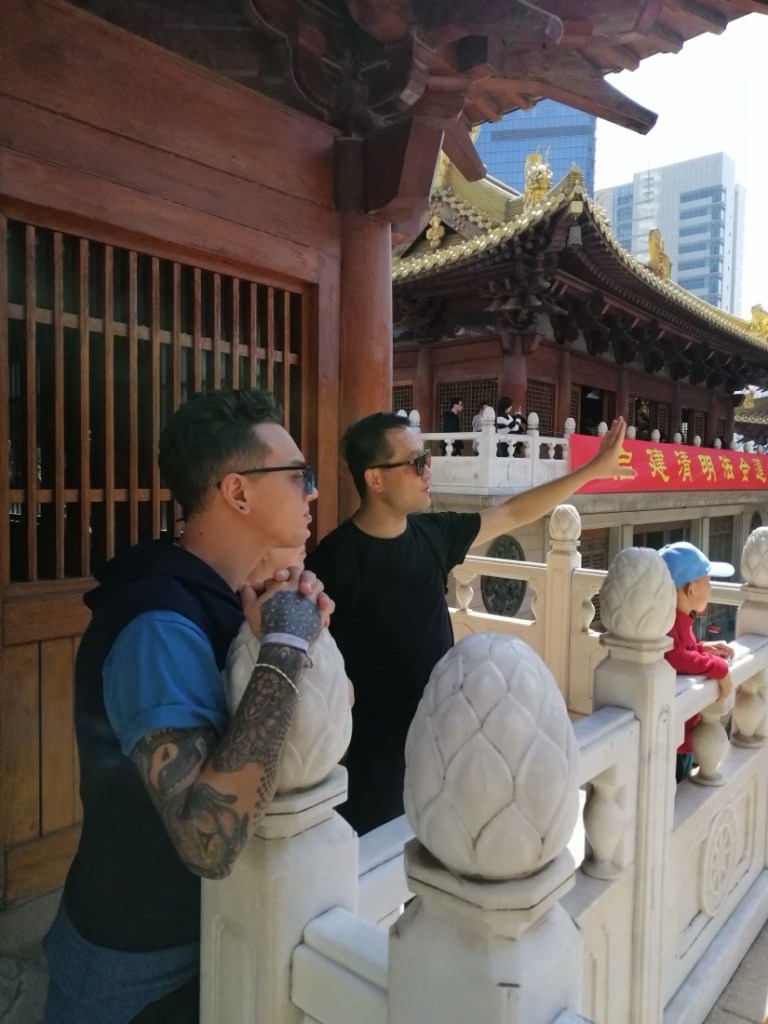
Then the Jing’an Temple.

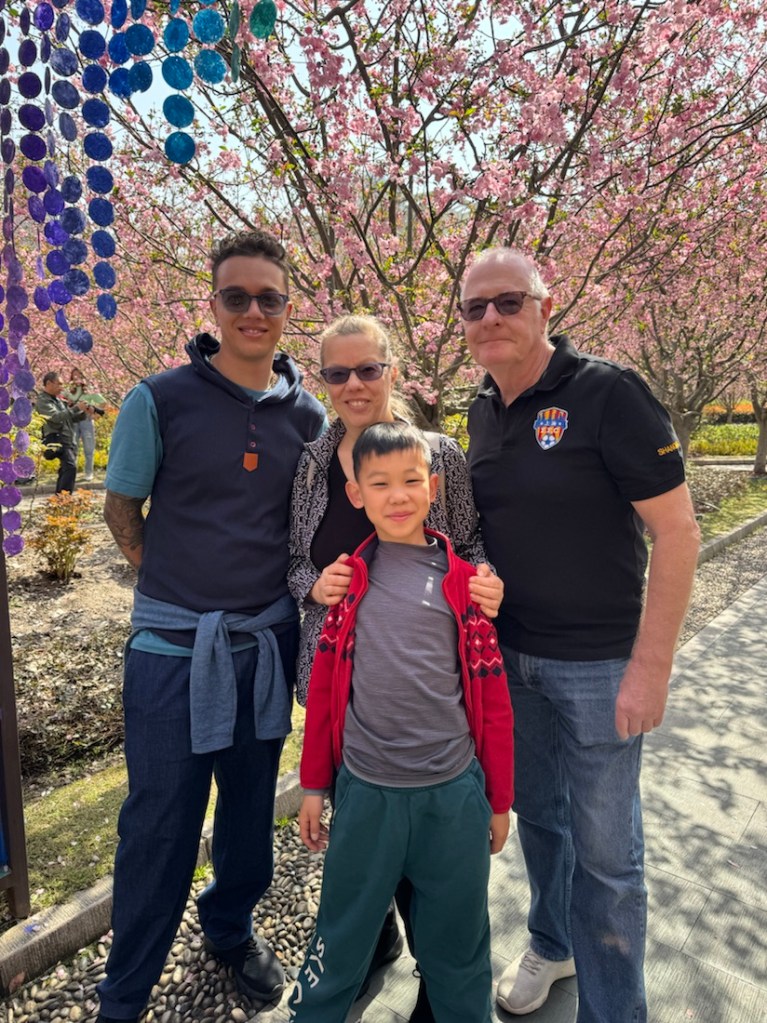
The weather has turned warmer, the beautiful blossoms are out and spring has arrived. I am so glad that he is here to see this special time.

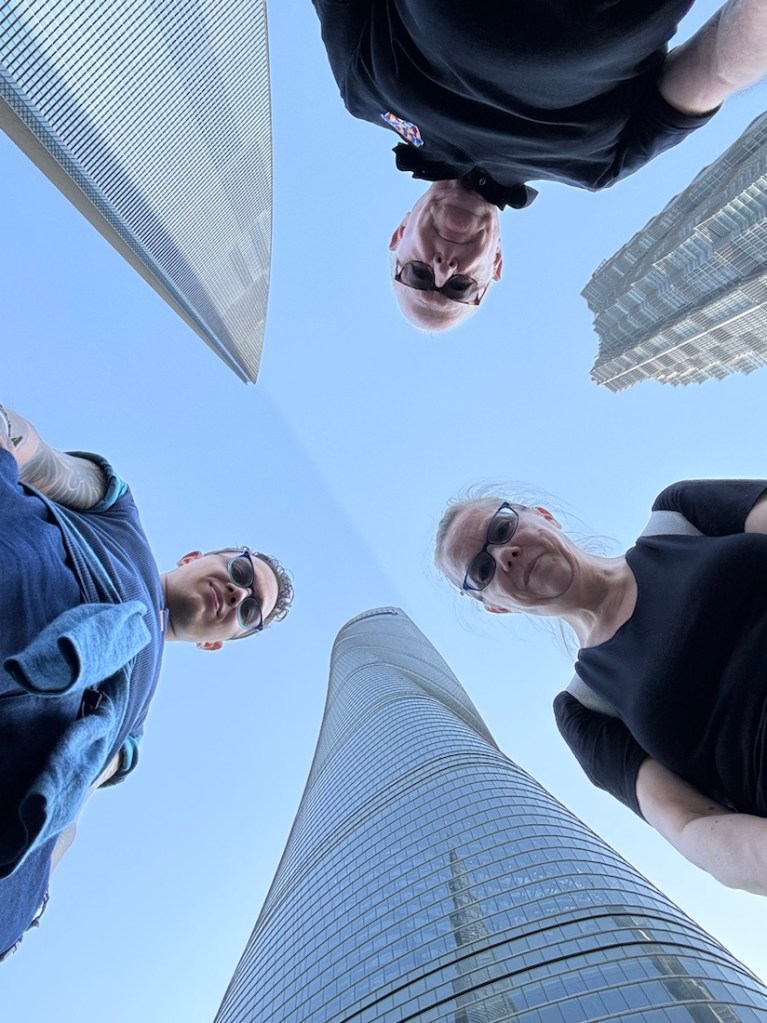
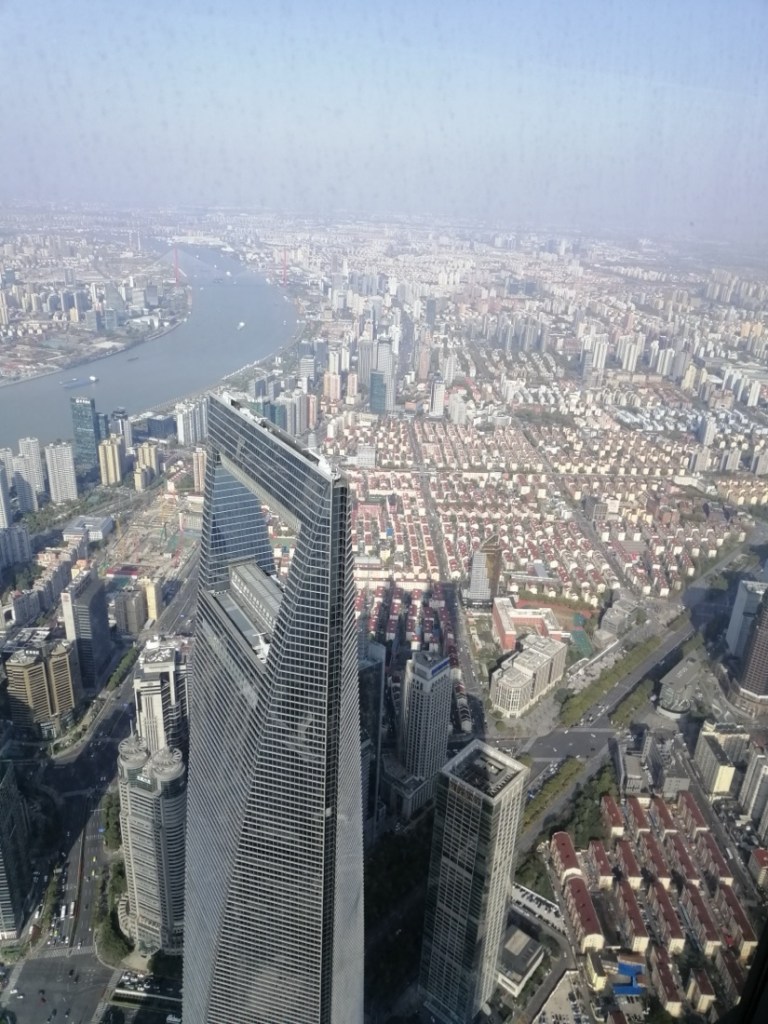
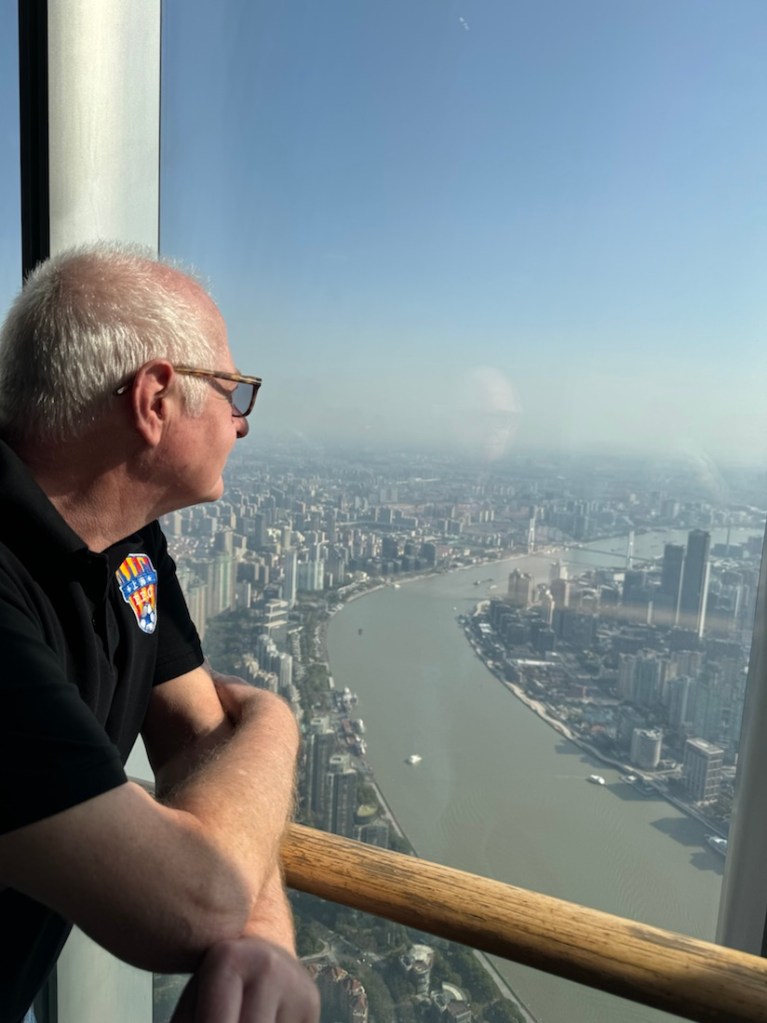
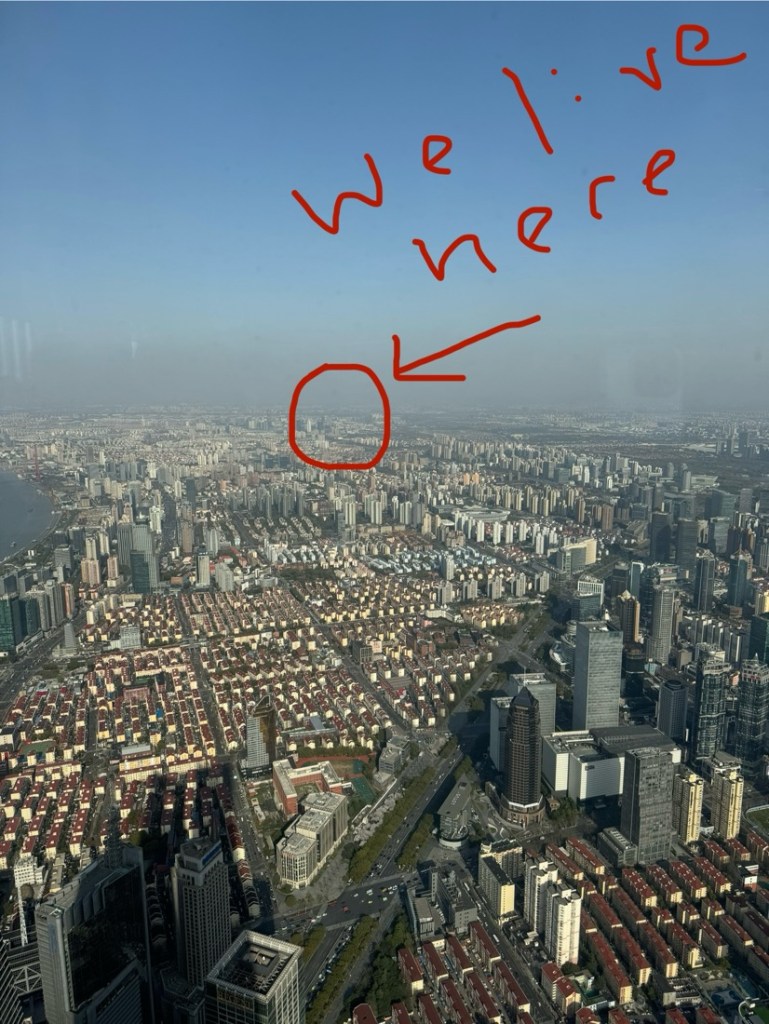
Kevin and I have always said that we wouldn’t go up the tall towers until we needed to take someone. I wanted to do the bottle opener (Shanghai Finance Centre) but the observation deck was closed when we got there. We had no choice but to go for the Shanghai Tower, the tallest of the 3. Initially I was a little unsure but they both persuaded me and I am very glad that they did.

Looking down on the Bottle opener!

Once upon I time I would have been extremely scared but Taiji has really helped my balance and cured my vertigo. I was absolutely fine going up and even went close to the windows and looked down which is something that I never dreamt I would do!!

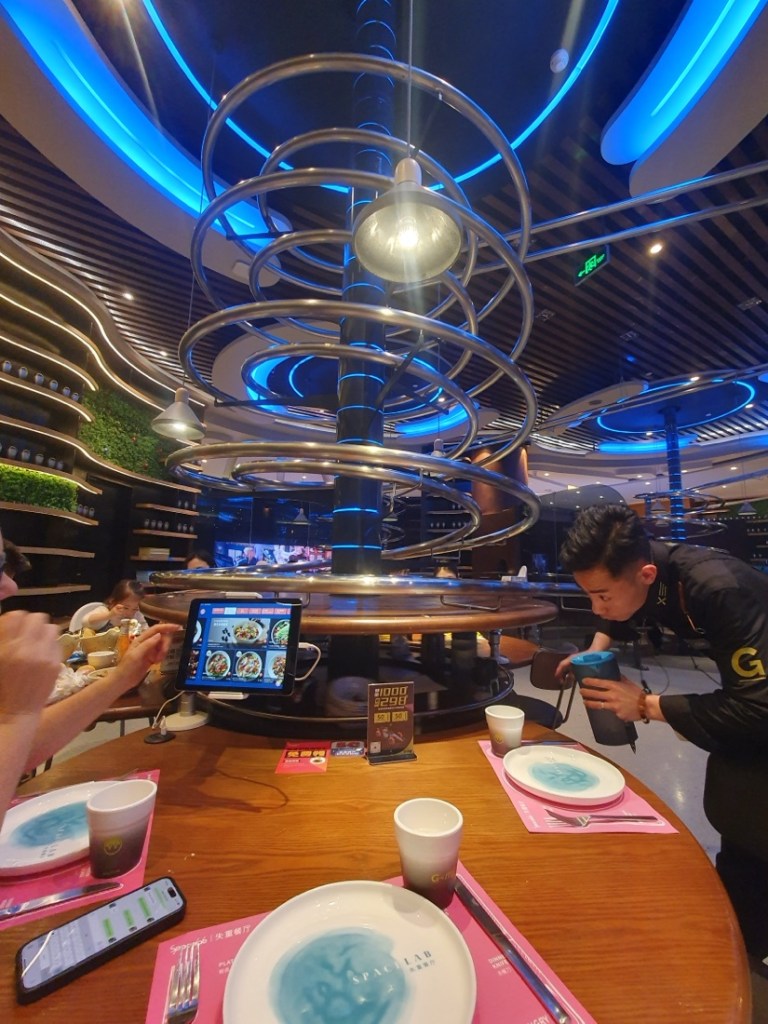
Inigo has been enjoying Chinese food. Today we went to the Spacelab (basically a burger joint) but the food is delivered by robotic tracks to your table which is pretty cool to watch!

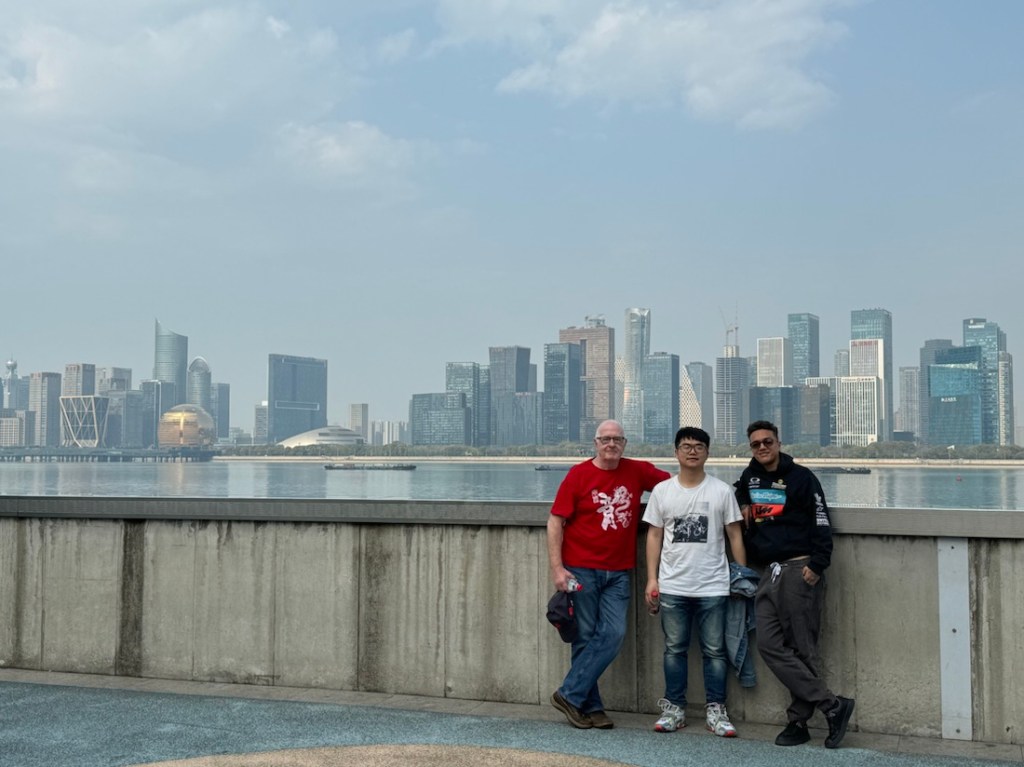
He has had dumplings and noodles and even spicy frog when we visited Rofoam in Hangzhou for the weekend. Unfortunately it rained on that trip so we stayed indoors and watched Dune2 (in English) but had a nice walk along the river the next morning.

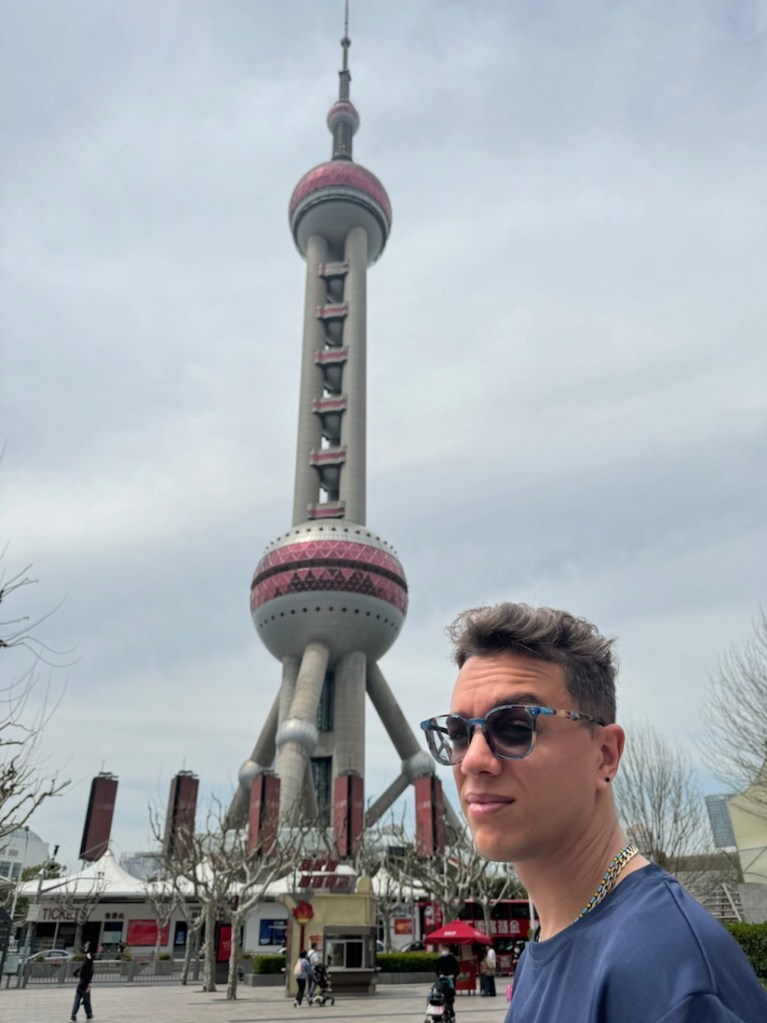
Today we went to the iconic Pearl Tower

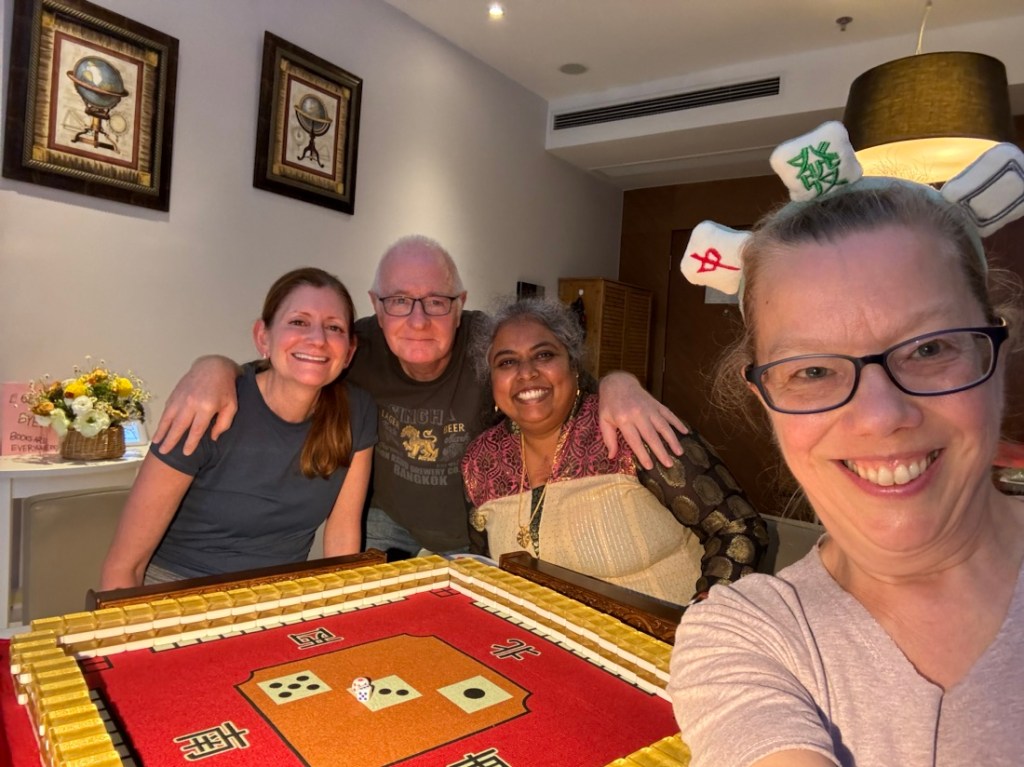
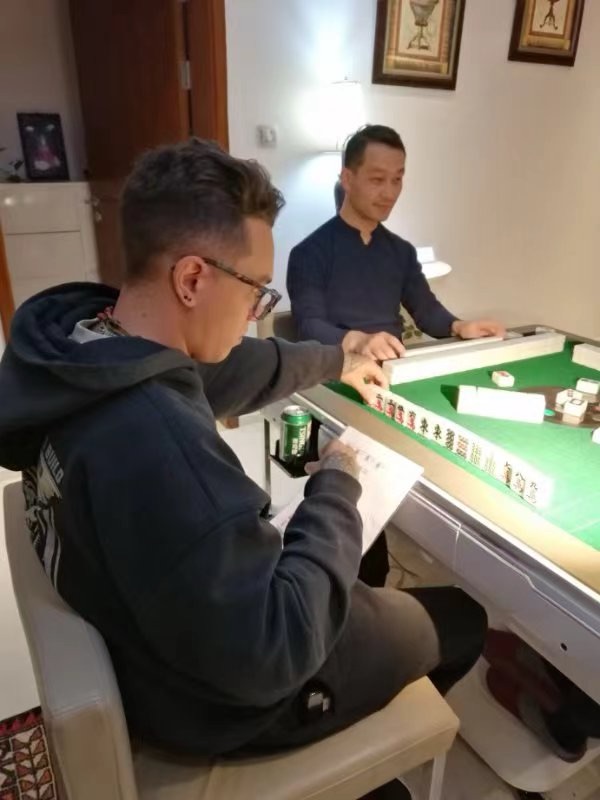
He even learned a bit of mahjong

The master of Mahjong

Time for tea

Tea is a big part of Chinese cultural traditions and nowhere more so than Fujian. In most of China tea is commonly drunk after lunch and into the evening but in Fujian they start drinking before and after breakfast and continue throughout the day.

It was here that we were offered the chance to experience a wide varieties of tea.

All the tea is taken without milk (unlike English Breakfast Tea) and is served in teeny tiny cups. You can have multiple cups from the same serving of tea and the water can be replenished up to 10 times (depending on the tea variety). This means that you are never exactly sure how much you have drunk.

We were offered tea in lots of places throughout our two days stay, the hotel reception, the sellers in the TuLous, there was even a tea set in our room. Serving tea was the local way of showing hospitality and we soon discovered that the people here are extremely hospitable!

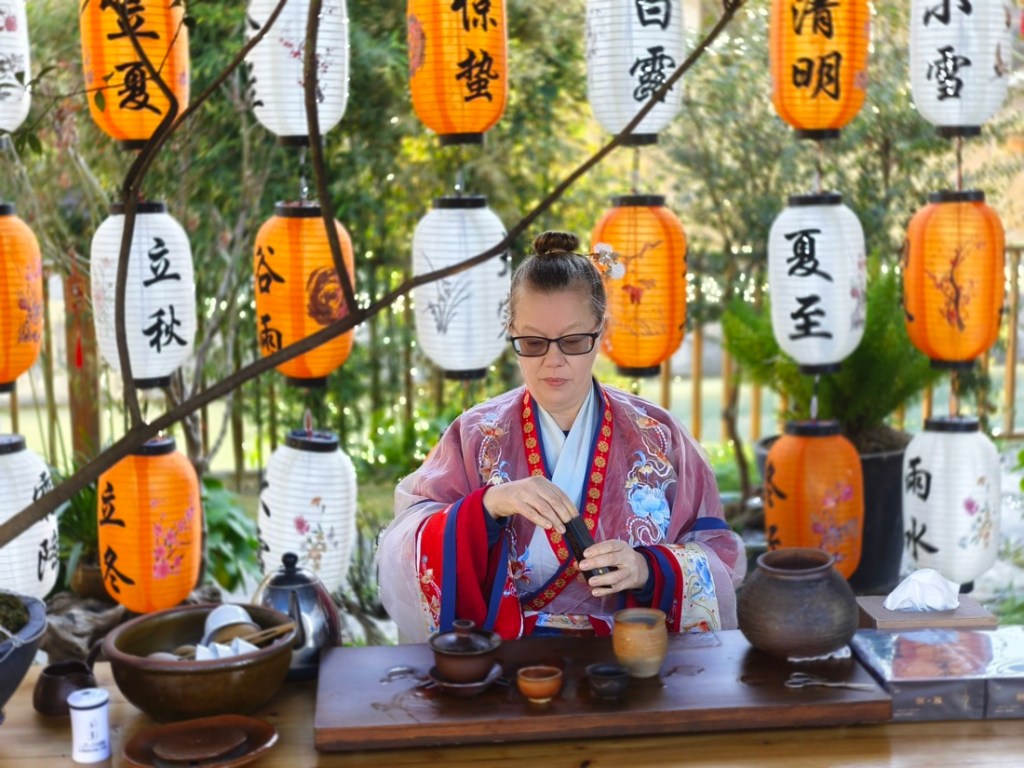
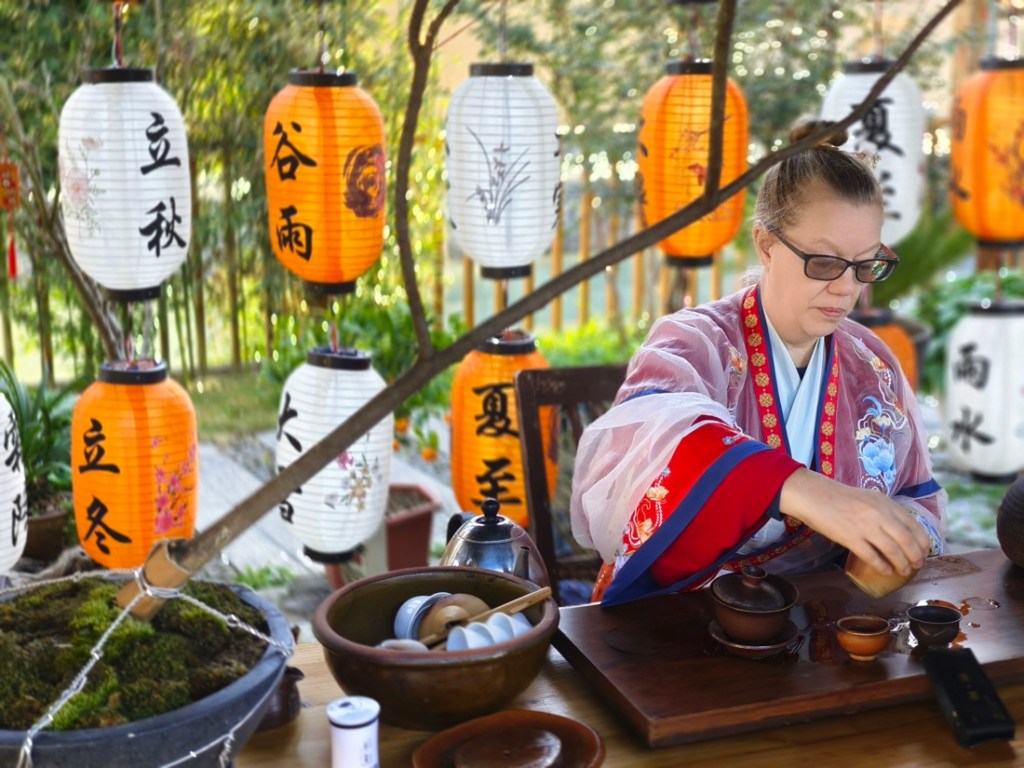
The lady in our hotel offered to teach me how to prepare and serve the tea. I was delighted to learn how to perform a tea ceremony. It is very intricate and precise. Everything follows a specific order from washing and warming the cups to washing the tea to swilling the leaves and water with the lid.

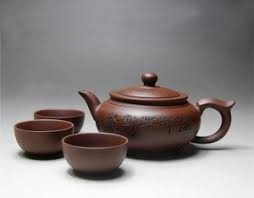
It should be noted that this method of tea preparation does not involve a teapot as we know it. Nor even the little clay teapots that are also common in China.

Traditional tea set

We used a Kung fu tea set like this

The clay teapots can only be used for certain brown tea because they can absorb the flavor. Whereas the glazed tea service can be used for any teas, red, green, brown, black or white.

The tea is steeped in the container with the lid and then filtered into the jug.

In Tulou the communities grow their own tea and it is very refreshing. Consequently there were many vendors selling their tea. On the first night when we were wandering around the Huai Yuan Lou building Shifu saw a vendor sitting alone in his downstairs room so he started to chat to him. The next thing we knew we were being invited in for tea.

Obviously he spoke no English at all and in fact in Fujian they have not only their local dialect but the Tulou communities each have their own family language as well! So Shifu had to concentrate hard to understand his Mandarin then he had to translate it for us.

Mr Jian told us all about his TuLou, his family and how they grow and make the tea. We learned about picking, drying and roasting different teas (each tea has its own process). Once the sun had gone in it was perishing cold (they had no heating in the TuLous!) so we were extremely glad of the 3 sets of tea that he served as he talked.

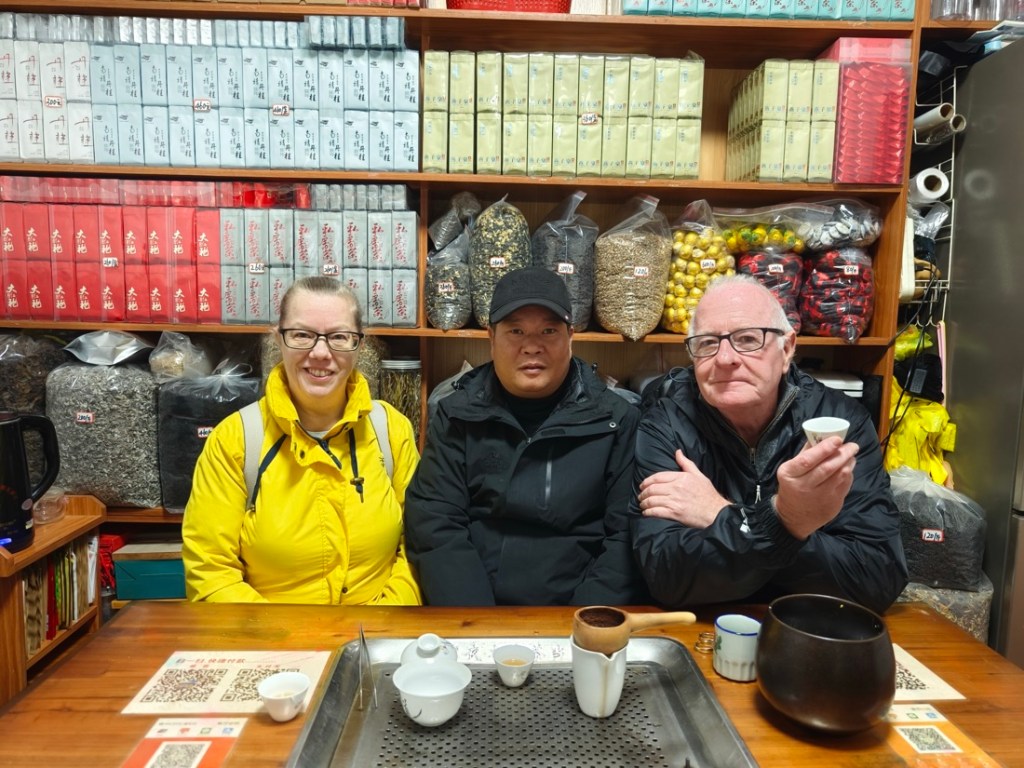
The next day we decided to return to see the building in the daylight and to say hello to him again. He was out collecting his children from school but his friend was there. She was equally welcoming and had obviously heard about us because she seemed to know who we were. She too served 3 types of teas and was also informative about tea growing in particular which types of tea can be used to cure while ailments. We were served a green Oolong variety which was said to help cleanse the blood vessels and reduce cholesterol. As this is currently a goal of mine and as the tea wasn’t bad I decided to buy some. However it was time for us to eat so they said they would weigh and bag everything and we should come back. Mr Jian even gave Kevin some of his home distilled rice wine to have with his dinner!

Kevin with the moonshine!

When we returned to collect our tea purchases (by this time we had sampled 7 different varieties that day), they ushered us in and Mrs Jian was now also there. Kevin said, ‘please no more tea’ but two hours later we were still there because this time they brought out the good stuff. The high quality white tea and a special herb called Anoectochilus roxburghii that is extremely expensive but is know for curing a number of ailments.

In fact this herb is now protected in the wild as animals and birds will eat it if they are sick!

Shifu loved chatting with his new friends and asked lots of probing questions. Tea culture and tea ceremonies, if done correctly, are one way of understanding more about the Tao. I think that these people appreciated someone who was genuinely interested in their way of life. I felt a bit guilty that they had given us so much (even some extra tea in our purchases) so I suggested that we teach them a Qi Gong move to say thank you. They were delighted with this arrangement and jumped up immediately.

We showed them the ‘metal’ moves from Shifu’s 5 Elements QiGong which is good for the lungs. I demonstrated the moves while Shifu explained what was happening and how to do it. They both said that they could feel the qi sensations but when they sat down they both lit up their cigarettes afterwards. Lol.

Tea is a huge part of Chinese culture. It is sociable and healthy (none of the teas we had contained caffeine). The sense of order in the preparation brings feelings of calm and harmony. The tea rituals, the small cups and the respect shown means that this is an unhurried part of life that must be savored and enjoyed.

San Mao (3 hairs)

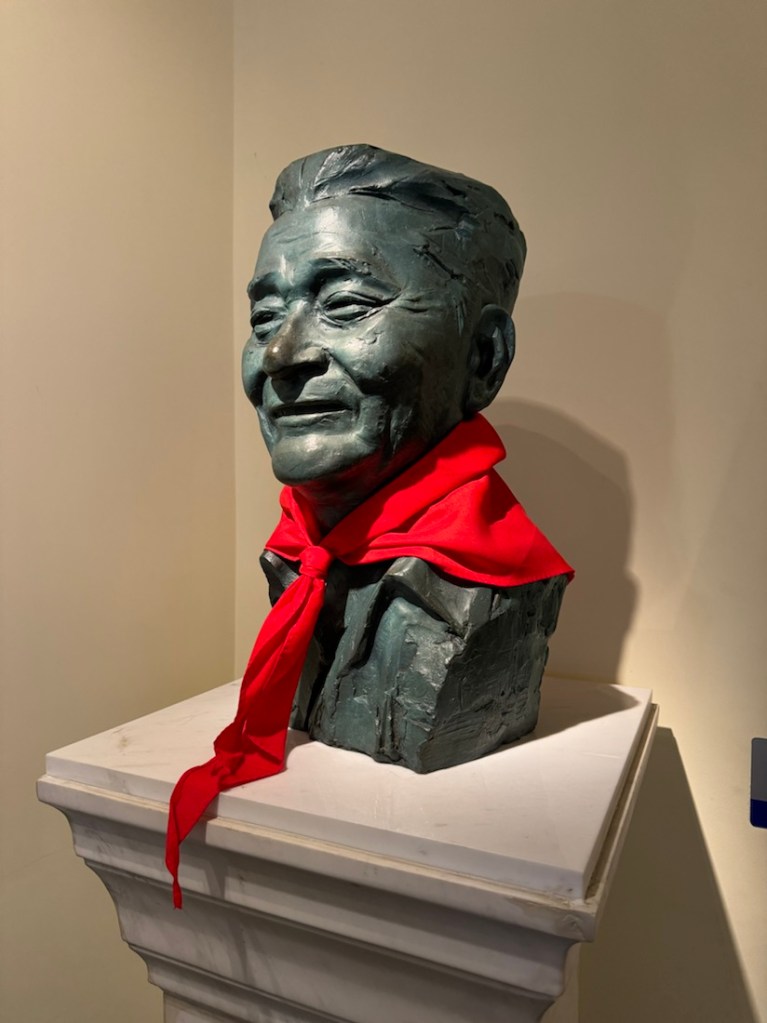
Today Shifu and Leping took me to Puxi to visit the home of a legendary Chinese cartoonist called Zhang Leping

Zhang Leping

Born in 1910 to a poor family he displayed a remarkable artistic talent as a child but he was forced to become apprenticed to a woodcarver to earn money to help support his family instead of finishing his education.

In 1928 though at the age of 18 he was supported by relatives to attend art school where he developed his talent.

Zhang Leping’s passion was for cartoons and children’s drawings. He created the character of San Mao which literally translates to 3 hairs. You can see why…

This delightfully charming character quickly gained popularity. Initially Sam Mao was created to convey the hardship of the Japanese occupation in China through the eyes of children. Sam Mao is innocent and funny but portrayed the realities of life. San Mao became a symbol for the victims of the hardships.

I personally liked the panel where he gets crushed by books!

Zhang Leping’s house in Puxi was a museum to 1930s Shanghai elegance with its interior bathroom and art deco features.

We had a lovely time learning about this influential author and illustrator.

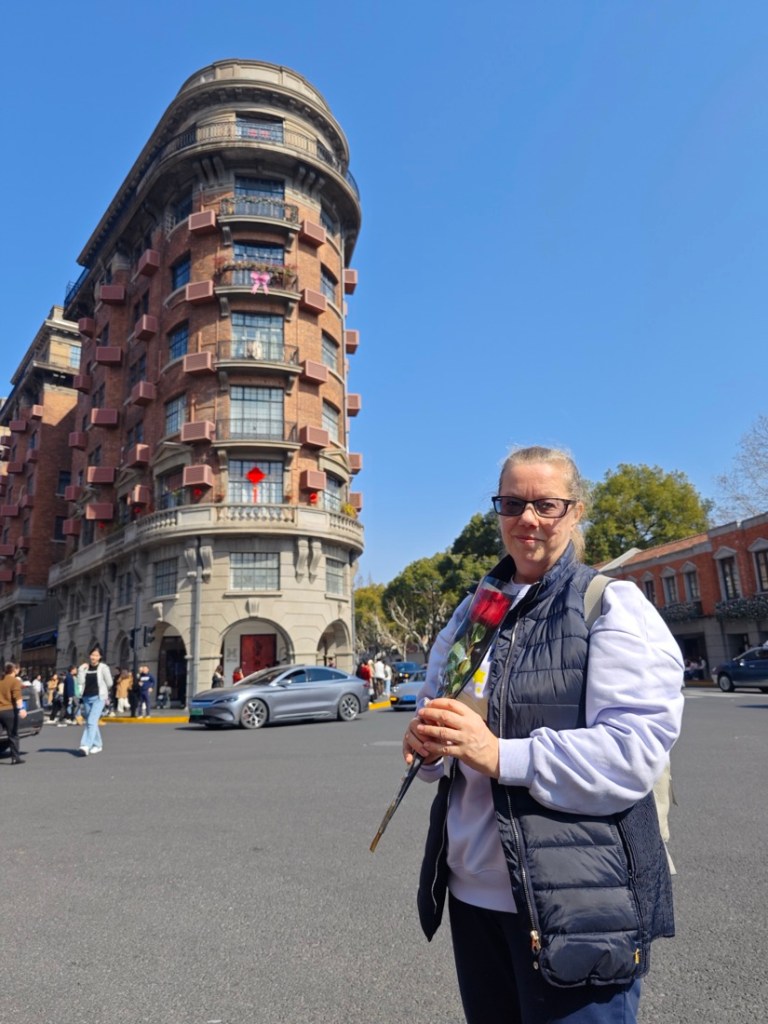
Walking around Puxi’s busy streets afterwards we also saw several very strange buildings

Look at the shape of this one. It’s a wedge. How small is that angle at the back! And it even has windows. What could you possibly put in that space?

Another beautifully shaped residence

It was wonderful to be in temperatures in the low 20s after starting the week in below zero conditions.

Tulou or ‘going round the houses’

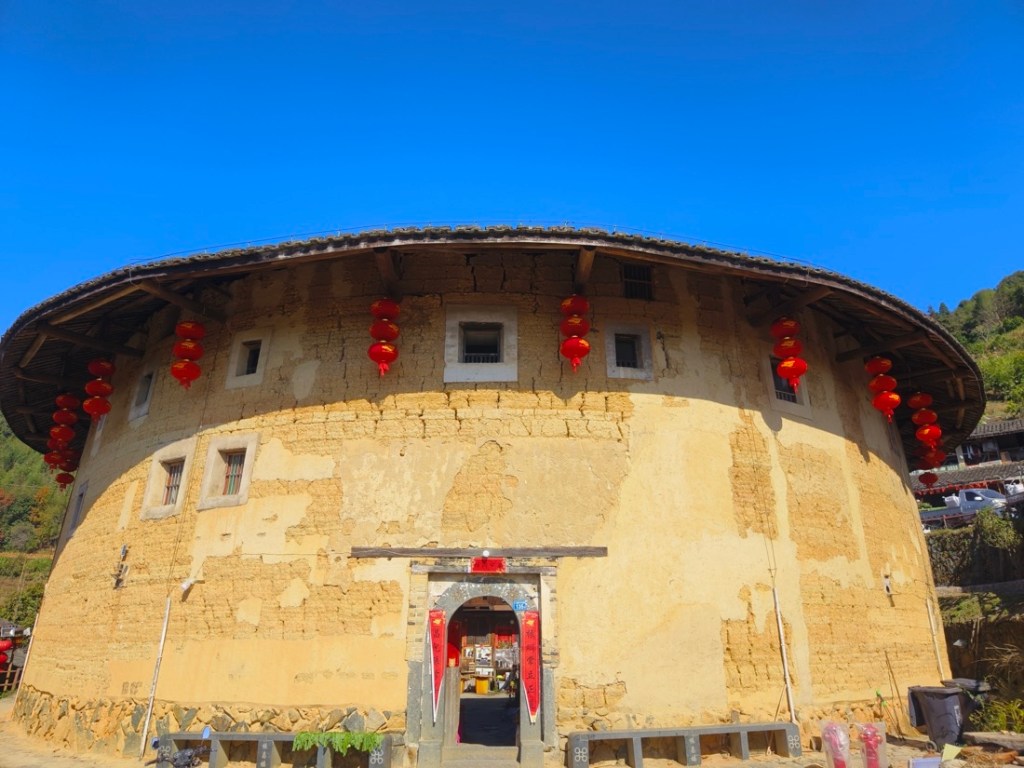
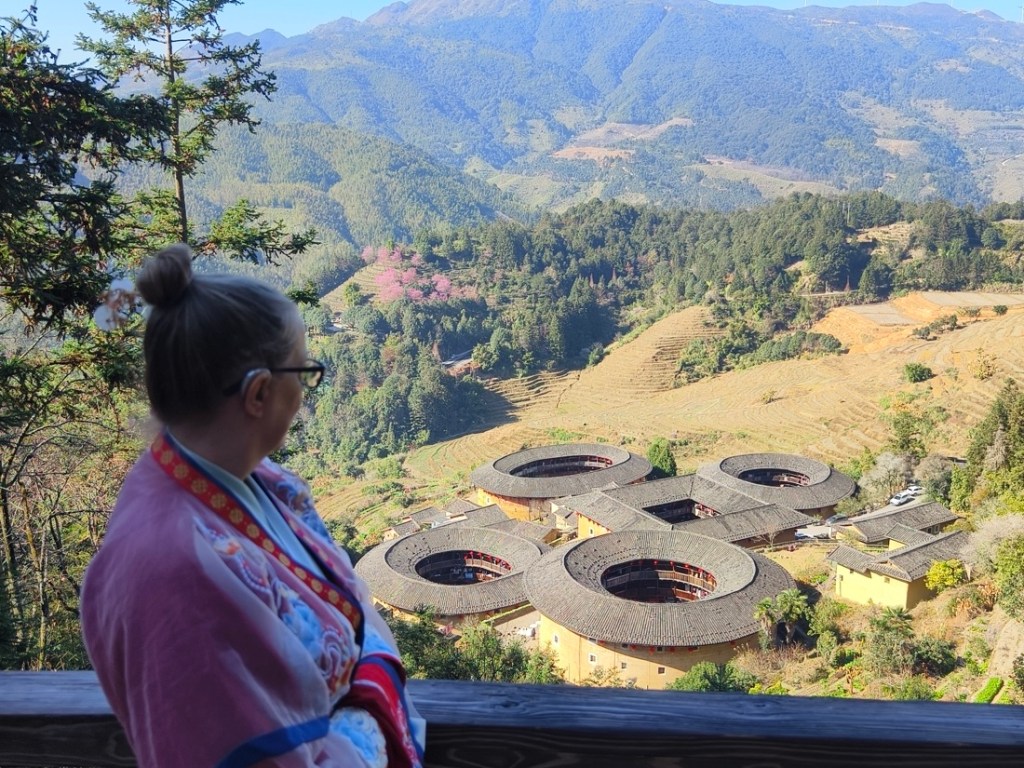
We drove from Xiamen to Yunshuiyao in the Fujian Province (approx 2 hours through fairly empty but very well maintained roads) to visit the TuLou or community of round houses. Tu means ‘earth’ and Lou is ‘building’. This area is famous for the round village buildings.

Originally a quite remote rural community these small villages became popular destinations for Chinese visitors after their use in a 2005 Chinese film called Yun Shui Yao (it’s just a name & I don’t know what it means). Then in 2020 one of the round houses was the setting for part of Disney’s live action Mulan film. In this the young Mulan chases a chicken over the circular rooftops. Since then ToLou has seen a steep increase in foreign tourists and is now firmly established as a must see destination. As such it has been on my bucket list for quite a while and I definitely wanted to see it before we leave.

These houses were built over 1000 years ago when migrants from Luoyang (which we visited at the beginning of this vacation making quite an uncanny connection for us).

There are many of these clusters of dwellings but this one is quite famous because it is built on the principle of the 5 elements. The ‘earth’ element is the square in the centre and the circular buildings are ‘metal’, ‘water’, ‘wood’ and ‘fire’. Chinese culture runs very deep and pervades many aspects of life which makes it all the more interesting if you understand what you are seeing.

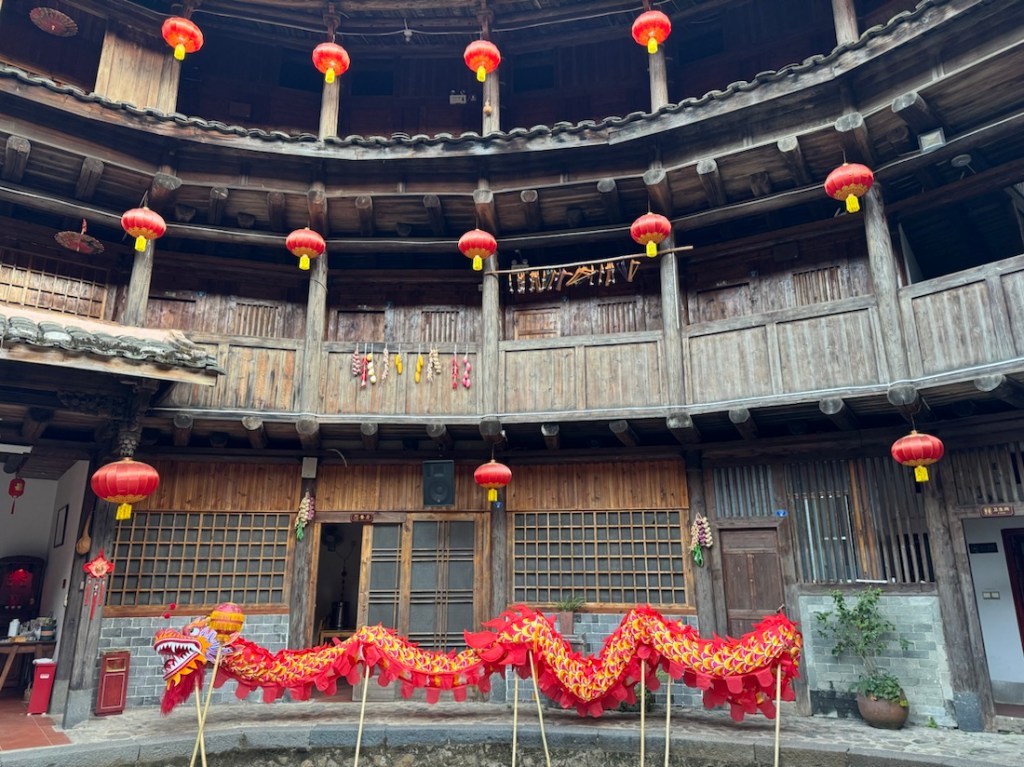
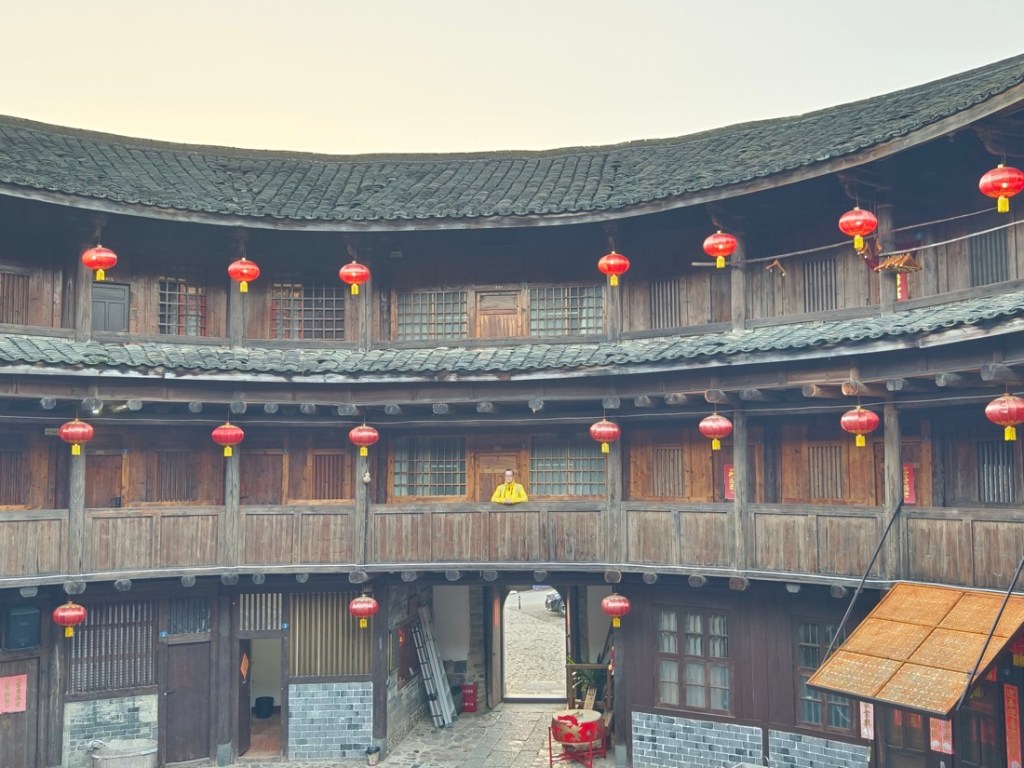
Each round house contains an extended family with small family units occupying a ground floor, first and second floor unit. The kitchen is on the ground floor and the 1st floor is for food storage. Living spaces are on the upper floor so you need good knees.

One of the big houses that we visited has housed 26 generations of the same family which is quite incredible if you think about it.

The founder was this guy, a wealthy government official, who traveled from the Henan Province to settle here in 871 to find more security and better living conditions for his family.

Mr Huang

He brought his 3 wives pictured below

Between them they produced 21 sons (they didn’t bother to count the girls)

These two photos are from the central family shrine which every unit has. The family makes offerings to these ancestors each year to thank them for providing this community. In the wall was a list of his founding tenents about sticking together in peace and harmony as a family to protect each other and to grow strong.

Each circular unit contains approx 120 rooms (all the same size) which can house anything up to 800 people. The males always stay there but the girls leave to go to their new husbands’ family. So each building contains many generations and all have the same family name. Apparently the males all get along very well but the women (who are all from the other villages) are the ones who bicker and squabble. All in all though these are very tight knit family communities who can all trace their lineages back over a thousand years.

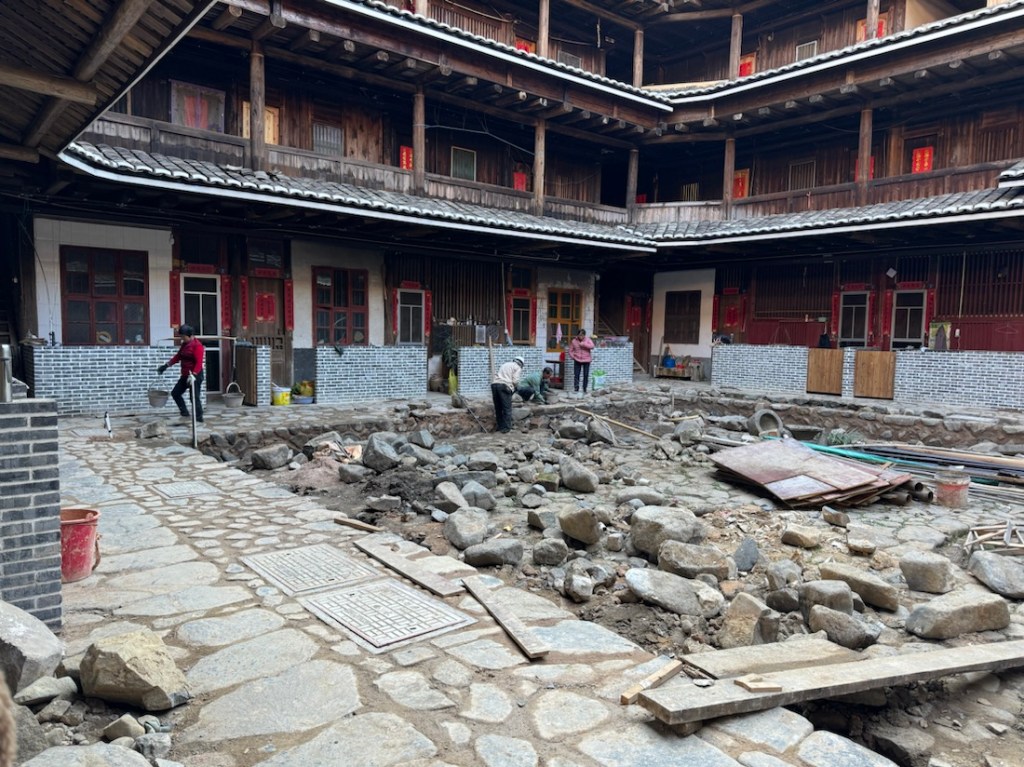
Renovating using traditional skills

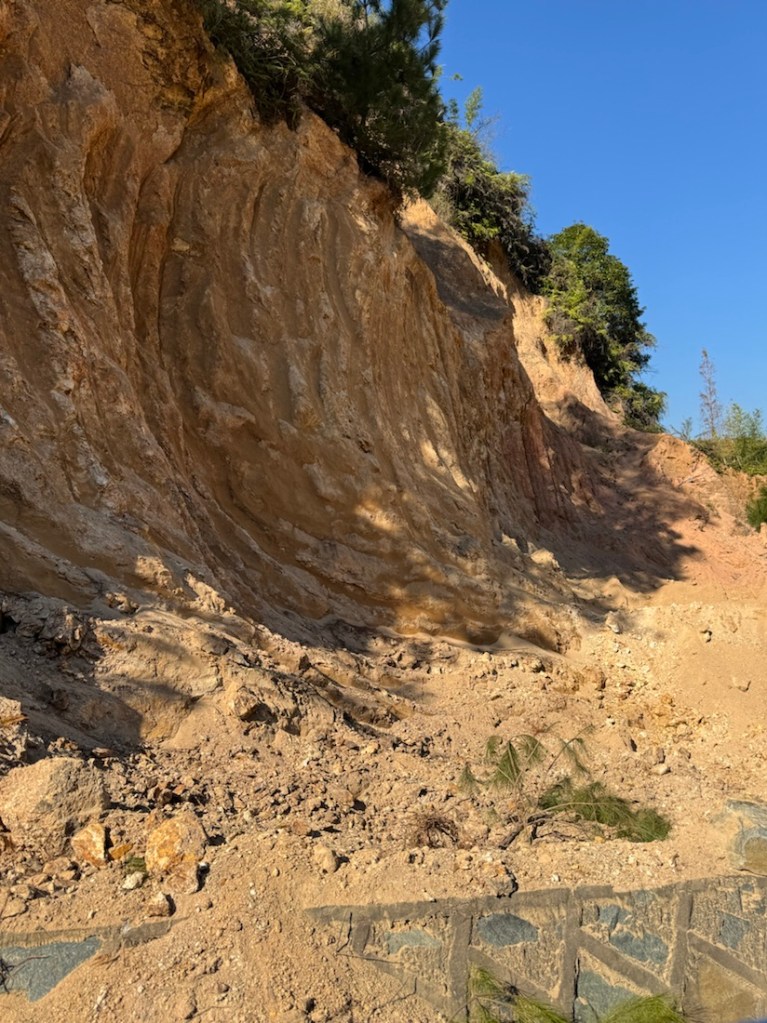
Each tulou is made from a bamboo and stick inner structure which is packed with local clay or mud to make walls of 2 meters depth at the base.

A clay quarry

These taper to become 1 meter at the top and this design has proven to be very strong and robust. The small wooden main doors are constructed from a local hard wood and can allegedly withstand battering rams and even cannon blasts. These made strong, self contained family compounds that were safe from marauding bandits and even earthquakes which accounts for their longevity and preservation.

Our guide was very accommodating and even let us see inside one of his rooms.

It was surprisingly warm even in January with no heating

This man remembers helping his grandfather to build some of this house as a youth. The men would have friendly competitions to see who carried the most stones. The winner each day would qualify for an extra steamed bun!

Then when the cultural revolution happened many members of the family were dispersed and only a few people remained in the buildings. In the time following Chairman Mao’s rule the government began to realize that these communities were a national treasure so they found all the family members and brought them back. Now they are all given 2000 rmb per year to live there. (That’s approx £220), so not great but it all helps.

When this gentleman came back he was given ‘orientation’ classes but it turned out that he knew more about the traditional building techniques than the government teacher!

Each small family unit is responsible for maintaining the wood in their section but the government helps to keep the roof in good repair.
Access to the top rooms are not for the faint hearted or those with vertigo!

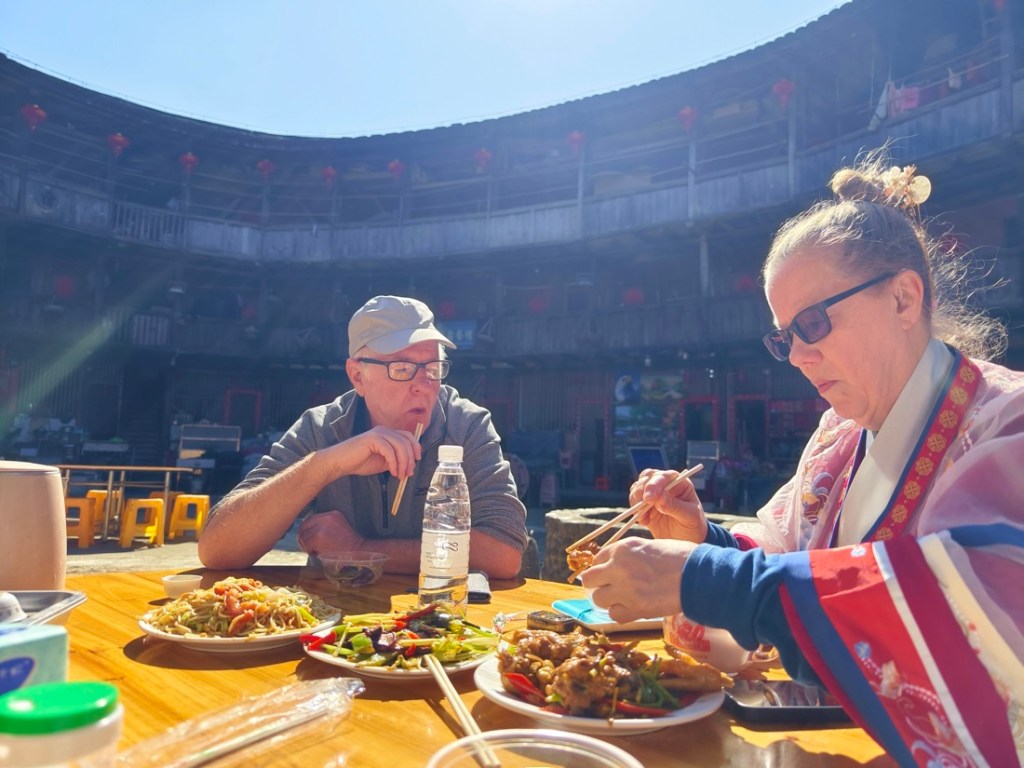
Our guide was so friendly he invited us for lunch.

All organic, home grown and extremely fresh

The locals here grow their own tea, vegetables and keep their own livestock so they are pretty self sufficient.

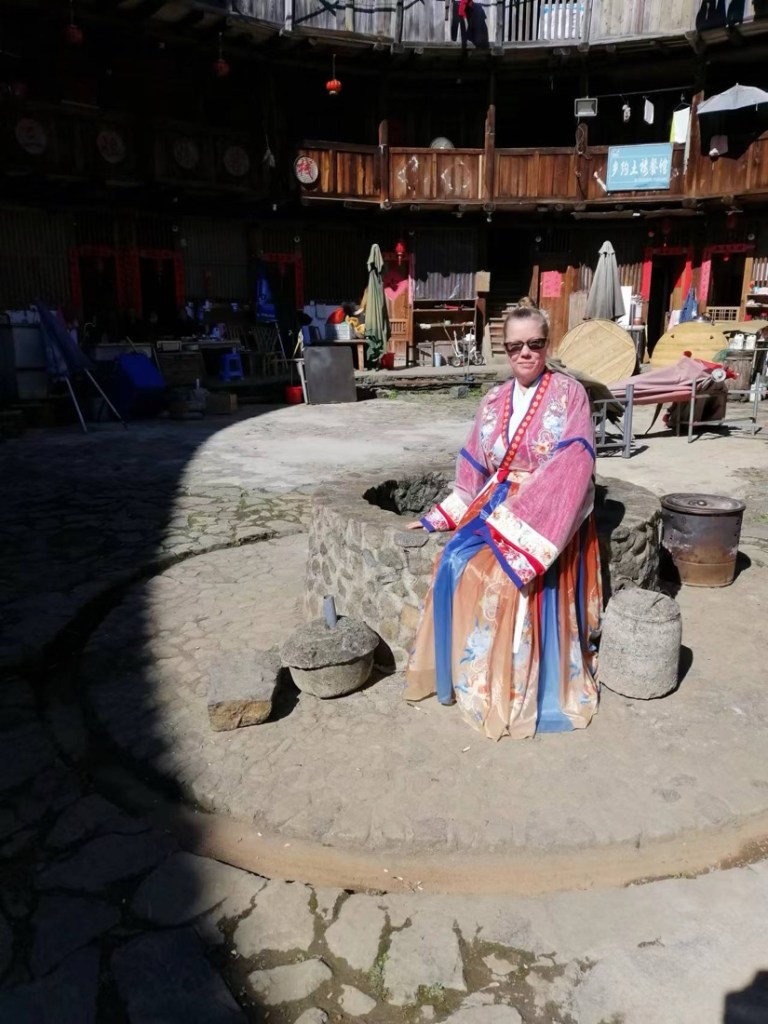
Each tulou is built around a central well

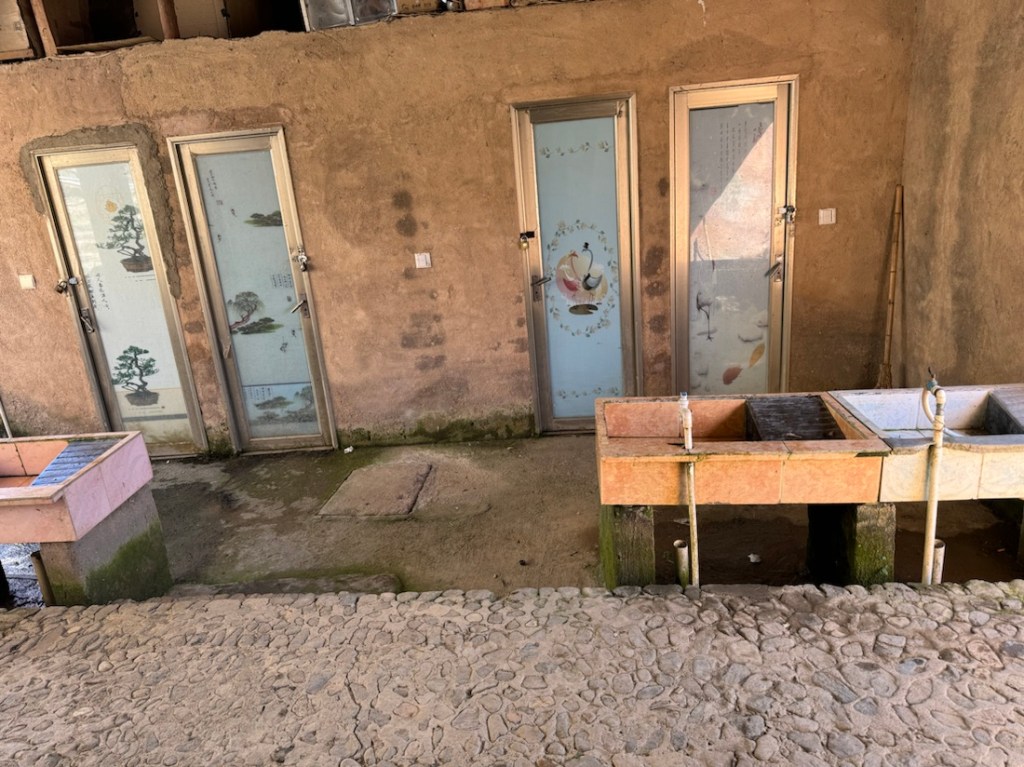
I had to ask! And the answer is that the toilet facilities are minimal. Each bedroom will have a chamber pot but the rest of the time the residents use the public conveniences set up for the tourists. These also contain the community washing areas.
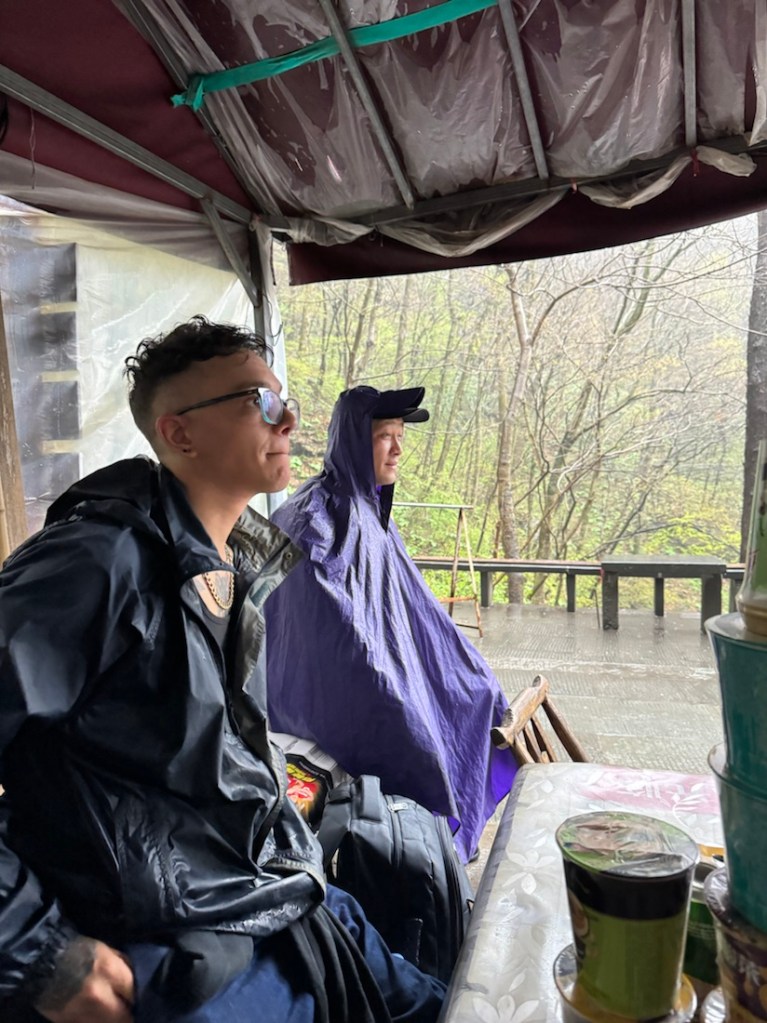
Here I was offered more cigarettes than any other place that I have visited anywhere in the world. It turns out that they even grow their own tobacco and roll their own cigarettes!
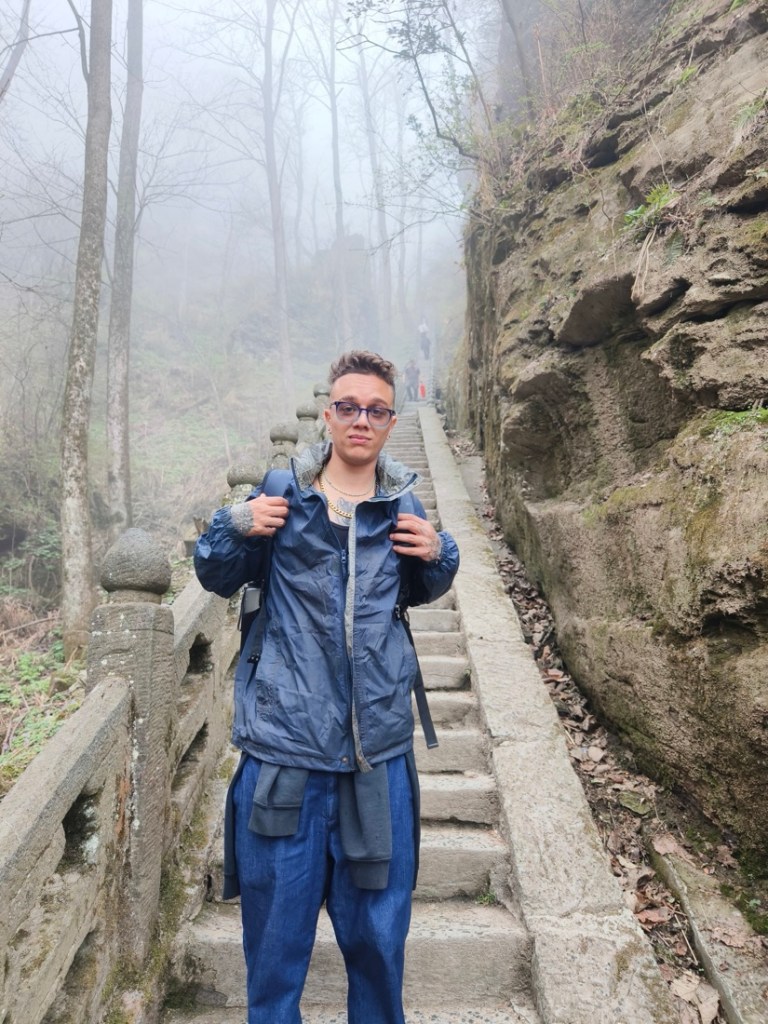
This lifestyle must be good though as the community has high levels of longevity with a large percentage of the residents being in their 80s or 90s.

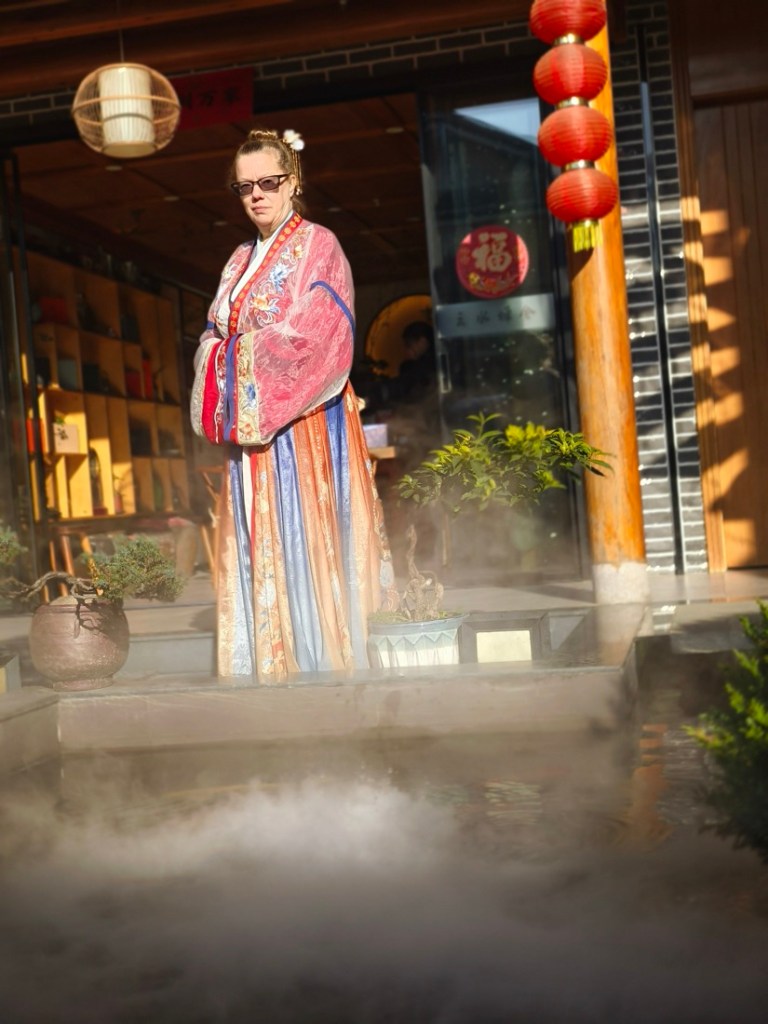
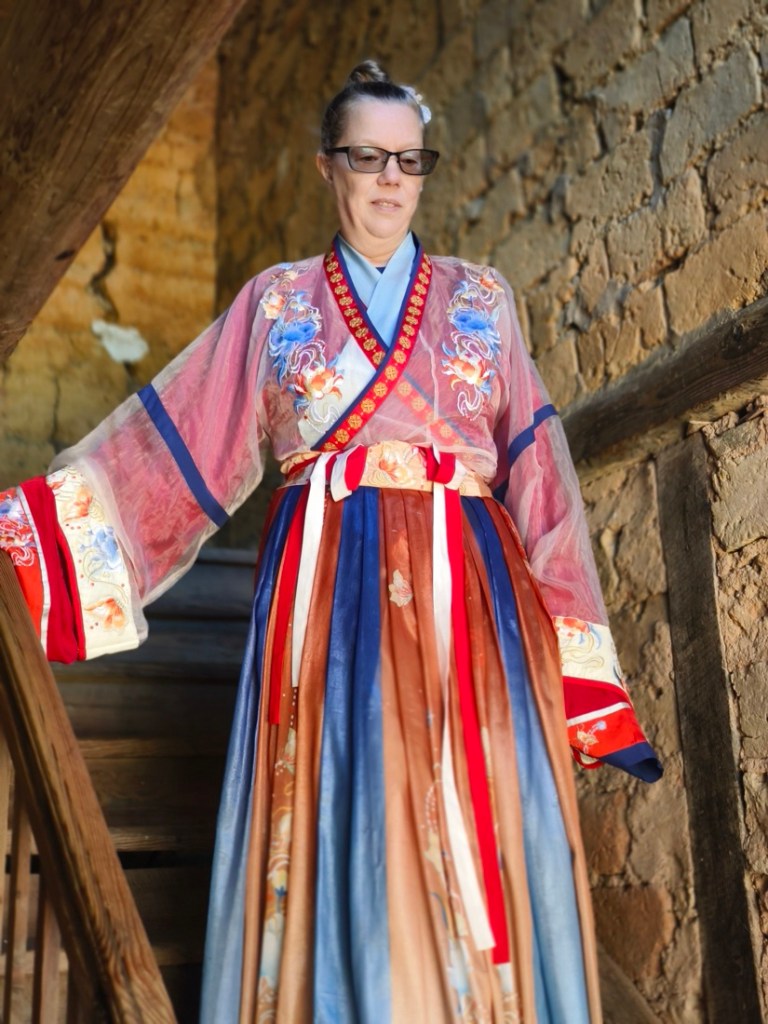
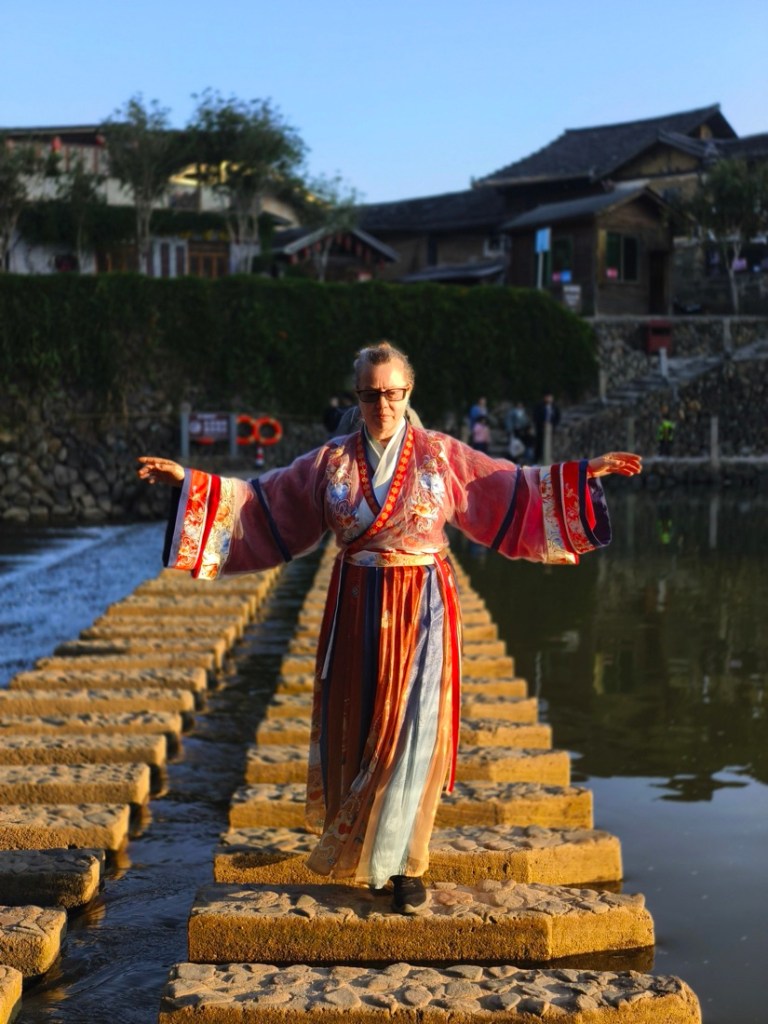
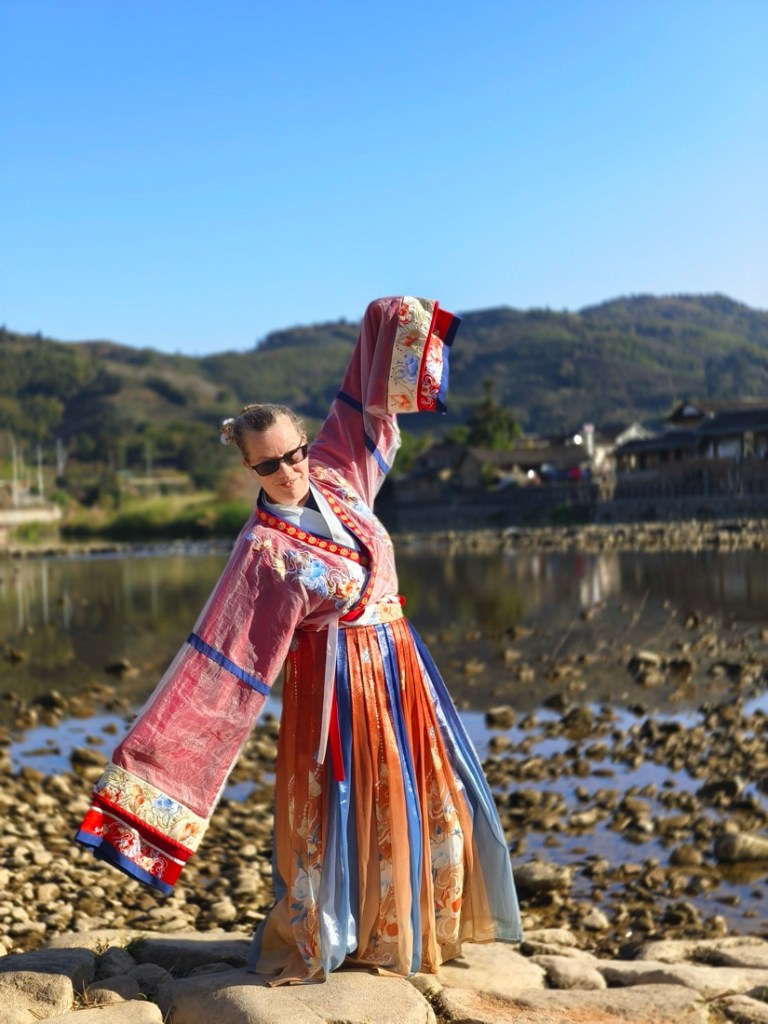
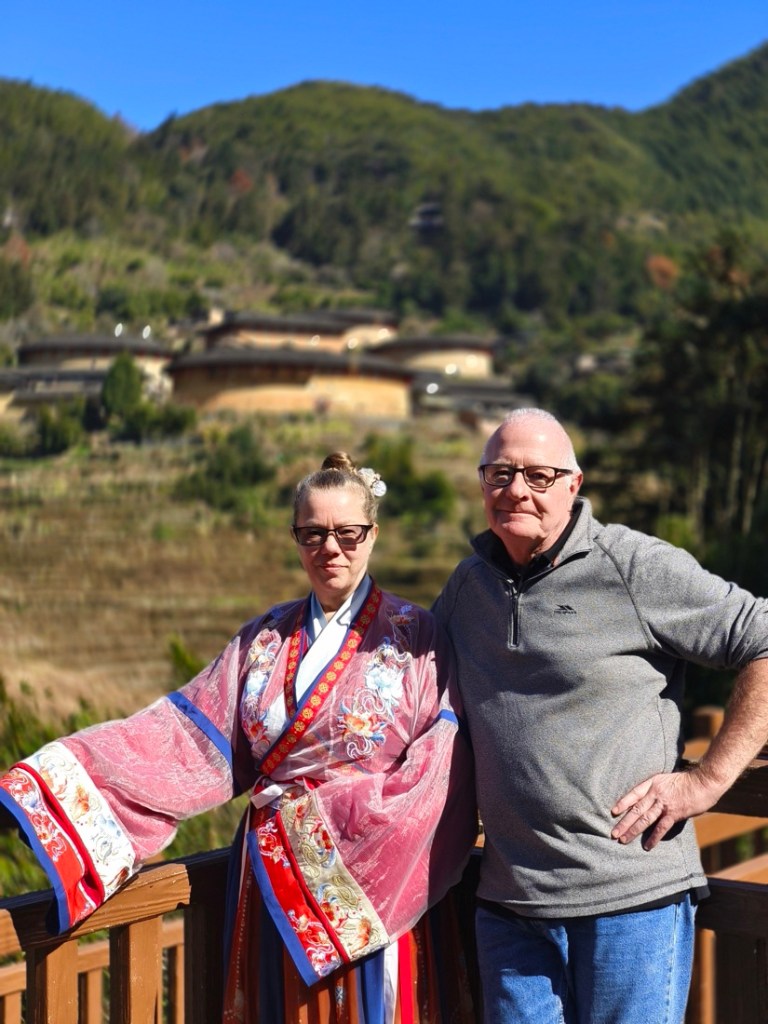
As you have probably spotted I was able to dress up for the day as part of the deal that Leping organized for us with our hotel. This was a Tang Dynasty style outfit 618-907 AD. It was great fun to imagine being one of the original ladies walking the cobbled streets and made for some fantastic photo opportunities at different locations. Shifu is a great photographer and has a great eye for the light and composition. Here are some of my favorites:

Kevin was there too…

Gulangyu a European island in the south China Seas

Gulangyu or Gulangyu Island is a beautiful island in the Fujian Province near to Taiwan. In fact on a clear day you can even see across the water to Taiwan.

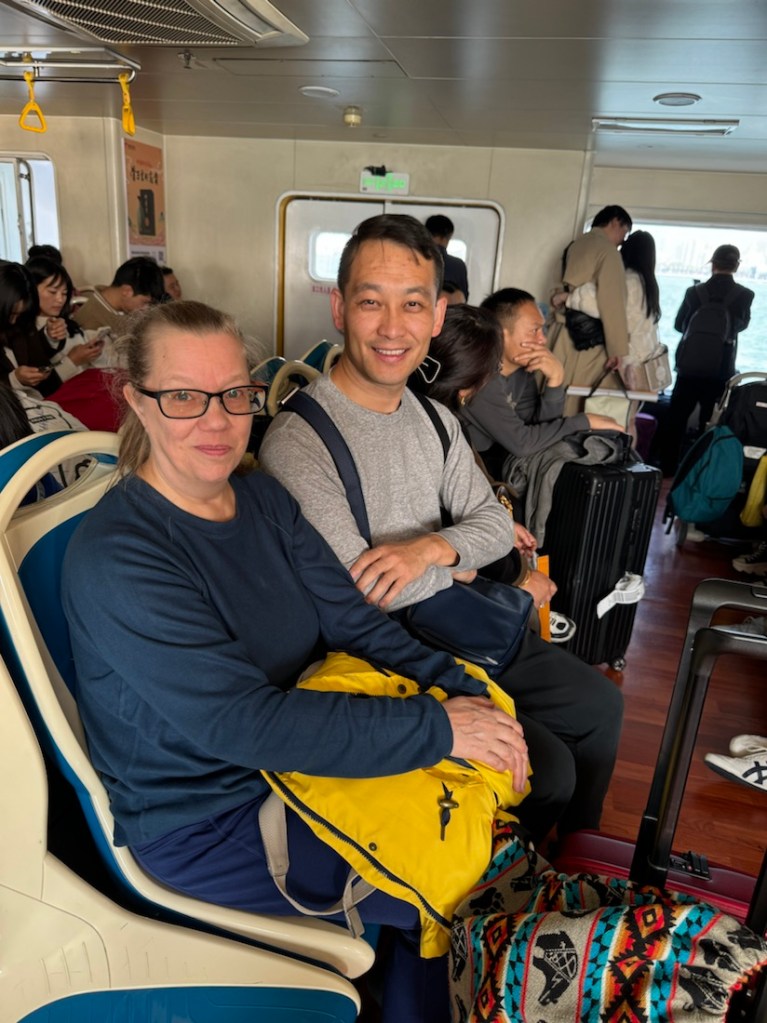
Shifu very kindly offered to take us so we flew into Xiamen, the nearest big city on this short break. Then a ferry ride full of diesel fumes was i

over the water to this enigmatic island.

Once a haven for colonialists this small island is now a popular tourist destination. Many wealthy Europeans settled here in the early 1800s bringing westerns musical and artistic talent as well as a penchant for eclectic architecture.

Narrow winding alleyways snake up the central hillside revealing hidden gems of colonial beauty at every turn.

Gulangyu literally means islet of the drumming waves because the sound of the ocean waves hitting the reefs sounds like the thundering of mighty drums. We didn’t actually get to hear that.

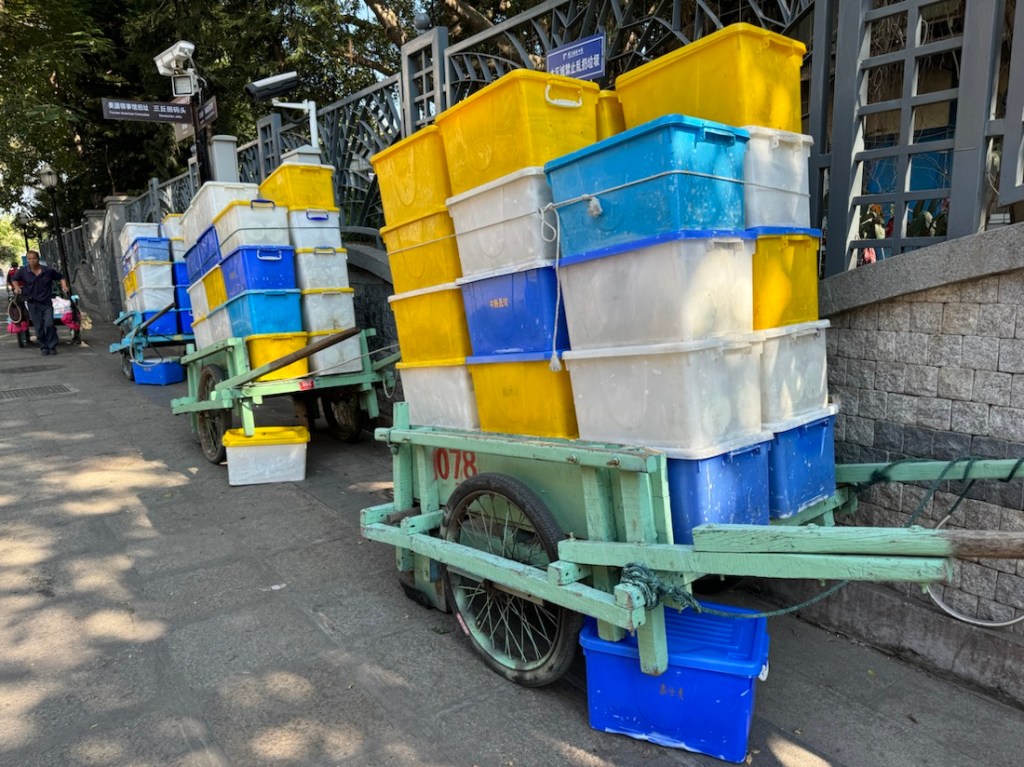
Now a UNESCO world heritage site this charming 2 square km island is also a traffic free zone meaning no cars, scooters or even bicycles are allowed. Goods are moved from place to place by handcart and the overall effect is one of historic nostalgia but with extremely clean air!

For a while Gulangyu was the only international settlement outside of Shanghai. Its southern location, tropical climate and sandy beaches made it very attractive to Europeans.

This is the 44 Bridge, called so because there are 44 corners on it! It must be the wonkiest bridge I have ever crossed!

The British played a major role in setting up and running the settlement. Much of the architecture has Victorian influences. Missionaries set up churches schools and colleges. Unlike Shanghai though this was not a location for trade. Instead cultural activities flourished, in particular music. Many of China’s most famous musicians were born or trained here.

Our hotel was right by Trinity church.

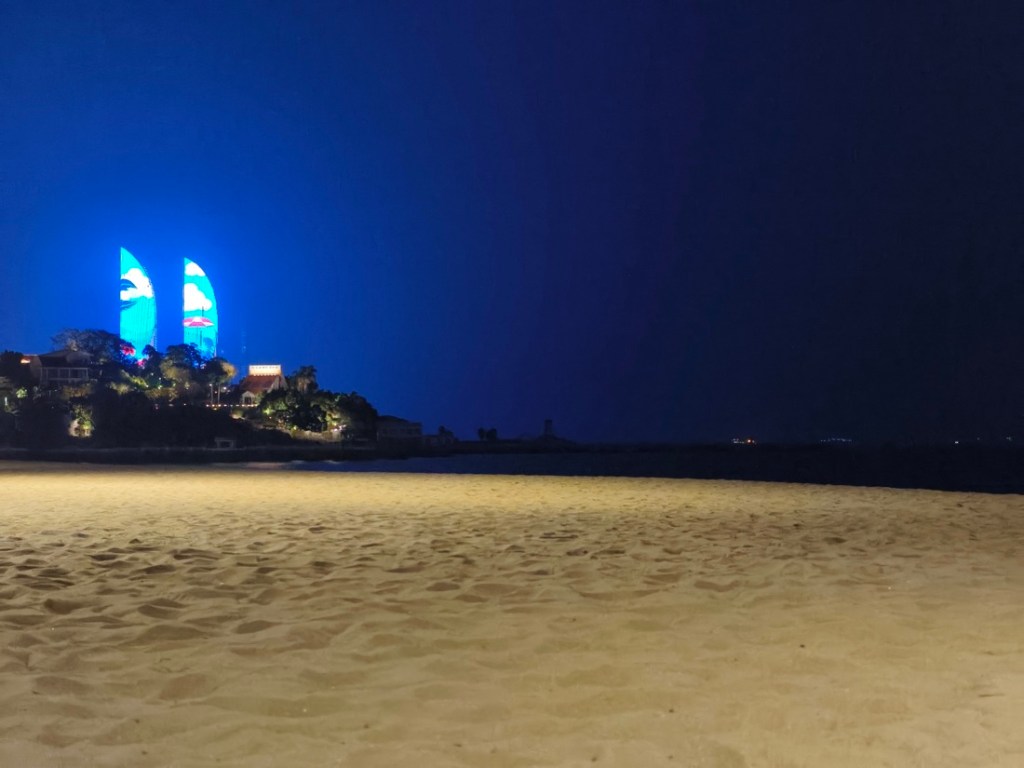
The island has a local population of approx 20,000 but copes with over 10 million visitors every year. Most people are day trippers but staying overnight gave us the opportunity to wander the quaint streets and narrow alleyways enjoying the soft evening air. Even though it was January it felt like a British summer’s evening.

With the invasion by the Japanese in 1942 the international contingent on the island departed leaving many of their houses unoccupied. This has led to a growing number of stories among the locals about ghosts and the island now has a reputation for being haunted (we didn’t see any though)

A highlight of the day was a visit to the Piano Museum. I mentioned before the musical talent that emerged from the fusing of western and Chinese culture in this place. I was surprised to see how many pianos there were on display, mostly of European origin.

There were many rooms like this
I have never seen one like this before!

Apparently there are 5000 pianos on the island itself, which is one for every 4 people. Quite a surprising ratio.

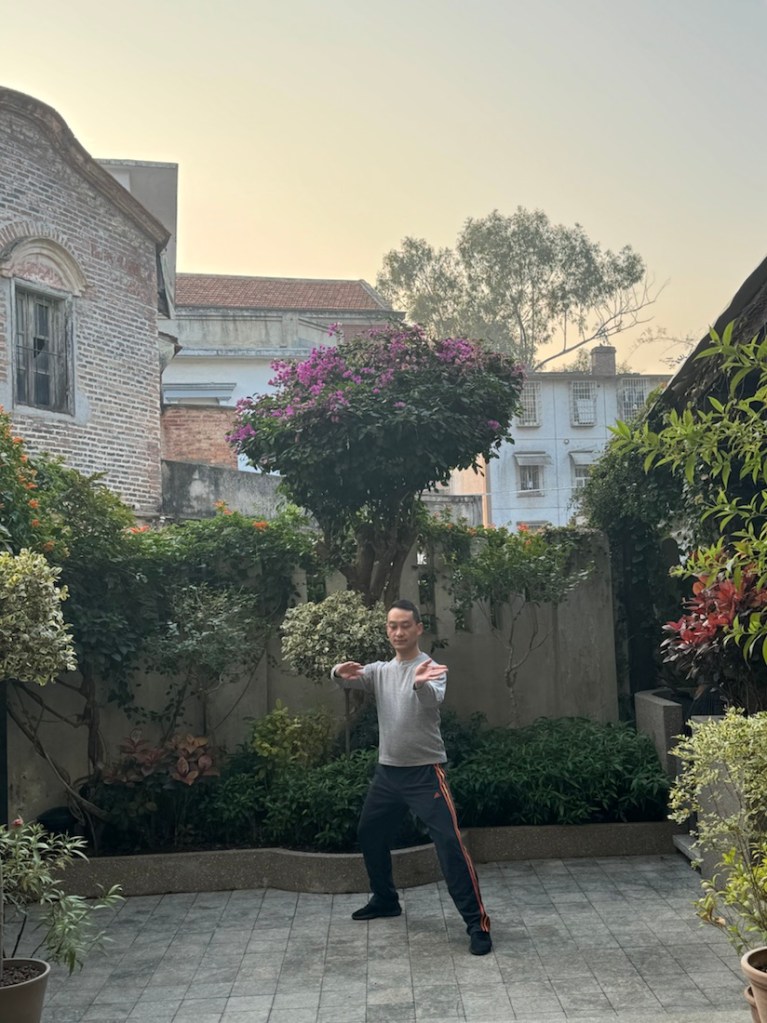
A lovely spot for our early morning training
So calm and peaceful

Finally, we saw this which is a public clothes line. I have never come across anything like this before. I guess it’s great when you have a small apartment and no garden. It reminded me of the village common with communal grazing rights back in medieval England.

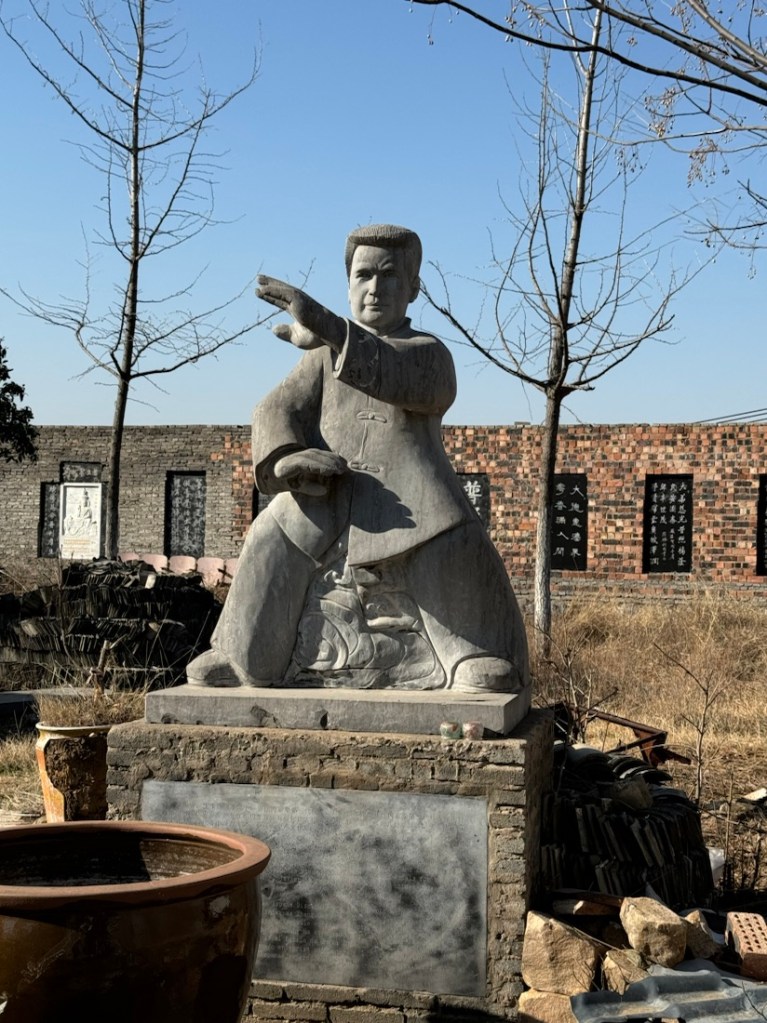
Javi’s Statue

One of the main reasons for visiting the Henan Province was to go to the Temple where there is a statue of Javi doing Taiji.

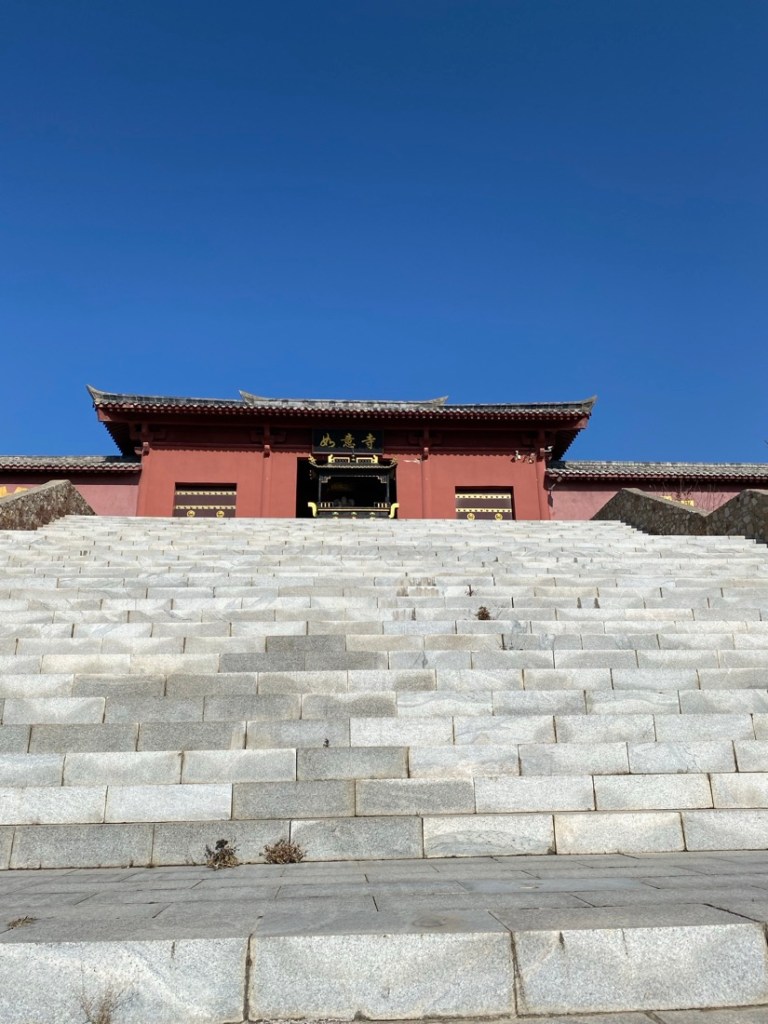
The temple is a Buddhist/Taoist fusion one in a remote part of the region. Supported by the Zhang family it was built after Shifu’s grandfather’s cousin had a dream about an elephant. Being an uneducated farmer he did not know what an elephant was. So he walked for many days to consult a monk who told him that the dream was auspicious and that they would set up a Temple there.

One of Shifu’s other uncles was the Kung Fu and Taiji Master. He was Shifu’s Shifu and the first generation of Zhang Family style of Kung Fu.

Taiji originated in family clans and was passed down through the generations. Lineage is extremely important as being authentic versions of a particular style, there are several popular styles such as Yang, Chen, Sun or Wu. Each version is slightly different.

My Shifu is the second generation of the Zhang family tradition and Javi and I are the third generation. Because Javi has been learning for a long time without giving up and teaching this style in Spain, the monks raised funds to put up a statue of him.

The temple is in the middle of fields and a long way from anywhere (China is a BIG country). It is only partially built and funding for the building projects stopped during COVID. Normally 5 monks live here but as it was winter 3 were traveling to raise funds and only two remained to greet us.

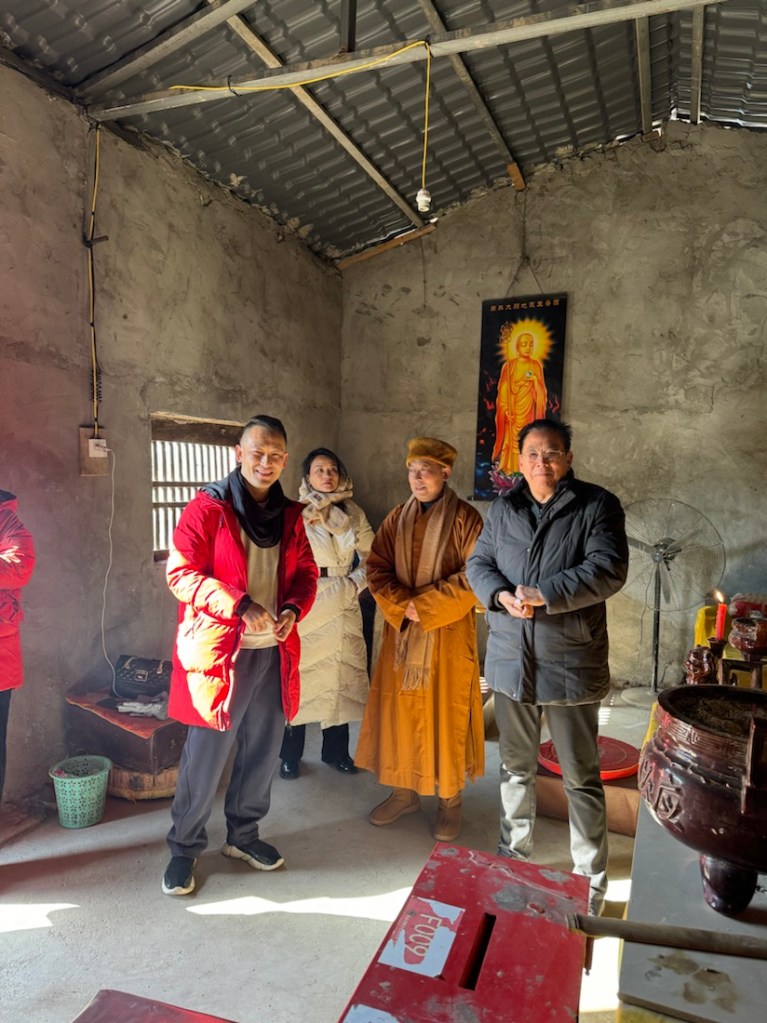
Shifu with his relatives and one of the monks

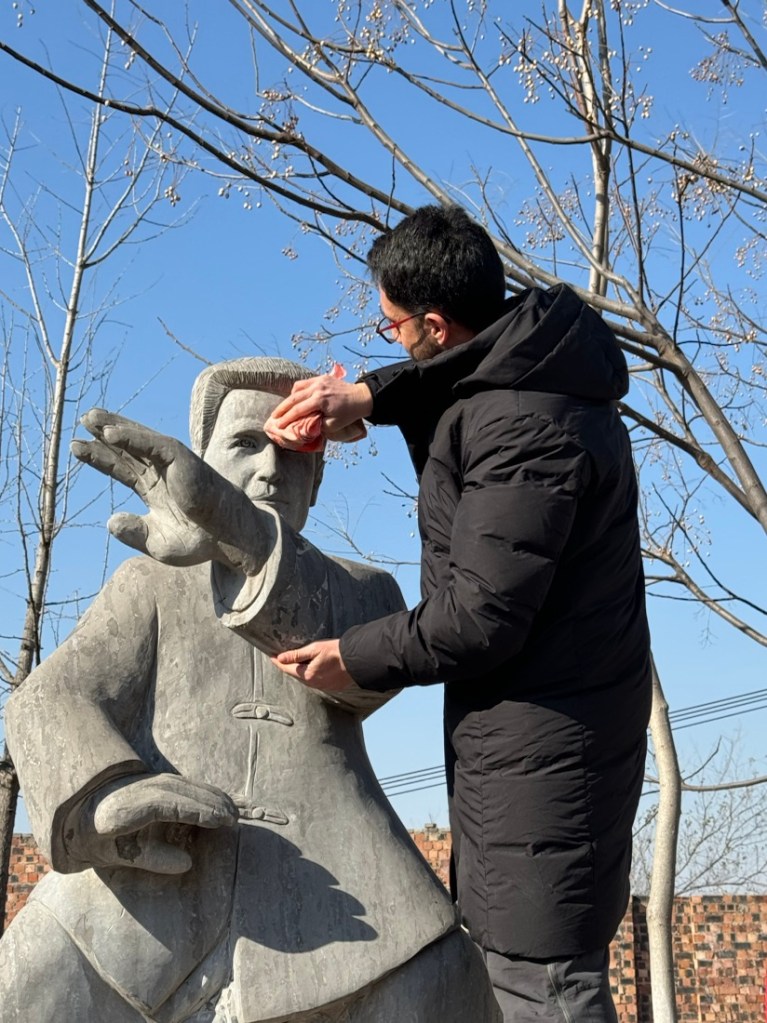
On this trip Javi needed to clean his statue

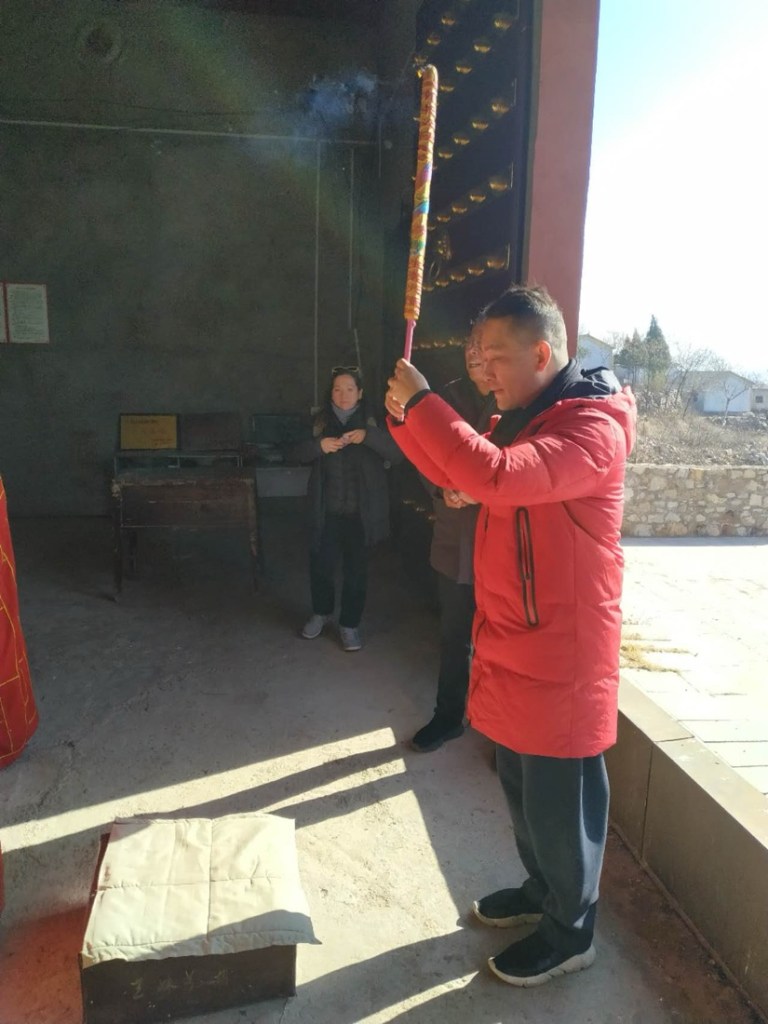
Then he and his family lit incense sticks and made ceremonial bows.

Javi and I are Shifu’s high level students. The term for us is ‘tu di’. As a Tu di we also lit incense sticks and placed them in the burner at the front of the Temple.

Shifu first
Then Javi as the senior Tu di
Finally me.
Quite a view from the incense burner

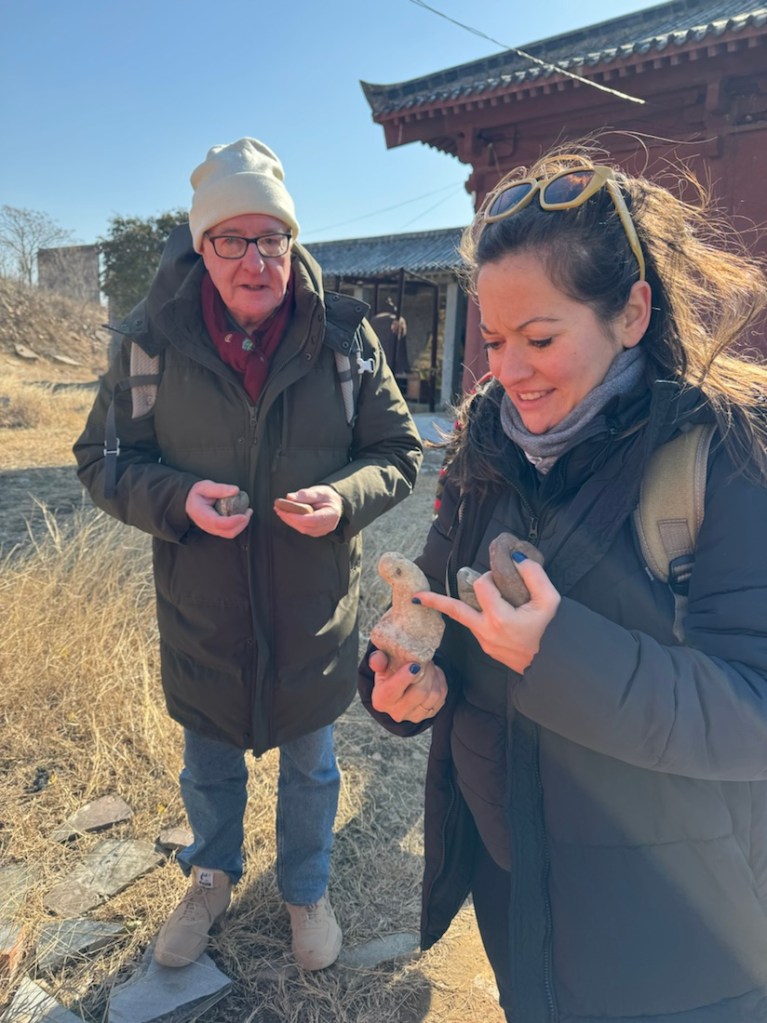
This 75 year old monk was quite sprightly. He even helped Kevin up and down the steps. He was so excited to have us there (I don’t think that they get many, if any, visitors) and he wanted to give us a gift. He had no material possessions, so he gave us from the beautiful things that he found in the earth. When he was meditating by the river he found pretty stones so he gifted them to us. It was so sweet and pure and we felt blessed to receive them. They were, however heavy in our luggage!!!

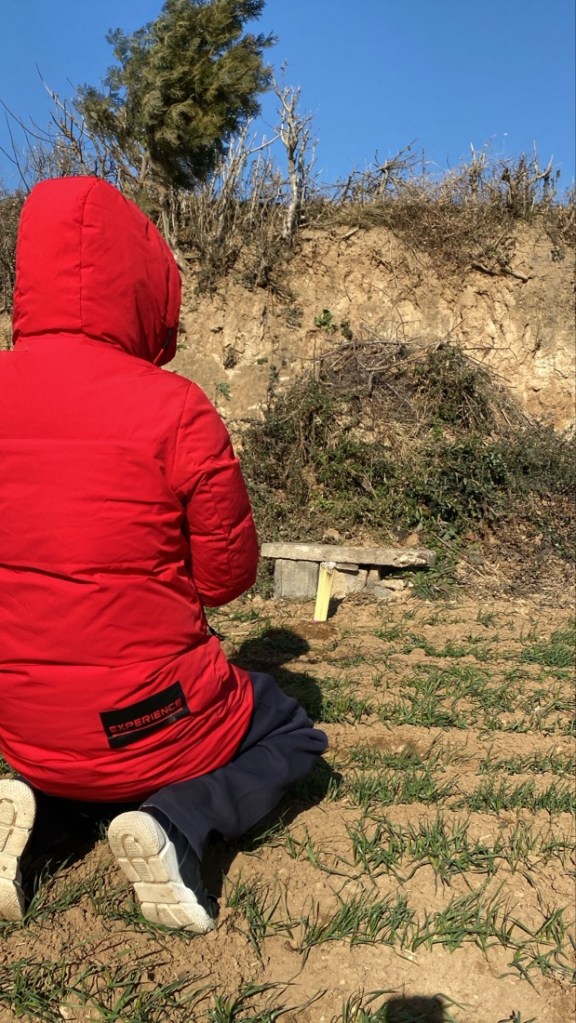
After the ceremonies at the Temple we went into a further field to the site of the tomb of shifu’s father.

Shifu lit incense , made obeisance and introduced me to his father. It was a great privilege to witness and to take part in these ceremonies. It enabled me to make very strong connections with the origins of our Taiji family.

This location, if properly funded and developed would make a fantastic retreat centre. Maybe one day…

Away from it all but in need of development

Taiji progress in Henan

Ostensibly a tourist trip, we went with Shifu and his Spanish student, Javi and family around the Henan Province. We visited many lovely places but on one day we revisited the Shaolin Temple and here I felt a huge leap forwards in my Qi.

Lotus walk

Inside each courtyard in the temple as you ascend are a series of carved lotus stones. As the others looked around at the buildings I did the lotus walk as a meditation (I had seen the courtyards before). I walked each step slowly and deliberately pausing on each stone before taking the next step. As I walked I felt the qi in my chest rotating forwards. As you practice more the 3 dantien balls in your body wake up and the chest is the second of these. This has recently happened for me and I have been feeling sensations across my chest when I do the Taiji or qi gong moves. This feeling got stronger and stronger with each step that I took. This was a wonderfully strong sensation that has stayed with me.

I heard later that many monks don’t bother to do the walk and think that it is just a story for the tourists. Shifu told me that he too has done the walk and felt strong sensations. Sometimes the people who are closest take things for granted. Shame.

The temple itself was as amazing as last time. Here are some of the pictures that we took.

Group picture
I love the lines in this shot
A little bell
The writing says I love Kung Fu

Shaolin is the home of Kung Fu and there are over 1000 Kung Fu academies in the surrounding area. Here are some of the kids doing their morning training. Temperatures were below freezing.

Training ground

Kung Fu is all about strength and balance. They practice their moves on these poles. Shifu has lots of strength and balance.

Kevin had a little go! That’s as far up as he got. Lol

After lunch we went up the cable car to the Shao mountain behind the temple. Last time we did this hike I was extremely nervous and not keen on the heights but now after practicing Taiji my vertigo is greatly improved. I walked twice as far and in icy conditions. I wasn’t as scared and didn’t feel the need to hug the mountain. lol I even went close to the stomach churning steep drops.

The rock formations are appropriately known as book shelves

The others went on ahead of us up a steep bit and just made it back in time to catch the very last cable car back down. Phew! There is a path down but it was covered in snow and ice and with no lights at all whatsoever it would have been a tricky descent to say the least. I was SO relieved that they made it back in time (Shifu had our tickets!)

Shaolin is the birthplace of Kung Fu so I just had to do this pose

The Snake

But my favourite picture of all is this one. Shifu with his two Tu di (me and Javi) in front of the Temple gate.