Time for tea

Tea is a big part of Chinese cultural traditions and nowhere more so than Fujian. In most of China tea is commonly drunk after lunch and into the evening but in Fujian they start drinking before and after breakfast and continue throughout the day.

It was here that we were offered the chance to experience a wide varieties of tea.

All the tea is taken without milk (unlike English Breakfast Tea) and is served in teeny tiny cups. You can have multiple cups from the same serving of tea and the water can be replenished up to 10 times (depending on the tea variety). This means that you are never exactly sure how much you have drunk.

We were offered tea in lots of places throughout our two days stay, the hotel reception, the sellers in the TuLous, there was even a tea set in our room. Serving tea was the local way of showing hospitality and we soon discovered that the people here are extremely hospitable!

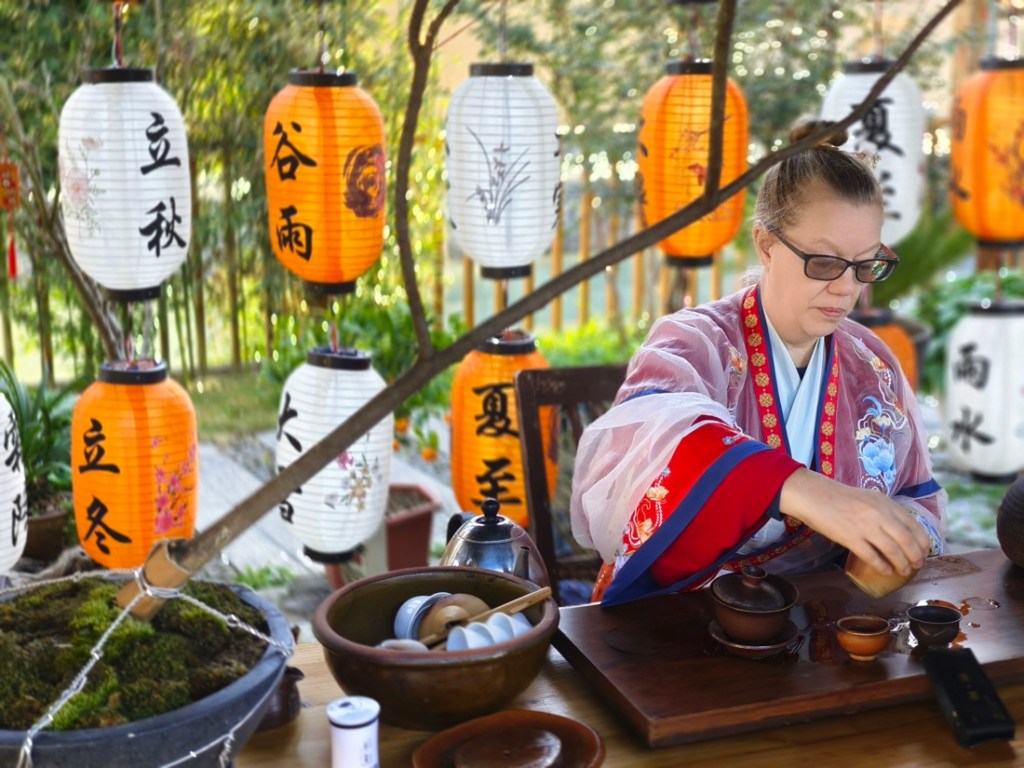
The lady in our hotel offered to teach me how to prepare and serve the tea. I was delighted to learn how to perform a tea ceremony. It is very intricate and precise. Everything follows a specific order from washing and warming the cups to washing the tea to swilling the leaves and water with the lid.
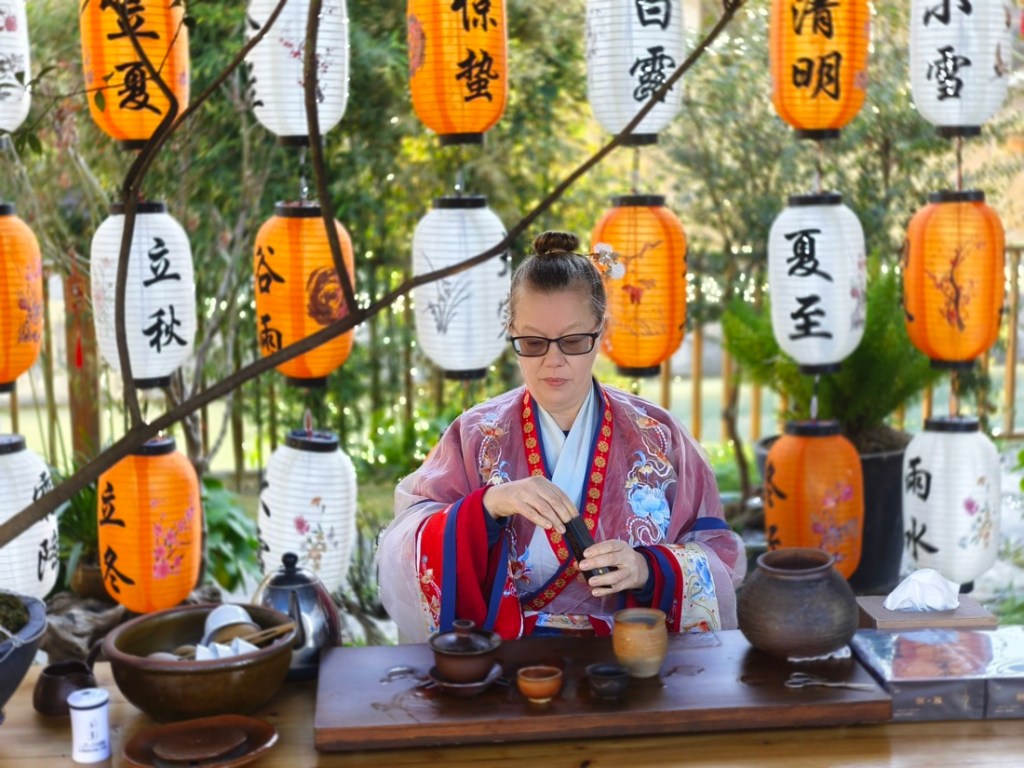
It should be noted that this method of tea preparation does not involve a teapot as we know it. Nor even the little clay teapots that are also common in China.
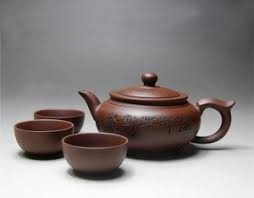
Traditional tea set

We used a Kung fu tea set like this

The clay teapots can only be used for certain brown tea because they can absorb the flavor. Whereas the glazed tea service can be used for any teas, red, green, brown, black or white.

The tea is steeped in the container with the lid and then filtered into the jug.
In Tulou the communities grow their own tea and it is very refreshing. Consequently there were many vendors selling their tea. On the first night when we were wandering around the Huai Yuan Lou building Shifu saw a vendor sitting alone in his downstairs room so he started to chat to him. The next thing we knew we were being invited in for tea.

Obviously he spoke no English at all and in fact in Fujian they have not only their local dialect but the Tulou communities each have their own family language as well! So Shifu had to concentrate hard to understand his Mandarin then he had to translate it for us.

Mr Jian told us all about his TuLou, his family and how they grow and make the tea. We learned about picking, drying and roasting different teas (each tea has its own process). Once the sun had gone in it was perishing cold (they had no heating in the TuLous!) so we were extremely glad of the 3 sets of tea that he served as he talked.
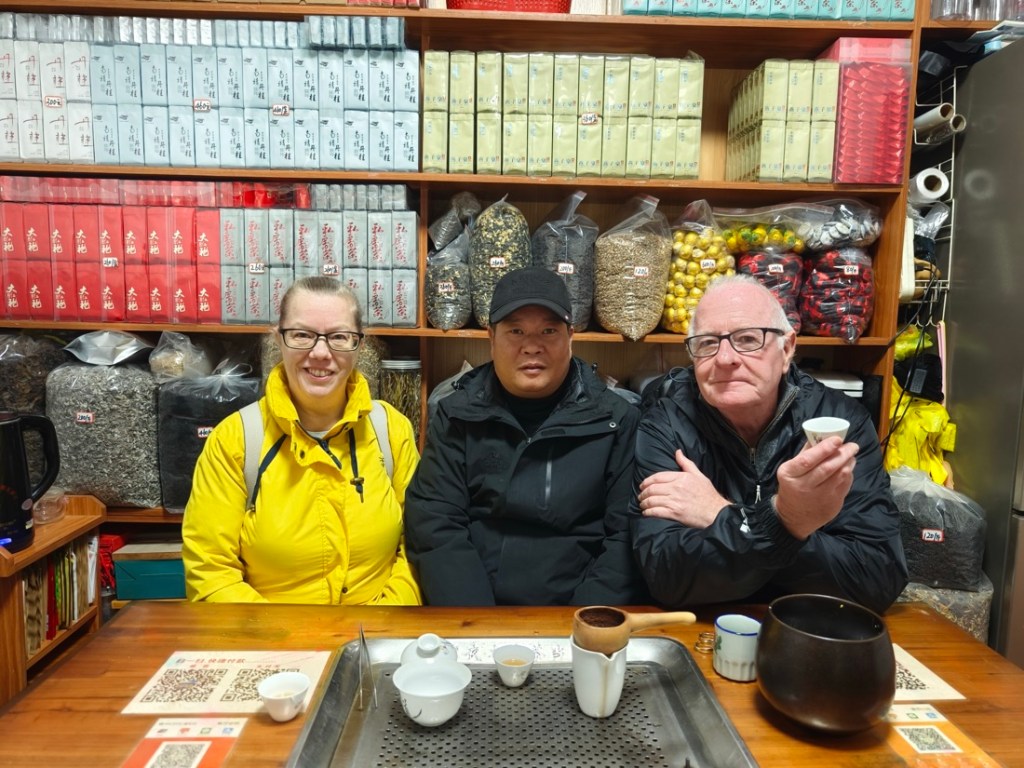
The next day we decided to return to see the building in the daylight and to say hello to him again. He was out collecting his children from school but his friend was there. She was equally welcoming and had obviously heard about us because she seemed to know who we were. She too served 3 types of teas and was also informative about tea growing in particular which types of tea can be used to cure while ailments. We were served a green Oolong variety which was said to help cleanse the blood vessels and reduce cholesterol. As this is currently a goal of mine and as the tea wasn’t bad I decided to buy some. However it was time for us to eat so they said they would weigh and bag everything and we should come back. Mr Jian even gave Kevin some of his home distilled rice wine to have with his dinner!
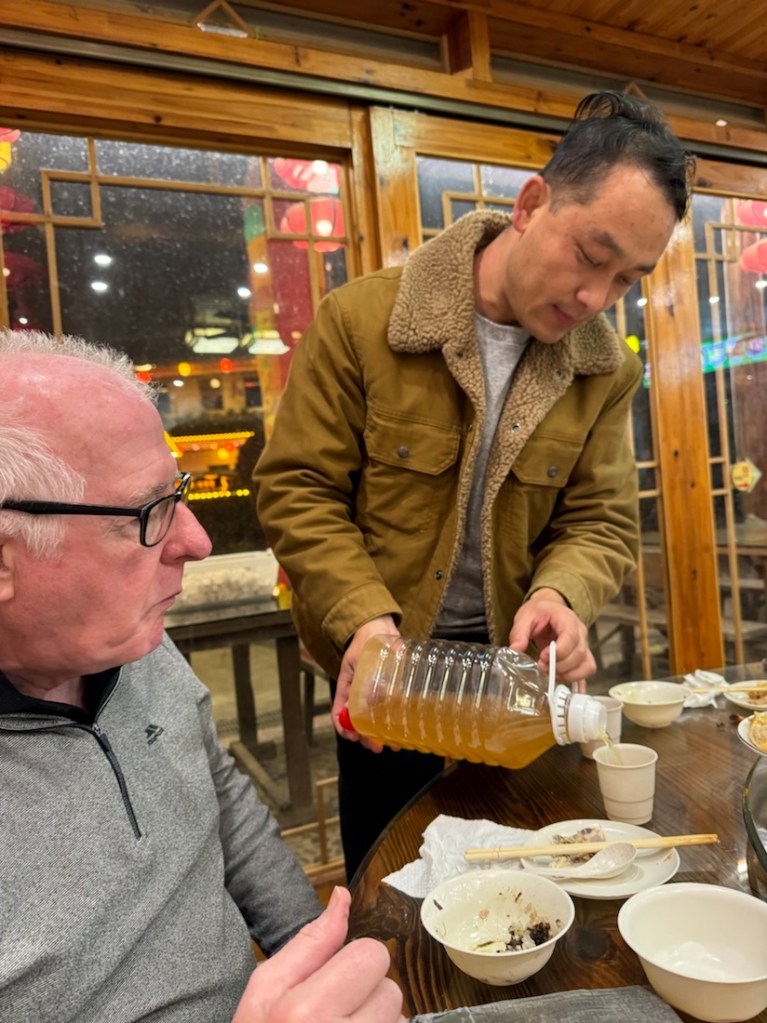
Kevin with the moonshine!

When we returned to collect our tea purchases (by this time we had sampled 7 different varieties that day), they ushered us in and Mrs Jian was now also there. Kevin said, ‘please no more tea’ but two hours later we were still there because this time they brought out the good stuff. The high quality white tea and a special herb called Anoectochilus roxburghii that is extremely expensive but is know for curing a number of ailments.

In fact this herb is now protected in the wild as animals and birds will eat it if they are sick!

Shifu loved chatting with his new friends and asked lots of probing questions. Tea culture and tea ceremonies, if done correctly, are one way of understanding more about the Tao. I think that these people appreciated someone who was genuinely interested in their way of life. I felt a bit guilty that they had given us so much (even some extra tea in our purchases) so I suggested that we teach them a Qi Gong move to say thank you. They were delighted with this arrangement and jumped up immediately.

We showed them the ‘metal’ moves from Shifu’s 5 Elements QiGong which is good for the lungs. I demonstrated the moves while Shifu explained what was happening and how to do it. They both said that they could feel the qi sensations but when they sat down they both lit up their cigarettes afterwards. Lol.

Tea is a huge part of Chinese culture. It is sociable and healthy (none of the teas we had contained caffeine). The sense of order in the preparation brings feelings of calm and harmony. The tea rituals, the small cups and the respect shown means that this is an unhurried part of life that must be savored and enjoyed.
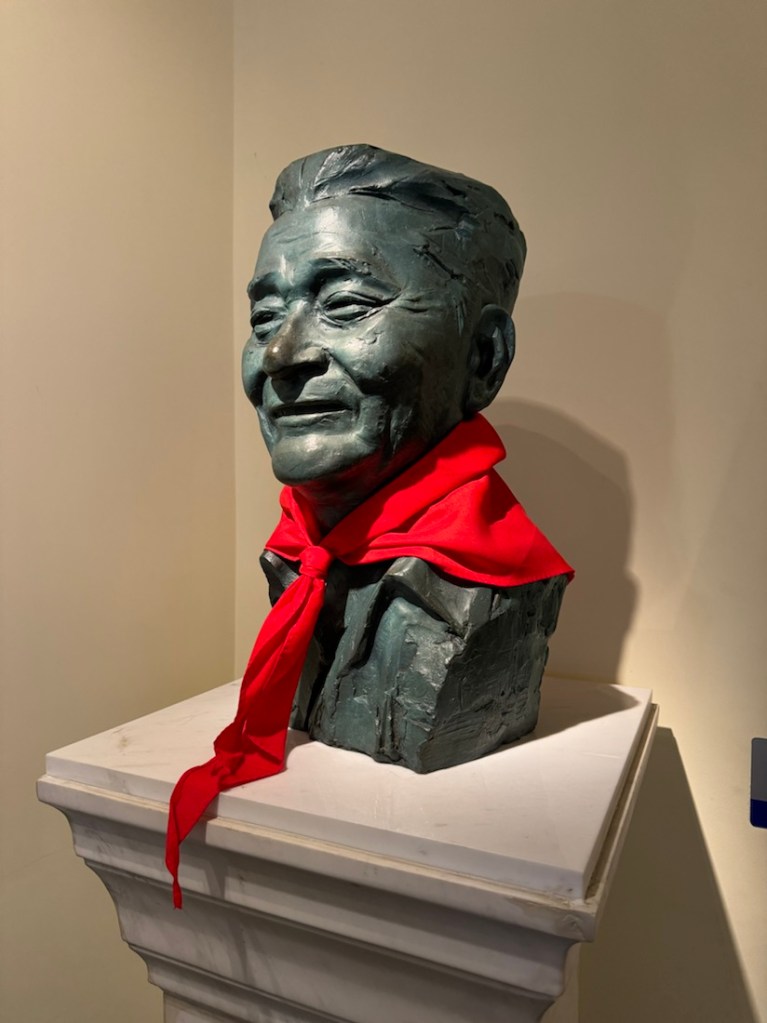
San Mao (3 hairs)

Today Shifu and Leping took me to Puxi to visit the home of a legendary Chinese cartoonist called Zhang Leping

Zhang Leping

Born in 1910 to a poor family he displayed a remarkable artistic talent as a child but he was forced to become apprenticed to a woodcarver to earn money to help support his family instead of finishing his education.

In 1928 though at the age of 18 he was supported by relatives to attend art school where he developed his talent.

Zhang Leping’s passion was for cartoons and children’s drawings. He created the character of San Mao which literally translates to 3 hairs. You can see why…

This delightfully charming character quickly gained popularity. Initially Sam Mao was created to convey the hardship of the Japanese occupation in China through the eyes of children. Sam Mao is innocent and funny but portrayed the realities of life. San Mao became a symbol for the victims of the hardships.

I personally liked the panel where he gets crushed by books!

Zhang Leping’s house in Puxi was a museum to 1930s Shanghai elegance with its interior bathroom and art deco features.

We had a lovely time learning about this influential author and illustrator.

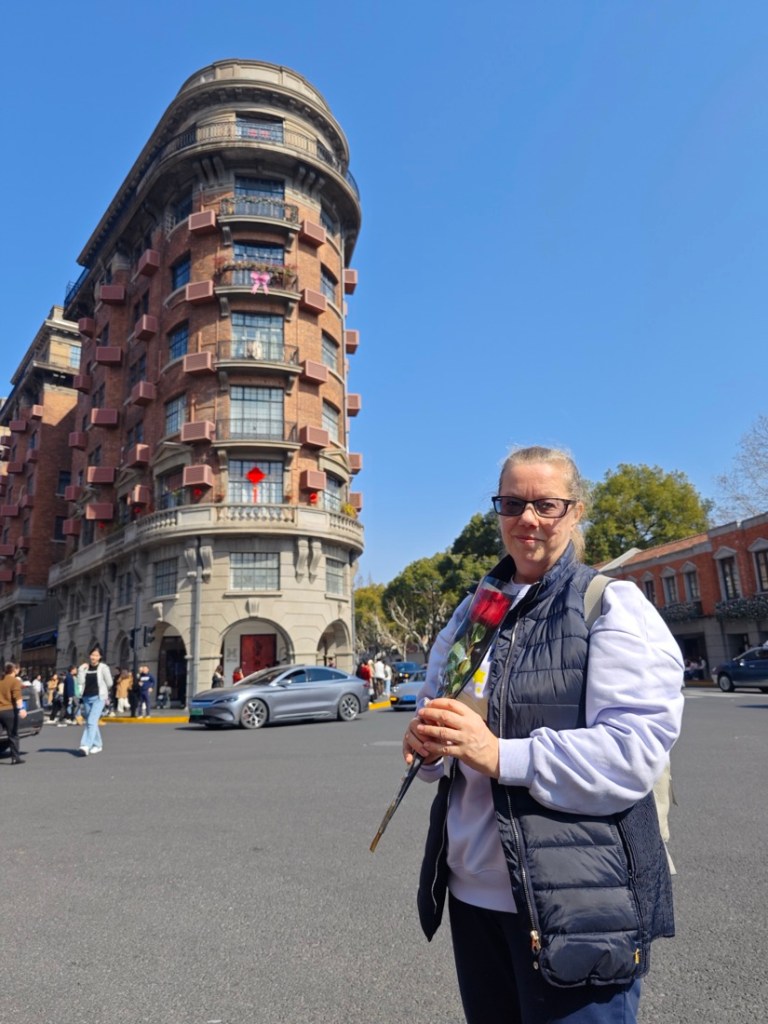
Walking around Puxi’s busy streets afterwards we also saw several very strange buildings

Look at the shape of this one. It’s a wedge. How small is that angle at the back! And it even has windows. What could you possibly put in that space?

Another beautifully shaped residence

It was wonderful to be in temperatures in the low 20s after starting the week in below zero conditions.

Tulou or ‘going round the houses’

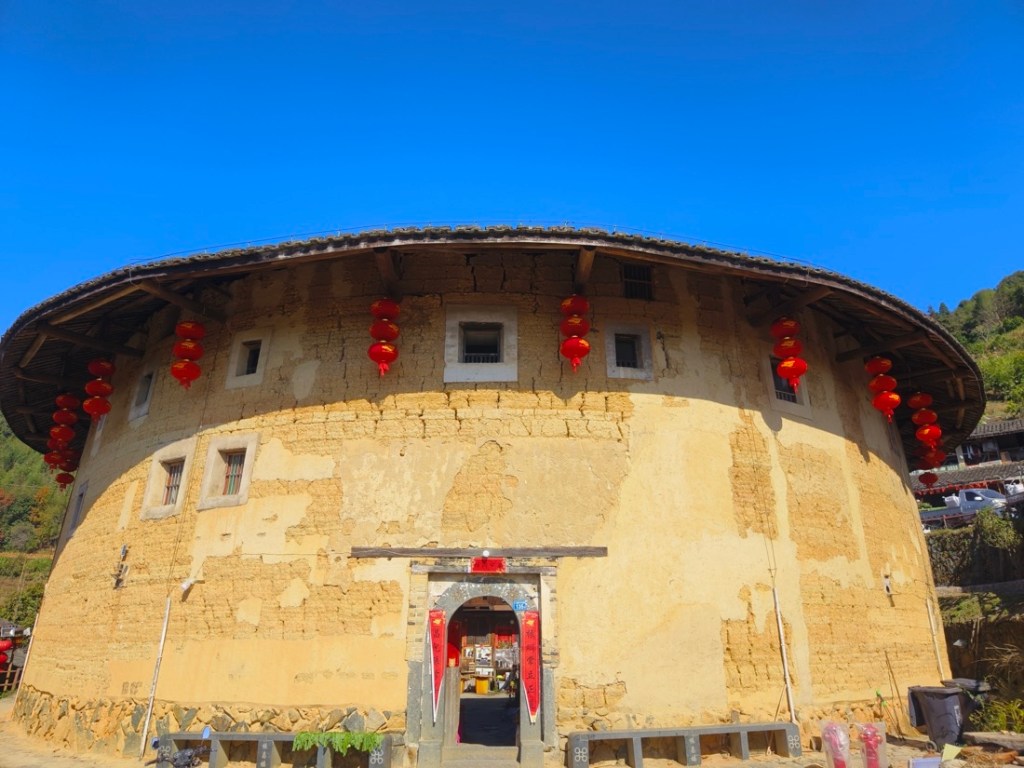
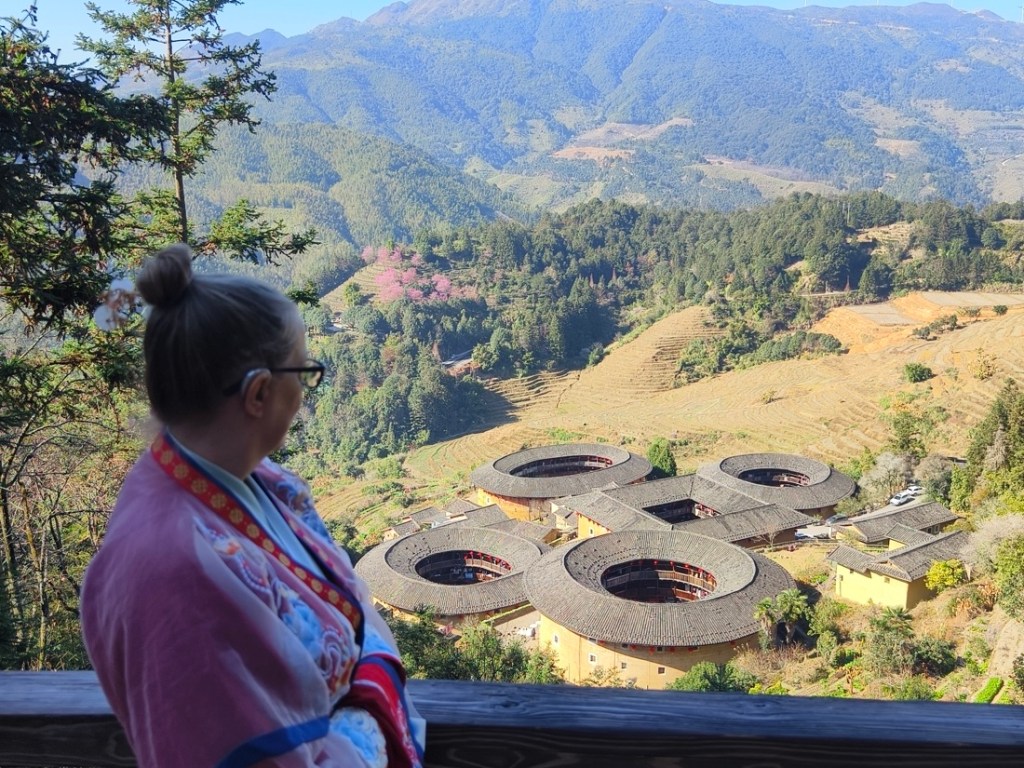
We drove from Xiamen to Yunshuiyao in the Fujian Province (approx 2 hours through fairly empty but very well maintained roads) to visit the TuLou or community of round houses. Tu means ‘earth’ and Lou is ‘building’. This area is famous for the round village buildings.

Originally a quite remote rural community these small villages became popular destinations for Chinese visitors after their use in a 2005 Chinese film called Yun Shui Yao (it’s just a name & I don’t know what it means). Then in 2020 one of the round houses was the setting for part of Disney’s live action Mulan film. In this the young Mulan chases a chicken over the circular rooftops. Since then ToLou has seen a steep increase in foreign tourists and is now firmly established as a must see destination. As such it has been on my bucket list for quite a while and I definitely wanted to see it before we leave.

These houses were built over 1000 years ago when migrants from Luoyang (which we visited at the beginning of this vacation making quite an uncanny connection for us).

There are many of these clusters of dwellings but this one is quite famous because it is built on the principle of the 5 elements. The ‘earth’ element is the square in the centre and the circular buildings are ‘metal’, ‘water’, ‘wood’ and ‘fire’. Chinese culture runs very deep and pervades many aspects of life which makes it all the more interesting if you understand what you are seeing.

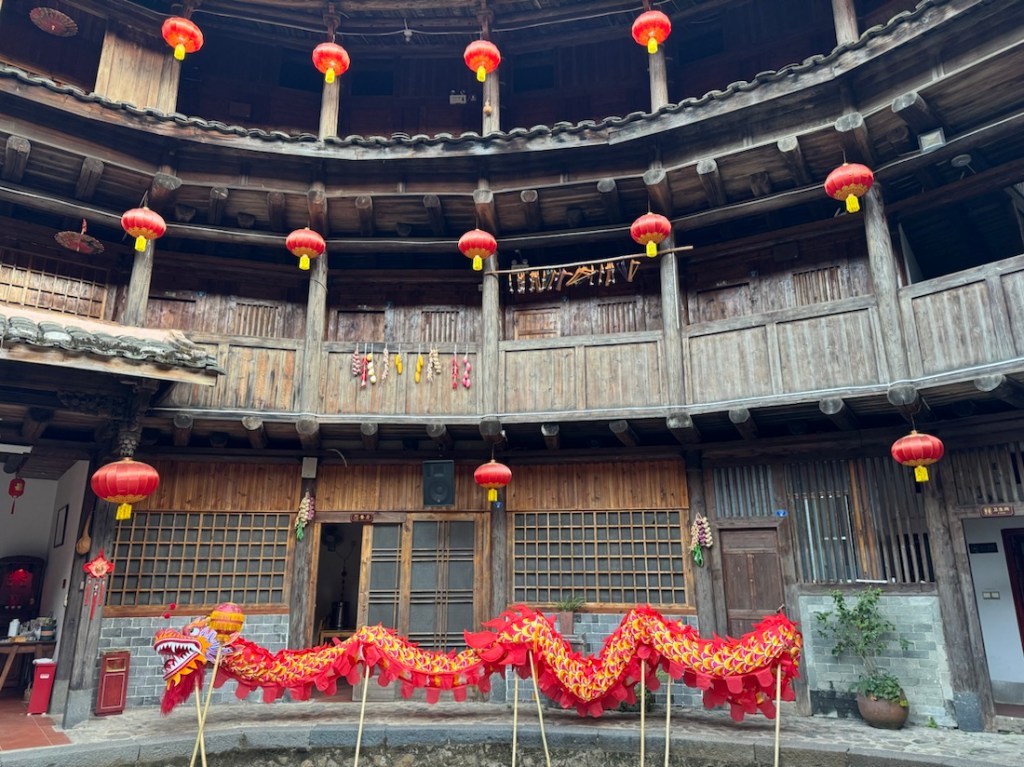
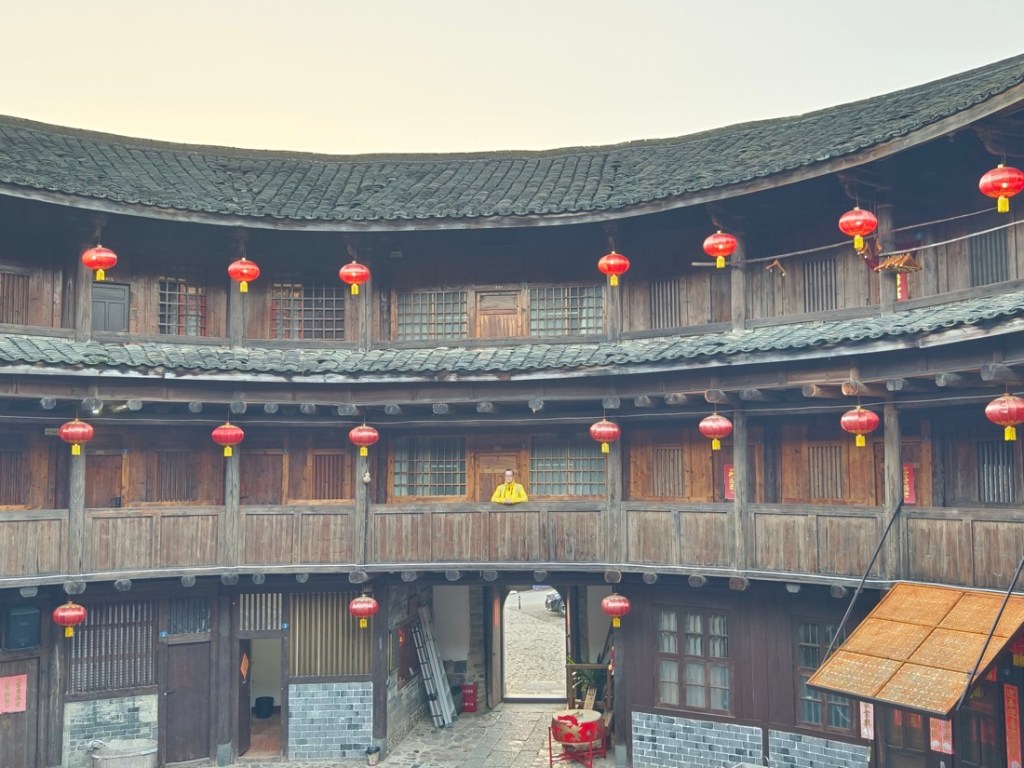
Each round house contains an extended family with small family units occupying a ground floor, first and second floor unit. The kitchen is on the ground floor and the 1st floor is for food storage. Living spaces are on the upper floor so you need good knees.

One of the big houses that we visited has housed 26 generations of the same family which is quite incredible if you think about it.

The founder was this guy, a wealthy government official, who traveled from the Henan Province to settle here in 871 to find more security and better living conditions for his family.

Mr Huang

He brought his 3 wives pictured below

Between them they produced 21 sons (they didn’t bother to count the girls)

These two photos are from the central family shrine which every unit has. The family makes offerings to these ancestors each year to thank them for providing this community. In the wall was a list of his founding tenents about sticking together in peace and harmony as a family to protect each other and to grow strong.

Each circular unit contains approx 120 rooms (all the same size) which can house anything up to 800 people. The males always stay there but the girls leave to go to their new husbands’ family. So each building contains many generations and all have the same family name. Apparently the males all get along very well but the women (who are all from the other villages) are the ones who bicker and squabble. All in all though these are very tight knit family communities who can all trace their lineages back over a thousand years.

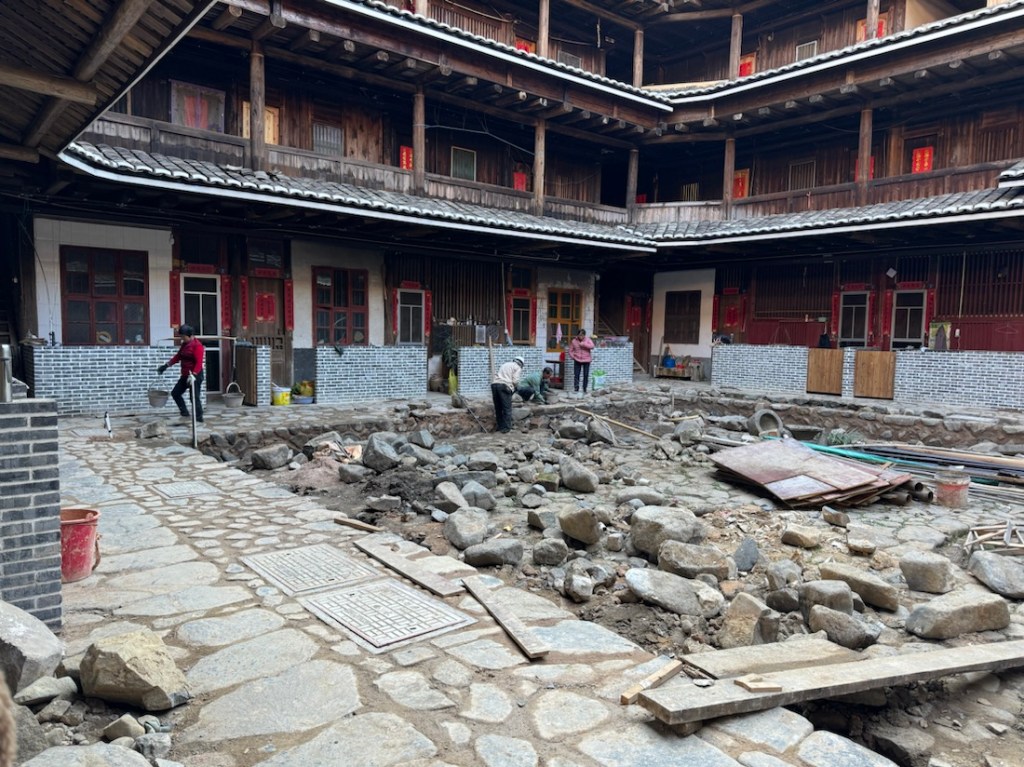
Renovating using traditional skills

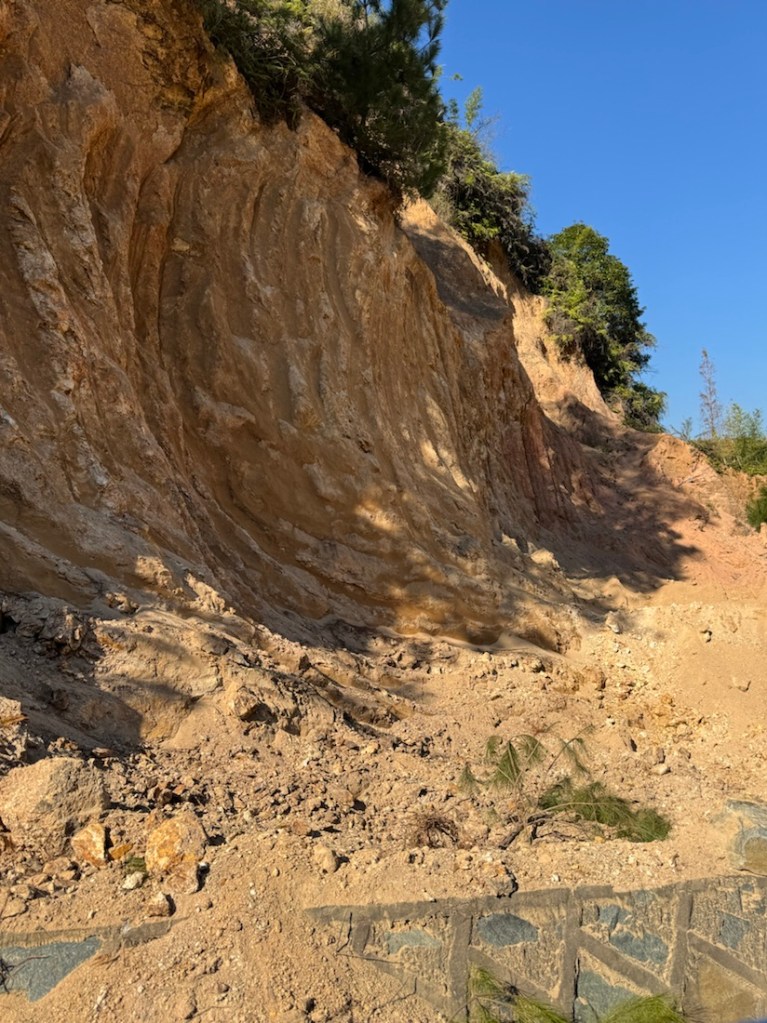
Each tulou is made from a bamboo and stick inner structure which is packed with local clay or mud to make walls of 2 meters depth at the base.

A clay quarry

These taper to become 1 meter at the top and this design has proven to be very strong and robust. The small wooden main doors are constructed from a local hard wood and can allegedly withstand battering rams and even cannon blasts. These made strong, self contained family compounds that were safe from marauding bandits and even earthquakes which accounts for their longevity and preservation.

Our guide was very accommodating and even let us see inside one of his rooms.

It was surprisingly warm even in January with no heating

This man remembers helping his grandfather to build some of this house as a youth. The men would have friendly competitions to see who carried the most stones. The winner each day would qualify for an extra steamed bun!

Then when the cultural revolution happened many members of the family were dispersed and only a few people remained in the buildings. In the time following Chairman Mao’s rule the government began to realize that these communities were a national treasure so they found all the family members and brought them back. Now they are all given 2000 rmb per year to live there. (That’s approx £220), so not great but it all helps.

When this gentleman came back he was given ‘orientation’ classes but it turned out that he knew more about the traditional building techniques than the government teacher!

Each small family unit is responsible for maintaining the wood in their section but the government helps to keep the roof in good repair.
Access to the top rooms are not for the faint hearted or those with vertigo!

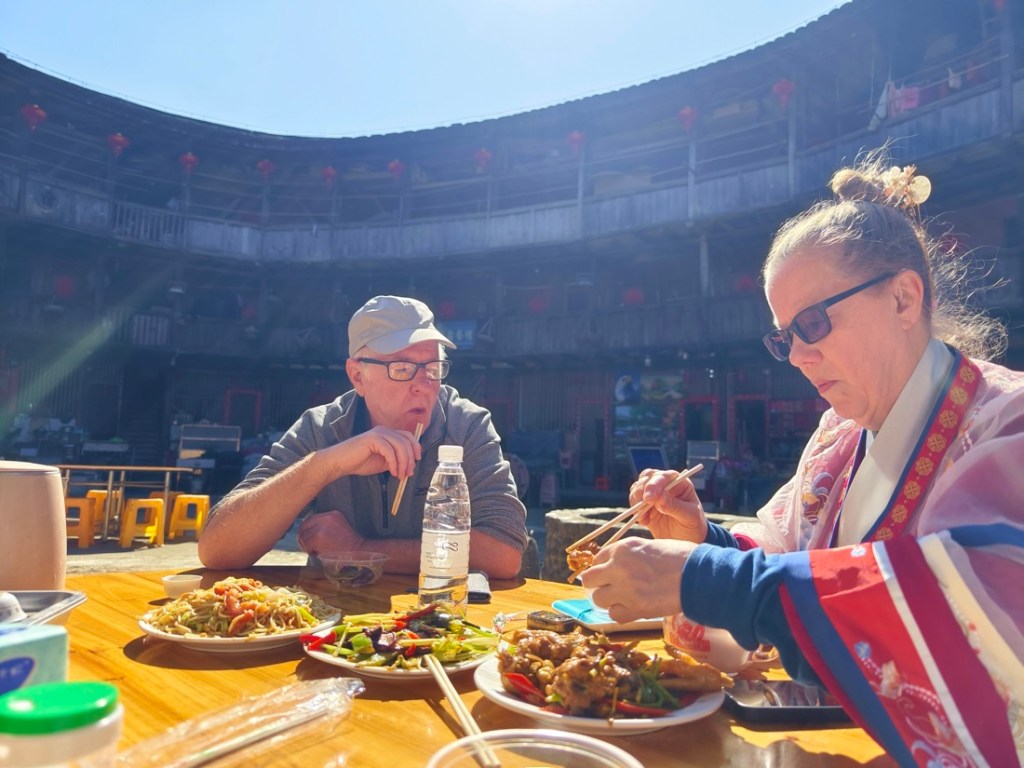
Our guide was so friendly he invited us for lunch.

All organic, home grown and extremely fresh

The locals here grow their own tea, vegetables and keep their own livestock so they are pretty self sufficient.

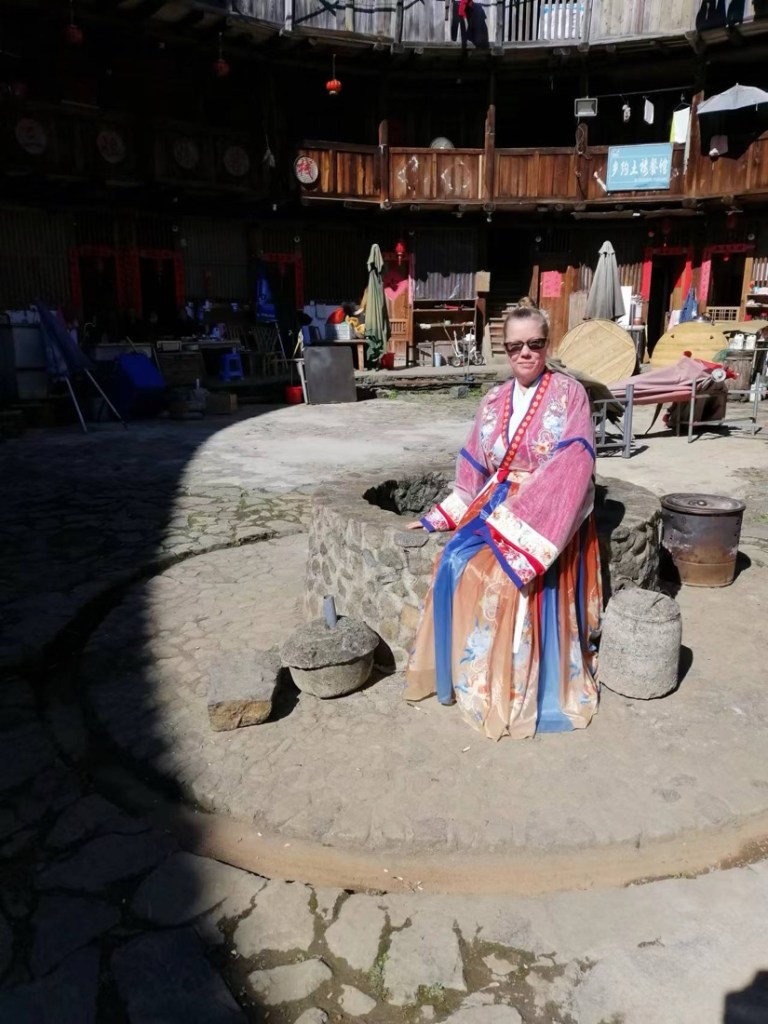
Each tulou is built around a central well

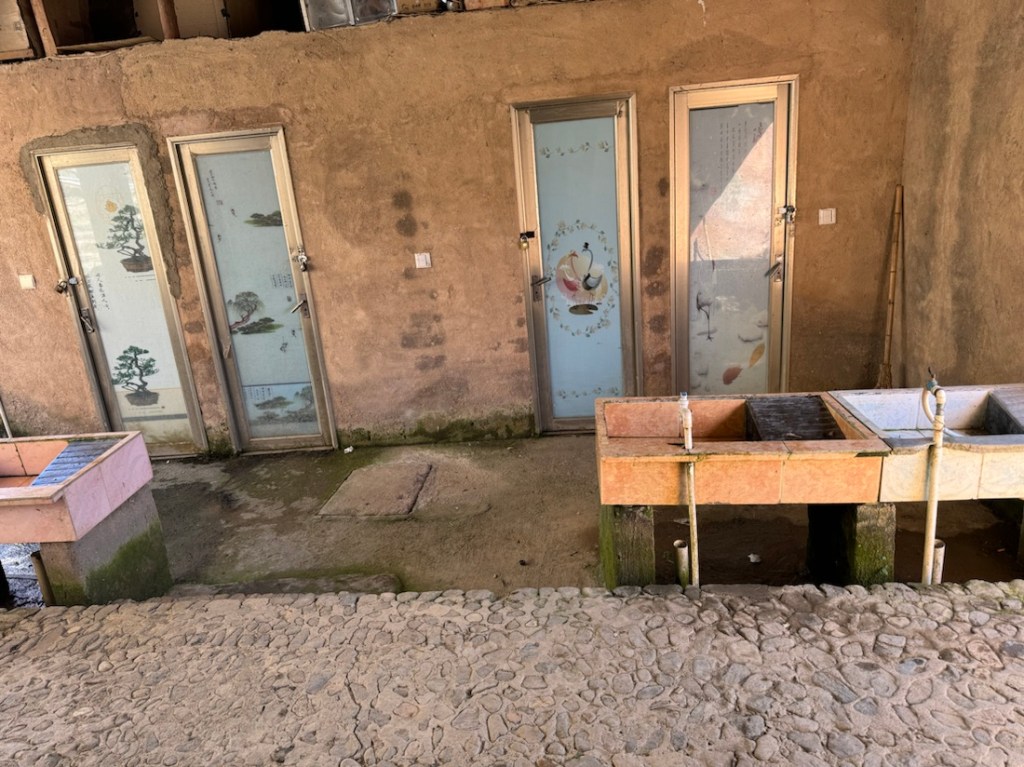
I had to ask! And the answer is that the toilet facilities are minimal. Each bedroom will have a chamber pot but the rest of the time the residents use the public conveniences set up for the tourists. These also contain the community washing areas.

Here I was offered more cigarettes than any other place that I have visited anywhere in the world. It turns out that they even grow their own tobacco and roll their own cigarettes!

This lifestyle must be good though as the community has high levels of longevity with a large percentage of the residents being in their 80s or 90s.

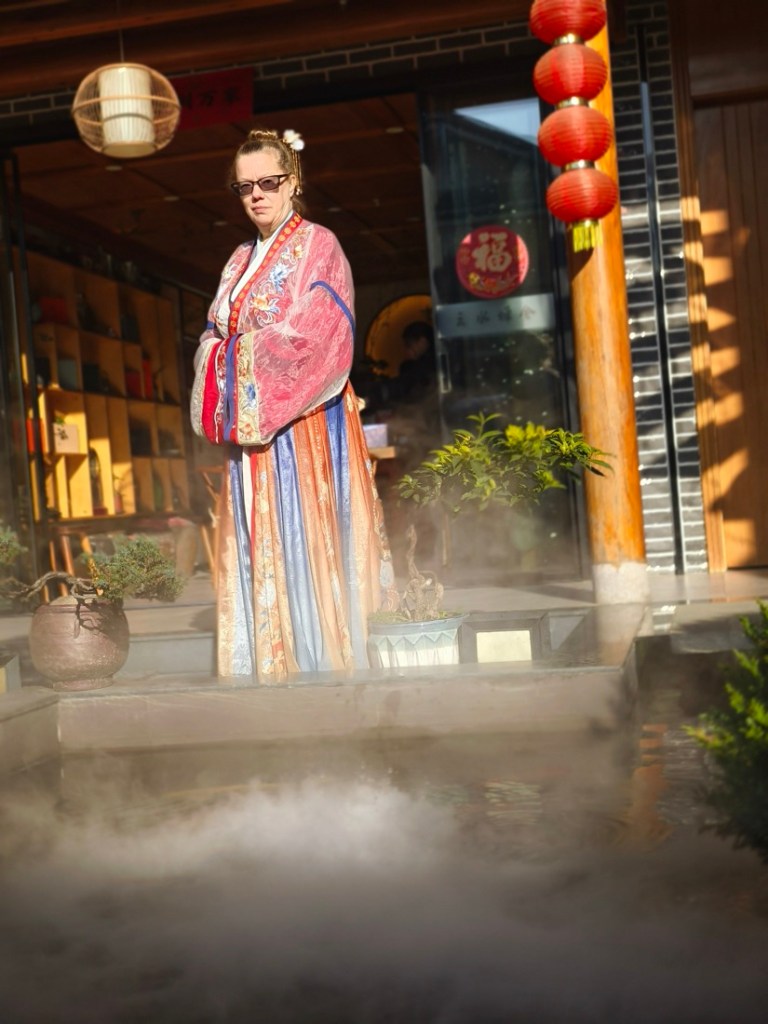
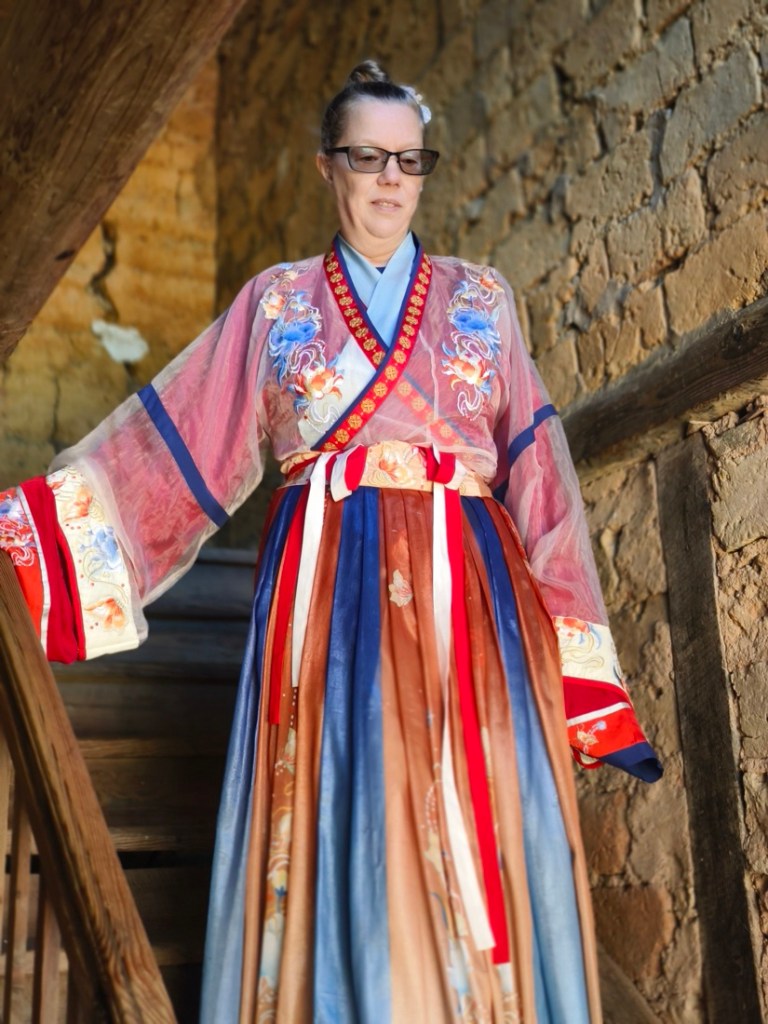
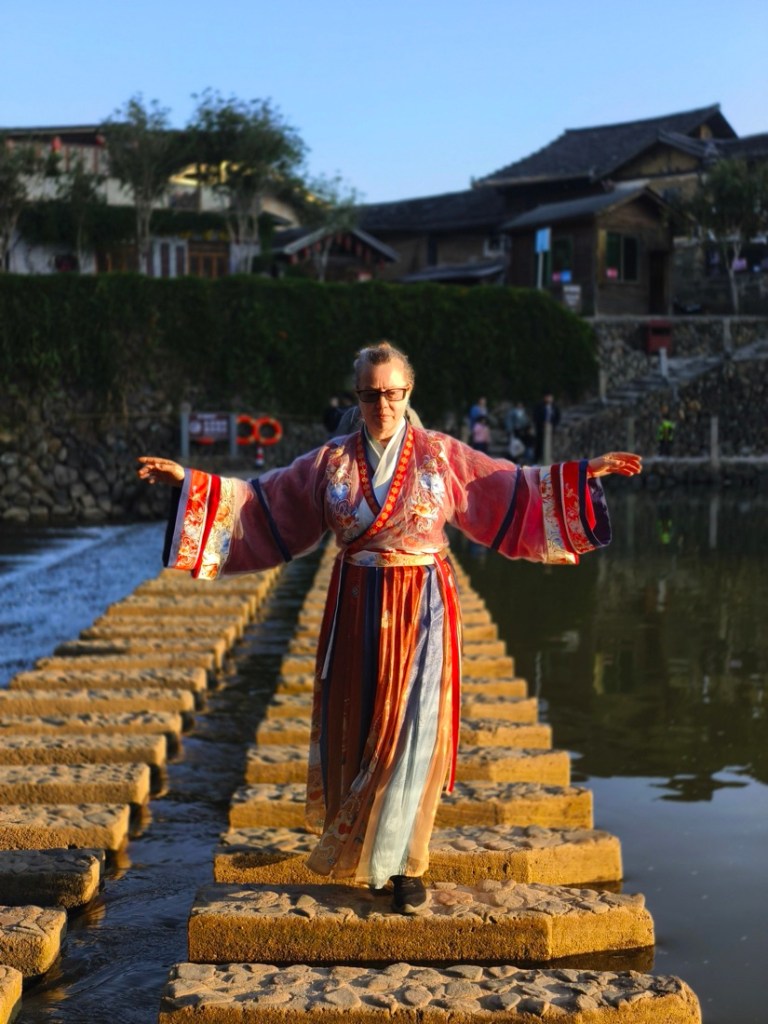
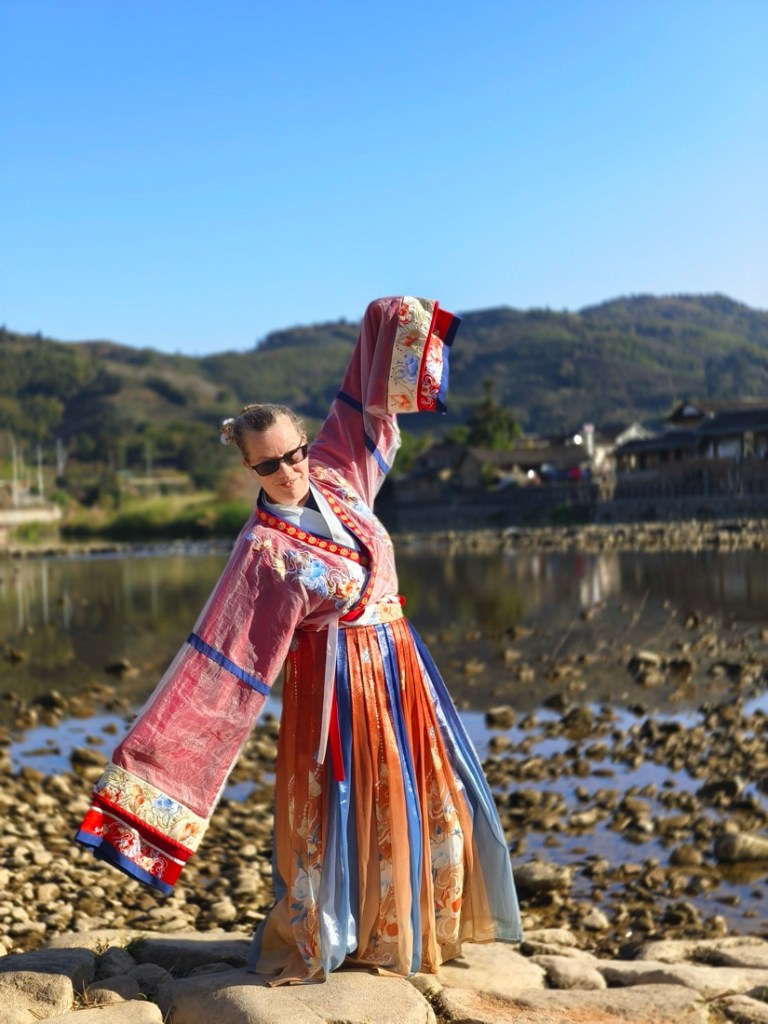
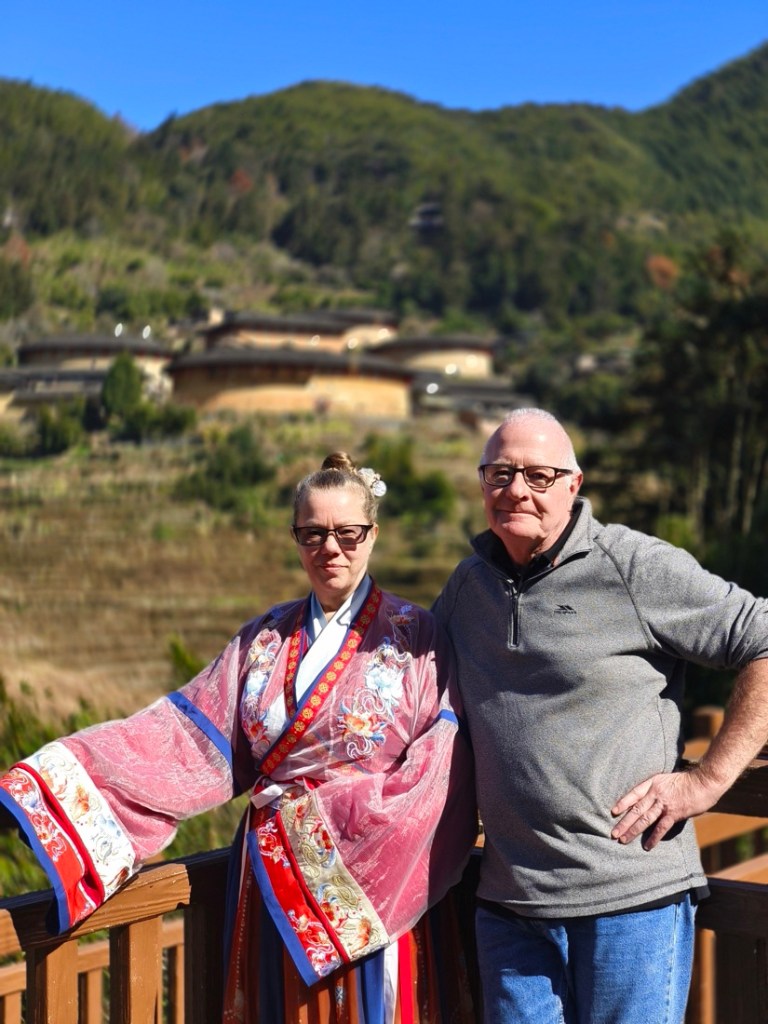
As you have probably spotted I was able to dress up for the day as part of the deal that Leping organized for us with our hotel. This was a Tang Dynasty style outfit 618-907 AD. It was great fun to imagine being one of the original ladies walking the cobbled streets and made for some fantastic photo opportunities at different locations. Shifu is a great photographer and has a great eye for the light and composition. Here are some of my favorites:

Kevin was there too…

Gulangyu a European island in the south China Seas

Gulangyu or Gulangyu Island is a beautiful island in the Fujian Province near to Taiwan. In fact on a clear day you can even see across the water to Taiwan.

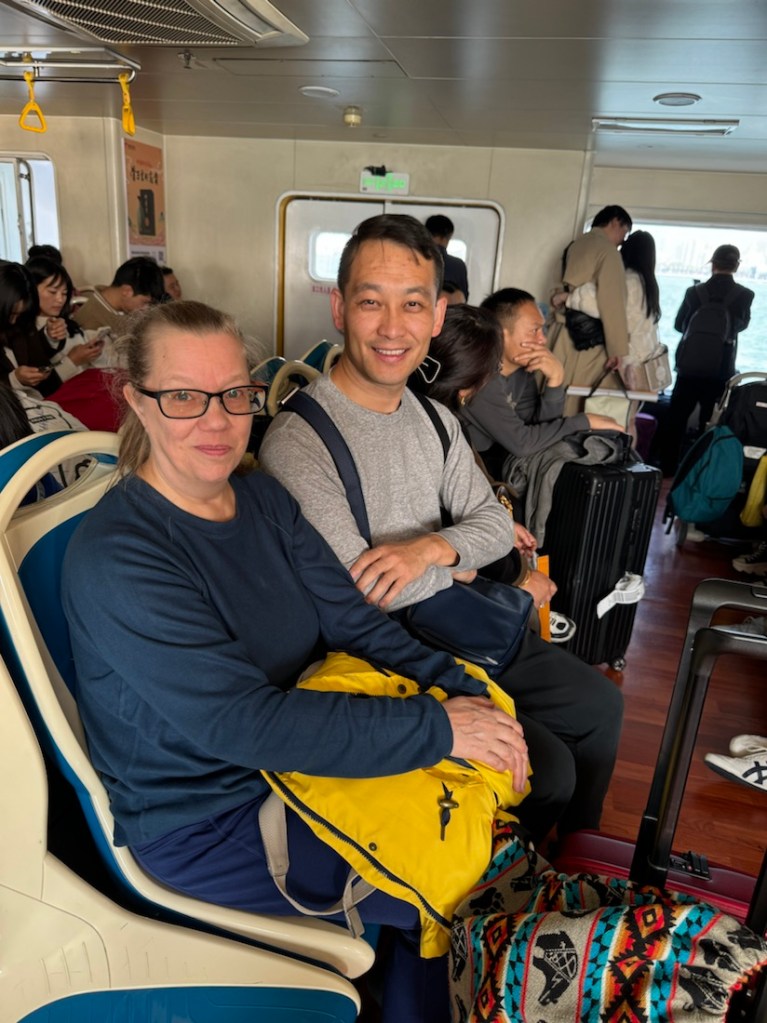
Shifu very kindly offered to take us so we flew into Xiamen, the nearest big city on this short break. Then a ferry ride full of diesel fumes was i

over the water to this enigmatic island.

Once a haven for colonialists this small island is now a popular tourist destination. Many wealthy Europeans settled here in the early 1800s bringing westerns musical and artistic talent as well as a penchant for eclectic architecture.

Narrow winding alleyways snake up the central hillside revealing hidden gems of colonial beauty at every turn.

Gulangyu literally means islet of the drumming waves because the sound of the ocean waves hitting the reefs sounds like the thundering of mighty drums. We didn’t actually get to hear that.

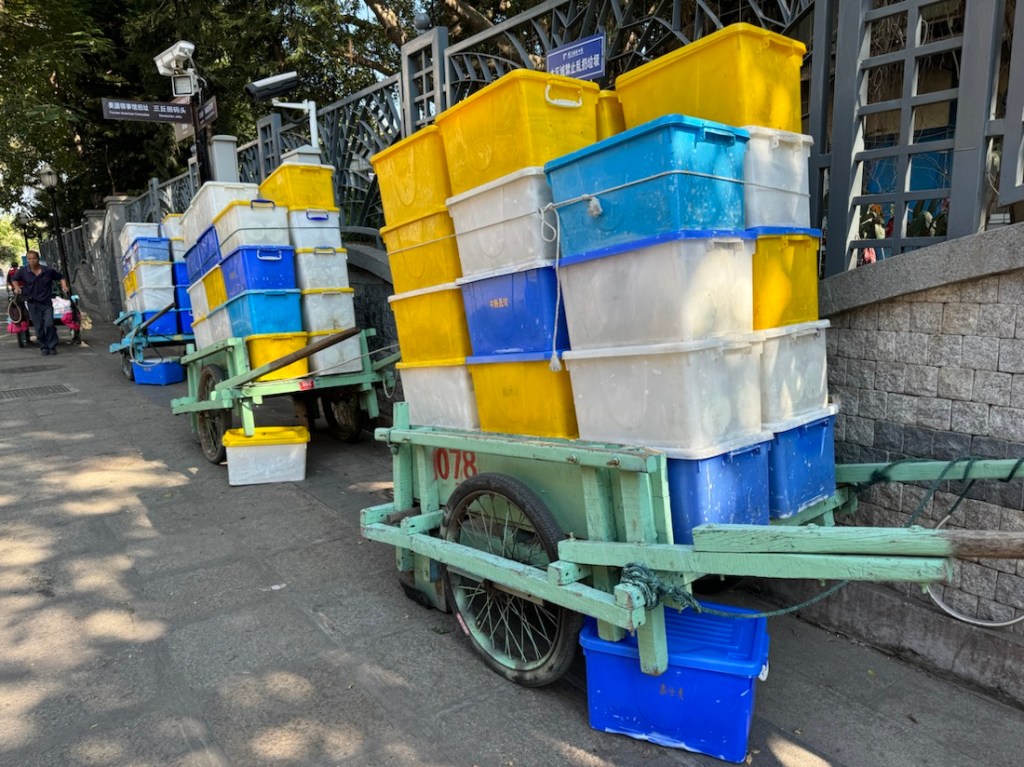
Now a UNESCO world heritage site this charming 2 square km island is also a traffic free zone meaning no cars, scooters or even bicycles are allowed. Goods are moved from place to place by handcart and the overall effect is one of historic nostalgia but with extremely clean air!

For a while Gulangyu was the only international settlement outside of Shanghai. Its southern location, tropical climate and sandy beaches made it very attractive to Europeans.

This is the 44 Bridge, called so because there are 44 corners on it! It must be the wonkiest bridge I have ever crossed!

The British played a major role in setting up and running the settlement. Much of the architecture has Victorian influences. Missionaries set up churches schools and colleges. Unlike Shanghai though this was not a location for trade. Instead cultural activities flourished, in particular music. Many of China’s most famous musicians were born or trained here.

Our hotel was right by Trinity church.

The island has a local population of approx 20,000 but copes with over 10 million visitors every year. Most people are day trippers but staying overnight gave us the opportunity to wander the quaint streets and narrow alleyways enjoying the soft evening air. Even though it was January it felt like a British summer’s evening.

With the invasion by the Japanese in 1942 the international contingent on the island departed leaving many of their houses unoccupied. This has led to a growing number of stories among the locals about ghosts and the island now has a reputation for being haunted (we didn’t see any though)

A highlight of the day was a visit to the Piano Museum. I mentioned before the musical talent that emerged from the fusing of western and Chinese culture in this place. I was surprised to see how many pianos there were on display, mostly of European origin.

There were many rooms like this
I have never seen one like this before!

Apparently there are 5000 pianos on the island itself, which is one for every 4 people. Quite a surprising ratio.

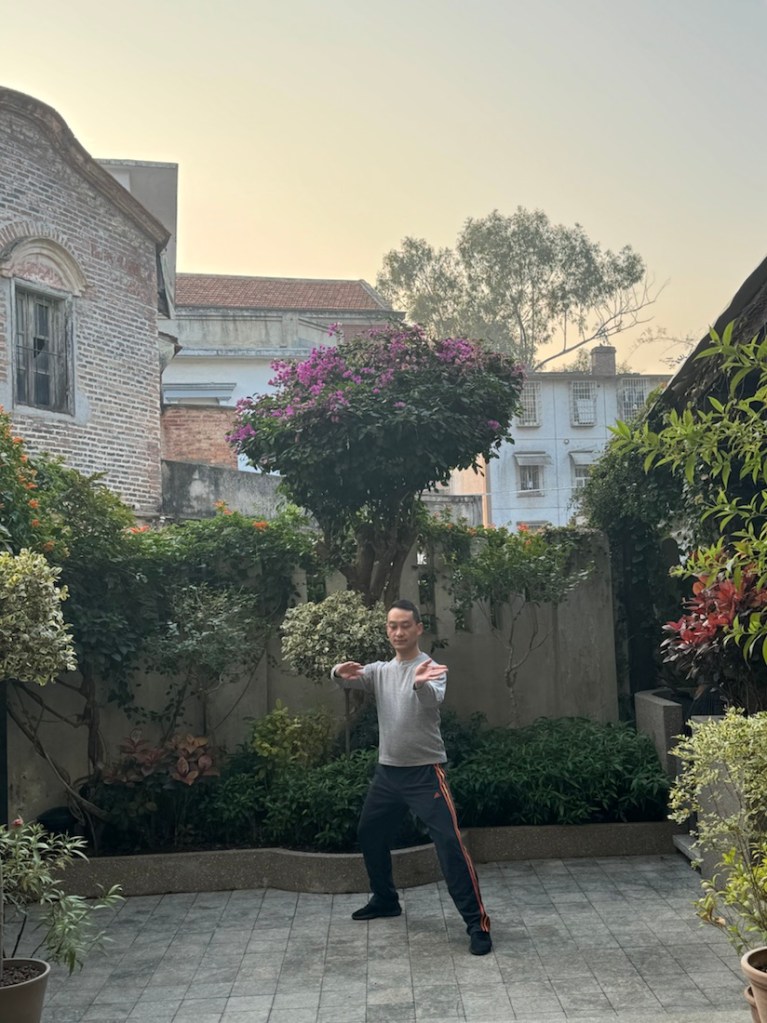
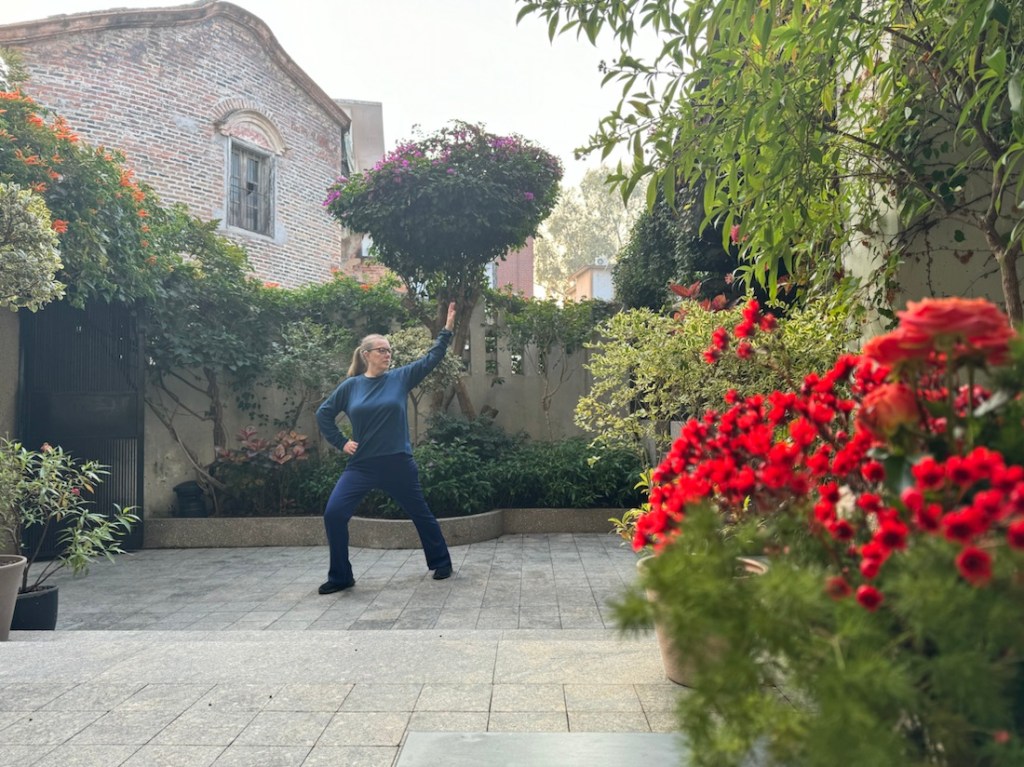
A lovely spot for our early morning training
So calm and peaceful

Finally, we saw this which is a public clothes line. I have never come across anything like this before. I guess it’s great when you have a small apartment and no garden. It reminded me of the village common with communal grazing rights back in medieval England.